Vampirio: Defend & Survive
- 125.00
- 4.6
- Installs
- 100.00K
- Price
- Free

Screenshots
Analysis by Reviewed
I went into Vampirio: Defend & Survive expecting a quick action game, but its appeal became clearer after a few sessions: the interesting part is not simply defeating monsters. It is the rhythm of preparing a position, reacting when the pressure rises, collecting the result, and deciding whether I am ready to begin again. That cycle gives the game a pleasantly immediate feel, especially when I only have a short amount of time to play.
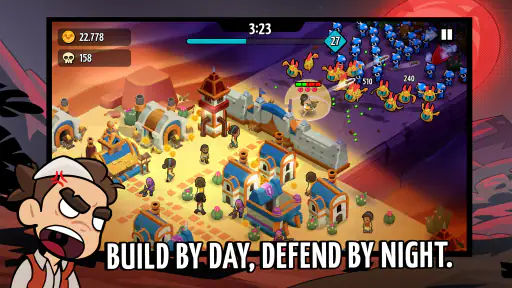
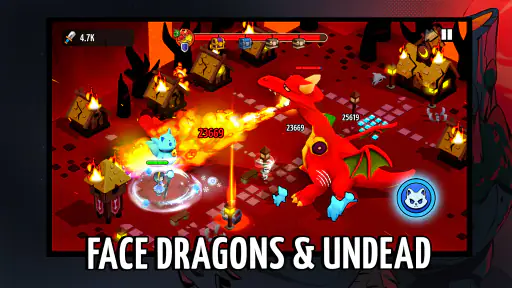
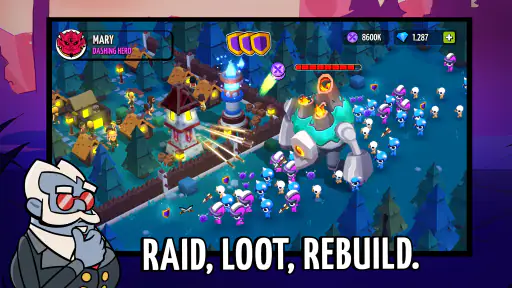
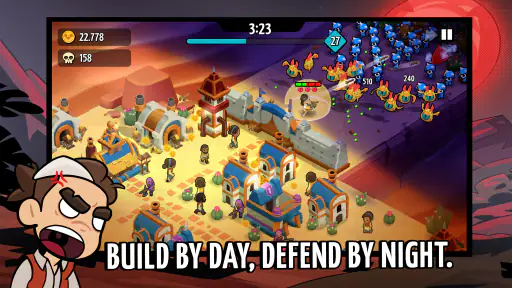
This is an action game from Outfit7 Neo Limited, built around a fortress that must be developed during the day and protected from monster attacks at night. It is free to download, aimed at Everyone, and available for devices running Android 6.0 or later. The current version is 1.5.10.25847, while the store summary describes its roguelike structure in a single sentence. In practice, that combination points toward compact runs rather than a long, quiet building simulator.
What I like most is that the game gives each phase a clear purpose. Daytime decisions create the conditions for survival, while nighttime action tests whether those decisions were sensible. The result is easy to understand without being completely mindless. I can play aggressively, but careless choices tend to make the next attack harder. I can also spend too much time preparing and lose the momentum that makes the game enjoyable.
How the first move sets up the whole run
The first useful question is not “How quickly can I attack?” but “What will help me survive the next wave?” That small change in attitude makes the fortress-building phase more meaningful. I found myself looking at every improvement as part of a short-term plan rather than treating construction as decoration between battles.
That is where the roguelike influence matters. A run feels temporary, so I am not merely building toward an endlessly expanding base. I am making choices for the immediate attempt, knowing that the night phase will expose weak planning. This gives the opening minutes a practical tension: I want enough strength to handle the raid, but I also want to keep moving so the game does not turn into a slow checklist.
The action itself is approachable. The basic goal is obvious, and the threat arrives in a form that makes the fortress feel useful rather than ornamental. I do not need a long tutorial explanation to understand why preparation matters. The game communicates through pressure: when enemies reach the defenses, the cost of an earlier mistake becomes visible immediately.
For a new player, I recommend resisting the urge to spend every available reward as soon as it appears. A better habit is to pause briefly and ask which improvement solves the most immediate problem. If the next attack is likely to overwhelm a weak point, strengthening that area is more valuable than choosing something that looks attractive but does not help the current layout. This is one of the first decisions that separates a thoughtful run from button pressing.
The fortress also gives the game a useful identity compared with ordinary action games. In a straightforward arena title, I usually focus on movement and attacks until the timer or enemy count ends the round. Here, the defensive setting makes the preparation phase part of the action rather than a separate menu task. I am constantly thinking about how the next assault will interact with what I have built.
The daytime choices are more important than they first appear
At first, the building phase can feel like a breather before the exciting portion begins. After playing longer, I saw it more as the game’s strategic filter. The night raid is where I receive the loud feedback, but the day phase is where I quietly decide what kind of problem I will face.
My most reliable approach was to prioritize consistency over ambitious upgrades. A spectacular improvement is not very helpful if the rest of the fortress remains vulnerable. I preferred choices that made the next attack easier to read and manage. That may sound conservative, but it reduces the number of emergencies competing for attention once the monsters arrive.
There is also a useful trade-off between immediate safety and future potential. Spending resources now can make the current raid more comfortable, yet saving them may create a stronger position later. The right choice depends on how stable the run feels. When my defenses were already coping well, saving made sense. When one breach could end the attempt, I treated survival as the better investment.
This is a good example of why the game is more engaging than its short description suggests. The central decision is not just whether to upgrade. It is deciding when an upgrade is worth delaying another option. That timing creates small moments of judgment even before the main combat begins.
Nighttime turns preparation into immediate feedback
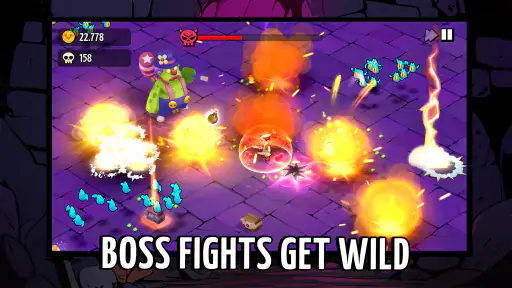
When the raid starts, the game becomes much more direct. The fortress is no longer a plan on the screen; it is a test. Enemies force me to notice which choices are working and which were optimistic. The feedback is immediate enough that I can connect a result to a decision instead of feeling that success or failure happened randomly.
I particularly enjoyed the contrast between calm preparation and sudden pressure. The change gives the run a natural pulse. During the day, I consider possibilities. During the night, I respond to consequences. That alternation prevents the building layer from feeling detached from the action and stops the combat from becoming a repetitive sequence with no context.
My practical advice is to watch the first signs of trouble rather than waiting for the fortress to be overwhelmed. If a problem becomes obvious early, reacting early is usually less stressful than trying to rescue everything at once. This also makes the game feel more skillful, because I am learning to read the attack rather than merely reacting to the final crisis.
The controls and objectives are accessible enough for casual play, but the loop still rewards attention. That balance is important for an Everyone-rated game. Someone can understand the premise quickly, while a more experienced player can spend time improving decisions and reducing waste. It is not demanding in the same way as a complex strategy game, but it does ask me to stay aware of the relationship between preparation and defense.
The feedback rhythm: action, consequence, and another attempt
The strongest part of Vampirio is its feedback rhythm. I make a choice, face the result, receive a reward or setback, and then decide whether to try again. Each step leads naturally to the next. There is little need for an external reason to continue because the previous run leaves me with a question: what would happen if I handled that situation differently?
That question is more compelling than a simple victory screen. If I fail because I prepared the wrong part of the fortress, I want to test a different priority. If I survive comfortably, I want to see whether I can take a more ambitious route. The game’s replay value comes from this adjustment process rather than from a single dramatic finish.
The action supplies the emotional peak, but the reward phase gives the run its meaning. A successful defense should feel like more than a cleared obstacle; it should improve the next decision. I paid attention to whether a reward helped me stabilize the fortress, prepare for a harder night, or change the way I approached the next attempt. That is the point where the loop either becomes satisfying or starts to feel like repetition.
For me, the best sessions were not necessarily the longest ones. They were the runs in which I could identify one mistake, correct it, and see a better result. That makes the game suitable for short breaks. I can play while waiting for an appointment, finish a run, and stop with a clear sense of what I learned. I do not need to commit to a large campaign before the game gives me useful feedback.
Rewards work best when they support a decision
The reward system is most effective when I treat it as a tool rather than a prize to collect automatically. Before accepting an improvement, I consider whether it helps the current weakness or merely looks stronger in isolation. This is a small but important habit because a run can become less stable when rewards are chosen without a plan.
One useful workflow is to identify the fortress’s most likely failure point before the next attack. I then compare each available reward against that specific concern. If the choice does not address the problem, I ask whether it creates a broader advantage that will matter soon. This keeps the decision grounded in the run instead of turning it into a search for the most impressive-looking option.
The trade-off is that this approach can make the game feel less carefree than a pure arcade title. Players who want to grab every reward instantly may find the planning slightly slower. I consider that a fair cost because the decisions are what give the action context. Still, anyone looking for nonstop combat with no pause for evaluation may prefer a conventional survival shooter.
There is also a psychological advantage to the reward loop: it makes failure informative. Losing a run is frustrating, but it is easier to accept when I can explain what went wrong. A reward that changes the next attempt gives me a reason to return, while a reward that feels disconnected would make the reset feel empty. The game works best when I actively use the result to refine my next plan.
What changes when the session resets
The reset is central to the experience. A new run removes the comfort of permanent progress and asks me to make decisions again under different pressure. That can be exciting because I am not simply repeating a solved sequence. It can also be tiring if I am not in the mood to rebuild and reassess.
I see the reset as a test of whether the game’s core actions are enjoyable on their own. In this case, the day-night structure gives a fresh attempt a clear shape. I know what the preparation phase is for, I know that the raid will challenge it, and I know that the result will inform the next run. The reset therefore feels like an invitation to experiment rather than a punishment for losing.
My advice is to stop after a frustrating attempt instead of immediately forcing another one. The loop is most rewarding when I return with a specific adjustment in mind. Starting again without changing anything can make the game feel repetitive, while changing one priority gives the next session a purpose. That is especially useful for players who tend to replay quickly after a defeat.
The reset also affects who should skip the game. If you prefer permanent character growth, a large story campaign, or a world that remembers every improvement, this structure may feel too temporary. A different action game with persistent upgrades would probably suit you better. Vampirio is aimed more at players who enjoy making short plans, watching them succeed or fail, and rebuilding with better information.
Playing it in everyday situations
I can easily imagine using this as a commute or waiting-room game. I would start a run with enough time to focus on the opening decisions, prepare the fortress, and see how the next raid develops. If I had to stop suddenly, the compact structure still makes more sense for that situation than a long narrative game that expects me to remember a complicated plot or location.
It also works as a wind-down game when I want some action without a large mental commitment. The objective is clear, and the day-night division creates natural points at which I can put the phone down. The catch is that a difficult run can encourage “one more attempt,” so I would not recommend beginning one immediately before an appointment or bedtime if you know you have trouble stopping after a setback.
For younger players, the Everyone rating makes the game approachable from a content standpoint, but I would still pay attention to the purchase model. The game is free, with in-app purchases ranging from $0.49 to $99.99 per item. That broad range means the safest approach is to decide in advance whether you want to spend anything and use device-level purchase controls when the phone is shared with a child.
The purchase structure does not automatically ruin the experience, but it changes how I evaluate the loop. A free game has to earn my continued attention through play, not only through prompts to accelerate progress. I prefer to judge each run by the quality of its action and decisions. If a player dislikes optional spending systems in free-to-play games, this is a point to consider before installing, even though the download itself costs nothing.
How it compares with familiar action alternatives
Compared with a standard monster-survival action game, Vampirio places more weight on the space between battles. The fortress gives preparation a concrete purpose, and the night raid makes that preparation visible. If you usually enjoy fast combat but find base-building menus dull, the balance here may be appealing because the construction phase is tied directly to the next defense.
Compared with a traditional tower-defense game, it feels more immediate and less like a purely fixed puzzle. I am not only arranging defenses and watching a route unfold; I am also thinking about the run as a temporary attempt. That roguelike framing makes experimentation more natural, although players who want meticulous, permanent level design may prefer a deeper tower-defense alternative.
Compared with a large role-playing game, it is much easier to enter and leave. There is no need to maintain a long quest thread in my head. The downside is that the emotional range is narrower. The pleasure comes from improving a run and surviving pressure, not from discovering a large world or developing a detailed cast of characters.
That comparison helped me place the game more accurately. It is not trying to replace a full strategy campaign, a story-heavy adventure, or a competitive action title. Its strongest position is between casual action and light tactical planning. It suits someone who wants a clear objective, visible consequences, and enough variation in each attempt to make replaying worthwhile.
Practical details before downloading
The game is free and has reached over 100 thousand installs, with a 4.6 average from around 2.3 thousand ratings. Those figures suggest that it has found an audience, but I would not use popularity as a substitute for fit. The important question is whether you enjoy the particular loop of building, defending, collecting, and resetting.
It was released on October 9, 2025, and the listed age rating is Everyone. The developer is Outfit7 Neo Limited. On Android, the minimum requirement is version 6.0, so the compatibility threshold is relatively broad for people using older devices. The current version shown for the game is 1.5.10.25847, which is the version I would look for when checking that I am installing the maintained release.
I would recommend it to players who like action with a modest strategic layer, especially those who enjoy seeing a mistake translated into a better second attempt. It is also a good match for people who prefer sessions with a clear beginning and end instead of an open-ended world. The game’s strongest audience is likely to appreciate the tension between spending resources now and preparing for what comes after the next attack.
I would skip it if you want a purely reflex-based experience, a permanent fortress that grows continuously, or a substantial story to carry the game forward. I would also be cautious if resets feel discouraging rather than motivating. The loop depends on accepting that a failed attempt is part of the learning process. Without that mindset, the same structure can feel like rebuilding from zero.
My verdict on the complete loop
Vampirio: Defend & Survive works because its five-part rhythm is easy to feel: I take an action during preparation, receive sharp feedback during the raid, earn a reason to improve the next attempt, face a reset, and start again with a more informed plan. The loop is tangible rather than abstract. I can point to the decision that helped, the weakness that caused trouble, and the adjustment I want to test next.
Its limitations are equally clear. The reset structure will not satisfy everyone, and the free-to-play purchase range deserves sensible safeguards on shared devices. The action is also less suitable for someone who wants uninterrupted combat without a planning pause. Those are not minor details; they determine whether the game feels focused or repetitive.
For me, the balance lands on the positive side. I like that the fortress is not just a backdrop and that the night raid gives every earlier choice a consequence. I also appreciate being able to finish a meaningful attempt without committing to a long campaign. The best reason to play is the next decision, not merely the next reward.
If you enjoy compact action games that ask you to adapt, this is worth trying while keeping your spending boundaries clear. I would begin with a few runs focused on learning the day-to-night rhythm rather than chasing the strongest-looking improvement. Once that rhythm clicks, the reset stops feeling like a restart and starts feeling like the game’s main invitation: take what the last defense taught you, build differently, and see whether you can survive the next night.
Pros
- Simple controls make it easy to start playing quickly.
- Short runs fit well into brief gaming sessions.
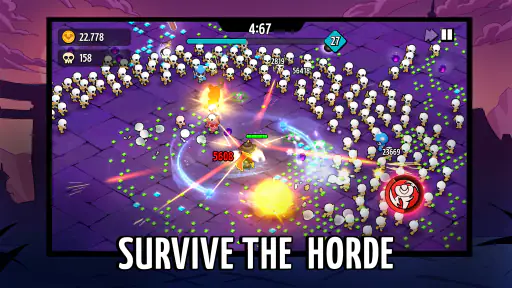
- Enemy waves create a satisfying sense of escalating pressure.
- Character upgrades add useful progression between attempts.
- The dark vampire theme gives the game a distinctive atmosphere.
Cons
- Repeated runs can feel similar after the initial learning period.
- Some upgrades may take considerable time to unlock.
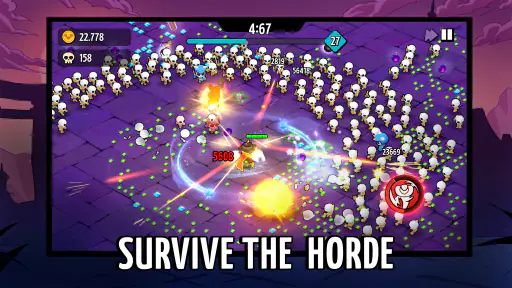
- The screen can become visually crowded during larger waves.
- Progress may feel slower without optional purchases or bonuses.
- The game may drain battery during extended play sessions.

- Category
- Action
- Version
- 1.5.10.25847