Ultimate Pro Basketball GM
- 793.00
- 4.0
- Installs
- 500.00K
- Price
- Free

Screenshots
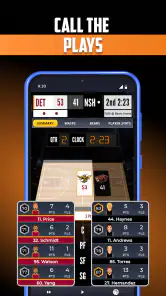
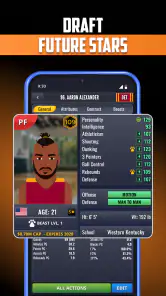
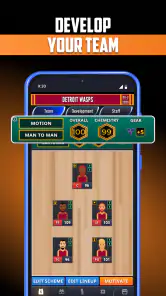
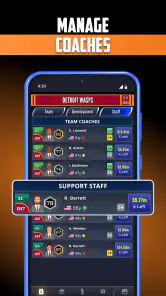

Analysis by Reviewed
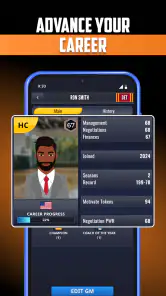
I usually know within the first week whether a management game has more to offer than a pleasant opening session. Ultimate Pro Basketball GM made a good first impression because it puts me in the role of the person responsible for an entire basketball franchise rather than asking me to control every possession on the court. That difference matters: the appeal comes from planning, judging decisions, and watching a team develop over time.
Games2rk presents this as a sports game for people who want to manage a professional basketball organization and push it toward success. It is free to start, carries an Everyone age rating, and is available for Android devices running version 7.0 or later. The current version is 2.2.2, so anyone installing it should still check that their device meets the minimum requirement before settling in for a longer career.
My overall impression is positive, but not unreserved. The opening is easy to understand and satisfying for fans of basketball strategy, while the lasting value depends heavily on whether you enjoy repeating the cycle of reviewing a roster, making choices, and accepting that not every move works. This is not the right pick if you want a fast arcade match or a highly visual on-court experience. It is much better suited to someone who enjoys being the decision-maker behind the team.
Why the first week feels so engaging
The strongest early hook is the change in perspective. Instead of measuring success by how well I personally shoot, pass, or defend, I have to think like a general manager. That immediately creates a different kind of tension. A win feels like evidence that my broader plan is working, while a poor result makes me reconsider the choices behind the roster and the franchise.
That structure also makes short sessions useful. I can open the game with a specific question in mind: should I trust the current group, adjust the lineup, or look for a better long-term direction? Even when I only have a few minutes, the management format gives the session a clear purpose. I am not simply tapping through a match and forgetting it afterward; I am checking the condition of a project that I am trying to improve.
For a new player, I recommend resisting the temptation to change everything immediately. The first useful habit is observation. Before making dramatic decisions, I look at what the team is already doing well and where the results seem inconsistent. That creates a baseline. Without one, it is easy to blame the wrong part of the organization and then spend the next few sessions repairing a problem that my own changes created.
The game’s basketball theme gives familiar context to the decisions, which helps even if I am not an expert in every technical detail of the sport. I can approach it as a fan who understands the broad goals: build a competitive team, make sensible choices, and keep the franchise moving forward. That accessibility is one reason the opening feels less intimidating than some deeper management alternatives.
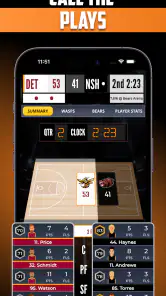
At the same time, the first-week appeal is not based on flashy presentation. Anyone expecting the immediacy of a live basketball game may find the experience restrained. The satisfaction comes from anticipation and consequence, not from controlling a dramatic final possession. I would compare it more closely with a compact sports-management notebook than with a console-style basketball title.
One practical approach helped me enjoy the early stages more: I treated each decision as a small experiment instead of assuming every move had to be permanent. If a change improved the team, I kept watching to see whether the improvement lasted. If it produced a poor result, I avoided overreacting to one outcome. This is a useful mindset in a management game because short-term success can hide a weak plan, while one bad result does not automatically prove that a decision was wrong.
The free entry point also lowers the barrier to testing that approach. You can begin without paying, although optional in-app purchases range from $0.99 to $37.99 per item. I would not make a purchase simply because the opening feels exciting. First, I would decide whether the management loop itself is something I expect to revisit. If the basic decisions already feel repetitive during the first week, spending money is unlikely to solve that problem.
What makes the early loop work
The game earns attention by turning ordinary sports questions into personal responsibility. A team is no longer just a collection of names or results; it becomes a project that reflects the choices I make. That sense of ownership is more important than any single screen. It is what makes me check back after a disappointing outcome instead of closing the game for good.
I also like that the format leaves room for different playing styles. One player may enjoy building patiently and protecting a promising direction, while another may prefer bold changes and faster rebuilding. The experience can accommodate both attitudes, but the trade-off is clear: aggressive decisions create more immediate drama, while cautious management makes progress feel slower and sometimes less exciting.
For an everyday scenario, imagine having a short break between errands or during a commute. This is the kind of game I would open when I want a focused mental activity rather than a reflex challenge. I can review the state of my franchise, make one or two considered decisions, and stop at a natural point. It is less suitable when I need something that can be played with one hand while barely paying attention, because the enjoyment depends on thinking about the consequences.
How the value changes after the novelty fades
The more important test is what happens after the first burst of curiosity. Many management games feel rich while every screen is new, then become a checklist once the player understands the routine. Ultimate Pro Basketball GM avoids an immediate collapse because the central question keeps changing: a decision that made sense for a developing team may not suit a stronger or more settled franchise.
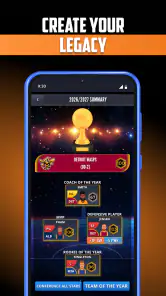
That said, the recurring value comes from the player, not just the app. I have to bring my own goals to the career. If my only objective is to reach success as quickly as possible, the process can become mechanical. If I instead create a challenge for myself—such as developing patiently, avoiding impulsive changes, or trying to recover from a poor run—the same management structure becomes more interesting.
This is where it compares favorably with ordinary sports games. In an arcade basketball title, replay value usually comes from improving execution, winning tougher matches, or competing against other people. Here, replay value comes from decision-making and the story that develops around the franchise. The trade-off is that there is less immediate excitement. Someone who wants direct control over players will probably get more lasting enjoyment from a traditional basketball game.
Compared with larger, more elaborate basketball management simulations, this game is easier to approach. I do not need to treat every session like a spreadsheet exercise. That makes it a better fit for casual fans and mobile players who want a meaningful sports-management layer without committing to a very demanding simulation. The cost of that accessibility is that experienced management-game players may eventually want more depth, more variety, or more detailed control than this compact format provides.
A useful long-term routine is to set a reason for returning before opening the game. I might check whether the current plan is producing steady progress, review a disappointing stretch, or decide whether a roster change is justified. This prevents the habit from becoming empty tapping. The game works best when each visit answers a question rather than merely repeating the previous session.
The audience size suggests that the concept has found a reasonable mobile following: it has passed 500K installs, with an average rating of 4.0 from about 6.3K ratings and 793 written reviews. I see those figures as evidence of interest rather than a guarantee. Ratings can tell me that the basic idea connects with players, but they cannot decide whether I personally enjoy the slower, more reflective rhythm of franchise management.
Month-to-month value also depends on tolerance for repetition. A player who enjoys comparing outcomes and refining a plan may find the loop comfortably familiar. Someone who needs constant new content or a steady stream of dramatic surprises may feel the experience flattening sooner. I would place it in the category of a game that rewards a regular habit, not one that demands daily attention through novelty alone.
The maintenance work behind a successful franchise
Running a virtual team is not completely passive. The main maintenance burden is mental: remembering what I am trying to build and resisting changes that do not support that direction. If I return after a long break without a clear idea of the current situation, the franchise can feel less inviting because I have to reconstruct my own reasoning.
That is why I prefer to make changes in a deliberate order. I first identify the most visible weakness, then make a limited adjustment, and finally give the team enough time to show whether the change helped. This workflow is more reliable than changing several things at once. It also makes the game more educational, because I can connect an outcome to a specific decision instead of guessing.
Another useful habit is keeping expectations realistic. A management game can make improvement feel slower than an action game because progress is measured across a sequence of choices rather than one brilliant moment. I enjoy that patience, but I would not recommend it to a friend who wants instant rewards after every session.
The app is free, but the presence of optional purchases deserves attention during long-term use. The listed items cost between $0.99 and $37.99 each, which creates a wide gap between a casual experiment and a substantial purchase. My advice is simple: treat spending as optional support for a game you already enjoy, not as a requirement for discovering whether the management loop suits you. If the game only feels worthwhile after paying, it has not passed the more important test.
Device compatibility is also part of maintenance. Since the minimum operating system is Android 7.0, many older devices can potentially run it, but performance and comfort still depend on the phone or tablet itself. For a management game, a clear screen and responsive navigation matter more than high-end graphics, so I would prioritize readability and ease of use when deciding where to play.
Where fatigue can appear
The biggest source of fatigue is repetition without a personal objective. Reviewing a franchise, making a choice, and checking the next result can be enjoyable for a long time, but the sequence needs context. If every session feels identical, the game starts to resemble administrative work rather than entertainment.
I also noticed a potential tension between simplicity and depth. The approachable structure is helpful at the beginning, yet it can leave experienced players wanting more layers. This is not necessarily a flaw; it is a matter of fit. The same clarity that welcomes a casual basketball fan may disappoint someone looking for an exhaustive simulation with a huge number of interconnected systems.
Another limitation is the distance from the sport itself. If what I love most is controlling movement, timing a shot, or defending an opponent directly, a general manager game cannot replace that experience. Even a very satisfying franchise decision does not provide the physical immediacy of playing a match. I would choose a conventional basketball game instead when my mood calls for action rather than planning.
The game can also punish impatient thinking. A player who constantly reacts to the latest result may create an unstable franchise, then blame the game for the lack of progress. I found it more rewarding to judge patterns and direction than isolated outcomes. That makes the experience more thoughtful, but it also means the game asks for a little discipline from the player.
For users who dislike in-app purchases, the free-to-play structure may create some hesitation even if they never buy anything. The safest approach is to decide on a personal spending limit before playing and to remember that the core question is whether the management experience is enjoyable on its own. The price of the app is free, but optional purchases can still affect how comfortable the experience feels for different players.
Parents may appreciate the Everyone content rating, especially when looking for a sports-themed game that does not present itself as an intense action title. Still, age suitability is not the same as universal appeal. Younger players who want visible basketball action may lose interest, while adults and older children who enjoy planning may connect with it more quickly.
Who should keep it installed
I would recommend keeping this game on an Android phone for anyone who enjoys sports strategy, roster-building decisions, and the feeling of guiding a team over time. It is particularly suitable for players who like short, purposeful sessions and who are willing to accept gradual progress. The best audience is not necessarily the most knowledgeable basketball fan; it is the person who enjoys weighing options and living with the results.
I would be more cautious recommending it to someone who wants multiplayer competition, constant visual action, or a deep simulation that can occupy every spare hour with new layers. A larger management game may be better for the dedicated strategist, while an on-court basketball title will be better for anyone seeking direct control. Ultimate Pro Basketball GM sits between those extremes: accessible enough for a casual player, but structured enough to reward careful thinking.
One of its less obvious strengths is that it can serve as a low-pressure introduction to sports management. It gives a player a chance to discover whether they enjoy the responsibilities of a general manager without first committing to a complicated, intimidating simulation. The corresponding weakness is that a newcomer who wants a full professional-management education may eventually outgrow its simpler approach.
I also think it works well as a “return to the hobby” game. Someone who once enjoyed franchise modes but no longer has time for long console sessions can use it to recover that feeling in smaller doses. The important condition is accepting that mobile convenience does not remove the need for attention. The decisions still matter, and careless play can make the career less satisfying.
My long-term verdict
After the novelty fades, Ultimate Pro Basketball GM earns lasting space only if I genuinely enjoy the role of planner. Its strongest quality is the clear identity of the experience: I am managing a basketball franchise, not pretending to play a full match through a simplified control scheme. That focus gives the game a reason to exist and makes its best sessions feel personal.
Its weaknesses are equally tied to that identity. The pace can feel slow, repeated management tasks can become tiring, and players seeking deeper simulation or direct basketball action may find a better match elsewhere. The optional purchase range also means I would approach the free-to-play model with awareness rather than assuming every player will have the same experience.
Games2rk has made a sports game that is easy to try and potentially rewarding to revisit. With over 500K installs, it has clearly attracted a substantial mobile audience, and its 4.0 average indicates a generally favorable reception without suggesting that it will suit everyone. I read that as a fair reflection of the product: solid and focused, but dependent on personal taste.
My recommendation is to install it if you want a compact franchise-management game, then judge it by your return habit rather than your first exciting session. Give yourself time to see whether you enjoy reviewing the team, making measured changes, and building a direction. If that routine still feels satisfying after the early curiosity disappears, the game deserves a permanent place in your sports folder. If you keep wishing you could control the players on the court or demand more detailed systems, it is better to move on without forcing the fit.
Pros
- Deep roster management with meaningful trades
- contracts
- and draft decisions.
- Detailed statistics help you evaluate players and build long-term strategies.
- Multiple league settings offer flexibility for different management styles.
- Season simulation keeps games moving quickly without sacrificing control.
- Offline play makes it convenient for managing your team anywhere.
Cons
- The interface can feel dense and take time to learn for new players.
- Progression may become repetitive after several seasons.
- Some advanced features are locked behind the paid version.
- Long-term saves can require significant time and attention to maintain.
- The game focuses on management
- with no direct on-court gameplay.

- Category
- Sports
- Version
- 2.2.2