Tuk Tuk Rickshaw - Auto Game
- 16.00
- 3.6
- Installs
- 5.00M
- Price
- Free
Screenshots
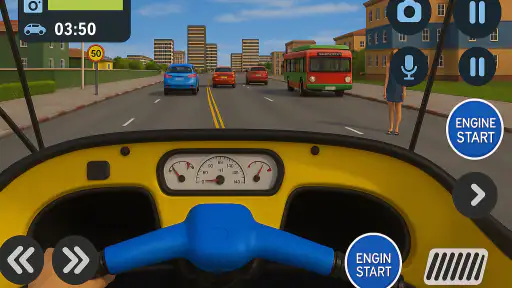
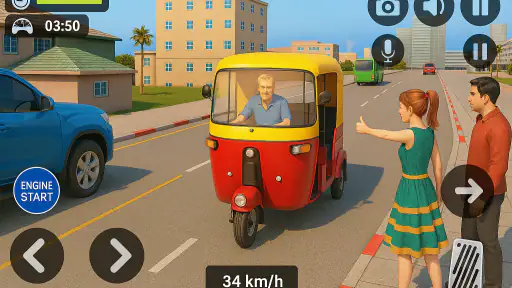
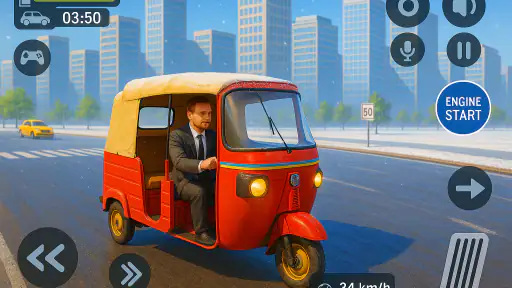
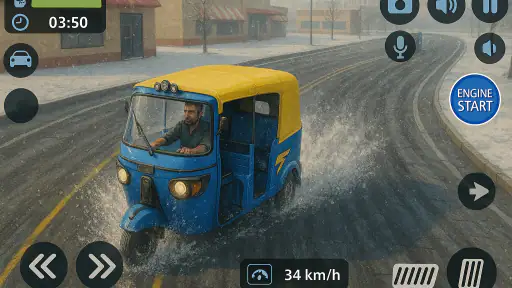
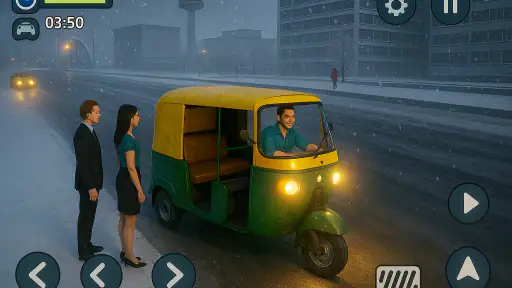
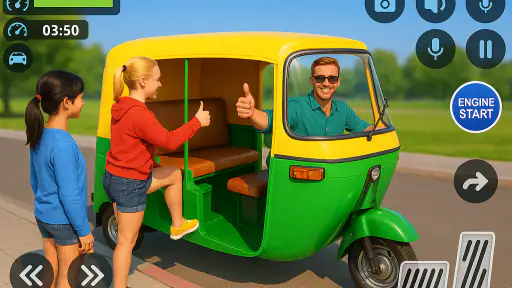
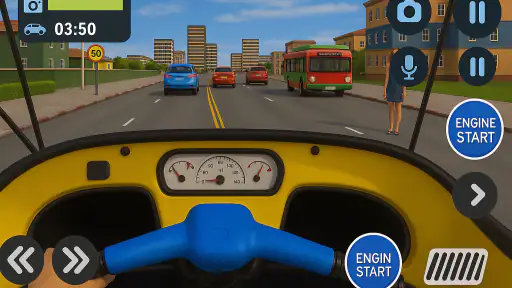
Analysis by Reviewed
I approached Tuk Tuk Rickshaw - Auto Game expecting a light trivia-style driving game, and that first impression is close to the truth: it combines passenger and parcel transport with the familiar tuk-tuk setting. The result is an easy-to-understand game that works best when I want something casual rather than a deep simulation or a demanding quiz challenge.
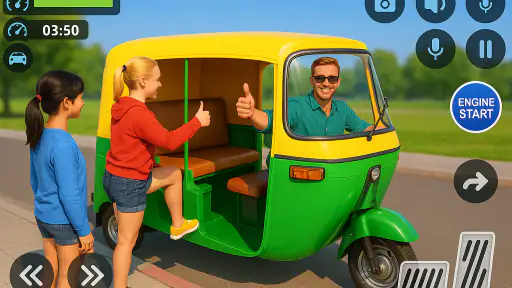
The basic appeal is immediate. You take on the role of a rickshaw driver, move people or deliveries, and try to make steady progress through the available play. That simple premise makes it approachable for a first-time player, including younger users who prefer clear objectives over complicated menus. I also found that its everyday transport theme gives the game more personality than a completely generic trivia title.
It is a free Android trivia game from Emerging Games Studio, rated for Everyone. The game has reached over five million installs, while its average rating sits at 3.6 from around four thousand ratings. Those figures suggest a broad audience, but also a mixed experience: plenty of players have found it worth trying, yet it is not the sort of release I would recommend blindly to every mobile gamer.
What the first session feels like
My advice is to begin with modest expectations. This is not a full vehicle simulator with the depth of a serious driving game, and it is not a traditional question-and-answer trivia app either. Its identity comes from combining transport tasks and tuk-tuk presentation in a compact mobile format. If you enjoy short sessions built around completing a simple job, that structure is easy to appreciate.
The first meaningful goal should be completing one passenger or parcel task without rushing. Instead of treating the opening minutes as a test of speed, I would use them to understand how the game presents destinations, movement, and task completion. That approach makes the early experience less confusing and gives you a better sense of whether the controls suit you.
There is a useful distinction between playing for relaxation and playing for mastery. For relaxation, the transport theme and straightforward objective are enough to create a pleasant break. For mastery, the game may feel limited if you are looking for highly detailed traffic behavior, realistic vehicle handling, or a large strategic layer. I would place it closer to a casual arcade experience than to a serious rickshaw simulation.
The store presentation describes the central activity as transporting passengers and parcels. That matters because it sets the right expectation: the satisfaction comes from finishing jobs, not from discovering a large narrative campaign. I enjoyed it more when I treated each assignment as a small self-contained challenge rather than expecting a long story to unfold around the driver.
Starting without overthinking the menus
After installation, I recommend looking for the most direct route into a transport task rather than spending time inspecting every option. The game is easier to understand through interaction than through speculation. Once a passenger or parcel objective appears, focus on identifying what the game considers the destination and what action confirms completion.
A first-time player may wonder whether the title is mainly about answering questions because it appears in the trivia category. In practice, the transport premise should guide your expectations more strongly than the category label. I would not install it specifically for a conventional trivia database, timed quiz rounds, or general-knowledge practice. Its appeal is the tuk-tuk job loop and the casual challenge around carrying out those jobs.
The game is free to download, which makes trying it low-risk. It does include optional in-app purchases ranging from $1.99 to $17.99 per item. I would avoid spending anything during the first session. Play long enough to decide whether the driving and delivery rhythm are enjoyable on their own, because a purchase cannot fix controls or pacing that do not suit you.
For families, the Everyone content rating makes the game easier to consider for a broad age range. I would still let a child explore the purchase screens with an adult nearby, not because the theme is unsuitable, but because free games with optional purchases deserve the same basic supervision as any other app involving spending.
How I reached the first successful delivery
The most reassuring way to begin is to handle the first assignment as a sequence of small checks. First, identify whether the current job concerns a passenger or a parcel. Next, observe where the game directs you. Then move carefully enough to keep the destination in mind instead of focusing only on speed. Finally, look for the visual or text cue that confirms the task has ended.
This sounds obvious, but it prevents a common beginner mistake: moving around without knowing what counts as progress. In a transport game, the difference between “I am driving” and “I am completing the job” is important. I found the session more satisfying once I treated each trip as a delivery workflow rather than simply wandering through the environment.
My practical tip is to learn the turning feel before attempting to optimize a route. A tuk-tuk-style game can feel different from a standard car game, especially when the screen is busy or the destination is not immediately clear. Gentle steering and deliberate movement are more useful at the beginning than trying to finish every task as quickly as possible.
Another useful habit is to pause mentally at the start of every new job. Ask yourself three questions: who or what am I transporting, where is the endpoint, and what will tell me that I succeeded? This small routine reduces wasted movement and is particularly helpful for younger players or anyone unfamiliar with mobile driving controls.
When the first task is complete, do not immediately assume that every later challenge will work exactly the same way. Passenger and parcel assignments may feel similar at a broad level, but the reason to play each one is slightly different. Passenger transport gives the game a more personal taxi-like identity, while parcels make the activity feel more like a delivery route.
Where new players can become confused
The biggest potential confusion is the relationship between the category and the actual play. Someone searching for a pure trivia quiz may be disappointed because the tuk-tuk transport setting is the main attraction. Conversely, someone looking for a casual driving game may find the trivia label unusual. I would judge it by the transport experience, not by expectations formed from the category name alone.
Another point of friction is knowing how much precision the game expects. New users often assume that faster driving is automatically better, but casual transport games usually reward reaching the objective more than simply moving at maximum speed. My approach is to prioritize control, destination awareness, and successful completion until the movement feels natural.
It is also easy to mistake a short session for a lack of content. A game designed around small passenger and parcel jobs may be intended for quick breaks rather than marathon play. If I have ten minutes to fill, this format can work well. If I want a long-term progression system with extensive customization, detailed maps, or realistic logistics, I would choose a different type of game.
Players should also understand what the game is not designed to replace. It is not a route-planning tool, not a real-world driving lesson, and not a substitute for a dedicated quiz app. Its value is entertainment built around a recognizable transport role. Keeping that boundary in mind makes the experience feel more coherent.
Small habits that improve the experience
I found three habits especially useful. The first is to slow down whenever the destination is unclear. Continuing at speed may create more confusion than progress. The second is to separate learning the controls from judging the game. A few minutes of adjustment can make the difference between “this feels awkward” and “I understand what the game wants.”
The third is to use passenger and parcel tasks as different kinds of short sessions. When I want a more people-focused role-play feeling, I choose passenger transport. When I prefer a simple objective with less social framing, a parcel job feels more direct. This is a small distinction, but it helps prevent the activities from blending into one repetitive loop.
I would also recommend keeping the first play session free of purchase decisions. Since optional items can cost between $1.99 and $17.99, the sensible test is whether the basic game already provides enough enjoyment. If the core transport tasks feel satisfying without spending, any later purchase can be considered as an optional convenience rather than a requirement for discovering the game.
For a child using the game, an adult can make the first session more enjoyable by explaining the job loop in plain language: pick up or accept the assignment, follow the destination, and finish the transport. That is more helpful than giving detailed instructions about speed or scoring before the player understands the basic objective.
Who will enjoy it, and who should skip it
I think this game suits players who like casual vehicle-themed games, short delivery challenges, and familiar everyday settings. It is also a reasonable choice for someone who wants a free title that can be understood quickly without committing to a complicated role-playing system. The Everyone rating supports its broad, accessible presentation.
It may work particularly well during short breaks. Imagine waiting for an appointment with only a few minutes available: starting a passenger or parcel task gives you a clear activity with a natural stopping point. You do not need to prepare a long strategy or remember an elaborate story. That makes the game more convenient than a large open-world driving title when time is limited.
I would skip it if your main goal is serious simulation. Drivers who want realistic traffic rules, detailed vehicle tuning, authentic route management, or a richly modeled city will probably find more satisfaction in a dedicated simulator. I would also skip it if you specifically want a pure quiz game, because the tuk-tuk transport concept is more central than conventional trivia questions.
Players seeking competitive online matches may also want to look elsewhere. The appeal here is the individual transport task, not a head-to-head contest that I would use as the main reason to return. Likewise, people who dislike repeated short jobs may find the structure too narrow after the novelty of the setting fades.
How it compares with familiar alternatives
Compared with a standard trivia app, this game offers more physical context and role-play. A quiz app is usually better for practicing facts, testing general knowledge, or competing through questions. This title is better when I want the feeling of carrying out a small transport assignment and prefer an active game loop over simply selecting answers.
Compared with a realistic driving simulator, it is easier to approach and less demanding. That is a strength for casual players, children, and anyone who wants a quick session. The trade-off is that players who enjoy detailed physics, vehicle maintenance, or complex road systems may find the experience too lightweight.
Compared with a general taxi or delivery game, the tuk-tuk theme gives this one a distinct identity. The setting is not just a cosmetic label; it shapes the kind of role I am imagining while playing. However, the theme alone cannot carry the experience forever. Long-term enjoyment depends on whether the transport tasks remain engaging for you.
My recommendation is therefore situational. Choose it over a quiz app when you want transport role-play, and choose it over a serious simulator when you value simplicity. Choose a different game when you need deep progression, realistic driving, or a broad competitive system.
Technical details worth knowing before installing
The game was released on December 28, 2018, and its current version is 1.0.29. It requires Android 7.0 or later, so owners of older devices should check compatibility before planning to play. These details make it a realistic option for many Android users, but the experience can still vary depending on how comfortable you are with the controls and the screen layout on your particular phone.
Emerging Games Studio is the developer behind the release. The title has attracted over five million installs, which tells me that its tuk-tuk transport idea has reached a substantial audience even though the average rating of 3.6 shows that reactions are not universally enthusiastic.
I would interpret that average carefully rather than treating it as a final verdict. A middling score can reflect differences in expectations: one player may enjoy a simple passenger game, while another may expect a polished simulator or a conventional trivia experience. My own recommendation depends less on the number and more on whether the game’s compact transport loop matches what you want from a mobile title.
My next-step recommendation
Install it if you are curious about a casual tuk-tuk game and want to test the idea without paying upfront. On the first launch, go straight to a passenger or parcel task, move carefully, and finish one complete assignment before judging the game. That first successful delivery is the best measure of whether the controls and pacing feel comfortable to you.
After that, try both sides of the transport theme. A passenger task can show whether you enjoy the taxi-like role, while a parcel task can reveal whether you prefer a more direct delivery objective. If both feel pleasant in short sessions, the game has probably found its place on your phone. If the basic movement already feels frustrating, more time or optional purchases are unlikely to change your opinion.
My final view is positive but specific: this is a casual tuk-tuk transport game, not a full simulator or a pure trivia quiz. I like its accessible premise, its suitability for short breaks, and the simple satisfaction of completing a job. I would recommend it to first-time players who want an easy, free experiment, while steering demanding simulation fans and dedicated quiz players toward alternatives that match their goals more closely.
Pros
- Simple controls make it easy for casual players to start driving.
- Short levels are convenient for quick gaming sessions.
- Bright city environments give the game a cheerful visual style.
- Traffic challenges provide a satisfying test of timing and reflexes.
- Runs well on many mid-range devices with modest hardware requirements.
Cons
- Repeated routes and objectives can make the gameplay feel predictable.
- Frequent advertisements may interrupt the experience between levels.
- Steering can feel imprecise when avoiding vehicles in busy traffic.
- Progress may become grindy if upgrades require repeated level completion.
- The game may offer limited depth for players seeking a realistic simulator.
- Category
- Trivia
- Version
- 1.0.29