Tribal Glory
- 799.00
- 4.7
- Installs
- 100.00K
- Price
- Free

Screenshots
Analysis by Reviewed
Tribal Glory is the kind of role-playing game I open when I want progress without committing to a long, uninterrupted session. Developed by Tribal Glory Studio, it presents itself as a tribal-themed idle RPG built around collecting heroes, making strategic choices, and watching a team grow over time. That sounds familiar on paper, but the important question is whether the experience feels rewarding when I am actively playing and when I am simply checking in between other tasks.
After spending time with it, my impression is that its appeal depends heavily on what you want from a mobile RPG. If you enjoy assembling a roster, improving characters gradually, and making decisions around a team rather than controlling every second of a battle, it has a comfortable rhythm. If you are looking for a highly interactive action game, deep real-time competition, or a completely pressure-free progression model, this is probably not the best match.
The game is free to download and aimed at a Teen audience. Its current version is 1.0.15, and it requires Android 7.0 or later. The public response is encouraging, with a 4.7 average from around 20 thousand ratings and more than 100 thousand installs. Those figures suggest that the basic loop is connecting with players, although they do not answer the more important questions about long-term balance, spending pressure, or how satisfying the later stages become.
How Tribal Glory feels to play day after day
An idle RPG that rewards planning more than reflexes
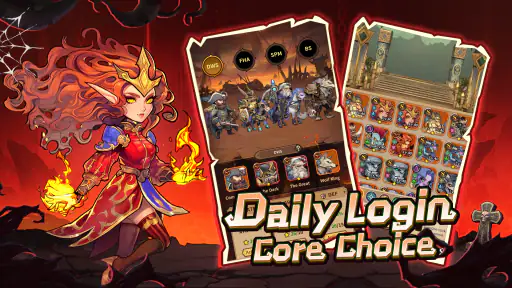
The central appeal is the combination of idle progress and team management. Instead of expecting me to remain in combat constantly, the game is designed around returning to collect progress, strengthen heroes, and decide what to do next. That makes it easy to fit into a busy day. I can imagine checking it during a commute, after finishing work, or while waiting for an appointment, then making a few meaningful decisions without needing a full gaming session.
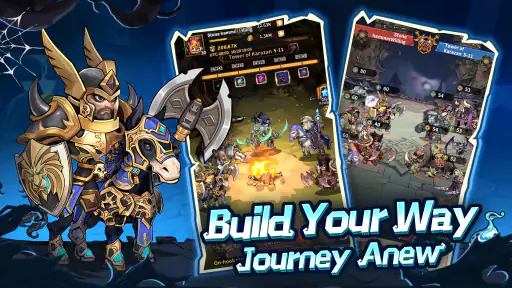
That convenience comes with a trade-off. The less direct control a game gives me, the more important its decisions become. In a traditional action RPG, a strong player can sometimes overcome a weak character through timing and skill. In an idle RPG, preparation carries much more weight. Hero selection, upgrades, formation choices, and the order in which I invest resources matter more than quick reactions. Tribal Glory is therefore best approached as a planning game with role-playing decoration, not as a miniature console adventure.
The tribal setting also gives the presentation a distinct identity. I found it more memorable than a completely generic fantasy backdrop, even though the real reason to continue is the progression loop rather than the theme alone. The setting helps the roster and battles feel connected, but it does not remove the familiar structure of collecting characters and improving a squad.
Building a roster without wasting early resources
One of the most useful habits is to resist upgrading every hero as soon as that option appears. Idle RPGs often make early improvements feel cheap and exciting, but spreading resources across too many characters can leave the main team underpowered. I had better results when I treated the roster as a set of possible roles instead of assuming every new recruit deserved immediate investment.
A practical approach is to choose a dependable core team first, then keep a reserve of resources for a hero who changes how the group functions. A character who improves survival, control, or damage consistency may be more valuable than one who simply has a higher-looking attack figure. This is especially important for players who do not intend to spend money, because inefficient upgrades can create a delay that feels much worse than the original decision.
Another useful tip is to judge a hero in the context of the whole formation. A character that looks unimpressive alone may become valuable when paired with abilities that protect, amplify, or support the rest of the group. Conversely, collecting several individually strong heroes does not guarantee a balanced team. I recommend testing the roster gradually rather than replacing the entire lineup whenever a new option appears.
What the idle structure changes about progression
The idle format makes progress feel steady, but it can also make the game feel passive. When I want to relax, that is a strength. When I want a challenge that demands constant attention, it becomes a limitation. The most satisfying moments come from making a smart adjustment and seeing the team overcome a barrier later, not from controlling a dramatic battle second by second.
Players should also think about how often they want to check in. Someone who opens the game briefly several times a day may get more from its structure than someone who plays once a week. Regular attention helps prevent resources from sitting unused and makes it easier to respond when a stage, upgrade, or roster change creates a new opportunity. It is not necessary to treat the game like a full-time obligation, but completely ignoring it for long stretches weakens the main reason to choose an idle RPG.
For an everyday example, I would use it as a short evening routine. I could collect accumulated rewards, review which heroes are closest to an upgrade, try a different formation against a difficult encounter, and then leave the game running its longer progression cycle. That is a pleasant ten-minute activity. It is less satisfying if I expect a substantial story chapter or a mechanically rich session every time I open it.
Spending, free play, and the pressure question
The game is free, but it includes in-app purchases ranging from $0.99 to $99.99 per item. That is the key financial context I would want to understand before installing it. The existence of purchases does not by itself prove that free players are treated unfairly, and it would be irresponsible to claim that spending is either essential or irrelevant without stronger evidence. What I can say is that the broad price range means players should approach optional offers carefully and decide on a personal limit before buying anything.
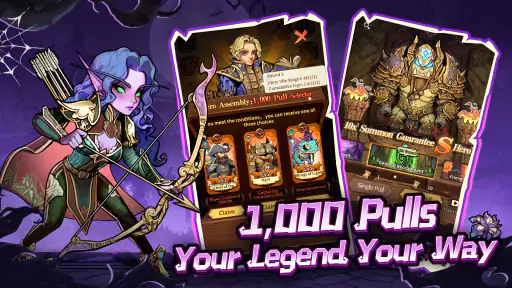
My preferred way to play would be to treat purchases as optional acceleration rather than part of the basic experience. In an idle RPG, almost every purchase can feel tempting because it promises to shorten waiting, improve a roster, or make a difficult stage more comfortable. That can turn a relaxed game into a sequence of small spending decisions. I recommend playing long enough to understand the normal pace before considering a purchase. Otherwise, it is difficult to know whether an offer solves a real problem or simply creates urgency.
A useful personal rule is to avoid buying immediately after a failed stage. Frustration makes convenience offers appear more valuable than they really are. I would instead change the formation, review which upgrades are being neglected, and try again after the normal progression cycle. If the game remains enjoyable without spending, that is a healthier foundation for deciding whether an optional purchase is worth it.
Players who want a completely transparent one-time purchase may prefer a premium RPG without recurring offers. Tribal Glory is more suitable for someone who accepts the free-to-play model and is comfortable ignoring purchases when they do not fit the budget. Families should also remember its Teen content rating and discuss spending expectations before allowing younger players to use a payment method connected to the device.
Fairness in a game built around collecting heroes
Competitive fairness is harder to judge from the basic concept alone. A hero-collection RPG can be enjoyable as a mostly personal progression game, but the balance becomes more sensitive if players are compared directly through leaderboards, events, or battles. Stronger characters obtained through spending may affect how fair competition feels, especially when a player is trying to compete rather than simply advance at their own pace.
I would separate two questions. First, can I enjoy the campaign and roster-building loop without paying? Second, can I compete at the highest level without paying? Those are not the same standard. A game may offer a satisfying free experience while still giving spenders faster access to improvements. For a casual player, that may be acceptable. For someone who treats rankings as the main purpose, it may be a serious concern.
My advice is to decide what “winning” means before investing time or money. If winning means building a team that handles personal progression efficiently, careful resource management may be enough to keep the experience enjoyable. If it means matching players who spend freely, I would be much more cautious. Do not purchase based on the assumption that a single upgrade will permanently solve progression or guarantee a competitive position.
The strongest fairness-minded strategy is to focus on account efficiency. Keep the main group coherent, avoid impulsive upgrades, and compare the practical effect of an improvement with its cost. A small purchase that saves time may be reasonable for one player and pointless for another. The right choice depends on whether the saved time improves the experience or merely encourages more frequent checking.
What I would want to learn before committing long term
There are several long-term questions I would keep in mind. How generous does progression feel after the early excitement fades? How often does the roster expand? Do older heroes remain useful, or does each new addition make previous investments feel outdated? These questions matter more than the initial impression because collection games are judged by how well they respect earlier decisions.
I would also pay attention to how the game handles difficulty walls. A reasonable wall can encourage experimentation, while an abrupt wall can make the player feel pushed toward a purchase. The best response is to identify whether the obstacle can be addressed through better team construction, patient resource gathering, or a genuinely necessary upgrade. If every solution appears to involve spending, the experience becomes less appealing for free players.
Another unknown worth considering is how much variety remains once the main team is established. A roster game needs reasons to revisit older characters and rethink formations. If the most effective solution becomes obvious and never changes, the strategic side can become repetitive. On the other hand, if different situations reward different combinations, the collection system has more lasting value.
I would not treat the strong rating as a guarantee that the game will suit everyone. Ratings are useful for showing that many players are enjoying the current version, but personal preferences still matter. Someone who dislikes idle mechanics may find the game too hands-off even if the community response is positive. Someone who enjoys incremental progress may appreciate exactly that slower, less demanding structure.
Who should play it and who should skip it
I would recommend Tribal Glory to players who like roster-building, gradual upgrades, and short check-in sessions. It is particularly suitable for people who want a role-playing game that can sit alongside daily life rather than demanding constant concentration. The tribal presentation adds flavor, while the hero-focused structure gives me enough decisions to feel involved without requiring fast reflexes.
It is also a reasonable choice for someone exploring idle RPGs for the first time, provided they understand the format. The most important expectation is that progress is designed to accumulate rather than arrive in one dramatic burst. Patience and resource discipline are more useful here than repeatedly searching for a shortcut.
I would skip it if my priority were real-time combat, a large open world, or a story that carries the entire experience. I would also hesitate if I know that collectible characters and purchase offers make me spend impulsively. In that case, a premium role-playing game with a fixed price may provide a more comfortable relationship with the hobby, even if it offers less ongoing progression.
Compared with a conventional turn-based RPG, this game puts more emphasis on account development and less on carefully directing every individual encounter. Compared with a competitive multiplayer title, it offers a calmer pace and less immediate pressure, but it may feel less exciting for players who need human opponents and constant tactical surprises. Its best alternative is not one specific rival; it is any game whose progression style better matches the amount of control and commitment a player wants.
My trust verdict after weighing the trade-offs
My overall view is cautiously positive. Tribal Glory has a clear reason to exist: it turns hero collection and team improvement into a manageable idle routine, with enough strategic choice to make roster decisions matter. The free entry point makes it easy to try, and the current player response gives it a credible starting point. I enjoyed it most when I treated it as a small daily game rather than expecting it to replace a full-scale RPG.
The main caution is financial and psychological rather than technical. The purchase range reaches from $0.99 to $99.99 per item, so I would not install it without being prepared to ignore offers that do not fit my budget. I also would not assume that a good rating answers questions about late progression or competitive balance. Those are areas where each player should observe the experience personally and avoid spending before understanding the normal pace.
My practical recommendation is to play patiently, build one coherent team, and judge the game by how enjoyable it remains without purchases. If collecting heroes and making gradual strategic adjustments feels rewarding, Tribal Glory can become a pleasant companion for short sessions. If the waiting, repetition, or temptation to accelerate progress bothers you, another style of role-playing game will be a better investment of your time.
For me, the game earns a trial rather than an unconditional recommendation. Its strongest quality is the way it fits small gaps in the day while still giving me decisions to make. Its biggest weakness is that the same idle structure can feel passive, and the presence of optional purchases means I need to set boundaries. With those expectations in place, Tribal Glory is a sensible free role-playing game to explore, especially for players who prefer thoughtful roster management over constant action.
Pros
- Strategic battles reward careful planning and smart unit placement.
- The tribal theme gives the game a distinctive visual and narrative identity.
- Multiple units and upgrades provide room to develop different play styles.
- Short gameplay sessions make it suitable for playing on mobile devices.
- Progression offers clear goals that encourage regular play.
Cons
- Some upgrades and progress may require considerable time or repeated battles.
- The interface can feel crowded when managing several gameplay systems.
- Later challenges may become difficult without investing in stronger upgrades.
- Online features may be affected by connection quality or server availability.
- Players looking for fast
- action-focused combat may find the pace too slow.

- Category
- Role Playing
- Version
- 1.0.15