Toy Triple - 3D Match Puzzle
- 527.00
- 4.6
- Installs
- 1.00M
- Version
- 6.7.8

Screenshots

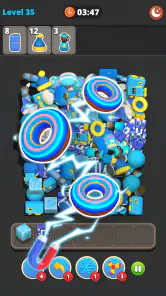

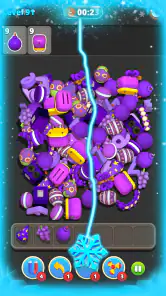
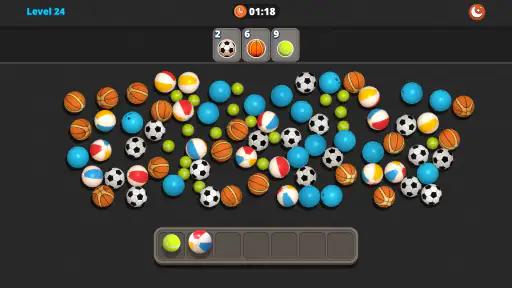
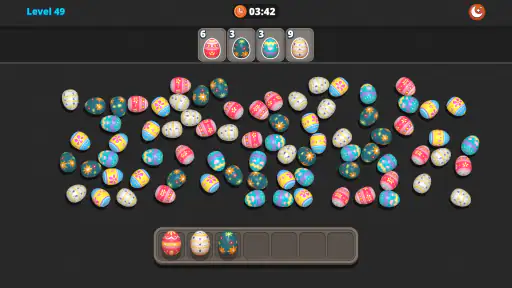
Analysis by Reviewed
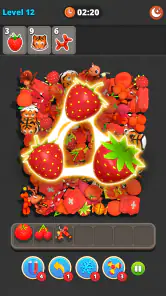
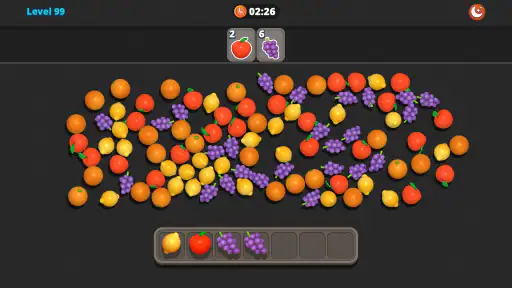
I picked up Toy Triple - 3D Match Puzzle expecting a simple way to fill a few spare minutes, and that is exactly where it makes the most sense. It is a free board game from Skylink Studio built around finding three matching three-dimensional objects. The idea is easy to understand, but the changing layouts give it enough structure to feel more purposeful than endlessly tapping through a basic matching screen.
What stood out to me was how naturally it fits into a shared household device. One person can play a level while waiting for dinner, then hand the phone to someone else without needing a long explanation. The visual style is approachable, the age rating is Everyone, and the short-puzzle format makes it suitable for casual players who do not want a complicated ruleset. Still, I would not treat it as a competitive family game. It works better as a turn-taking puzzle than as a coordinated multiplayer experience.
The game is free to install, although optional in-app purchases range from $0.99 to $89.99 per item. That makes the basic barrier low, but it also means I would pay attention before letting a child use a shared device. My overall impression is positive: Toy Triple is a pleasant matching game for relaxed sessions, especially when you enjoy visual sorting and gradual brain-training challenges more than fast action.
How Toy Triple fits into a shared household
A puzzle that works well in short turns
The strongest household use case is a phone or tablet that moves between people during ordinary downtime. I can imagine one family member playing while travelling, another trying a level after school, and an adult returning to it later in the evening. Because the central task is immediately visible, the next player can understand what is happening without learning a large set of rules or waiting for a campaign explanation.
That simplicity is useful when attention is divided. If someone is cooking, commuting as a passenger, or taking a short break, a level can provide a contained activity rather than demanding a long uninterrupted session. I found the three-object matching format calmer than a typical action game, and it gives the player a clear visual goal: scan the board, identify a trio, and decide what to remove next.
There is also a small social element in watching another person solve a crowded board. A child may ask an adult to help spot a hidden match, while an adult may enjoy seeing how quickly a younger player recognizes patterns. The game does not need to become a formal contest for that interaction to be enjoyable. In my experience, the best shared moments come from discussing which object to select first, not from comparing who is better.
Why it is not really a multiplayer family game
It is important to set expectations. Toy Triple is a board-style puzzle for individual play, not a game I would choose when everyone wants simultaneous participation. There is no reason to expect a shared live board or coordinated team round from its basic format. If your household is looking for a game where several people make decisions together at the same time, a local multiplayer title would be a better match.
Instead, this app suits a pass-and-play rhythm. One person can attempt a level, explain a choice, and let the next person take over when the device is free. That arrangement works particularly well when players have different skill levels because nobody has to wait through a full competitive match. The downside is that the experience can feel solitary if you are hoping for conversation, shared objectives, or a visible family progress system.
I would also avoid turning every session into a performance test. The three-dimensional objects and busy arrangements reward careful scanning, but a younger or less experienced player may need more time. A useful household rule is to let the current player finish a level without unsolicited hints, then discuss the board afterward. That keeps the puzzle personal while still making it easy to enjoy together.
Setting sensible boundaries before handing over the device
The most practical setup question is not how to learn the matching rule; it is how to manage a shared device. Since the game is free to start and includes optional purchases, I would check the device’s purchase protections before a child plays. I would not assume that an Everyone rating removes the need for adult supervision around spending. Age suitability and purchase responsibility are separate issues.
If several people use one phone, I would also agree on a simple handover routine. Finish the current level where possible, avoid changing device settings, and tell the next player whether the board is in progress. This sounds minor, but puzzle games become less enjoyable when someone accidentally interrupts another person’s attempt or spends a limited resource without knowing what it does.
I would keep expectations clear about progress as well. A shared device can make it difficult to know who completed what unless players remember their own levels or use an agreed routine. I would not promise separate household identities or independent profiles unless the version on your device clearly offers them. Treating the game as a shared activity rather than a carefully separated family account avoids unnecessary confusion.
How I would coordinate play between adults and children
For mixed-age use, I would let the child choose the first object group and ask the adult to explain the reasoning only when requested. That turns the board into a visual observation exercise instead of an adult-led solution. The game’s core action is simple enough for a child to grasp, but recognizing the best order of matches can still become a useful discussion about attention, planning, and avoiding rushed choices.
One tip I found valuable is to scan the whole board before tapping. It is tempting to select the first familiar item, but a quick visual sweep can reveal several possible groups and help prevent a poor opening choice. On a shared device, this also creates a natural pause for another player to participate: one person can search for the first trio while the other checks whether a different group looks safer.
A second useful habit is to describe objects by location rather than by vague labels. Saying “the three pieces near the upper edge” is clearer than saying “those blue things,” especially when the board contains similar shapes. This makes cooperative observation easier without requiring a separate communication feature. It also helps younger players practice precise visual language.
For adults playing alone, I would use the game as a reset between demanding tasks rather than as a serious training program. The store positions it as a way to relax and exercise the brain, and I think that description is fair when treated as light mental engagement. It should not replace a structured learning tool, but it can encourage visual sorting and short-term planning in a more entertaining form.
Age context and trust on a family device
The Everyone rating makes Toy Triple approachable for a broad audience, and the absence of complex controls is helpful for children or older relatives who prefer straightforward games. I would still introduce it differently depending on the player. For a child, I would explain that free installation does not necessarily mean every optional item is free. For an older relative, I would focus on the visual matching task and allow time to become comfortable with the three-dimensional presentation.
Trust also depends on the device owner. If this is a phone used for work, banking, or private messages, I would create a clear boundary around when the game may be opened and who may use it. That is not a criticism of the puzzle itself; it is simply good shared-device practice. A casual game can be family-friendly while the phone containing it remains personal.
I would be especially careful with unsupervised use when the device has a payment method attached. The available purchase range reaches from small optional items to much larger ones, so I would rely on the device’s own purchase controls and adult oversight rather than a verbal promise from a young player. This is the main point where the free-to-play model changes the household conversation.
What the current version feels like in everyday use
The current version is 6.7.8, and the game has been available since Jul 7, 2023. Its established presence is reflected in an average rating of 4.6 from around twenty-one thousand ratings, with more than one million installs. Those figures suggest that the format has found a sizeable casual audience, although popularity alone does not guarantee that every household will enjoy the same pace or visual style.
In my daily use, the appeal comes from the balance between recognition and decision-making. Matching identical objects is accessible, but the three-dimensional presentation asks me to look carefully rather than rely on a flat row of icons. That distinction gives each board a little more texture. I can play casually, yet I still feel involved in choosing which visible group deserves attention first.
The trade-off is that visual busyness can become tiring. If you prefer clean interfaces, minimal animation, or very predictable layouts, the object-filled boards may feel less relaxing than the name suggests. I also would not choose it for a long session when I want a deep strategy system. The decisions are satisfying in small doses, but they are built around repeated matching rather than a broad set of evolving mechanics.
Where it stands beside other matching games
Compared with a traditional tile-matching game, Toy Triple feels more tactile because the pieces are presented as objects rather than only colored symbols. That makes it a better choice for players who enjoy scanning shelves, piles, or collections for visual duplicates. It is also less dependent on quick reflexes than many match-three games, so I can approach it at my own pace.
Compared with classic board games, however, it offers less social depth. There is no reason to expect the negotiation, bluffing, or direct competition found in a tabletop title. A physical matching game may be better when the goal is conversation around a table, while this app is more convenient when everyone is taking separate turns on one screen.
Compared with dedicated brain-training apps, it is more playful and less structured. I like that it does not make the session feel like homework, but players seeking detailed performance tracking, lessons, or a planned cognitive routine may prefer a specialized alternative. Toy Triple is strongest when the objective is to relax while keeping the eyes and mind occupied, not when the user needs formal measurement.
Small techniques that make the puzzle smoother
My first practical technique is to pause before making the opening match. The most obvious trio is not always the best starting point. I look for groups that are easy to identify and then consider whether removing them will make the remaining objects easier to read. This simple scan reduces impulsive taps and makes the board feel more manageable.
My second technique is to use the device orientation and viewing distance that make the objects easiest to distinguish. On a smaller phone, I hold it a little farther away when the board feels crowded instead of immediately tapping randomly. On a larger screen, I can inspect clusters more comfortably. The goal is not speed; it is reducing visual confusion before committing to a choice.
My third technique is useful for shared play: narrate the search without giving away the solution. Saying “I am checking the lower group first” lets another player follow the thought process and learn the approach. It turns a solitary puzzle into a quiet problem-solving activity while preserving the satisfaction of finding the trio independently.
A final trade-off is session length. Because the basic action is easy to repeat, it is possible to continue longer than intended. I prefer using a natural stopping point after a level or a small batch of attempts, particularly on a shared device. That keeps the game from taking over the evening and makes it easier for another household member to have a turn.
Who should install it, and who should skip it?
I would recommend Toy Triple to anyone who likes object-spotting puzzles, relaxed board games, and short sessions that require attention without demanding fast reactions. It is a good fit for a shared household device when players understand that they are taking turns rather than competing in real time. It also suits adults who want a light break and children who enjoy sorting colorful objects under appropriate supervision.
I would be more cautious if you dislike free-to-play purchase prompts, even when the initial download costs nothing. The optional purchase range means the app deserves the same spending boundaries as other games on a family device. I would also skip it if your priority is a rich multiplayer experience, a serious strategic board game, or a formal brain-training course with detailed progress analysis.
Another reason to look elsewhere is visual fatigue. The three-dimensional boards are part of the appeal, but they may be less comfortable for players who prefer uncluttered screens. In that case, a flat tile-matching game with simpler layouts could be a better everyday companion. The right choice depends less on the category label and more on whether you enjoy searching through object-rich scenes.
My household verdict
After spending time with it, I see Toy Triple as a friendly, accessible puzzle that earns its place on a casual-use device. Its best quality is the way it combines an instantly understandable rule with enough visual searching to keep each level from feeling completely automatic. It can support a quiet personal break, or it can become a low-pressure pass-and-play activity between family members.
The household experience works best with clear boundaries: decide who is using the device, protect purchases, and avoid assuming that separate family progress or live cooperation is part of the package. Those simple arrangements address the main friction points without taking away from the game’s relaxing character.
My recommendation is to try it if you want a free, approachable matching game for short turns and shared downtime. I would keep expectations realistic about its depth, social features, and optional spending. For me, it is most enjoyable as a visual reset: a few carefully chosen matches, a little concentration, and then an easy stopping point when the next person in the household wants the device.
Pros
- Relaxing gameplay suitable for short breaks
- Colorful 3D objects are easy to recognize
- Gradually increasing difficulty keeps levels engaging
- Helpful boosters can assist with challenging boards
- Simple controls make it accessible for all ages
Cons
- Some levels may feel repetitive after extended play
- Limited moves can make certain puzzles frustrating
- Boosters may be difficult to earn without extra play
- Requires focus because objects can overlap visually
- Progress may feel slow for players seeking fast rewards