The Program: College Football
- 6.40K
- 4.5
- Installs
- 500.00K
- Price
- Free

Screenshots
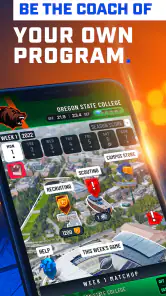


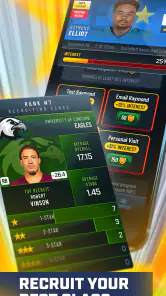
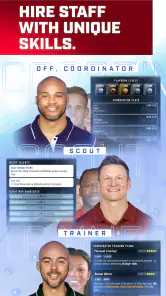
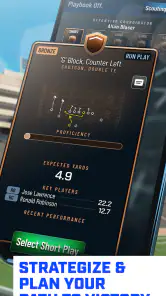
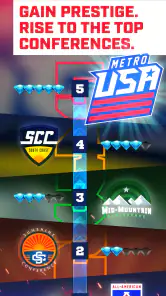
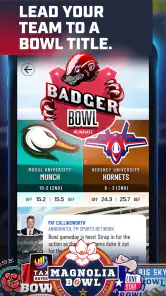
Analysis by Reviewed
College football management games can be intimidating at first. They often throw you into recruiting, schedules, tactics, and long-term planning before you understand what actually matters. The Program: College Football takes a more approachable route. I found it easiest to enjoy when I treated it less like a fast arcade sports game and more like a compact decision-making simulator in which every choice gradually shapes a college team.
Developed by Fantasy Moguls, Inc., this free sports game puts you in the role of managing a college football program. Its store summary is simply “College Football Manager,” but that description is useful because it sets the right expectation: you are not primarily controlling individual plays with rapid taps. You are making the kinds of choices that determine whether a program improves, stalls, or becomes difficult to manage.
The game is available to an Everyone audience and supports devices running Android 7.0 or later. It has built a solid audience, with more than half a million installs, an average rating of 4.5 from roughly twenty-three thousand ratings, and around six thousand reviews. Those figures suggest that the basic idea connects with many players, although the experience still depends heavily on whether you enjoy planning more than direct action.
What the first session really feels like
My first useful piece of advice is to resist the urge to make every decision immediately. The Program becomes clearer once you separate short-term actions from choices that affect the wider direction of your team. A new player can easily spend too much attention on whatever item is most visible on the screen, while the more important question is often what kind of program they are trying to build.
The appeal is in the rhythm. You review your situation, choose a direction, make a few adjustments, and then watch the consequences develop. That makes it a good fit for short sessions during a commute, a lunch break, or a quiet evening when I want something involving without the intensity of a real-time match.
It is also worth knowing what the game is not. If you want to control every snap, manually steer a player, or recreate the feeling of an action football console title, this will probably feel too indirect. The satisfaction comes from being responsible for the larger picture. You are testing judgment, not reflexes.
I also noticed that the game rewards patience more than constant experimentation. Changing direction whenever an early result looks disappointing can make the experience feel random, even when the real problem is that a plan has not had time to develop. I had better results when I made one clear adjustment, observed what followed, and only then changed course.
Choosing the right mindset before you begin
Think of your first run as a learning season rather than a perfect career. That small change in attitude removes much of the pressure. You are trying to understand how the game presents information and which decisions deserve your attention, not prove that you can build a dominant program without mistakes.
A useful habit is to keep your first choices conservative. When two options seem attractive, I usually prefer the one that gives the team a more understandable path forward instead of the flashier choice. This is especially helpful when the interface introduces several decisions close together. The goal is to learn why a result happened.
The game is free to download, with optional purchases ranging from $0.99 to $9.99 per item. I would approach those purchases as a convenience rather than a requirement during the opening sessions. First learn whether the management loop itself suits you. Spending before understanding the game can make ordinary progression feel harder to judge.
Setting up a first program without getting lost
The initial setup is less stressful if you read each screen as a question. What is the team trying to accomplish? Which area needs attention first? What information is the game asking you to weigh? Instead of tapping through quickly, I recommend pausing long enough to identify the decision that will affect the next stage.
For a first-time player, the safest approach is to establish a simple priority. You might focus on building consistency, improving a weakness, or creating a clearer identity for the program. The exact priority matters less than having one. Without it, every available option can look equally urgent.
One of the more useful habits I developed was checking the broader context before reacting to an individual result. A single win or setback can be emotionally persuasive, but it does not always tell you whether the underlying plan is working. Look at the pattern of decisions you have made and ask whether the result fits that pattern.
This is where the game differs from a typical football action title. In a conventional sports game, the next move is usually obvious: choose a play, control the athlete, and respond to what happens. Here, the important work often happens before the visible outcome. The setup phase is not a menu you rush through; it is where you decide what kind of challenge you are accepting.
A practical setup routine
I suggest using the first few minutes to create a repeatable routine. Start by reviewing the current state of the program. Then choose one main objective, make only the changes that support it, and note what you expect to happen next. This gives you a reference point when the game moves forward.
That routine also makes mistakes easier to diagnose. If the result is disappointing, you can ask whether the objective was unrealistic, the supporting decisions were mismatched, or the change simply needs more time. Without a clear starting point, every outcome blends together and the game can feel less transparent than it really is.
Another small but important tip is not to confuse more activity with better management. I found that repeatedly revisiting the same choice did not automatically improve the situation. The better use of attention was comparing the available options, selecting one, and returning later with new information.
Players who enjoy spreadsheets, long-term sports careers, or testing different strategies will probably appreciate this structure. Players who want an immediate match and a clear score at the end of every minute may find the setup comparatively slow. Neither reaction is wrong; they point to two different ideas of what makes a sports game enjoyable.
Getting to the first meaningful success
Your first meaningful success should not be defined only by a big result. For me, it was the moment I could explain why a decision had helped the program. That might mean recognizing a weakness earlier, choosing a more suitable direction, or avoiding a change that would have made the next stage harder.
To reach that point, I recommend making the first cycle deliberately simple. Pick one priority and follow it long enough to see a consequence. When you receive new information, compare it with your original expectation. Did the team move toward the goal? Did an unexpected issue appear? This turns the game into a conversation between your plan and its results.
A realistic everyday scenario is playing during a short break. I can open the game, review the current situation, make one considered decision, and leave without feeling that I abandoned an action-heavy match halfway through. Later, I return with a clearer reason for what I want to check. That stop-and-start rhythm suits the management format particularly well.
The first success also comes from learning what not to chase. A tempting option may look valuable because it promises immediate improvement, but a program can lose direction when every short-term opportunity is treated as essential. I had more satisfying sessions when I accepted that some attractive choices were distractions from the main objective.
How to evaluate progress without overreacting
Try to judge progress in groups of decisions rather than isolated moments. If you change your plan after every result, you will not know which decision produced which effect. Keeping the same general approach for a while creates a useful comparison, even when the outcome is not ideal.
This is one of the game’s less obvious strengths. It encourages a form of sports reasoning that is easy to miss in more immediate titles. You learn to distinguish between a bad choice, a reasonable choice with a poor outcome, and a good choice that needs more time. That distinction is valuable because it makes the game feel less like guessing.
I also recommend treating setbacks as information. If a chosen approach repeatedly creates the same problem, do not simply push harder. Revisit the assumption behind it. Perhaps the objective was too broad, or perhaps you gave too much attention to one part of the program while neglecting the conditions around it.
There is a trade-off here: the game can feel slower when you play carefully, but the slower pace is what gives the decisions meaning. If you want instant feedback from every tap, you may see that as friction. If you enjoy watching a plan take shape, it becomes the central pleasure.
Common points of confusion for new managers
The first confusion is usually about the player’s role. This is not a direct-control football game, so a lack of constant on-field action is intentional rather than a missing feature. Your influence is expressed through management choices and the direction you give the program.
The second is understanding why a sensible decision may not produce an immediate reward. Management games often separate the quality of a decision from the timing of its result. I found it helpful to ask whether the choice improved the program’s position, even if the next visible outcome was mixed.
A third source of friction is information overload. When several parts of the program compete for attention, start with the item most closely connected to your current objective. Do not try to optimize everything at once. A narrow plan is easier to understand and more likely to teach you something.
New players may also wonder whether optional purchases are necessary. My recommendation is to play enough of the opening experience to decide whether the core management loop is enjoyable before considering any item. The game is free, and the listed in-app purchases are separate from the basic download. That makes it reasonable to evaluate the fundamentals first.
Another practical question is device compatibility. The game requires Android 7.0 or later, so most modern Android users should begin by checking that their phone meets that requirement. The current version is 1.17.1, which is the version I would look for when deciding whether the installed copy is up to date.
When another sports game would suit you better
I would not recommend this as the first choice for someone who wants licensed-feeling presentation, instant matches, or hands-on control of every play. A traditional football action game is better for that kind of session because it gives immediate feedback through movement and timing.
I would also steer away from it if you dislike revisiting decisions or waiting to understand their effect. The Program asks you to think in terms of a developing program rather than a single isolated contest. That can be rewarding, but it is not the right structure for every sports fan.
On the other hand, it is a strong option for someone who enjoys college football as a planning challenge. It is particularly suitable if you like comparing approaches, learning from imperfect outcomes, and returning to a save with a new idea. The free entry point also makes it easy to test that style without committing to a purchase first.
Turning the first run into a longer-term routine
Once the basic loop makes sense, the next step is to stop treating each session as a separate experiment. Build a personal rule for how you make decisions. For example, I prefer to identify the main weakness, select a response, and then review whether later results support that response before making another major change.
This approach prevents a common mistake: confusing novelty with progress. Trying a completely different direction can be entertaining, but it does not always teach you more than refining the plan you already understand. I found the most useful runs came from making controlled changes and remembering what I was trying to improve.
You can also use the game as a light strategy exercise. Before confirming a decision, predict its likely benefit and its possible cost. Afterward, compare the result with both parts of that prediction. This makes the game more engaging than simply selecting the option that appears strongest.
For busy players, the best routine is probably short and consistent. A few focused decisions are more valuable than opening the game repeatedly without a purpose. For dedicated management fans, longer sessions can be used to compare different philosophies, but I would still keep notes mentally or in a simple personal record so that each run has a clear lesson.
My recommendation after spending time with it
The Program: College Football works best when you approach it as a thoughtful college football management game rather than an action simulator. Fantasy Moguls, Inc. has built an experience around choices, patience, and the gradual satisfaction of understanding a program more clearly than you did at the start.
I like that the game can fit into ordinary spare time while still offering enough strategic texture to reward attention. I also appreciate that its strongest moments are not necessarily the biggest results. Sometimes the better moment is recognizing that a decision worked for the reason you expected, or spotting a problem early enough to respond intelligently.
Its limitations are equally clear. The indirect style will not satisfy players looking for hands-on football, and the management pace can feel demanding if you want constant action. Optional purchases also mean that players should decide for themselves whether they are comfortable with the available spending choices after trying the free experience.
For a first-time user, I would install it, choose one straightforward objective, make a small number of deliberate decisions, and judge the game only after seeing how those decisions develop. If that process feels rewarding, you have probably found the right kind of sports game. If you are waiting for the next play to control yourself, a different football title will be a better match.
My final view is positive, with a clear condition: this is a game for people who enjoy building a program, not merely playing a match. The Everyone rating makes it broadly accessible, and the 4.5 average shows that many players respond well to its approach. I would recommend it to patient football fans and strategy-minded mobile players, while warning action-focused fans that its most important moments happen in the decisions between the visible highlights.
Pros
- Live scores and updates make it easy to follow games on the go.
- Schedules help users plan around upcoming college football matchups.
- Team information is organized for quick browsing and comparison.
- Useful for checking results without watching every game live.
- Simple design makes core football details easy to find.
Cons
- Coverage and features may vary between teams and conferences.
- Some updates can arrive late during especially busy game periods.
- Advertising may interrupt browsing or reduce the clean viewing experience.
- Advanced statistics may be limited compared with dedicated sports platforms.
- Notifications can become excessive unless users adjust their preferences.

- Category
- Sports
- Version
- 1.17.1