The Eminence in Shadow RPG
- 3.02K
- 4.4
- Installs
- 1.00M
- Price
- Free

Screenshots


Analysis by Reviewed
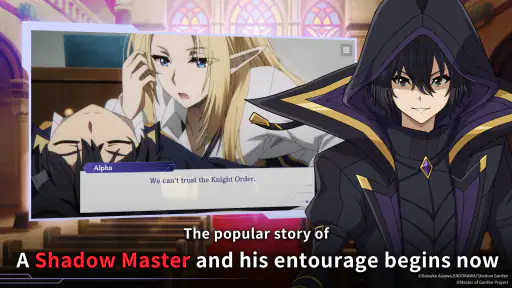
I approached The Eminence in Shadow RPG as a fan of anime-inspired role-playing games, expecting a familiar mix of character building, story scenes, battles, and repeated progression. That expectation is important because this is not trying to be a quiet, numbers-first RPG. It is built around the dramatic world of The Eminence in Shadow, with the appeal coming from seeing recognizable characters take part in a playable fantasy adventure rather than simply reading another adaptation of the story.
My first impression was that the game works best when I treat each session as a short sequence of decisions: choose how to approach the next fight, watch the team respond, collect the result, and then decide whether the reward is good enough to justify another round. That action-feedback-reward-reset pattern gives the game its identity. It is also the reason I can imagine opening it during a spare moment, while knowing that players who want a completely hands-on action RPG may find the pace less satisfying.
Starting with the world and the first battle
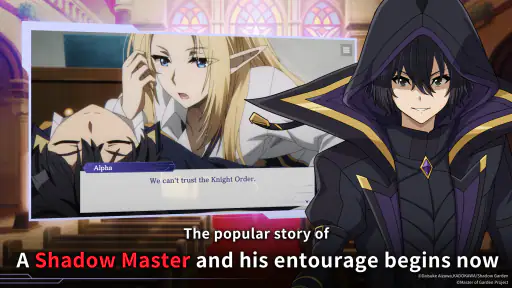
The game belongs to the role-playing category and comes from Crunchyroll Games, LLC. Its strongest invitation is easy to understand: it lets fans step into the fantasy setting associated with the anime instead of asking them to learn an unrelated original universe. That makes the opening more approachable for viewers who already recognize the tone, characters, and central premise. I did not need a long period of adjustment before understanding why the story was presenting certain personalities and conflicts.
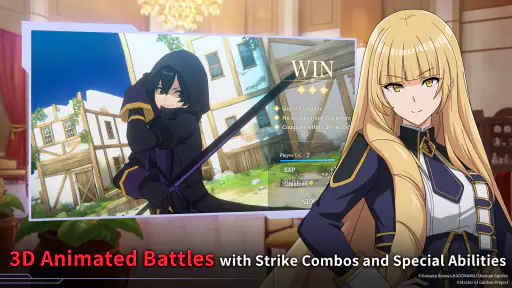
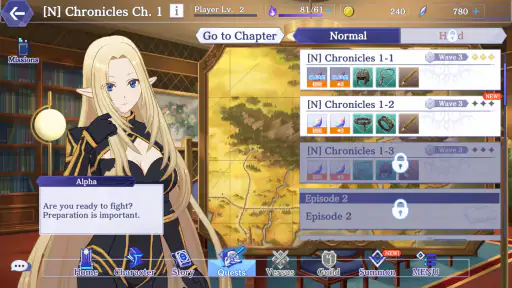
The first action in a session is usually less about reflexes and more about preparing a party for what is ahead. That distinction matters. I am not constantly moving a character around an arena or manually aiming every attack. Instead, I pay attention to the group I am using, the situation in front of me, and whether my current setup is sensible for the challenge. The game then turns those choices into a battle sequence that I can follow and influence through its role-playing structure.
That approach makes the game comfortable on a phone. I can begin a stage without needing a large uninterrupted block of time, and the controls do not demand the precision of a competitive action title. On the other hand, the reduced physical input means the excitement depends heavily on preparation and presentation. If I want every hit to come from my own timing, this is not the right kind of RPG. If I enjoy assembling a team and watching a plan produce a result, the format is much more appealing.
The anime connection also affects how I judge the early experience. A new player who has never watched The Eminence in Shadow can still understand the broad fantasy direction, but a returning fan will naturally notice more of the setting’s personality. I found that the familiar atmosphere gives ordinary progression a little more meaning. Improving a character is not only about making a number larger; it feels connected to the fantasy of building a capable group around the story’s unusual cast.
Why the first action matters more than it seems
A useful habit is to avoid treating every available battle as something to rush through automatically. Before starting, I look at whether the current team is actually ready or whether I am relying on a favorite character who does not fit the situation. This is one of the game’s less obvious trade-offs: a familiar character may be enjoyable to use, but a more balanced party can make progression smoother. The best choice is not always the character I most want to see on screen.
I also recommend paying attention to the difference between a productive attempt and a merely completed attempt. Finishing a stage is satisfying, but the more useful question is whether the result moves the team toward a clear improvement. If a session ends with a meaningful upgrade, stronger preparation for the next obstacle, or a better understanding of how the group performs together, it feels worthwhile. If I am only repeating a stage without a reason, the loop can become mechanical quickly.
This is where the game separates itself from a traditional console-style role-playing game. A console RPG often asks me to follow a long route, explore a larger environment, and remain involved in one continuous journey. Here, the experience is easier to divide into individual tasks. That makes it friendlier to mobile play, but it can also make the world feel more like a sequence of objectives than a place I am freely exploring.
The feedback rhythm: action, result, and the next decision
The most important part of the experience is the rhythm after I press into a battle. I make a preparation choice, the team performs, the game shows me the outcome, and I receive a clear signal about whether my current approach is working. That feedback is what keeps the game from feeling like a completely passive character collector. Even when the battle presentation does much of the work, I am still comparing the result with my expectations and adjusting the party for the next attempt.
When a fight goes well, the feedback is immediate enough to encourage another stage. I see that the team can handle the current level, collect the materials or progression attached to the victory, and begin thinking about the next improvement. When a fight goes badly, the failure is useful only if I respond to it. I may need to strengthen a character, change the party, or stop spending resources in a direction that is not helping. That small moment of diagnosis is more rewarding than blindly repeating the same action.
For me, the strongest sessions happen when I have a specific problem to solve. Perhaps a stage is exposing a weakness in my team, or a character is close to becoming more useful after an upgrade. The game then gives me a short-term target that connects the battle to the broader role-playing progression. This creates a satisfying chain: attempt, observe, improve, and attempt again. Without that target, the same structure can feel like routine maintenance.
The presentation also helps maintain the anime flavor. The characters are not presented as anonymous units with interchangeable labels. Their presence is part of the reason to continue, especially for people who enjoy the source material’s dramatic style. I found that this makes the feedback from a successful battle feel more personal than a simple victory screen. The reward matters, but so does seeing the group perform in the setting I came to experience.
How to make the feedback useful
My practical advice is to change one important thing at a time when a stage gives trouble. If I replace the entire party, alter every upgrade, and spend everything at once, I cannot tell what actually fixed the problem. A smaller adjustment creates better feedback. It also protects resources, which is especially useful in a free game that includes optional purchases. Progress feels more controlled when I know why an improvement worked.
Another useful approach is to separate story enjoyment from farming decisions. I prefer to move through new content when I am alert and interested, then use repeat sessions for strengthening the team. Mixing those purposes can make the game feel slower than it really is. When I know that a session is for advancing the narrative or for collecting what I need, the same battle loop feels more focused.
This is also where the game compares favorably with many conventional mobile RPGs. It is easier to fit into a daily routine than a large open-world adventure, and it does not require the same continuous attention as a real-time multiplayer game. However, it does not offer the same sense of freedom as an exploration-focused RPG, nor the same direct skill expression as an action game. Its feedback is mainly strategic and progression-based rather than physical.
Rewards that give the next session a purpose
The reward stage is what turns a completed battle into a reason to return. In my experience, the most satisfying reward is not simply receiving something new; it is receiving something that answers a current need. A useful upgrade, a stronger party option, or progress toward a more reliable team gives the session a clear conclusion. I am then able to look at the next challenge and understand what the previous battle accomplished.
This structure is familiar in mobile role-playing games, but the anime setting gives it extra motivation. I am not only improving an abstract roster. I am building a version of the cast that can handle more demanding situations. That connection helps the reward loop feel less detached from the story. It is still a progression system, but the characters give the progression a face and a personality.
The free price makes it easy to test this loop without paying at the start. The game is listed as free, with optional in-app purchases ranging from $0.99 to $99.99 per item. I consider that an important part of the decision to play. A patient player can explore the experience before spending anything, but anyone who is uncomfortable with a game offering purchases at several price levels should set a personal limit before getting deeply involved.
I would not advise spending simply because a stage feels slow. First, I would check whether the real problem is team composition, neglected upgrades, or an unrealistic expectation about how quickly the game should advance. Spending can remove friction, but it does not automatically make the strategic part more interesting. The better reason to pay would be a deliberate choice to support the experience or accelerate a progression path I already understand, not an emotional reaction to one difficult attempt.
A practical way to manage progression
I find it helpful to decide what kind of reward I am pursuing before starting a session. If I need general strengthening, I can focus on the activity that improves the team most broadly. If I am trying to make one favorite character more useful, I should accept that this may produce a less balanced group in the short term. That is a genuine trade-off: specialization can be satisfying, while a broader team is often safer for varied challenges.
I also try not to judge a reward in isolation. An item or upgrade that looks modest may become valuable when it completes a larger improvement plan. Conversely, a flashy result may not help if it does not fit the party I actually use. This is one of the game’s more important lessons for new players: the best reward is the one that improves the way I play, not necessarily the one that appears most impressive at first glance.
Compared with a standard single-player RPG, the reward cycle here is more compact and repeatable. Compared with a collectible mobile RPG, the anime identity gives the prizes more emotional context. The compromise is that repetition is part of the design. Players who enjoy steadily polishing a roster will likely appreciate it; players who want every reward to come from a unique discovery may lose interest sooner.
When a session resets and why I start again
After a battle and its rewards, the game returns me to a decision point. That reset is not a failure of the design; it is the structure that makes mobile sessions practical. I can stop after one useful result, or I can use the new resources to prepare for another attempt. The game does not need me to complete a long uninterrupted chapter before I feel that I have made progress.
A realistic everyday scenario would be a short break between errands or during a commute when I am not driving. I can check the team, attempt a stage, review the result, and decide whether the next improvement is close enough to pursue. If I have more time, I can continue into a longer progression session. If I do not, the reset gives me a natural stopping point rather than leaving me halfway through a lengthy real-time encounter.
That flexibility is one of the clearest reasons to choose this game over a larger role-playing alternative. It respects a fragmented schedule better than a game built around long exploration segments. At the same time, the reset can make the experience feel cyclical. I return to a familiar menu structure, repeat a type of battle, collect another result, and prepare again. The game needs the story, character appeal, or personal progression goal to keep that cycle from becoming empty.
I would skip it if my main goal were a deep, uninterrupted adventure with extensive exploration and constant manual control. I would also be cautious if I dislike repeating content for upgrades or if I prefer games where every victory depends primarily on my own reflexes. The Eminence in Shadow RPG is better suited to someone who enjoys planning a party, watching the outcome, and gradually making the next attempt more effective.
Who gets the most from the reset loop?
Fans of the anime are the obvious audience, but they are not the only ones who may enjoy it. I think it also suits mobile players who want a fantasy RPG that can be checked in short bursts, as well as people who like character progression without committing to a competitive multiplayer environment. The setting provides a stronger hook than an anonymous fantasy roster, while the repeatable structure makes it easier to maintain casually.
Newcomers should approach it as a character-driven mobile RPG rather than expecting a complete replacement for a console adventure. That expectation will make the resets feel useful instead of disappointing. Returning fans should still be prepared to evaluate the game on its own terms: familiarity with the cast can make the opening more enjoyable, but it does not remove the need to manage progression thoughtfully.
The age rating is Teen, so I would keep that in mind when deciding whether it is appropriate for a younger player. The game supports devices running Android 8.0 or later, which covers a broad range of Android phones, although the actual comfort of play will naturally depend on the device and the player’s tolerance for loading or battery use. On a supported phone, the main question is less about access and more about whether this particular loop matches personal taste.
My verdict on the complete action-to-reset loop
After following the cycle from first action to feedback, reward, and reset, I see The Eminence in Shadow RPG as a focused mobile role-playing game for players who value anime atmosphere and gradual team development. Its strongest quality is not a single battle or reward. It is the way a small decision can lead to a visible result, which then gives me a concrete reason to prepare for another session.
The game has reached over a million installs, with an average rating of 4.4 from around thirty-eight thousand ratings and roughly three thousand reviews. Those figures suggest that the format has found a substantial audience, but they do not replace personal judgment. I would recommend trying it because the entry cost is free, not because those numbers guarantee that every player will enjoy the repetition.
Its current version is 4.11.0, and the developer is Crunchyroll Games, LLC. For me, the practical takeaway is that this is a game to approach with a clear idea of what I want from a mobile RPG. I enjoy it more when I set a modest objective, make a deliberate party choice, and stop after the reward has served that objective. I enjoy it less when I repeat stages without knowing what I am improving.
My recommendation is simple: choose it if the anime world, party building, and short progression loops sound appealing. Give it a pass if you need constant manual action, open exploration, or a completely purchase-free structure. For the right player, the reset is not a reason to quit; it is the invitation to try again with a slightly better plan. That is the central appeal of The Eminence in Shadow RPG, and it is also the clearest limit of the experience.
Pros
- Faithful characters and scenes appeal to fans of the anime.
- Stylish skill animations make battles feel dramatic and satisfying.
- Auto-battle and speed options keep routine fights quick.
- Frequent events offer extra rewards and limited-time content.
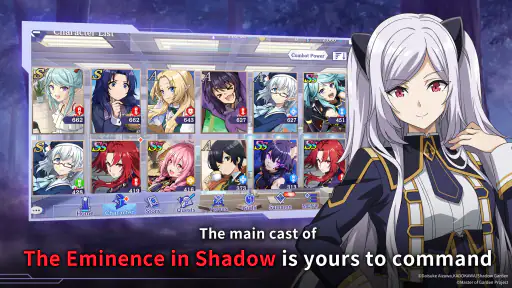
- Team building provides depth through roles
- elements
- and abilities.
Cons
- Progression becomes heavily dependent on duplicate character upgrades.
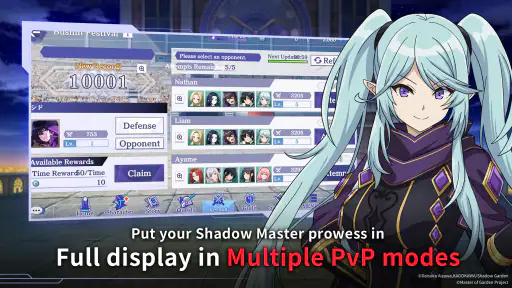
- Endgame content can feel repetitive once daily tasks are completed.
- Premium currency is limited
- making mistakes in summons costly.
- Large downloads and frequent updates may consume considerable storage.
- Some menus and systems can feel overwhelming for new players.

- Category
- Role Playing
- Version
- 4.11.0