The Cursed Dinosaur Isle: Game
- 2.20K
- 4.4
- Installs
- 1.00M
- Price
- Free

Screenshots
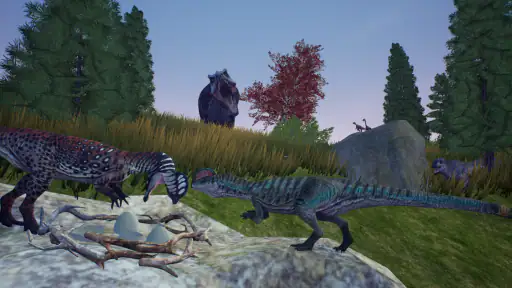
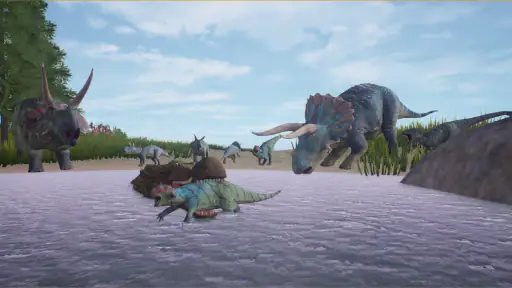
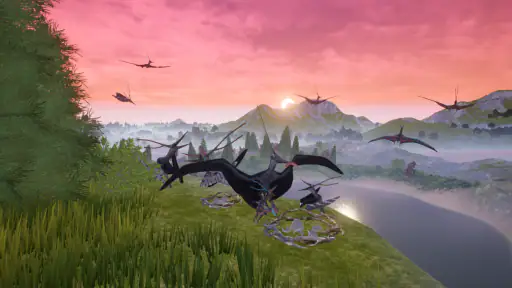
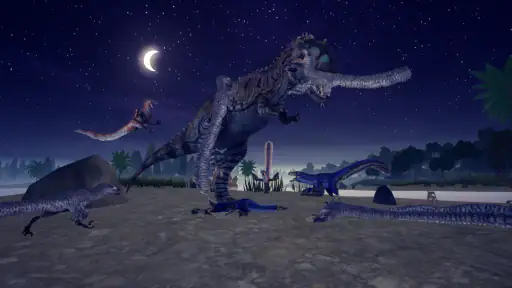
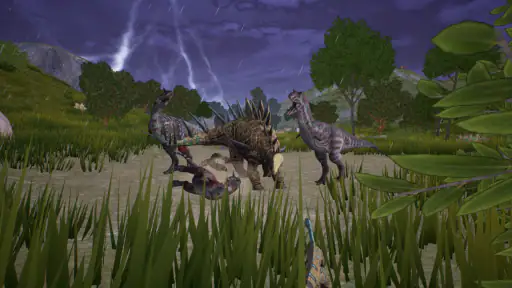
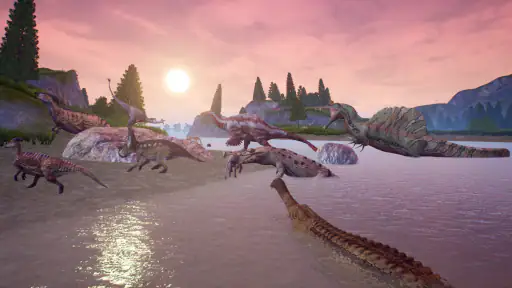
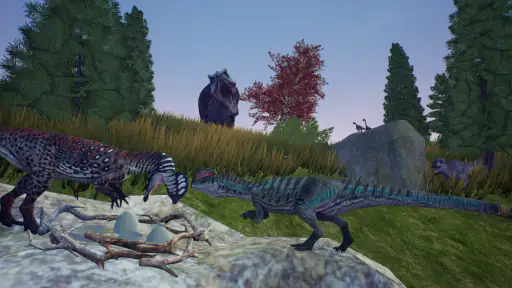
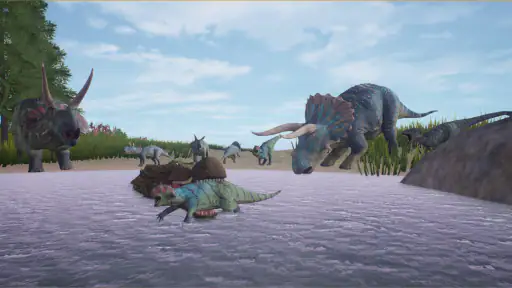
Analysis by Reviewed
I spent time with The Cursed Dinosaur Isle as a mobile survival simulation, and my first impression was clear: this is not a relaxed dinosaur park builder where I can decorate an enclosure and watch visitors arrive. Its focus is staying alive in a dangerous prehistoric world, with carnivores turning ordinary movement into a constant risk calculation. That gives the game a sharper personality than many dinosaur-themed alternatives, but it also means the experience asks for patience and attention.
The game comes from The Ancient Isle of Dinosaur - Games Studio and is free to start on Android. It sits in the simulation category, although its survival pressure makes it feel more active than a typical management game. The combination works best when I treat every outing as a short expedition rather than simply wandering around to admire the scenery. I have to think about where I am going, what I can safely approach, and when it is smarter to retreat.
Its audience is already substantial, with over a million installs and an average rating of 4.4 from around 201 thousand ratings. That does not automatically make it the right choice for everyone, but it does suggest that the basic idea has found a sizeable audience. The Teen content rating also gives a useful hint about the tone: this is aimed at players comfortable with danger and dinosaur conflict, not very young children looking for a gentle educational toy.
How a normal survival session actually works
Start with a route, not a fight
My most reliable habit was to begin each session with a simple route in mind. Instead of moving toward the first creature I saw, I looked for a practical path through the environment and tried to keep an escape direction available. That sounds obvious, but the temptation to chase every opportunity is one of the easiest ways to turn a manageable run into a bad one.
The game’s online survival setting makes awareness especially important. I found myself treating open ground differently from areas that offered more room to reposition. When a carnivore appeared, the best response was often not immediate aggression. Creating distance, avoiding a poor angle, and refusing to get trapped were more valuable than trying to prove that every encounter could be won.
This is where the simulation label makes sense. The challenge is not only reaction speed. I am constantly balancing exploration against safety, progress against recovery, and curiosity against the possibility of losing time. Players who enjoy making small decisions under pressure will probably connect with that rhythm. Players who want a predictable, low-stress dinosaur experience may find it tiring.
Use short sessions to learn the island
I recommend treating the first few sessions as reconnaissance. Rather than expecting immediate mastery, I used them to notice which routes felt exposed, which encounters caused trouble, and how quickly a careless decision could escalate. This approach is more useful than trying to force progress before understanding the game’s pace.
A realistic everyday scenario is a short evening session after work or school. I might have only enough time for one focused attempt, so I would choose a modest objective, follow a familiar route, and stop before frustration encouraged reckless decisions. That makes the game easier to fit into a busy day than a long-form survival title that demands a major uninterrupted commitment.
Another useful routine is separating exploration from experimentation. When I wanted to test a risky approach, I did not combine it with a valuable run. Keeping those purposes apart helped me understand the consequences of a decision without making every session feel like a high-stakes gamble.
What the free entry point means
The game is free, which makes it easy to try without committing money first. It includes in-app purchases ranging from $1.99 to $10.99 per item, so I would approach spending carefully and decide whether the core loop is enjoyable before buying anything. The important question is not whether optional purchases exist; it is whether I still enjoy planning, escaping, and repeating attempts without relying on them.
For me, the free starting point is most appealing when I use it as a trial of the survival style. If I want a dinosaur game mainly for collecting creatures, decorating, or passive progression, this is probably not the strongest match. Its identity comes from danger and persistence, so the value depends on whether those pressures feel motivating rather than annoying.
Settings I would check before settling in
I always look through the available settings before judging a mobile game, especially one built around movement and quick reactions. In this case, I would check control sensitivity, sound levels, notification behavior, and any display options offered on the device. I do not treat settings as decoration: small adjustments can make a survival game feel readable instead of clumsy.
Sound deserves particular attention. I prefer to keep important environmental audio audible while lowering anything that makes a long session tiring. If I am playing in public or late at night, I may use a lower volume, but I would avoid making the game completely silent until I understand how much awareness depends on audio cues. That is a general survival habit worth testing rather than assuming.
I would also check whether the control layout feels comfortable before beginning a serious run. Mobile games can become frustrating when a thumb covers the action area or when movement requires an awkward grip. If the interface allows any adjustment, I would place the most frequently used controls where my hands naturally rest. If it does not, I would change my grip rather than blame myself for every missed response.
Device performance matters as well. The minimum requirement is Android 7.0, but compatibility alone does not guarantee that every phone will feel equally smooth. I would close unnecessary background apps, avoid playing while the device is overheating, and test a few short runs before making a purchase. A survival game loses much of its fairness when stutters or touch problems interfere with decisions.
Small habits that make movement safer
Experienced play is less about one dramatic trick and more about repeatable habits. I found three especially useful. First, I avoided moving directly toward every visible target. A diagonal or indirect route can preserve options if the situation changes. Second, I tried not to enter unfamiliar areas at the end of a session, because tired decision-making makes a dangerous encounter feel worse. Third, I used failed attempts as notes: what caused the problem, where I was positioned, and whether impatience played a role.
These habits are not hidden mechanics, and I would not present them as guaranteed shortcuts. They are ways of organizing attention around the game’s actual survival premise. The biggest improvement often came from reducing unnecessary risks rather than discovering a powerful new action.
Faster patterns for repeat players
Once the basic route became familiar, I started grouping decisions into patterns. I would identify a safe starting direction, establish a point where I could turn back, and avoid improvising until I had a reason. This reduced the mental load of every run. Instead of asking what to do every few seconds, I only had to reconsider when the environment or a creature changed the plan.
Another efficient pattern is to assign each session a single purpose. One run might focus on learning movement around danger; another might focus on reaching a particular area; a third might simply test how far I could go without taking unnecessary risks. Mixing all of these goals together made progress difficult to judge. Separating them gave me clearer feedback.
I also prefer a conservative reset point. When a run starts going badly, I do not keep pushing just because I have already invested time. That is a common survival-game trap. A controlled retreat can preserve more useful information than a desperate attempt that ends with no clear lesson. The habit feels slow at first, but it makes later attempts more consistent.
Where the game differs from familiar alternatives
Compared with a dinosaur park-management game, this title offers less of the calm satisfaction that comes from designing habitats and watching a simulated attraction develop. The reward here is more personal: I survived a dangerous situation, learned a route, or handled a threat more intelligently than before. If construction and customization are the main reasons I like dinosaur games, I would look elsewhere.
Compared with a large, complex survival sandbox, it feels more approachable as a mobile experience because I can think in terms of short routes and immediate decisions. The trade-off is that players expecting the broad systems of a full desktop-style survival game may find the experience narrower. I would choose this one for quick dinosaur survival sessions, not for an enormous crafting project that becomes a second job.
It also differs from a purely action-focused dinosaur game. Winning is not only about attacking quickly. Position, caution, and timing matter, which gives the simulation angle more weight. That can make encounters satisfying when I have planned well, but it can also feel less exciting if I want uninterrupted combat.
Advanced limits and the point where patience runs out
The same pressure that gives the game its identity can become its main limitation. Repeated danger is enjoyable when each attempt teaches me something, but less enjoyable when a failure feels like repetition without meaningful improvement. I would pay attention to that distinction. If I am learning routes and refining choices, the loop remains engaging. If I am simply replaying the same mistake because progress feels opaque, it may be time to take a break.
The online setting is another factor to consider. Players should expect the experience to be more dependent on a stable connection than an entirely offline dinosaur game. That makes it less suitable for travel, unreliable networks, or situations where I need guaranteed access without interruptions. I would choose a different option for a long flight or a remote trip unless I had already tested the game in similar conditions.
In-app purchases also create a practical boundary. I would not spend simply because a difficult run made me impatient. First I would ask whether the purchase improves a style of play I already enjoy or merely removes a frustration temporarily. That rule is especially useful in free survival games, where pressure can make an optional purchase feel more urgent than it really is.
The current version is 0.9.9.0.848, and I would keep the game updated through the normal store process so that my installed build matches the active experience. I would also remember that mobile games can change over time. A strategy that feels comfortable today may need adjustment after future changes, so I prefer flexible habits over relying on one supposedly perfect routine.
Who should play it, and who should skip it?
I would recommend it to someone who likes dinosaurs but wants more tension than a collection game provides. It suits players who enjoy repeated attempts, cautious exploration, and the satisfaction of gradually making fewer mistakes. It is also a good fit for people who want a free game they can sample in short sessions before deciding whether the survival loop deserves more time.
I would not recommend it to a player looking for a peaceful dinosaur encyclopedia, a family-friendly management toy, or a fully offline pastime. I would also hesitate to suggest it to anyone who dislikes losing progress, repeating routes, or making decisions without always having a comfortable safety margin. The Teen rating is another reason I would choose it selectively for younger players rather than assuming that its dinosaur theme makes it suitable for everyone.
My final recommendation after building a routine
After adjusting my approach, I found the strongest part of The Cursed Dinosaur Isle was its ability to turn a simple dinosaur setting into a series of small survival judgments. The game is most enjoyable when I play deliberately: check the controls, choose one goal, keep an escape route, and treat failure as information instead of an insult.
It is not the best dinosaur game for every mood. I would choose a park simulator when I want creativity, a deeper sandbox when I want long-term construction, and an offline title when connection reliability matters. But for a free, online survival simulation with carnivores creating constant pressure, this game has a clear purpose and a manageable learning curve if I resist rushing.
My verdict is positive with a condition: play it as a careful survival game, not as a casual dinosaur screensaver. Give it a few focused sessions, inspect the controls and audio before judging the difficulty, and decide early whether the repeated tension feels rewarding. If it does, the island can provide a satisfying routine of exploration, retreat, and gradual improvement. If it does not, no purchase or shortcut will change the fact that its central appeal is survival under pressure.
Pros
- Relaxing island-building gameplay with charming dinosaur designs.
- Many dinosaur species to collect
- hatch
- and upgrade over time.
- Simple controls make it accessible for younger and casual players.
- Offline-friendly features allow progress without a constant connection.
- Regular events provide extra goals and limited-time rewards.
Cons
- Progress can become slow without spending premium currency.
- Energy and waiting timers may interrupt longer play sessions.
- Some upgrades require repetitive resource gathering.
- Ads may appear frequently during free gameplay.
- The small text and menus can feel cramped on phone screens.

- Category
- Simulation
- Version
- 0.9.9.0.848