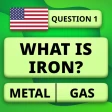
The Chase - World Tour
- 51.00
- 4.6
- Installs
- 10.00K
- Price
- Free

Screenshots








Analysis by Reviewed
I approached The Chase - World Tour as a quick trivia game rather than a replacement for the television show itself. Developed by Barnstorm Games, it brings the familiar quiz-show idea to Android and iOS in a format that suits short sessions: answer questions, test your general knowledge, and see whether you can stay ahead of the Chaser. That basic promise is easy to understand, but the real question is whether it offers enough depth to remain enjoyable after the novelty fades.
My overall impression is positive, especially if you already enjoy quiz games and like the tension of answering under pressure. It is free to start, carries an Everyone age rating, and has built a respectable audience with a 4.6 average from around 165 ratings. At the same time, the free entry point should not be confused with unlimited value. In-app purchases range from $0.99 to $99.99 per item, so I would treat the game as something to try first rather than something to buy into immediately.
How the quiz-show format works in everyday play
The appeal comes from the structure. This is not simply a collection of disconnected multiple-choice questions where the result feels disposable. The Chaser gives each correct or incorrect answer more weight, because every decision contributes to the larger feeling of trying to escape elimination. Even when I only have a few minutes, that framing makes a small round feel more purposeful than a standard trivia drill.
That makes it a good companion for ordinary gaps in the day. I can imagine playing a round while waiting for an appointment, sharing questions with a family member, or using it as a light evening challenge after watching television. The sessions work best when I want concentration without the commitment of a long strategy game. It is also easy to hand the phone to someone else for a quick challenge, although the experience is more naturally suited to individual play unless everyone agrees to take turns.
The game belongs firmly in the trivia and quiz space, and that focus is important. It is not trying to provide an adventure campaign, a role-playing progression system, or a deep competitive ladder. The satisfaction comes from recognition, recall, and risk management. If I answer a difficult question correctly, the reward is the feeling that I earned another step forward. If I miss an obvious one, the disappointment is immediate but understandable.
Why the Chaser changes the feel of ordinary trivia
The strongest design choice is the opponent concept. A normal quiz can become a private test of memory, but the Chaser turns each answer into part of a contest. That creates a useful psychological difference: I am not only asking whether I know the answer; I am also thinking about whether this answer keeps me safe. The format encourages me to slow down just enough to read carefully, rather than tapping through questions without considering them.
That pressure is also the main reason some players may tire of it. People who prefer relaxed learning will probably find the competitive framing less comfortable than a straightforward facts app. I would not choose this as a calm study tool, because the entertainment comes from the show-like stakes rather than from detailed explanations or a structured course of lessons.
A practical tip is to treat the first few sessions as a way to discover your weak areas rather than as a test of intelligence. Trivia covers a wide range of subjects, and a poor round can reflect unfamiliar topics rather than poor general knowledge. I found that the game becomes more enjoyable when I focus on patterns in my mistakes: names, geography, entertainment, history, or everyday facts. That turns a disappointing result into a reason to return with a clearer goal.
What the free starting point really means
The download is free, which makes trying the game straightforward. That is the most important cost advantage: I do not need to commit money before finding out whether the question style and Chaser format suit me. For a casual player, free access can be enough to decide whether the game deserves a regular place on the phone.
There are in-app purchases, with individual items priced from $0.99 up to $99.99. I would therefore avoid assuming that every part of the experience is included simply because the initial download costs nothing. The sensible approach is to play the available free portion first, check what feels satisfying without spending, and only then consider whether an optional purchase adds enough value for your habits.
This distinction matters because trivia games can be enjoyable even when played occasionally. If I only want a few questions during spare moments, paying for more content may not be necessary. On the other hand, someone who plays frequently and wants to continue beyond the free experience may see more value in spending, provided the purchase matches the way they actually use the game. The price range is broad enough that I would pay close attention to the specific item rather than treating all purchases as equivalent.
I also appreciate that the game is suitable for Everyone from an age-rating perspective. That makes it easier to recommend for family use, though the actual enjoyment will depend on the ages and knowledge levels of the players. A younger player may know plenty about one subject and struggle with another, while an adult may have the opposite experience. That unevenness is normal for trivia, but it is worth remembering before treating the result as a serious comparison between players.
Where the value comes from
The value is mainly in replayable mental friction. I get a compact challenge that asks me to recognize information quickly and live with the result. That is different from a puzzle game where I can experiment until I find the solution. Here, the moment passes, and I either knew the answer, reasoned it out, or made a guess. The format is particularly effective when I want something more engaging than scrolling but less demanding than a full game session.
Another useful quality is its social flexibility. I can play alone, but questions also create natural conversation. A family member can argue for a different answer, explain why a choice seems right, or laugh at an unexpected miss. This makes it more suitable for casual group interaction than many single-player trivia apps, even if the phone remains the center of the activity.
The television connection gives the game a recognizable identity without requiring me to learn an unfamiliar world or set of characters. Fans of the show will likely understand the appeal immediately. However, I would not recommend buying it solely because of the brand. The important test is whether the quiz-show pressure itself sounds fun. If I do not enjoy general trivia, the television association will not magically turn every question into an engaging challenge.
Compared with a basic trivia app, this game has a clearer dramatic hook. Compared with a dedicated learning app, it is less useful for building knowledge in a systematic way. Compared with a board game, it is faster to start and easier to play alone, but it does not provide the same physical table experience. Those differences help define its place: it is best as an accessible quiz-show recreation, not as the deepest option in every category.
Small habits that make rounds more enjoyable
One habit I recommend is reading the entire question before deciding that an answer is obvious. The pressure of the format can make a familiar word trigger an instant response, and that is exactly when a careless mistake happens. Taking one extra moment to identify what the question is actually asking improves the experience without removing the tension.
A second approach is to use it as a rotating group challenge. Instead of letting one person play repeatedly, each player can take a turn and compare how different knowledge backgrounds affect the outcome. This avoids turning the game into a simple contest between the fastest tapper. It also shows why trivia results should be treated as entertainment rather than a definitive measure of who is smartest.
A third is to set a personal stopping point. Because quiz games can encourage “one more round” after a mistake, it is easy to continue while becoming frustrated. I get more from the game when I stop after a satisfying result or after identifying a topic I want to revisit later. That is a small but useful trade-off: the game can sharpen attention, but it does not need to fill every spare minute.
Trade-offs before spending money
The biggest limitation is that the free download does not automatically tell me how much long-term content I will personally consider sufficient. Since purchases are available, the value depends on how much of the game can be enjoyed without paying and whether additional items feel worthwhile. I would not spend at the upper end of the listed range casually. A large purchase only makes sense for someone who has already played enough to know that this is a regular hobby rather than a brief curiosity.
There is also a subjectivity problem. Trivia games can feel brilliant when the questions match my interests and unfair when they land outside my experience. That is not necessarily a flaw in the individual question, but it affects perceived difficulty. Players looking for consistent skill progression may prefer a game that teaches each answer or lets them select a narrow subject. Here, the uncertainty is part of the quiz-show character.
Another trade-off is replay motivation. The Chaser format gives questions context, but the basic activity remains answering questions. If I need a story, exploration, character development, or a large strategic system to stay interested, this will probably feel limited. It is strongest as a focused trivia experience, and its narrowness is both its identity and its boundary.
The current version is 1.14.1, and the game supports devices running Android 6.0 or later. That makes it accessible to many older compatible phones, though I would still consider how comfortably the game runs on a particular device before expecting a polished experience. The practical point is that installation compatibility is not the same thing as personal enjoyment; the question format remains the deciding factor.
Who will get the most from it?
I think the best match is someone who enjoys quiz shows, general-knowledge challenges, and short sessions with a clear result. Fans of the television format have an obvious reason to try it, but prior knowledge of the show is not essential. The game explains itself through the contest structure, so a newcomer can understand the goal quickly.
It is also a reasonable choice for households that want an easy shared activity. The Everyone rating supports that kind of setting, and the questions can spark discussion even when nobody agrees on the answer. I would especially recommend trying it on a device that is easy to pass around, because the social value comes from reacting to the questions together rather than silently completing them.
People who prefer learning-focused apps should be more selective. If my goal is to master a language, revise school material, or follow a carefully ordered curriculum, I would choose a specialist tool instead. This game may expose me to facts I did not know, but exposure is not the same as teaching. Its purpose is challenge and entertainment first.
I would also skip it if I dislike pressure in games or become annoyed by questions outside my strongest subjects. A relaxed flashcard app, a topic-specific quiz, or a board game with more control over difficulty could be a better fit. The Chase works when uncertainty feels exciting; it works less well when uncertainty feels like an interruption.
My verdict on trying, buying, or skipping
My recommendation is to try the free version without making an immediate purchase decision. The entry cost is low in the literal sense, and the format reveals its strengths quickly: a recognizable quiz-show setup, short rounds, and the extra tension created by facing the Chaser. If those elements make me want another round, the game has already delivered useful entertainment before I spend anything.
I would consider paying only after establishing a regular routine with it. The available purchase range is wide, so I would choose the smallest relevant option and judge it by actual play time, not by the promise of having more. Someone who plays once a week may find free access perfectly adequate, while a dedicated fan may value additional access more. Neither choice is automatically better.
Released on November 3, 2023, and still presented as a free trivia title, it occupies a comfortable middle ground between a casual mobile diversion and a branded quiz-show experience. Its 10K-plus installs suggest that it has found an audience, while the 4.6 average indicates a generally warm reception, though I would still base my decision on the style of play rather than popularity alone.
In the end, The Chase - World Tour is worth downloading for fans of fast general-knowledge contests who want a familiar opponent and a reason to care about each answer. I would skip spending heavily until I knew the free experience suited me, and I would choose another app if structured learning or deep progression mattered more than quiz-show tension. For the right player, its best quality is simple: it turns a handful of questions into a small event instead of another forgettable tap-through.
Pros
- Fast-paced trivia keeps short sessions engaging.
- Global locations add variety to the question sets.
- Simple controls make it easy to start playing.
- Competitive scoring encourages replaying and improvement.
- Bright visuals and upbeat presentation suit casual play.
Cons
- Some questions may feel too difficult without broad knowledge.
- Progress can become repetitive after extended play.
- Mistakes may be frustrating during otherwise strong runs.
- The experience may favor players familiar with trivia games.
- A stable internet connection may be needed for some features.

- Category
- Trivia
- Version
- 1.14.1