Sword of Convallaria
- 2.11K
- 4.4
- Installs
- 1.00M
- Price
- Free

Screenshots

Analysis by Reviewed
I went into Sword of Convallaria expecting a familiar mobile role-playing game, but its strongest quality appeared before any long-term progression: it gives each early battle a clear reason to matter. The setting, tactical encounters, and character-focused presentation work together so that I was usually thinking about the next decision rather than simply tapping through a queue of rewards. It is free to play, yet it does not feel like a disposable side game that only exists to fill a few minutes.
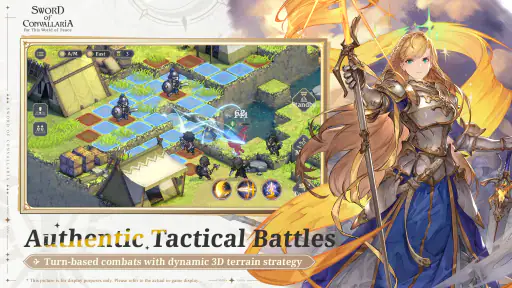
Developed by XD Entertainment Pte Ltd, this game sits in an interesting space between a story-led adventure and a grid-based strategy RPG. I found it most appealing when I treated every encounter as a small puzzle. Positioning, timing, and the order in which I handled threats mattered more than blindly choosing the strongest-looking attack. That makes it a better fit for someone who enjoys planning than for a player who wants completely automatic combat.
Why the opening hours give you useful goals
The early portion works because it gives me several goals at once without making them feel identical. I am following the narrative, learning how the battlefield behaves, improving a growing group of characters, and testing which abilities work together. Those objectives overlap naturally: a difficult fight pushes me to understand a unit, while a new character gives me a reason to revisit my approach to the next stage.
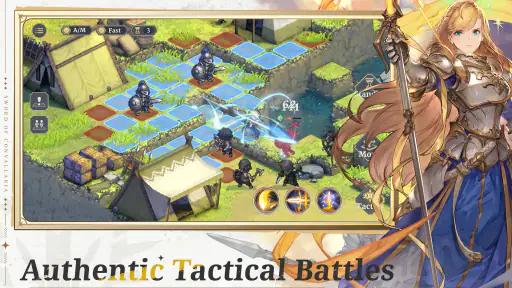
I especially liked that the first battles teach through consequences instead of burying every lesson in instructions. A unit placed carelessly can become exposed, while a better position can turn the same encounter into something manageable. Terrain, distance, and the sequence of actions become part of the conversation between the player and the game. This gives the opening a stronger sense of purpose than a simple chain of fights where the only question is whether my overall power is high enough.
That said, the beginning is not ideal for someone who wants instant freedom. The game needs time to establish its world and its combat rhythm, so the first sessions can feel guided. I would not recommend judging it after only a few minutes. Its appeal grows when you start noticing why a battle went wrong and make a deliberate adjustment instead of just repeating it.
For an everyday example, I could imagine playing during a commute or after dinner, completing a manageable story encounter, then stopping before the next demanding battle. The game supports that kind of stop-and-start routine because each session can have a defined purpose: finish a scene, test a formation, or improve one weak part of a team. It is less satisfying if you only have time to rush through menus and skip the tactical decisions.
Progress feels clearer when you measure decisions, not only power
One of the better progress signals is personal understanding. At first, a victory may feel like luck or a result of having stronger units. Later, I could tell that improvement came from reading the field more carefully. I began to recognize which enemy deserved immediate attention, when to protect a vulnerable character, and when saving an ability for a later turn was wiser than using it immediately.
The character roster also gives progress a human face. Instead of viewing every upgrade as an abstract number, I found myself thinking about which members of the group I actually understood and enjoyed using. That distinction matters in a role-playing game: a character who fits my habits can be more valuable than one who looks impressive on paper but does not suit the way I approach combat.
A useful habit is to change only one variable after a failed attempt. I might alter the opening formation, replace one member, or hold a key skill for a different moment, but not do all three at once. This makes the game easier to read. If the second attempt succeeds, I know what helped. If I change everything together, the victory tells me much less about the encounter.
The game also benefits from the difference between a narrow victory and a clean victory. Finishing a battle is one kind of progress; finishing it while keeping the team in control is another. That distinction encouraged me to refine my approach instead of accepting every win as proof that my setup was finished. It is a small but meaningful reason to keep engaging with battles I have already understood.
There is a trade-off here. Players who prefer a straightforward power ladder may find this less immediately rewarding than a conventional auto-battle RPG. The satisfaction often comes from learning and adapting, not merely from watching a combat rating rise. If your favorite mobile games let you solve most problems by collecting resources and pressing an upgrade button, this may feel slower and more demanding.
The challenge curve rewards patience, but it can expose weak habits
The difficulty is most interesting when it asks me to stop treating every fight the same way. A formation that works against a cluster of ordinary enemies may be awkward when the battlefield changes or when a dangerous opponent controls the pace. I had to think about approach, not just composition. That makes the challenge feel connected to the role-playing structure rather than pasted on top of it.
When I lost, the useful question was usually not “Do I need more power?” but “What did I misunderstand?” Sometimes the answer was poor positioning. Sometimes I had spent an important ability too early. At other times, my team was simply not suited to the encounter. This is a healthy kind of friction because it gives failure a practical explanation.
Still, the game can be unforgiving if you enter a battle without checking your assumptions. A player who sends the same units forward in the same pattern may hit a wall and feel that progress has suddenly stopped. My advice is to pause before retrying and identify the first moment when control was lost. Fixing that moment is generally more useful than making random changes across the whole team.
I also recommend resisting the urge to upgrade every character equally. Concentrating attention on a dependable core makes it easier to understand strengths and weaknesses, while spreading resources too widely can leave the entire roster feeling merely adequate. The best balance depends on how much experimentation you enjoy, but I found a focused group more comfortable for story progress and a broader bench better when I wanted to test alternatives.
This is one of the game’s more important trade-offs: tactical depth makes victories satisfying, but it also means that casual play can become frustrating if you are tired or distracted. I would choose a simpler role-playing game for a quick, low-attention session. I would choose this one when I want my decisions to have visible consequences and I am willing to replay a difficult encounter with a different plan.
Unlocks give the journey direction without removing the need to learn
New characters and abilities are most valuable when they change the way I think about a battle. An unlock feels worthwhile when it opens a different tactical option, not merely when it adds another stronger version of something I already use. That is where the role-playing side supports the strategy side: progression expands the set of answers available to me.
I found it helpful to evaluate a new addition by asking three questions. Does it solve a problem my current group has? Does it make a familiar encounter easier to read? Does it give me a reason to adjust my opening plan? If the answer is no to all three, the unlock may still be useful later, but it does not need to replace a character I already understand.
This approach also reduces the pressure to chase every possible improvement immediately. I could enjoy the game more when I treated the roster as a toolbox rather than a collection that had to be completed. The goal was not to own everything; it was to build a group that gave me reliable answers while leaving room for experimentation.
There is an important caveat for free-to-play players. In-app purchases range from $0.99 to $99.99 per item, so the store layer is capable of creating a strong temptation, particularly when a difficult stage makes a new character or upgrade look like the fastest solution. I recommend deciding in advance whether you are playing for the story, for tactical mastery, or for collection. Those goals can overlap, but they do not create the same spending pressure.
For me, the healthiest way to approach the paid elements is to let a failed battle teach me something before I consider spending. If I cannot explain why my current plan failed, a purchase is unlikely to solve the underlying problem. If I understand the weakness and still want a different style of play, then a new addition has a clearer purpose. That mindset keeps the progression loop from becoming only a shopping loop.
Where the pacing holds attention and where it asks too much
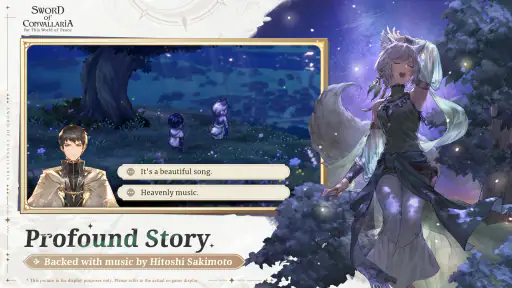
The pacing is strongest when a story beat, a new tactical problem, and a meaningful character decision arrive close together. Those moments made me curious about what the next encounter would demand. I was not only waiting for a reward; I was wondering whether I could apply what I had just learned more effectively.
The rhythm becomes less comfortable when progression starts to feel like preparation for the next gate rather than an adventure in its own right. Repeating familiar activities can be useful when I am deliberately testing a team or gathering what I need for a specific improvement. It is less enjoyable when repetition becomes the main answer to a difficulty spike. This is the point where players who dislike grinding may begin to lose patience.
My solution was to give each session a narrow intention. One evening, I might focus on advancing the story. Another time, I might experiment with a different formation or strengthen a character who had been underused. This prevented the game from becoming an endless checklist and made routine progress feel connected to a personal goal.
The game also creates retention pressure through curiosity. A new chapter, character, or challenge can make me want to return because I want to see how the situation develops or whether a different tactical tool changes my options. That is more compelling than a simple daily obligation. However, curiosity can turn into pressure if I feel that I must keep up with every available activity rather than play at my own pace.
I would therefore avoid treating Sword of Convallaria as a second job. It is better enjoyed in focused sessions than through constant checking. Players who want a game that respects a relaxed schedule can make it work, but they should be comfortable leaving some optional progress for later. Players who feel compelled to clear every task may find the combination of story, upgrades, and purchases mentally tiring.
How it compares with more familiar mobile role-playing games
Compared with a typical auto-battle role-playing game, this offers more ownership over the important moments. I am not simply assembling a team and waiting for a result; I am deciding where that team stands and how it responds. That makes individual battles more memorable, but it also removes some of the convenience people expect from a game designed for passive play.
Compared with a pure strategy game, it gives more attention to characters and narrative motivation. The units are not just anonymous pieces with useful statistics. Their role in the wider journey makes me more interested in who I am deploying and why. The compromise is that story pacing may occasionally slow the immediate tactical flow for someone who only wants back-to-back battles.
It also differs from collection-focused games where the main excitement comes from obtaining the next rare addition. Here, a new character matters most when I can understand how that character changes my options. Collection can be part of the appeal, but it is not a substitute for learning the battlefield. That makes the game more rewarding for thoughtful players and less instantly gratifying for anyone chasing constant novelty.
In practical terms, I would choose this over a hands-off alternative when I have enough attention to plan. I would choose the hands-off alternative when I am multitasking, commuting in a crowded place, or looking for something that can be played almost automatically. The distinction is not about quality; it is about the kind of involvement each game expects.
Who should play it and who should skip it
I think this is a strong choice for players who enjoy story-led role-playing games with tactical battles, gradual mastery, and a roster that invites experimentation. It suits someone who likes asking why a plan worked, then trying to improve it. It is also a good fit for a player who wants a free starting point and is comfortable deciding personally whether optional purchases are worth it.
I would be more cautious recommending it to someone who wants instant action, minimal reading, or a completely frictionless progression path. It may also disappoint players who dislike replaying a stage to understand its demands. The tactical layer is not decoration; it is the reason to play, and avoiding it removes much of what makes the game distinctive.
The Teen content rating is worth keeping in mind for families choosing a game together. I would not hand it to a younger child without checking whether its tone, story themes, and purchase options are appropriate for that household. On compatible devices, the minimum operating system is Android 6.0, which makes it accessible to a broad range of Android users, though the actual play experience will still depend on the device.
On the platform side, the current version is 2.10.0. I mention that because players should keep an eye on the version shown for their device before troubleshooting a problem or comparing experiences with friends. A game with ongoing updates can change its balance and pacing over time, so a guide written for an older build may not always match what is on screen.
My verdict on the long-term progression
After spending time with it, I see Sword of Convallaria as a role-playing game whose retention comes from a useful combination of curiosity and competence. I wanted to continue because the story gave context to the journey, but I stayed because battles made me feel that better decisions were possible. That is a stronger foundation than simply handing out larger rewards.
The game is not effortless entertainment. Its challenge can punish unfocused play, its pacing may ask for patience, and the range of in-app purchase prices means free players should set sensible boundaries. Those are real limitations, not minor footnotes. They become especially important if you want a game you can play with almost no attention or if you dislike any pressure around collecting and upgrading.
Even so, I would recommend it to a friend who enjoys tactical role-playing games and wants a mobile experience with more thought behind each encounter. The free entry point makes it easy to try, while the 4.4 average from around 29 thousand ratings and over 1 million installs suggest that it has found a substantial audience. I would not use popularity as a substitute for personal taste, but it does make the game feel like a well-established option rather than an obscure experiment.
My final advice is to play slowly enough to learn the battlefield, keep a focused core of characters, and treat every unlock as a new tactical question rather than an automatic replacement. If you do that, the progression feels earned. If you only want rapid rewards and effortless victories, another mobile role-playing game will probably suit you better. For me, the balance lands on the positive side: the best reason to keep playing is the feeling that my next victory can come from understanding the game better, not merely from waiting for a bigger number.
Pros
- Deep tactical battles reward careful positioning and planning.
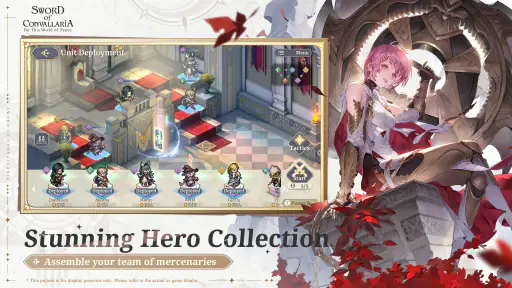
- Large cast of characters offers varied team-building options.
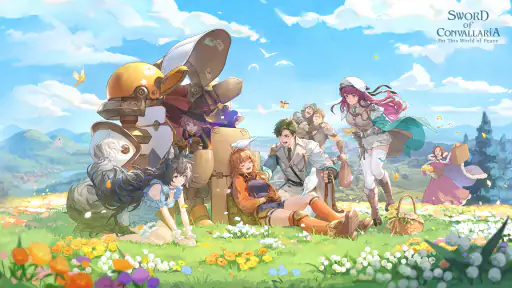
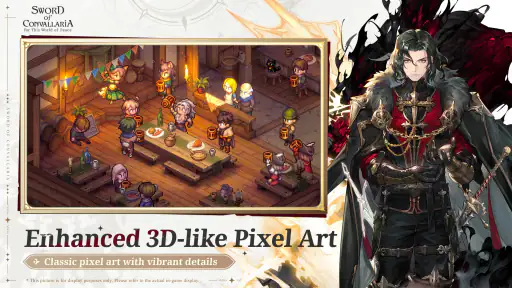
- Beautiful pixel-art visuals blend classic style with modern effects.
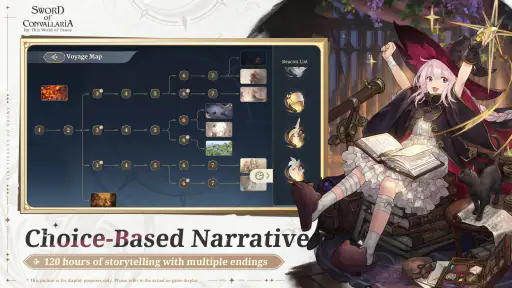
- Branching story choices give campaigns meaningful replay value.
- Frequent events provide additional challenges and rewards.
Cons
- Energy limits can interrupt longer play sessions.
- Gacha mechanics may make favorite characters difficult to obtain.
- Some missions become grind-heavy when upgrading your roster.
- The interface can feel crowded for new players.
- Later content may be demanding without optimized teams.

- Category
- Role Playing
- Version
- 2.10.0