Superstore Story 3D
- 312.00
- 4.6
- Installs
- 1.00M
- Price
- Free

Screenshots
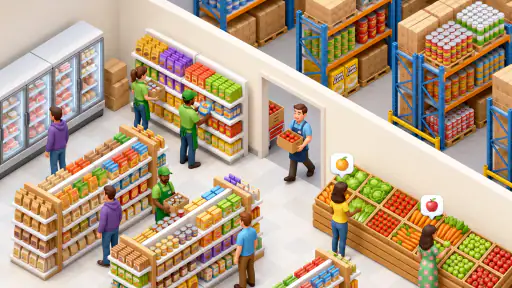
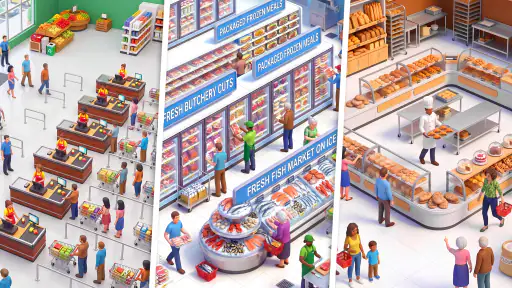
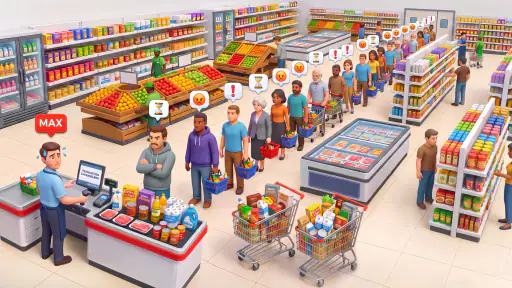
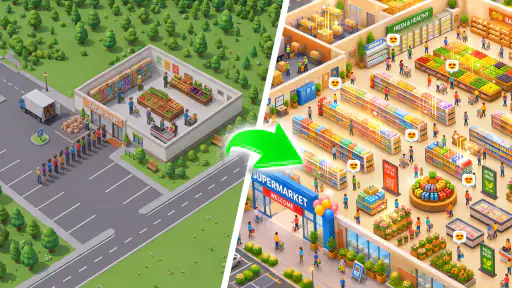
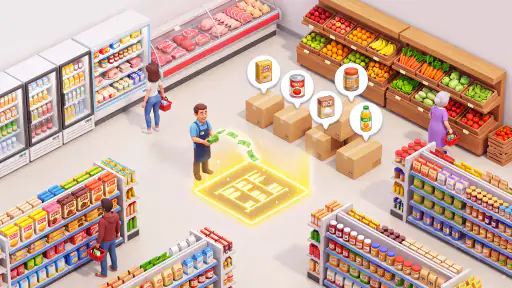
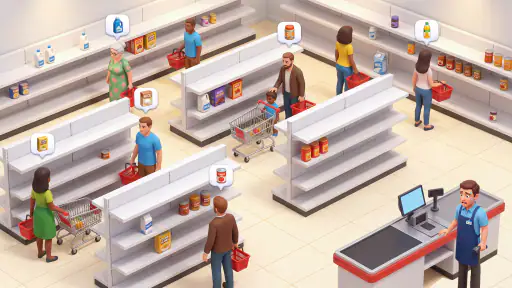
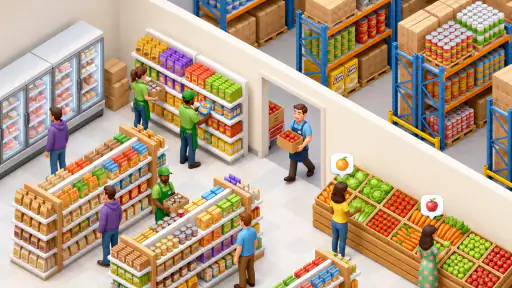
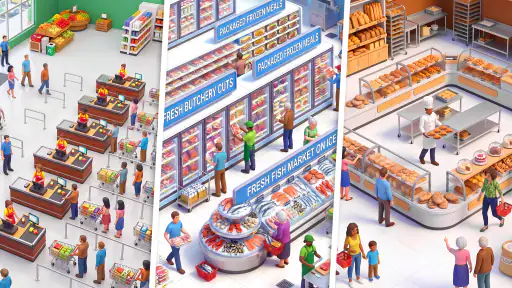
Analysis by Reviewed
I like management games best when they make a small decision feel meaningful: where to focus, what to improve, and when to stop tinkering and let a plan play out. Superstore Story 3D is a free simulation game built around running a store, so its appeal is easy to grasp. The more important question is whether its tycoon-style premise offers enough satisfying choices to keep you engaged between the first few upgrades and the longer-term business decisions.
My impression is that this is most appealing as a casual, hands-on management game rather than a demanding business simulator. You can dip in when you have a spare moment and still enjoy the basic satisfaction of shaping a store. At the same time, anyone expecting a highly detailed model of retail operations should keep their expectations measured: the store’s brief pitch promises a management experience, but that alone does not establish how elaborate its systems are.
A useful way to judge the first sessions
I would treat the opening sessions as a test of whether the game’s pace suits you, not as a race to unlock everything. Notice whether the choices feel satisfying even when you make only one or two at a time. If the enjoyment comes from deciding what matters next, the format may click; if you need a dense web of interdependent systems right away, you may be happier with a more involved business simulator.
That distinction is especially helpful if you are choosing between this and a puzzle or idle game for short breaks. A puzzle tends to put the challenge in a single self-contained problem, while a store tycoon asks you to carry a goal forward across visits. The trade-off is that progress can feel more gradual, but your decisions have a continuing context rather than resetting with each new round.
Small decisions are the heart of the store
Choosing where your attention goes
A store-management game works when it gives you competing priorities instead of asking you to make the same upgrade repeatedly. In Superstore Story 3D, I would approach each play session with one question in mind: am I trying to make the shop feel more capable now, or am I building toward a more ambitious operation later? That framing helps keep the tycoon premise interesting even when you only have a short window to play.
The useful habit is to avoid treating every available improvement as equally urgent. If the game presents several ways to develop your store, consider what each choice is supposed to solve before committing. An upgrade that supports immediate progress may feel rewarding, while saving resources for a bigger step can be more valuable over a longer stretch. This kind of prioritization is the part of the genre I enjoy most, because it gives ordinary progression a little shape.
There is also a practical way to avoid aimless tapping: decide on a near-term goal before you start, then check whether your actions are moving toward it. For example, you might focus on making the current store run more smoothly before expanding your ambitions. I cannot claim a particular system or feature that the game does not establish, but as a player, setting a simple objective is a sound way to get more out of a management loop.
You May Like

Clash of Clans Is Won Between the Battles

Android Auto Makes the Case for Quieter Car Software

MobiOffice: Transforming Mobile Productivity with Seamless Integration

EA SPORTS FC™ Mobile Soccer: Redefining Mobile Sports Gaming

How Microsoft OneDrive Became a Mobile Productivity Giant

How Google Translate Breaks Language Barriers Effortlessly
Reward is satisfying, but restraint matters
Tycoon games are good at making progress feel visible. That can be motivating, but it can also tempt you to spend every resource as soon as an improvement appears. My advice is to pause briefly before each major commitment. Ask whether the purchase helps with the problem you have now, or whether it is simply the newest thing asking for attention.
That small pause creates a more interesting risk-and-reward rhythm. Investing early may make the next stage feel easier, while holding back can preserve flexibility if a better opportunity arrives. The exact balance depends on what the game puts in front of you, so I would not recommend following a rigid build order. Instead, look for the clearest bottleneck in your current run and make the next decision serve that.
The main limitation of this approach is that a store-management game can feel repetitive if its decisions do not keep changing in significance. If you prefer simulations where every choice has deep consequences, you may find a lighter tycoon game less absorbing than a detailed economic sim. I would play this for relaxed progress and approachable planning, not for a stern test of retail expertise.
Change your plan when progress slows
A good manager does not keep investing in a strategy just because it worked earlier. When progress starts to feel sluggish, I would reassess rather than repeat the same actions automatically. Look at what is currently holding the store back, then redirect your attention toward that issue. This is a more useful habit than trying to maximize every part of the business at once, which can scatter effort without making any one part feel better.
One non-obvious tip for this style of game is to treat a session as a short experiment. Make one meaningful change, play long enough to see whether it helps, and then decide whether to continue in that direction. Changing several things at once makes it harder to understand what improved the experience. Even without assuming a particular analytics screen or hidden mechanic, this approach gives your decisions a clearer cause and effect.
Another helpful trade-off is between immediate convenience and future flexibility. A choice that makes the current stage comfortable may not be the best use of resources if it delays a more useful development. Conversely, saving everything can make the present feel needlessly slow. I would alternate between practical, immediate improvements and a longer-term target rather than committing completely to either extreme.
How it fits into the simulation genre
Compared with more intricate management simulations, this game’s premise is easier to approach: you are building and managing a store, not learning a complicated business model before you can enjoy yourself. That makes it a reasonable choice when you want a straightforward tycoon theme and prefer gradual progress to dense planning screens. It is also a better fit for casual sessions than for players who want a simulation to demand constant attention.
On the other hand, fans of city builders or detailed economic games may prefer alternatives with more explicit systems to study and more variables to balance. A broad tycoon label can cover very different experiences, and I would not assume that a store theme automatically means deep supply chains, staff scheduling, customer analytics, or other specific mechanics. If those details are what make a simulation fun for you, choose a game that clearly centers them.
The audience figures suggest that many players have taken an interest: it has a 4.6 average from around 20,000 ratings and has passed 1 million installs. Those numbers are reassuring as a sign of reach, but they cannot tell you whether its pace suits your taste. I would use them as context, not as a substitute for deciding whether you enjoy a lighter retail-management loop.
Who is likely to enjoy this kind of management?
I think the best fit is someone who likes seeing a business develop through manageable choices, but does not need every session to become a serious planning exercise. It can also suit a player who enjoys returning to a continuing project after work, school, or a commute, rather than starting a fresh challenge each time. If you usually play in short bursts, choosing one goal per visit gives those sessions a satisfying beginning and end.
It is less suited to anyone who wants to optimize a detailed retail operation or make decisions with clearly documented consequences at every turn. Likewise, if you dislike gradual progression, prefer a fixed story with a strong ending, or want an experience that never presents optional spending, this may not be your ideal pick. I would choose a deeper simulation for strategic complexity and a focused puzzle game for a more self-contained challenge.
What to expect before you settle in
Cost, age suitability, and device basics
The game is free to download, which makes it easy to try without committing to an upfront purchase. It does include optional in-app purchases, with items priced from $1.99 to $29.99, so I would decide in advance whether you are comfortable spending inside a free game. If you prefer to keep play entirely free, approach purchases as optional rather than necessary and see how the ordinary progression feels first.
It is rated for Everyone, making its stated age classification broad. That does not mean every child will enjoy a management game, but the rating may help families decide whether it is appropriate to consider. The minimum operating-system requirement is Android 9, so checking your device’s software version before downloading is a straightforward way to avoid an installation surprise.
Pusilung is the developer, and the current version is 1.0.14. I would still check the game’s current store page on the device you plan to use before installing, particularly if compatibility or purchase options matter to you. That is a sensible routine for any mobile game, rather than a reason to expect a specific update or feature.
A realistic way to play during a busy day
Imagine opening the game during a short break, with only enough time for a few decisions. Rather than trying to overhaul everything, pick one store goal, make a focused improvement, and leave the broader plan for another session. Later, when you have more time, review whether that change actually helped and decide what deserves attention next. This makes the game easier to fit into ordinary life without turning every check-in into a hunt for the next purchase.
That workflow also helps answer a common question: is this the right game for a quick break or a long, focused session? I see it as better suited to relaxed, repeat visits than to an uninterrupted strategic marathon. If you want a game that rewards careful thinking in compact bursts, that can be a strength. If you need complex systems to sustain a long session, a deeper simulator is likely the better match.
Another question is whether someone new to tycoon games can get into it. The store premise is familiar enough to make the basic goal approachable, and you do not need to arrive as a business expert. The best way to learn is to make modest choices, notice what feels effective, and adjust your next plan. Players who dislike gradual progression or repeated management decisions may still find the genre’s basic rhythm less appealing.
Making the free-to-play choice deliberately
Before spending, I would give the ordinary progression a fair try and ask whether a purchase would solve a genuine frustration or simply shorten a wait. That distinction matters in a management game, where a slower pace can be part of the pleasure if you enjoy planning between visits. If the game feels enjoyable without paying, there is no reason to treat optional purchases as a requirement for getting started.
For families, I would also make the purchase decision separately from the age classification. Everyone is the stated content rating, but a child may still need help understanding that in-app items cost real money. Agreeing on a simple rule before play—such as not buying anything without asking—can prevent a casual game from becoming an unexpected spending decision.
My verdict on its long-term appeal
For me, the lasting value of a store tycoon depends on whether I can keep finding a fresh priority: improve what is lagging, hold resources for a larger goal, or change direction when the current approach stops feeling worthwhile. Superstore Story 3D has a clear premise that supports that kind of casual planning, and its free entry point makes it approachable for curious simulation fans.
I would recommend it to players who enjoy building a business over time, making manageable decisions, and checking in for relaxed progress. I would skip it if you want a demanding retail simulator, a guaranteed wealth of interconnected systems, or a game that avoids optional purchase prompts altogether. With in-app purchases ranging from $1.99 to $29.99 per item, the sensible approach is to try the free game first and spend only if you decide the extra value is worth it to you.
Overall, I see this as an easygoing management game to consider rather than a must-play for every simulation fan. Its strongest appeal is the simple fantasy of developing a store through a series of choices; its main risk is that players looking for substantial strategic complexity may want more. If you enjoy steering a small business at your own pace and are willing to set your own short-term goals, it is worth giving a try.
Superstore Story 3D Frequently Asked Questions
What is Superstore Story 3D about?
Superstore Story 3D is a casual management game centered on building and running a supermarket. Players typically work to expand the store, arrange products, serve customers, and earn in-game money to unlock further improvements. Its straightforward objectives make it approachable for short play sessions, while the gradual progression offers a reason to keep developing the business. Exact features and available content may vary by version.
Is Superstore Story 3D free to download and play?
The game may be available as a free download, but that does not necessarily mean every part of the experience is free. Mobile games in this category can include optional in-app purchases, advertising, or offers that speed up progress. Check the store listing on your device for current pricing and purchase details before installing, and review your device’s purchase settings if children may play.
Can I play Superstore Story 3D offline?
Whether Superstore Story 3D works without an internet connection can depend on its current version and how the game handles ads, rewards, and saved progress. Basic gameplay may be available offline in some releases, while certain features could require a connection. For the most reliable answer, check the game’s store description and test it in airplane mode after installation; connect first if you need to sync progress.
Is Superstore Story 3D suitable for children?
The supermarket-management theme and accessible gameplay may appeal to younger players, but suitability depends on the specific version, advertising, and purchase options. Before handing over a device, review the age rating and content information on the official app-store listing. It is also sensible to check whether the game contains ads or in-app purchases and enable parental controls to help prevent unwanted spending.
Which devices support Superstore Story 3D, and how can I download it safely?
Availability and device requirements can change, so confirm that Superstore Story 3D is listed for your Android phone or tablet, or your iPhone or iPad, before downloading. Use the official Google Play Store or Apple App Store rather than unfamiliar download sites. Check the listed operating-system requirements, recent update date, permissions, and developer details to make sure the version is compatible and legitimate.
Pros
- Easy-to-understand controls make it approachable for casual players.
- Short tasks suit quick play sessions.
- Store expansion gives you a clear sense of progression.
- Bright 3D visuals make the shop easy to navigate.
- A lighthearted theme keeps the gameplay relaxed.
Cons
- Progress can feel repetitive as similar tasks recur.
- Some upgrades may require extended play to afford.
- Ads may interrupt the flow of gameplay.
- Small interface elements can be tricky on compact screens.
- The management gameplay may feel too simple for strategy fans.

- Category
- Simulation
- Version
- 1.0.14