Super Tiny Football
- 976.00
- 4.6
- Installs
- 100.00K
- Price
- Free

Screenshots

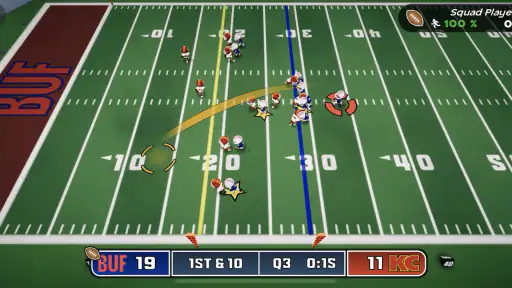
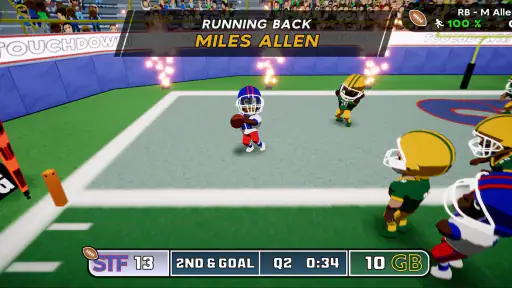

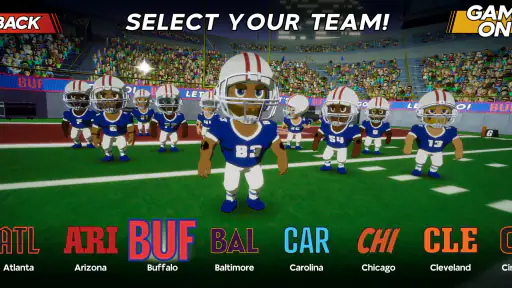
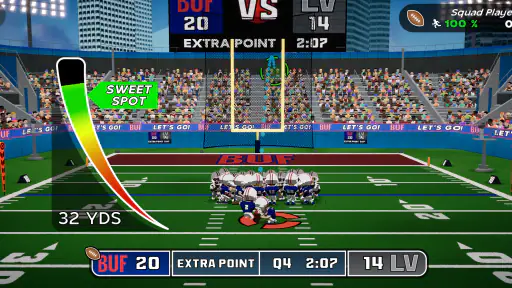

Analysis by Reviewed
Super Tiny Football is the kind of sports game I can open for a short break without first learning a complicated control system. SMT Games presents it as a premium American football experience built around touch and swipe input, and that focus is exactly what defines my time with it. Rather than trying to reproduce every detail of a full console simulation, it aims to make the important moment—the decision, the movement, and the timing—feel manageable on a phone.
That makes it appealing if you enjoy American football but do not want a game that demands a long tutorial before the first enjoyable play. I found the controls approachable, although “easy” does not mean automatic. The challenge comes from using a simple gesture at the right moment, not from memorizing a large set of buttons. For me, that balance is the main reason to consider it.
Why the touch-and-swipe idea matters
The most important capability here is the direct use of touch and swipe controls. On a mobile screen, that choice can either make a sports game feel natural or turn it into a frustrating collection of imprecise gestures. In this case, the approach works best when I treat each play as a quick visual decision rather than as a miniature controller exercise.
A tap is easy to understand, but a swipe asks for more judgment. Direction, timing, and the amount of movement in my finger can affect how confident an action feels. That gives the game a useful layer of skill without covering the screen in virtual buttons. I do not have to shift my attention between several control areas, which is especially helpful when I am playing one-handed on a phone.
The real strength is not simply that the controls are easy to learn; it is that they keep the focus on the next football decision. I can concentrate on reacting to what is happening instead of remembering which small on-screen icon performs a basic action. That is a meaningful difference from many sports games that borrow console-style layouts and feel cramped on mobile.
There is also a trade-off. A simplified control scheme gives the game a cleaner first impression, but it may not satisfy someone who wants detailed control over every formation, adjustment, or individual player movement. Super Tiny Football is better suited to people who value quick interaction and readable actions than to fans looking for a deep coaching simulator.
Learning the gestures without wasting a session
My advice is to spend the first few attempts learning the rhythm of the controls instead of trying to play perfectly. New players often swipe too quickly because they are thinking about the result rather than the motion. A calmer gesture makes it easier to understand what the game expects, and that knowledge carries over into later plays.
I also found it useful to keep my finger movement short and deliberate. Long swipes can feel dramatic, but they are harder to repeat consistently when the action becomes busy. Shorter motions make it easier to react, especially when holding the phone in one hand. This is one of those small habits that is not obvious from a store description but makes the game feel more reliable.
Another practical tip is to avoid judging the game after only a few failed attempts. Touch controls can feel unfamiliar when I am expecting the precision of physical buttons. Once I stop trying to force the screen to behave like a controller, the design becomes clearer. The game asks for timing and direction, not a complicated sequence of inputs.
How it feels during an ordinary play session
In practice, the game fits naturally into short sessions. I can pick it up while waiting for an appointment, play through a few moments, and put it down without feeling that I have abandoned a long management task. That quick-start quality is one of its strongest everyday advantages.
The experience is also less intimidating than many full-scale American football games. Those alternatives often appeal to players who want extensive team management, larger rule sets, and a more detailed simulation of the sport. Super Tiny Football takes a different route. It puts the emphasis on getting into the action and making touch-based decisions quickly.
That does not make it shallow by default. Simple controls can still create pressure when I have to react quickly or choose between a safe action and a more ambitious one. The difference is where the difficulty lives. Instead of being buried in menus or complicated button combinations, it is concentrated in timing and reading the play.
For a new player, that makes the opening experience much friendlier. I can understand the basic idea almost immediately, then improve through repetition. For an experienced sports-game player, the same simplicity may feel limiting if the appeal comes from controlling every stage of a drive. The game’s value depends heavily on which side of that divide I occupy.
A realistic phone scenario
Imagine having ten minutes before leaving for work. A traditional football simulation may be a poor fit because loading, setup, and the demand for sustained attention can consume the whole break. With Super Tiny Football, I can start a session quickly, focus on a few touch interactions, and stop when I need to move on.
The same applies during a commute when I am seated and have a free hand. I would not recommend playing while walking or doing anything that requires attention elsewhere, but the compact format suits a quiet waiting period. The controls do not require a separate accessory, and the game does not ask me to reserve an entire evening for one meaningful session.
That short-session design also makes it a good introduction for someone who knows little about American football. I could hand the phone to a friend and explain the basic idea without giving a long lesson about control layouts. The player can learn by doing, which is often more inviting than starting with a large set of instructions.
Where the design starts to show its limits
The biggest limitation is the same quality that makes the game accessible: the streamlined control model. If I want the feeling of directing a complete football team in detail, I should look at a deeper simulation instead. Those games are more suitable for players who enjoy planning, roster decisions, and extended tactical control.
Super Tiny Football is also not the best choice for someone who expects a full console-like presentation on a phone. Its appeal is concentrated in the interaction itself. I would choose it for quick football action, not because I want every aspect of the sport represented with maximum complexity.
Touch input can introduce friction in situations where precision matters. A physical controller gives clearer tactile feedback, while a glass screen leaves me relying on sight and muscle memory. Even when a gesture is straightforward, my finger can cover part of the display or begin from a slightly different position. Players who dislike touch controls in general may never find the system comfortable.
There is also a financial point to consider. The game is free to download, but in-app purchases range from $0.99 to $99.99 per item. That does not automatically make the experience poor, yet it means I would check the purchase prompts carefully and decide in advance whether I want to spend anything. A player looking for a completely unrestricted free experience should keep that model in mind before committing time.
The age rating is Everyone, which makes the game easier to recommend in a family setting from a content-rating perspective. Still, I would explain the optional spending model to younger players and use the device’s purchase controls where appropriate. That is sensible for any free game with a broad audience.
What it does better than the usual alternatives
Compared with a large football simulation, Super Tiny Football wins on immediacy. I do not need to be a dedicated fan to understand why a swipe matters, and I can enjoy a short session without managing a large number of systems. The lighter approach is particularly useful for casual players who want the feel of making football plays without studying a manual.
Compared with a very simple arcade sports game, it has a more focused identity. The American football theme is not just a visual wrapper for generic tapping; the gestures are meant to make the player feel involved in the action. That gives it more personality than a game that reduces every play to pressing one button repeatedly.
However, the alternatives remain better in specific situations. A detailed simulator is the stronger pick for strategy enthusiasts. A traditional arcade title may be better for someone who wants constant speed and almost no decision-making. Super Tiny Football sits between those two options: accessible enough for casual play, but interactive enough that timing and control still matter.
Small habits that improve the experience
Playing with the phone held securely makes a noticeable difference. I prefer a grip that leaves my swiping finger free while keeping the device steady, because accidental movement can make a deliberate gesture feel like a mistake. This is especially important for people using larger phones or playing one-handed.
I also recommend treating each attempt as feedback. If a gesture goes wrong, I try to identify whether the problem was direction, timing, or an overextended motion. That approach is more productive than repeating the same swipe harder. The game’s compact control set gives me a chance to isolate those mistakes quickly.
Another useful workflow is to play a short warm-up session before trying to improve a result. Touch accuracy changes when I am distracted, tired, or holding the phone differently. A few low-pressure plays help me settle into the screen before I start caring about the outcome. This is a simple technique, but it prevents the controls from feeling inconsistent when the real issue is my own grip.
Players who use a phone with a smaller display may find the direct gestures comfortable, while those with a crowded or highly sensitive screen may need more care. I would avoid playing with wet hands, gloves, or anything that makes swipes less predictable. The game is designed for touch, so the quality of that physical interaction has a direct effect on enjoyment.
Who is most likely to enjoy it
I would recommend this game first to casual sports fans, newcomers to American football games, and anyone who wants a quick mobile activity with a clear control idea. It is especially suitable for players who enjoy improving through timing rather than navigating a complex interface.
It can also work for experienced players who want a lighter companion to a larger football game. After spending time with a detailed simulator, I may not want to manage another full roster or learn another extensive control scheme. This offers a different kind of football session: shorter, more direct, and easier to fit around the rest of the day.
The game is less suitable for people who want a serious management layer, comprehensive tactical control, or the tactile certainty of a controller. I would also skip it if I strongly dislike gesture-based input, because the touch-and-swipe system is not a minor feature that can be ignored. It is the central way the game communicates with me.
SMT Games released it on September 17, 2024, and the current version is 0.9.5. It requires Android 12 or later, so compatibility is worth checking before installing. The game has already passed one hundred thousand installs and holds a 4.6 average from around four and a half thousand ratings, with close to one thousand written reviews. Those figures suggest a healthy level of interest, while the version number also reminds me that the experience belongs to an actively evolving mobile game rather than a finished console package.
Because it is free and rated Everyone, the barrier to trying it is low. My only caution is to approach it with the right expectations. I would not download it expecting a full football simulation. I would download it expecting a focused sports game where a few well-timed touches and swipes carry most of the interaction.
My final take after focusing on the controls
Super Tiny Football succeeds when I let it be a compact mobile game instead of demanding that it imitate a console football title. The touch-and-swipe controls are the reason to play: they remove much of the usual interface clutter and make the important decisions feel immediate. They also create the main weakness, because players seeking detailed control or physical-button precision may outgrow the format.
For me, the best use is a short, focused session in which I can react, adjust, and try again without a long setup. The controls reward calm gestures, a steady grip, and attention to timing. Those details make the difference between feeling that the game is too simple and recognizing that its simplicity is deliberate.
My recommendation is straightforward: try it if you want accessible American football action that fits naturally on a phone, especially if full simulations feel like too much work. Choose another option if your enjoyment comes from deep team management or exhaustive tactical control. As a free sports game from SMT Games, it offers a clear and appealing idea, and its value depends on whether that focused idea matches the way you want to play.
Pros
- Quick matches are ideal for short gaming sessions.
- Simple controls make it easy for new players to get started.
- Bright
- cartoon-style visuals give the game a friendly look.
- Unlockable content provides extra goals beyond the basic matches.
- The lightweight design should run well on many mobile devices.
Cons
- The gameplay may become repetitive after extended sessions.
- Limited tactical depth may disappoint experienced football fans.
- Progression can feel slow without frequent play.
- Small-screen controls may occasionally cause accidental inputs.
- The game may offer less appeal to players seeking realistic football simulation.

- Category
- Sports
- Version
- 0.9.5