Steelborn: Tank Idle RPG
- 144.00
- 4.1
- Installs
- 10.00K
- Price
- Free

Screenshots




Analysis by Reviewed
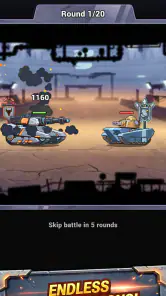
I went into Steelborn: Tank Idle RPG expecting a quick role-playing game built around armored combat, and that is exactly the kind of experience it presents: short sessions, a warrior tank to develop, and battles that are meant to be easy to start rather than difficult to understand. The central appeal is straightforward. You enter the PvP arena, improve your tank, and try to turn each new fight into a better result than the last one.
That simplicity is both the game’s strength and its main limitation. I never felt lost during the opening moments, but I also understood quickly that the long-term experience depends on whether I enjoy gradual improvement more than deep tactical variety. Steelborn is free to download, belongs to the role-playing category, and comes from SayGames Ltd. Its store presence is still relatively small, with over ten thousand installs and an average score of 4.1 from around one thousand ratings, so I would approach it as a compact, developing game rather than a huge established competitive platform.
How the first battles establish a reason to keep playing
The early goal is refreshingly clear: make the tank stronger and use that strength to win in the arena. In many role-playing games, the first hour can become crowded with menus, currencies, character screens, and explanations. Steelborn’s concept is easier to grasp. Your vehicle is also your fighter, so the improvement loop feels connected to what you actually use in battle.
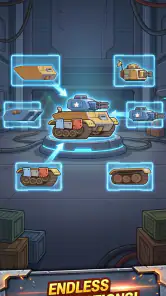
I like that the premise does not ask me to manage a large team before I understand the basics. A single warrior tank gives the opening progression a personal feel. When a fight goes better, the improvement belongs to the machine I have been building rather than to an anonymous collection of units. That makes the early victories useful as feedback: I can see the point of returning because the next attempt is tied to the same evolving combatant.
The best way to approach the opening is to treat every battle as a test of progress, not as a final judgment on your skill. If a match feels difficult, I would first look for a sensible upgrade opportunity before repeatedly forcing the same encounter. This is a small but important habit in an idle RPG. The genre usually rewards patience and preparation, while impatient retries can make the game feel more repetitive than it needs to be.
For a player who wants a game that can be checked during a short break, the setup works well. I can imagine opening it while waiting for transport, completing a few actions, and putting it away without needing to remember a complicated story or a large roster. The trade-off is that anyone looking for a detailed role-playing campaign, extensive exploration, or a large cast of characters may find the tank-focused structure narrow.
What progress feels like in practice
The useful progress signal is not simply that a number rises on a screen. It is whether the tank begins to handle an arena opponent that previously stopped me. That kind of change gives upgrades a practical purpose. I prefer it when a stronger build changes the outcome of a fight, because it makes the development loop easier to understand than a series of disconnected rewards.
I also found that it helps to separate immediate progress from long-term ambition. An immediate goal might be to improve enough to clear the next obstacle. A longer goal is to build a tank that can keep winning as the opposition becomes tougher. Thinking in those two layers prevents the game from becoming a constant search for one more upgrade with no clear reason behind it.
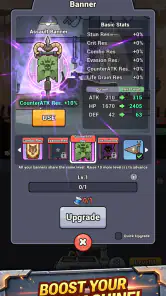
One useful routine is to check the tank before spending anything: identify what is currently preventing a win, then improve the area most closely connected to that problem. If survival is the issue, a defensive improvement is more meaningful than blindly increasing offensive power. If fights last too long, stronger damage may be the better choice. This sounds obvious, but it gives the idle structure a little more decision-making and stops progression from feeling entirely automatic.
That is one of the more interesting trade-offs in Steelborn. The game is approachable because it does not demand elaborate planning, yet the player can still make poor choices by upgrading without considering the next arena challenge. I would not call the strategy deep, but there is enough room for a thoughtful player to get more from the same basic loop than someone who taps through every option without looking at the result.
Reading the difficulty curve instead of fighting it
The difficulty curve matters more here than it might in a story-driven RPG. Since the main motivation is arena performance, a sudden wall can make the whole game feel stalled. In my experience with this kind of design, the healthiest rhythm is a cycle of winning, meeting resistance, improving the tank, and returning with a clearer chance of success. Steelborn works best when that cycle feels visible.
When progress slows, I would avoid treating every loss as a demand to spend immediately. First, I would replay the situation mentally: was the tank simply underdeveloped, or did the opponent expose a weakness in the current build? If the answer is only “not strong enough yet,” the game is asking for patience. If the answer is that the build is poorly suited to the challenge, a more deliberate upgrade choice becomes worthwhile.
This approach also helps with the idle element. Idle progression can make a game comfortable because it allows improvement between active sessions, but it can also reduce the excitement of direct play if waiting solves every problem. Steelborn’s arena focus gives the player a reason to return and check results, yet the experience will depend on how satisfying those checks feel. Players who enjoy watching a carefully prepared build overcome a barrier should appreciate that rhythm more than players who want constant hands-on action.
I would be cautious about expecting every battle to provide a dramatic tactical puzzle. The game’s appeal is closer to managing a steadily improving combat machine than mastering a complex competitive system. That makes it suitable for relaxed sessions, but less suitable for someone who wants precise controls, elaborate real-time maneuvering, or a large range of combat roles.
Where the retention loop helps and where it can press too hard
Steelborn’s retention pressure comes naturally from the promise of a stronger tank and another arena win. That is a familiar loop, but it can be effective when the next target is close enough to feel attainable. I found the idea of “one more improvement, then another attempt” easy to understand. It gives a short session a purpose without requiring a long commitment.
The risk is that progression can begin to feel like a waiting room between meaningful battles. If the tank is not ready for the next challenge, the player may have little to do beyond returning later or considering a purchase. That is where I would pay attention to my own reaction. If I am enjoying the anticipation of a stronger return, the pacing is working. If I am opening the game only to discover that I still need more time or resources, the same system starts to feel restrictive.
There are in-app purchases ranging from $0.99 to $299.99 per item. That range is worth knowing before installing, even though the game itself is free. I would recommend deciding in advance whether I am playing without spending, making only occasional small purchases, or treating the game as a paid hobby. Setting that boundary early is especially useful in an upgrade-driven RPG, where the desire to overcome a difficult opponent can make an immediate purchase feel more tempting than it did at the start.
For me, the fairest way to use the game would be to judge progress by the quality of the battles rather than by how quickly I reach the next milestone. If I am comfortable with a slower pace, the free entry point makes it easy to sample. If I expect rapid access to every upgrade or dislike any pressure around optional spending, I would be more cautious. The purchase range does not automatically make the game unsuitable, but it does make personal spending limits important.
Who will get the most from the tank-building format
I would recommend Steelborn to someone who likes compact role-playing games with a clear combat objective. It is a good match for players who enjoy improving one main fighter, checking whether a build has become strong enough, and returning for another arena attempt. The tank theme also gives the progression a stronger identity than a completely abstract stat-based game.
It should work particularly well for a person who wants something lighter than a full-scale RPG. You do not need to prepare for a lengthy narrative session or learn a large group of characters before the game makes sense. A short, everyday scenario would be opening it during a lunch break, reviewing the tank’s current state, making one considered improvement, and trying an arena fight before returning to work. That kind of stop-and-start use fits the game’s compact premise.
I would skip it if my priority were a deep story, extensive exploration, or highly technical PvP competition. The store identifies it as a game for everyone, and its minimum operating requirement is Android 8.0, but accessibility in age and device terms does not mean the design will suit every taste. A younger or casual player may appreciate the direct objective, while a veteran role-playing fan may want more character variety and more control over each encounter.
It is also not the best alternative to a traditional action game. In a conventional arena title, the player’s reflexes and moment-to-moment decisions usually dominate. Here, the tank’s development and the pacing of improvement are more important. If I want to feel that every victory came from precise manual play, I would choose a more action-focused option. If I want a lighter progression loop that can be checked repeatedly, Steelborn is the more convenient fit.
How it compares with familiar role-playing alternatives
Compared with a story-heavy mobile RPG, Steelborn is more focused and less demanding. There is less reason to manage a broad party or follow a long narrative structure. That focus is helpful when I want to play for a few minutes, but it also means the tank must carry most of the game’s personality. Players who need a rich world to stay engaged may find the arena loop too concentrated.
Compared with a standard idle game, the PvP arena gives progression a clearer destination. The tank is not being developed only to make future numbers larger; it is being developed to perform against opponents. That competitive framing adds urgency. At the same time, it may make slow progression more noticeable, because a player can feel the distance between the current build and the next real test.
Compared with a deep strategy game, the learning curve is gentler. I can understand the basic objective without studying extensive systems. The cost of that accessibility is reduced complexity. Steelborn is better viewed as a streamlined tank-building RPG than as a full tactical simulator. That distinction matters because it sets the right expectation before downloading.
The current version is 1.1.1, which reinforces my view that this is a relatively early experience to evaluate on its own terms. I would install it for the core loop rather than for a promise of endless depth. The most important question is whether improving one tank and testing it in the arena is satisfying enough to repeat. If that answer is yes, the focused design becomes a benefit instead of a missing feature.
Small habits that make the loop more satisfying
My first practical tip is to avoid spending resources simply because an upgrade is available. Save the choice for a clear purpose: surviving a particular opponent, shortening a battle, or reaching the next meaningful threshold. This turns the tank from a collection of rising values into a build with a reason behind it.
Second, I would use difficult encounters as information. A loss can reveal whether the current tank lacks endurance or offensive pressure, even when the game does not present a complicated combat analysis. That makes the next improvement more intentional. It also reduces the temptation to blame the pacing immediately when the real issue may be an unfocused build.
Third, I would play in planned check-ins rather than opening the game constantly. A quick visit after enough time has passed can make the next upgrade or arena attempt feel more meaningful. Repeatedly checking without a realistic goal may make the idle structure seem slower, while a simple routine preserves the sense of progress.
Finally, I would keep the purchase range in mind and decide what “free play” means to me before a difficult wall appears. The game costs nothing to start, and that makes trying it low-risk. The more important decision is whether the gradual route remains enjoyable when progress takes patience. That is a personal pacing question, not something the tank’s theme can solve for every player.
My verdict on the progression
Steelborn: Tank Idle RPG succeeds when I want a direct, low-commitment role-playing loop centered on one evolving armored fighter. Its early goals are easy to understand, its progress is most satisfying when an upgrade changes an arena result, and its idle structure suits short sessions. I also appreciate that the concept gives progression a visible purpose instead of asking me to improve a character without a clear test.
The limitations are equally clear. The focused format may not provide enough variety for players who need a deep campaign or constant tactical control. The pacing can become less appealing when the next arena challenge feels far away, and the available in-app purchases mean I would approach spending carefully. Those are not minor details for an upgrade-driven game; they shape whether the loop feels relaxing or pressuring.
My recommendation is therefore specific: try it if you enjoy gradually strengthening a single tank and measuring progress through arena victories. Skip it if you are looking for a large role-playing adventure, a reflex-heavy PvP game, or a system with extensive character management. As a free game for everyone, it is easy to sample, and the Android 8.0 requirement keeps the technical entry point familiar for many users.
After spending time with it, I see Steelborn as a compact progression game rather than an all-purpose RPG. Its best quality is the clear connection between building the tank and returning to battle. When that connection keeps you curious, the simple structure works. When you need more variety than one warrior tank and an arena-focused loop can provide, a larger role-playing alternative will be the better choice.
Pros
- Simple idle progression makes it easy to check in and play briefly.
- Tank upgrades provide a satisfying sense of steady improvement.
- RPG elements add variety beyond basic idle resource collection.
- Runs smoothly on most modern phones with short loading times.
- Suitable for players who enjoy casual
- low-pressure strategy games.
Cons
- Progress can feel slow without frequent upgrades or extended playtime.
- Combat is largely automated
- limiting direct control over tank battles.
- Repeated missions may become predictable after the initial progression.
- Some upgrades and rewards may encourage in-app purchases.
- The game may require an internet connection for certain features.

- Category
- Role Playing
- Version
- 1.1.1