Star Rising: Basketball
- 757.00
- 4.8
- Installs
- 500.00K
- Price
- Free

Screenshots



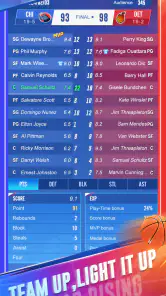
Analysis by Reviewed
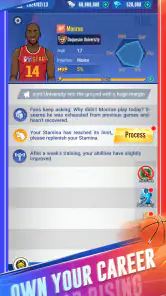
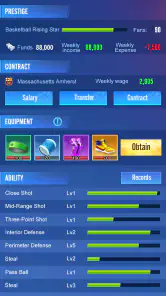
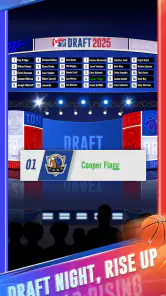
I spent time with Star Rising: Basketball as a sports game built around the long climb from college basketball toward the Hall of Fame and the World Cup. That career idea gives it a more personal feel than a quick match-only game: each decision is tied to the larger question of how far you can take a player. It is free to start, rated for Everyone, and developed by Rising Star Sports Studio, so it is easy to imagine becoming a shared choice on a household phone or tablet.
My first impression was that this is best approached as a progression game rather than a full simulation. I would not install it expecting the depth of a console basketball title, complete team management, or the exact control precision of a competitive online game. Its appeal is the steady sports-story loop: play, improve, move forward, and see whether the career can reach its biggest stages. That makes it a natural fit for short sessions, especially when different people use the same device at different times.
How Star Rising: Basketball Fits a Shared Household
A good game for passing the device around
In a shared-use situation, the most practical strength is that the game offers a clear personal objective. One person can focus on building a promising basketball career, while another can simply enjoy the sport and try to improve the next result. I like that this creates an easy handoff: a parent, sibling, or friend can understand the broad goal without needing a long explanation of complicated controls or a dense management screen.
A realistic example would be a family tablet used after school. One player has a few minutes to continue a career, then someone else picks it up later for a quick session. The important habit is to agree on whose progress is being played before starting. A shared device can make a single save feel communal, but it can also create confusion if several people assume they are advancing the same career in different ways.
That is where the game’s career framing becomes both useful and limiting. It gives the household a common storyline to discuss, but it does not automatically turn separate players into a coordinated team. If everyone wants independent progress, I would treat the game as a one-player-at-a-time experience and keep a simple household rule about who plays which session. If the goal is direct head-to-head competition, a dedicated multiplayer basketball game may be a better match.
What to decide before installing
Because the game is free, the initial decision is fairly easy: it can be tried without paying for access. The more important conversation is about how the device will be used. The game includes in-app purchases ranging from $1.99 to $99.99 per item, so I would not hand it to a child on a shared device without first agreeing on purchase boundaries. The free entry point is convenient, but it should not be mistaken for a completely cost-free progression experience.
I recommend deciding whether purchases are allowed at all, who is responsible for approving one, and whether the game is meant for casual play or a more serious long-term career. These are simple household rules, but they matter more than the download itself. A player who believes every improvement should be earned through play may feel differently from someone who is comfortable paying to speed up progress. Discussing that difference early prevents a small sports game from becoming a source of unnecessary arguments.
There is also a difference between sharing a device and sharing an identity. If several people play the same career, they should understand that a decision made by one person may affect what the next player sees. If the household wants clean boundaries, separate user spaces on the device are the safer arrangement where the operating system supports them. I would not assume that the game itself provides family profiles, child accounts, or a built-in way to separate careers.
Keeping progress understandable
My most useful practical tip is to create a handoff routine. Before leaving the game, the current player should finish the immediate activity, check that progress has been saved, and tell the next person what they were trying to achieve. This is especially helpful in a career game, where a short session can still influence the direction of the player’s development.
A shared note can be surprisingly effective. It might contain the player’s name, the current stage, and one sentence about the next goal. That is not a feature of the game; it is simply a household workflow that reduces accidental interference. I would also avoid switching rapidly between players during a single active sequence. The person who began the session should normally finish it, because passing the device in the middle of a meaningful decision makes responsibility unclear.
This approach also helps adults judge whether the game is being used as intended. A child can explain what they are working toward, while a parent can see whether the game remains a relaxed pastime or has become too focused on progress and purchases. The conversation is more useful than silently assuming that a shared screen means shared control.
Age context and trust
The Everyone rating makes the game approachable for a broad audience, and basketball is an easy subject for different ages to understand. Still, an age label does not answer every household question. Younger players may need help understanding the difference between ordinary in-game progress and an optional purchase. Older children may be able to manage that distinction independently, but I would still make the rule explicit on a device used by several people.
I also think trust should be connected to the child’s role in the household, not just the rating. A responsible older player might be fine with independent sessions, while a younger child may benefit from playing when an adult is nearby. That is not a criticism of the game; it is a sensible response to the presence of paid items and shared progress. The game can be suitable for family use without every family needing to use it in exactly the same way.
For a child who mainly wants authentic basketball strategy, the experience may feel lighter than expected. For a player who enjoys the fantasy of rising through a sporting career, the structure is more inviting. I would explain that distinction before installing it: this is a sports progression game, not necessarily a replacement for watching real basketball, practicing skills outside, or playing a detailed simulation.
Where the career idea works best
The college-to-Hall-of-Fame path gives each session a reason to matter. Instead of treating every match as an isolated event, I found myself thinking about the next step and whether a short improvement would make the larger journey feel more successful. That sense of direction is the game’s strongest design idea from a player’s point of view.
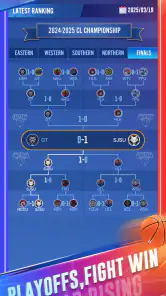
The World Cup goal also gives the career a recognizable destination. Even if a player only has time for brief sessions, the larger ambition makes it easier to return later. This is particularly useful for a household where nobody owns the device permanently. A player can stop after a small milestone and come back without needing to remember a complicated story or a large collection of unrelated objectives.
At the same time, long-term progression can create pressure. If someone in the household is impatient to reach the biggest stages, they may become more interested in paid shortcuts than in playing naturally. I would encourage players to treat the career as a gradual project and decide in advance whether spending is part of the experience. That keeps the focus on basketball rather than on who can advance fastest.
Controls, pacing, and everyday play
For everyday use, I would choose this game when I want a sports-themed break that can be fitted around other activities. It makes sense on a phone during a quiet wait or on a tablet when the household is sharing a larger screen. I would not choose it for a serious five-minute competition between two people unless the game’s available play options clearly support that kind of direct challenge in the version being used.
The distinction matters because career games reward continuity. A player who jumps in only once may enjoy the basketball theme but miss the satisfaction of building toward a larger achievement. Someone who likes gradual improvement, however, may find the format more compelling than a collection of disconnected quick matches. My advice is to give it several relaxed sessions before deciding whether the progression feels motivating or repetitive.
Players should also watch how they respond to setbacks. A career path naturally makes losses and slower improvement feel personal. That can be enjoyable when the player treats each result as part of the story, but frustrating when every session is judged only by immediate advancement. In a shared household, adults can help by framing progress as experimentation rather than as a test that must always produce a better result.
How it compares with familiar alternatives
Compared with a traditional basketball simulation, Star Rising: Basketball is more appealing if you want a guided rise through a player’s career and less appealing if you want exhaustive realism. Simulation-focused alternatives usually attract people who care about detailed tactics, precise roster decisions, or the feeling of controlling every part of a match. I would send those players elsewhere rather than promise that this game offers the same kind of depth.
Compared with a simple arcade basketball game, this one has a stronger reason to return because the career destination gives the sessions continuity. Arcade alternatives can be better for instant action, quick local challenges, or a player who does not want to maintain a long-term goal. If a child wants to pick up the device and score a few baskets without thinking about development, a simpler game may be less demanding.
There is also a difference from sports management games. Management titles are built around planning, budgets, lineups, and decisions away from the court. Here, the attraction is the rising-player fantasy rather than the responsibilities of running an entire organization. I would choose Star Rising: Basketball for someone who wants to feel attached to a basketball journey, not for someone asking to become a general manager.
Technical and purchase considerations
The current version is 1.6.9, and the game supports devices running Android 7.1 or later. That makes it accessible to people who are not using the newest phone, although real comfort will still depend on the particular device and how smoothly it handles the game. On a shared tablet, I would test the controls and screen readability before deciding that it is suitable for younger players or older family members.
The game has an average rating of 4.8 from around 36 thousand ratings, with more than 500 thousand installs. Those figures suggest that the central concept has connected with a substantial audience, but they should be read as a signal of broad appeal rather than a guarantee that every household will enjoy the pacing. Ratings cannot tell me whether a particular player prefers simulation, arcade action, or career progression; that personal fit remains the decisive factor.
Rising Star Sports Studio has positioned the game around an ambitious basketball journey, and that ambition is clear in the college-to-Hall-of-Fame and World Cup framing. My reservation is that a big destination can make the early stretch feel like preparation rather than immediate excitement. Players who need constant variety may lose interest before the career has time to become meaningful.
I would also keep purchase expectations visible. The game costs nothing to begin, and that lowers the barrier for a family trial. However, the presence of items priced from $1.99 to $99.99 means the free starting point should be paired with sensible device-level purchase protection and household agreement. I would never rely on a child’s understanding of the rating alone to manage that issue.
Who should choose it, and who should skip it
I would recommend it to a basketball fan who likes the idea of shaping a player’s rise over repeated sessions. It is also a reasonable choice for a shared household that wants one sports game with an easy-to-explain objective. The free entry, Everyone rating, and broad career theme make it approachable, while the long-term goal gives older players something more substantial than a single quick round.
I would be more cautious for a child using a family device without clear purchase rules, for a player who expects separate household profiles, or for someone who wants a deep competitive simulation. I would also skip it if the main requirement is instant multiplayer rivalry. In those cases, a game designed specifically around local competition, detailed simulation, or stronger account separation would be a better fit.
One non-obvious trade-off is that shared use can make the game more social without making the gameplay itself cooperative. Talking about a career, celebrating a milestone, and planning the next session can be enjoyable family activity, but that should not be confused with everyone controlling one coordinated squad. The household may share the story while still needing clear ownership of each session.
Another useful distinction is between a shared device and a shared goal. If everyone agrees that one career belongs to the household, the game can become a small ongoing project. If each person wants personal achievements, the same arrangement may feel restrictive. I would decide that before the first serious session, because changing expectations after progress has accumulated can be frustrating.
My household verdict
After using it, I see Star Rising: Basketball as a friendly, accessible career-focused sports game rather than an all-purpose basketball replacement. Its best quality is the sense of a climb: starting in college and aiming for the Hall of Fame and the World Cup gives ordinary sessions a clear direction. That makes it more memorable than a purely disposable arcade experience.
For a shared household, I would install it with three simple agreements: identify the player before starting, protect purchases, and explain what progress should be left for the next person. Those steps address the main practical friction without pretending the game has built-in family organization. They also make it easier to keep the experience enjoyable for both children and adults.
My final recommendation is positive, with conditions. If you want a free sports game that turns basketball into a personal long-term journey, it is worth trying. If you want precise simulation, guaranteed independent profiles, or direct competition as the central feature, choose a more specialized alternative. The right reason to play is the rising-career fantasy, not the expectation of a complete basketball simulator. Used with clear household boundaries, it can become a pleasant shared-device game that gives everyone something to talk about without making the device itself a source of confusion.
Pros
- Fast-paced matches are easy to pick up and play.
- Stylish basketball visuals give the game a lively atmosphere.
- Multiple athletes offer variety when building your lineup.
- Short sessions work well for quick breaks.
- Competitive modes add replay value beyond the main progression.
Cons
- Progress can feel slow without frequent play or upgrades.
- Some advanced content may require substantial grinding.
- Touch controls can feel imprecise during hectic plays.
- Matchmaking may be uneven for less experienced players.
- The game may consume noticeable battery during longer sessions.

- Category
- Sports
- Version
- 1.6.9