Sonic Rumble Party
- 2.49K
- 4.3
- Installs
- 10.00M
- Price
- Free

Screenshots

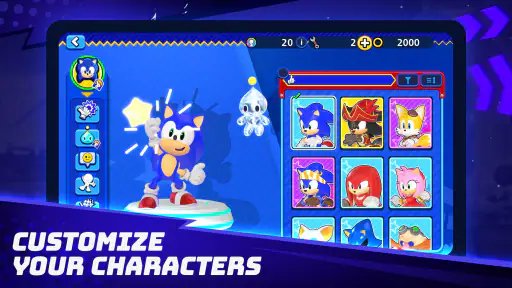



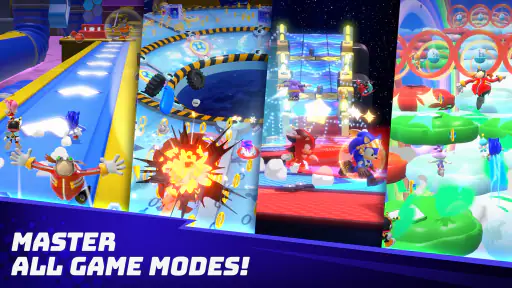


Analysis by Reviewed
I went into Sonic Rumble Party expecting a quick burst of familiar character energy, but the game’s real appeal is its mix of action and social chaos. It is a free action game from SEGA CORPORATION in which Sonic and his friends compete inside a playful online party setting. That combination makes it easy to understand within minutes, yet the results can feel very different depending on whether I am playing casually, chasing better performance, or deciding whether spending money is worthwhile.
The basic pitch is attractive for anyone who enjoys short, lively matches rather than a long story campaign. The setting gives the Sonic cast a lighter, more toy-like identity, while the online party format keeps the focus on movement, timing, and surviving the confusion around me. I would recommend trying it to fans who want a social action game on a phone, especially if they already enjoy quick competitive sessions. I would be more cautious with players who want a quiet single-player experience, a deep narrative, or a game where every outcome feels completely under their control.
What the first sessions reveal about the game
My first useful observation is that Sonic Rumble Party is built around immediate readability. Sonic is a character associated with speed, but this is not simply a traditional platforming adventure moved onto a touchscreen. The party-game structure changes the rhythm. I have to pay attention to the space around me, react to sudden movement, and accept that a crowded match can become messy very quickly. That disorder is part of the entertainment, although it can also be the source of frustration when I want a clean, precise run.
The action category is a good fit, but the social format matters just as much as the character branding. I would not approach this as a replacement for a classic Sonic campaign. Instead, I see it as a pick-up-and-play option for moments when I want animated competition without committing to a long session. A short break after work, a few rounds while waiting for an appointment, or an informal session with friends are the situations where the design makes the most sense.
The online element also affects how I judge the experience. A solo game can let me pause, repeat a difficult section, or learn at my own pace. A party game places me in a shared flow, so I need to make decisions quickly and recover from mistakes rather than stopping to study every detail. That makes the game more exciting, but it also means that someone looking for a predictable training environment may prefer a conventional platformer or a calmer puzzle game.
One practical tip is to treat the opening sessions as observation time instead of immediately trying to win everything. I found it more useful to watch how the environment moves, where other players tend to bunch together, and which moments create the biggest loss of control. In a chaotic game, learning the rhythm of danger can be more valuable than simply moving as fast as possible. That is a small but important distinction for Sonic fans who instinctively rush forward.
Why the toy-world presentation works
The playful presentation gives the competition a softer edge. The characters and surroundings suggest a game that wants to be energetic without taking itself too seriously. That helps when a round goes badly: being knocked out or losing momentum feels more like part of a cartoon contest than a harsh punishment. I still notice the competitive pressure, but the visual tone makes the experience easier to share with younger players and casual friends.
More From Our News Desk

Clash of Clans Is Won Between the Battles

Android Auto Makes the Case for Quieter Car Software

MobiOffice: Transforming Mobile Productivity with Seamless Integration

EA SPORTS FC™ Mobile Soccer: Redefining Mobile Sports Gaming

How Microsoft OneDrive Became a Mobile Productivity Giant

How Google Translate Breaks Language Barriers Effortlessly
The Everyone content rating also supports that broad accessibility. I would still supervise younger players in the same way I would with any online game, particularly because spending decisions and social play deserve an adult’s attention. The rating makes the game approachable, but it does not remove the need for sensible family rules around play time and purchases.
There is another useful trade-off here. The recognizable Sonic identity can bring people into the game even if they are not regular action players. That is a strength for families or groups with mixed experience levels. At the same time, a Sonic name does not automatically guarantee the exact kind of speed-running or platforming depth that a longtime fan might expect. I would choose this for shared excitement and quick competition, not as my only Sonic game.
Progression, spending, and the pressure to continue
Because the game is free to download, the first decision is easy: install it and see whether the party format suits me. The more important decision comes later, when I start considering whether optional purchases are useful. The listed in-app purchase range runs from $0.29 to $99.99 per item. That is a wide spread, so I would set a personal spending limit before browsing any purchase screen rather than deciding in the middle of an exciting session.
I appreciate that the entry cost does not force me to pay before trying the core experience. However, free access can create a different kind of pressure. Once I have invested time in learning the game, I may feel tempted to spend simply to keep pace with my own expectations or to make progress feel faster. That emotional pressure is easy to overlook because each individual purchase can appear small, while the upper end of the range shows that some items can represent a much larger commitment.
My advice is to separate three questions: am I enjoying the matches, do I understand what a purchase changes, and would I still be happy with the game if I bought nothing? If the answer to the last question is no, I would pause before spending. That approach is especially useful in a competitive party game, where the excitement of a close result can make an optional item seem more necessary than it really is.
I would also avoid treating purchases as a substitute for learning. In a game built around movement and reactions, better awareness may improve my results more reliably than buying something without understanding its role. A simple routine helps: play several sessions without spending, note what causes repeated mistakes, and only then decide whether an optional item addresses a genuine problem. If it does not, keeping the money is the better choice.
How fair does competition feel?
Fairness is the area where I would keep my expectations measured. The game is clearly designed around online party competition, and the presence of purchases means I should pay attention to how optional spending relates to play. The available purchase range is confirmed, but that fact alone does not tell me whether purchases affect power, appearance, convenience, or another part of the experience. I would not claim that spending creates an advantage without seeing a clear explanation in the relevant purchase screen.
That uncertainty does not make the game unusable, but it does change how I approach it. I would inspect each item’s description before paying and ask whether it changes the competitive conditions or simply adds personalization. If the explanation is unclear, I would skip the purchase. A fair competitive environment needs players to understand what they are buying, particularly when matches involve other people and results matter to them.
For a player who wants a level field, the safest starting point is free play with no assumption that purchases are required. I can then judge whether my enjoyment comes from reading the action, improving my timing, and handling the crowd. If I find that the game remains satisfying without spending, that is a strong sign that it works for me as a casual title. If I feel pushed toward purchases before I understand their purpose, I would treat that as a reason to step back.
Compared with a traditional offline action game, this format naturally carries more uncertainty. An offline platformer usually gives me a fixed challenge that I can repeat and master. Here, the presence of other players and the party structure make each session less predictable. That unpredictability is fun for social play, but it is not ideal for someone who measures enjoyment through precise, repeatable performance. A single-player Sonic adventure would be the better alternative for that audience.
Compared with other online party games, the Sonic identity is the clearest differentiator. The familiar cast and fast-moving tone can make the game more inviting than an unfamiliar multiplayer title. Yet the same comparison exposes its likely limitation for serious competitors: a playful, chaotic format may prioritize spectacle and accessibility over the exact control and consistency that dedicated esports-style players want. I would choose it for accessible competition, not for a highly controlled tournament routine.
Device, access, and everyday suitability
The game requires Android 8.0 or later, so anyone using an older device should check compatibility before planning around it. On a supported phone, I would reserve a stable connection and enough uninterrupted time for online play. Even when a round is short, joining a shared session is less convenient than opening an offline game for a few seconds. That makes it a better fit for a planned break than for every tiny spare moment.
A realistic use case is a small group of friends meeting after school or work and wanting something everyone can understand quickly. One person may already know Sonic well, while another may only recognize the characters. The party format gives both a starting point because the appeal is not dependent on following a complicated story. I would suggest agreeing on spending rules beforehand if younger players are involved, and I would keep the first session focused on learning rather than purchases.
Another use case is a solo player who wants a colorful change of pace after playing slower strategy or role-playing games. The quick action can provide a useful mental reset, especially when I do not want to manage a large inventory or read long dialogue sections. The trade-off is that online competition can be more tiring than relaxing if I am already frustrated. On those days, an offline game remains the better choice.
The current version is 1.6.2, which tells me the game has an established update line rather than being presented as a first rough experiment. I still would not assume that every issue is resolved simply because the version has advanced. My own test would be practical: confirm that the game runs comfortably, check how I feel after several matches, and see whether the online format fits my connection and schedule.
What I would check before committing
There are a few questions I would answer through normal use before deciding whether this becomes a regular game. First, do I enjoy the chaos when I lose, or do I only enjoy it when I am ahead? That distinction matters because party competition produces unpredictable results. Second, can I understand the effect of an optional item without guessing? If not, I would not spend money on it. Third, does the game still feel worthwhile when I play casually rather than trying to optimize every session?
I would also watch how progress affects my behavior. If I begin playing longer than intended because I am chasing one more result, I would set a session limit. This is not a criticism unique to Sonic Rumble Party; it is simply a sensible response to a competitive loop. The colorful presentation can make extended play feel harmless, but attention and spending are still real resources.
For parents, I would make the purchase range part of the conversation before handing over a phone. The Everyone rating makes the game broadly approachable, but a child may not naturally distinguish between a low-cost item and a much more expensive one. A device-level purchase restriction and a clear rule about asking first are more useful than assuming the rating answers every family concern.
For adults who dislike in-app purchases on principle, I would not push this as a must-have. The free entry point makes testing easy, but the presence of purchases may be enough to make another action game more comfortable. For players who are happy to ignore optional spending and simply enjoy online matches, the game has a fair chance of becoming a convenient casual favorite.
My trust verdict after weighing the trade-offs
The game has a clear identity: fast, colorful, social action built around Sonic’s cast rather than a conventional adventure. That focus works when I want a lively shared session and do not mind a little disorder. It works less well when I want precise platforming, a substantial solo campaign, or complete certainty about how every purchase relates to competition.
Its audience reach is already substantial, with over 10 million installs and an average rating of 4.3 from around 32 thousand ratings. Those figures suggest that many players have found the format appealing, but they are not a substitute for deciding whether its particular style matches my preferences. I would use them as encouragement to try it, not as proof that every player will enjoy it.
SEGA CORPORATION is a familiar developer, and the Sonic connection gives the game an immediate advantage in recognition. Still, trust for me comes from the details of play and spending, not only from the name. I want purchase descriptions to be clear, competition to feel understandable, and the free experience to remain enjoyable without making me feel cornered.
My recommendation is therefore positive but specific. I would suggest Sonic Rumble Party to Sonic fans, families seeking an approachable online action game, and friends who enjoy short rounds full of unpredictable moments. I would skip it in favor of an offline platformer if I wanted mastery through repetition, and I would choose a different competitive game if transparent, tightly balanced progression was my highest priority.
The best way to approach it is to play first, spend later, and judge fairness through your own experience rather than assumptions. Start with the free version, learn how the chaos feels, read every purchase description carefully, and decide whether the game remains fun when you are not chasing a perfect result. For me, that makes it a worthwhile casual recommendation, provided I treat the spending system with the same attention as the action itself.
With a free price, an Everyone rating, support for Android 8.0 and later, and a current version of 1.6.2, it is easy to give the game a low-risk trial on a compatible device. Just remember what it is: not a replacement for every Sonic experience, but a social action party game whose charm comes from quick reactions, familiar characters, and the unpredictable energy of playing alongside others.
Sonic Rumble Party Frequently Asked Questions
How much storage space should I leave for Sonic Rumble Party?
Before downloading Sonic Rumble Party, make sure your device has enough free storage for the installation and future updates. The amount needed can vary by device and version, so check the game’s store page for its current download size. Leaving extra room can also help prevent update problems and gives your device space to run smoothly.
Does Sonic Rumble Party require a powerful phone to run well?
Sonic Rumble Party is a fast-moving action game with real-time online play, so performance can vary between devices. A newer phone may provide a smoother experience, while older devices can be more prone to slow loading or choppy play. Check that your device meets the operating system requirement and close other apps if you experience performance issues.
Can I play Sonic Rumble Party on both Android and iOS?
Sonic Rumble Party is available for mobile devices, but compatibility depends on the platform and the device you use. On Android, the game requires version 8.0 or later. Before installing, search for Sonic Rumble Party in the official store on your device and confirm that the game is available for your operating system and region.
Does Sonic Rumble Party need an internet connection?
Sonic Rumble Party is primarily designed around online multiplayer gameplay, so an internet connection is generally required for its main races, party events, matchmaking, and progression features. Offline access may be limited to certain menus, tutorials, or loading screens, depending on the version and platform. Before downloading, players should confirm the current connection requirements in the official store listing.
Is Sonic Rumble Party suitable for children?
Sonic Rumble Party is rated Everyone, making it suitable for a broad audience. Its action comes from racing, obstacle courses, and playful competition rather than realistic violence. Since the game is designed for online multiplayer, parents may also want to review its social features and supervise play as they see fit, especially for younger children.
Pros
- Fast
- chaotic matches are ideal for quick mobile gaming sessions.
- Familiar Sonic characters and colorful stages add strong nostalgic appeal.
- Simple controls make the game accessible to younger and casual players.
- Multiple playable characters offer variety beyond Sonic himself.
- Party-focused gameplay creates fun moments when playing with friends.
Cons
- Matchmaking may feel frustrating when facing highly experienced players.
- Random events can sometimes make victories feel less skill-based.
- Limited content may reduce long-term appeal for dedicated players.
- Frequent visual effects can make busy stages difficult to read.
- Online play depends heavily on a stable internet connection.

- Category
- Action
- Version
- 1.6.2