FIST OF THE NORTH STAR
- 1.75K
- 4.6
- Installs
- 500.00K
- Price
- Free

Screenshots
Analysis by Reviewed
I went into FIST OF THE NORTH STAR expecting a straightforward licensed action game, but it is better understood as a character-driven action RPG built around the world of the manga. The appeal is not only in hitting enemies hard. It comes from collecting a large cast, improving the fighters you care about, and deciding how to build a team that can survive increasingly demanding battles. That combination gives it more staying power than a short arcade-style experience, although it also brings the familiar complications of random-item purchases and long-term progression.
This is a free game from SEGA CORPORATION, aimed at mature players and listed in the Action category. It has reached over 500 thousand installs and holds a 4.6 average from roughly 25 thousand ratings, which suggests that its presentation and core combat have connected with a substantial audience. I would not treat those figures as a guarantee that everyone will enjoy it, though. The game has a very specific identity: dramatic manga violence, a collectible roster, and a progression loop that asks for regular attention.
How the current version feels to play
The current release is version 8.0.0, and that matters because this is not a tiny one-off game that can be judged only by its opening stages. It has evolved into a larger service-style experience, where the value comes from returning to improve characters, explore more content, and make better use of the fighters already in your collection. I found the first sessions easy to understand, but the deeper appeal appears after the basic attacks stop being enough and team choices begin to matter.
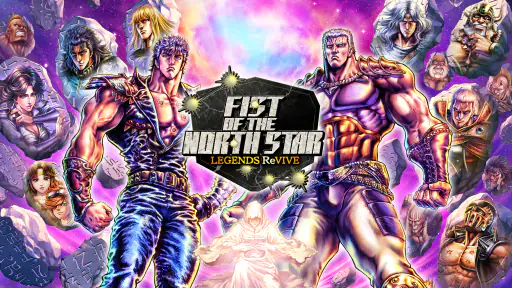
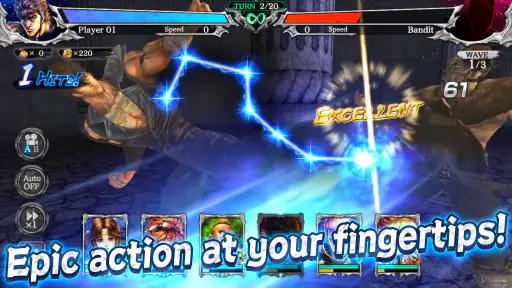
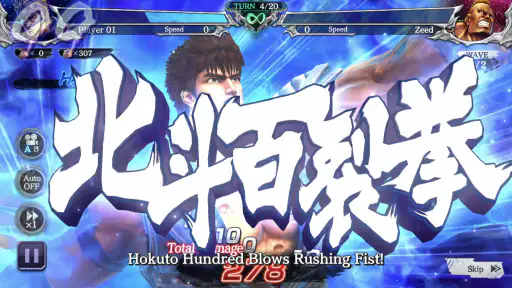
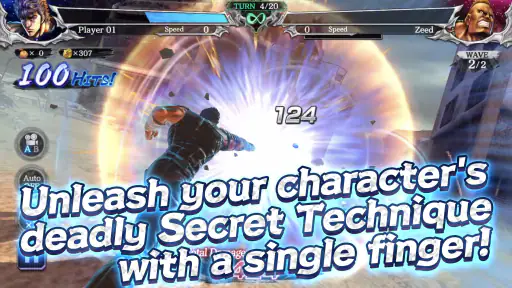
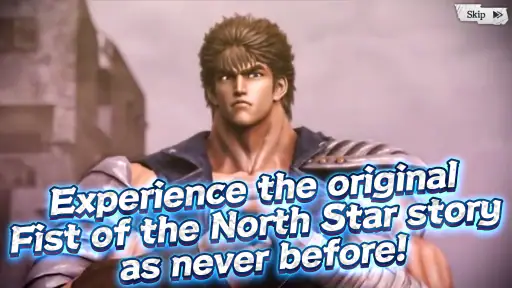
The combat has the exaggerated physicality I would expect from Fist of the North Star. Attacks are designed to feel forceful rather than delicate, and the visual style leans into the source material’s harsh post-apocalyptic atmosphere. That tone is important: this is not a lighthearted brawler with a manga skin. The mature rating reflects the violent world and presentation, so I would be careful about recommending it to younger players simply because it is available on a phone.
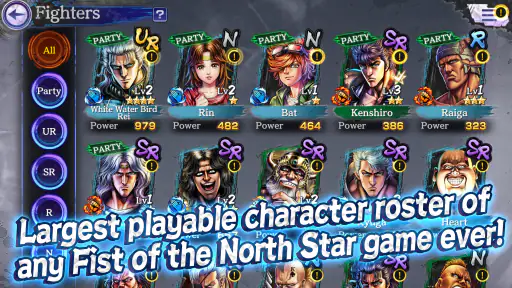
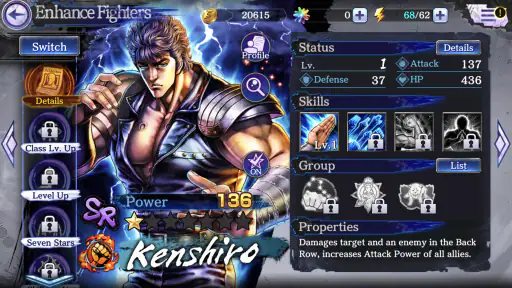
What kept me interested was the relationship between action and collection. A single strong character can carry early encounters, but a broader roster gives you more ways to respond when an opponent resists your usual approach. That creates a useful reason to experiment instead of automatically investing every resource in the first fighter who feels powerful. The game rewards players who think beyond the most obvious favorite.
It also works well in short bursts. I can imagine playing a few battles while commuting, waiting for an appointment, or taking a break from work, then returning later for a longer session when I want to manage characters. That flexibility is one of its practical strengths. The trade-off is that the game can feel less satisfying if you want a completely self-contained action experience with a clear ending and no ongoing collection demands.
The roster is the main reason to stay
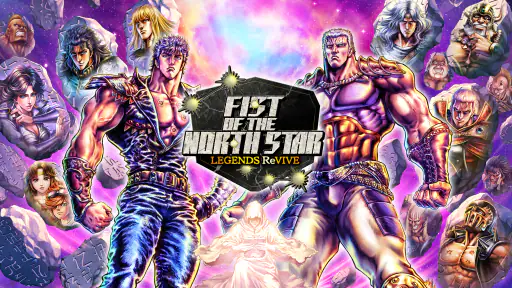
The large manga roster is more than a headline feature. It changes how I approach progression because familiar characters create an immediate emotional reason to keep playing. Fans may want particular versions of their favorites, while newcomers can focus on whichever fighters fit their preferred style. In both cases, collecting is tied to the game’s identity rather than being an unrelated side activity.
More From Our News Desk

Clash of Clans Is Won Between the Battles

Android Auto Makes the Case for Quieter Car Software

MobiOffice: Transforming Mobile Productivity with Seamless Integration

EA SPORTS FC™ Mobile Soccer: Redefining Mobile Sports Gaming

How Microsoft OneDrive Became a Mobile Productivity Giant

How Google Translate Breaks Language Barriers Effortlessly
My advice is to avoid spreading every upgrade evenly across the entire roster. Early resources feel more useful when concentrated on a reliable group, with a smaller reserve kept for a character who may solve a later problem. This is one of the less obvious lessons of a collectible game: owning many fighters does not automatically mean having a strong team. A carefully developed core can be more practical than a large collection of underdeveloped characters.
I would also spend time learning what each new fighter actually contributes before deciding whether to replace an established team member. A character who looks less impressive in a quick battle may offer a useful answer to a specific enemy or stage condition. That kind of testing is more valuable than chasing rarity or visual appeal alone, especially when resources are limited.
Progression rewards planning, not just tapping through battles
The game’s long-term structure asks me to think about where improvement will have the biggest effect. It is tempting to treat every reward as permission to upgrade immediately, but saving materials for a clear goal can prevent a frustrating shortage later. I would first identify the team I use most often, then improve the weakest link rather than repeatedly polishing the strongest fighter.
Another useful habit is to separate progress goals. One session can focus on advancing through combat, while another can be used for roster management and checking which characters are worth developing. Mixing those activities without a plan makes the game feel busier than it needs to be. A simple routine—battle, review rewards, choose one upgrade target, then stop—keeps the collection loop manageable.
This is also where the game differs from a conventional mobile beat ’em up. A traditional action game usually asks whether I can execute attacks well enough to clear the next encounter. Here, execution is only one part of the answer. Team composition, character investment, and the timing of progression decisions can matter just as much. Players who enjoy planning around a roster will find more depth; players who only want immediate action may find the extra layers distracting.
Random-item purchases change the experience
The game includes random-item purchases, and that is the most important point to understand before starting. The free entry price makes it easy to try, but the collection system can create pressure to spend when a desired character or useful reward is tied to chance. Individual purchases range from $0.99 to $99.99, so the distance between a casual purchase and a much larger commitment is significant.
I would approach the store with a fixed personal limit rather than deciding in the middle of excitement. If I wanted to spend, I would treat it as entertainment money and assume that a purchase may not produce the exact result I want. That mindset prevents the common mistake of viewing a random draw as a reliable shortcut to a completed team.
For a free player, the better strategy is to enjoy the early roster and learn the systems before considering any purchase. You will understand which characters you actually use, which upgrades make a visible difference, and whether the repeated progression loop suits you. Spending before answering those questions can make the game feel like a test of patience rather than an action RPG.
This monetization model is not automatically a reason to skip the game, but it does affect who should play it. Fans who enjoy collecting can accept the uncertainty as part of the format. Players who dislike chance-based rewards, or who want every playable option to be earned through direct skill, will probably be happier with a premium action title instead.
What the latest version means for returning players
Version 8.0.0 presents the game as a mature, established experience rather than an early experiment. For someone returning after a long break, that can be positive because there is likely more to investigate than in the original release. The game first appeared on September 4, 2019, so its current form represents a substantial period of evolution from its starting point.
At the same time, a returning player should expect some adjustment. A developed roster can make the opening feel familiar while the wider progression structure takes time to relearn. I would not immediately spend saved resources or dismantle old plans. Instead, I would replay the basic battles, inspect the current team, and work out which characters still match my preferred approach.
Existing users who have played continuously will probably value the current version differently from newcomers. They may already have favorite fighters and established routines, so new content or progression changes are most useful when they give those players a reason to revisit neglected characters. New users, by contrast, may feel overwhelmed by the size of the roster and the number of possible upgrade decisions. Starting with a small, dependable team is the safest way to reduce that friction.
The version number alone should not be read as a promise of a particular feature or balance change. What I can say from playing the current release is that the game’s identity is firmly built around ongoing roster development, not a single linear campaign. That distinction helps set expectations: this is a game to maintain over time, not simply finish once.
Where the experience still falls short
The biggest weakness is the tension between action and management. When I want fast, satisfying combat, menus, upgrades, and collection decisions can interrupt that momentum. Those systems are necessary for the game’s long-term structure, but they also mean that the best experience depends on being in the mood for both fighting and administration.
The random-item model is another genuine limitation. Even if the combat is enjoyable, uncertainty around collection can make progress feel uneven. A player may understand exactly which character would help, yet still have no direct path to obtaining that fighter. That can weaken the sense that skill and planning alone determine success.
There is also a commitment issue. The game is free, but free does not mean effortless. A player who wants to keep pace with a growing roster needs to return regularly and make sensible choices about upgrades. Someone who only opens a game once every few weeks may enjoy the theme but struggle to build momentum. In that situation, a shorter offline action game would be a better fit.
Device compatibility is reasonably accessible because it supports Android 7.0 and later, but compatibility is not the same as comfort. Older phones may provide a less pleasant experience than newer hardware, especially during visually busy moments. I would check available storage and battery behavior before committing to it as a daily game, particularly if the phone is already crowded with large applications.
Who should play it, and who should choose something else?
I would recommend it to fans of the manga who want a playable collection of its characters, and to action RPG players who enjoy building teams over time. It is also a good choice for someone who likes mobile games that can be divided into short sessions without abandoning longer-term goals. The dramatic setting gives the progression a stronger personality than an anonymous fantasy roster.
I would be more cautious about recommending it to a player who wants a pure skill-based fighter. The collectible structure means that combat is not the only source of power, and random-item purchases may feel uncomfortable. I would also point elsewhere for anyone seeking a quiet, family-friendly action game, since the mature presentation is part of the experience rather than a minor detail.
Compared with a standard arcade brawler, this game offers more reasons to return but less immediate simplicity. Compared with a traditional role-playing game, it puts more emphasis on recognizable fighters and action presentation than on slow exploration. Compared with a premium mobile game, it is easier to start without paying but asks the player to accept a more persistent progression and monetization structure.
Practical habits that make the game easier to enjoy
My first recommendation is to decide what kind of player you are before chasing the full roster. If you are here for the story and characters, build around favorites and accept that progress may be slower. If you are here for efficient combat, judge fighters by how they support the whole team rather than choosing only the most famous names.
Second, keep a small record of your upgrade priorities. It can be as simple as choosing one main damage dealer, one dependable support option, and one flexible backup. This prevents the common mobile-game problem of spending everything as soon as it appears, then having nothing available when a more useful character arrives.
Third, use difficult encounters as information instead of treating every defeat as a demand to spend. If a battle exposes weak survivability, improve that weakness. If the problem is poor team coverage, change the lineup. A random purchase may help, but it should not be the first answer to every obstacle.
Finally, decide in advance how much time you want the game to occupy. A short daily routine can keep the roster moving without allowing menus and collection goals to take over your free time. If the routine starts feeling like an obligation, taking a break is sensible; the game is supposed to support entertainment, not turn every spare minute into maintenance.
My recommendation after spending time with it
FIST OF THE NORTH STAR works best when its three parts—heavy action, manga character appeal, and long-term collection—are all attractive to you. Remove any one of those and the weaknesses become easier to notice. The combat alone may not satisfy someone wanting a focused brawler, while the roster alone may not justify the uncertainty of random-item purchases.
For me, the strongest reason to try it is the way the familiar world gives purpose to team building. I like having a reason to revisit characters, test a different lineup, and improve a fighter that initially seemed secondary. The weaker side is the pressure created by chance-based collection and the amount of attention required to keep progression organized.
Because it is free, the sensible approach is to install it, play without spending, and judge the core loop honestly. Give yourself enough time to see whether managing a roster feels rewarding rather than merely necessary. If it does, the current version offers a substantial action RPG experience with plenty for a committed fan to explore. If it does not, no purchase will fix that mismatch.
Overall, I see it as a focused recommendation for mature manga fans and mobile players who enjoy ongoing character development. It is not the best choice for a quick, uncomplicated action game, and the random-item system deserves careful boundaries. Still, its distinctive setting, broad cast, and blend of combat with planning give it a clear personality. Try it for the characters and team-building, but stay for the combat only if the progression loop feels fair to you.
FIST OF THE NORTH STAR Frequently Asked Questions
Can I play FIST OF THE NORTH STAR without knowing the manga or anime?
Yes. The game’s story and recognizable characters may mean more to longtime fans, but its action RPG format can also offer an entry point for newcomers. You can follow the dramatic story and build a team without needing to know every detail of the original series. If you enjoy martial arts battles, collectible heroes, and post-apocalyptic themes, it may still be worth exploring.
What should I know about purchases and random-item mechanics before downloading?
FIST OF THE NORTH STAR is free to download and includes optional purchases, along with random-item purchases connected to its character-collection systems. Spending is not required to begin playing, but purchases can support faster progression or attempts to recruit characters. If you prefer to avoid unexpected spending, review your device’s purchase controls before playing and consider whether randomized rewards suit your preferences.
Can I play FIST OF THE NORTH STAR without spending money?
Yes. You can experience the game without paying, though optional purchases may help players progress faster or collect characters. Free play can require more patience, especially when developing a team or pursuing particular heroes. The game’s story stages and progression systems provide reasons to keep playing, while spending controls can help you manage purchases if you share your device with someone else.
How much storage space should I set aside for FIST OF THE NORTH STAR?
FIST OF THE NORTH STAR is a mobile RPG, so leave room for the initial installation as well as any additional game files and future updates. The amount of storage needed can vary by device and over time. Checking your available space before downloading is a sensible step, particularly if your phone is already close to its storage limit.
Which devices can run FIST OF THE NORTH STAR?
FIST OF THE NORTH STAR is available for Android and iOS, and the Android version requires Android 7.0 or later. Before downloading, check that your device meets the relevant operating-system requirement and has enough free space for the game. Keeping the operating system current can also help with compatibility and a smoother installation.
Pros
- Faithful post-apocalyptic setting and recognizable characters
- Flashy combat effects make special attacks satisfying
- Includes story content alongside competitive modes
- Character progression offers plenty of upgrade goals
- Playable without constant internet access in some modes
Cons
- Energy limits can slow progress during longer sessions
- Gacha mechanics may require patience to obtain top fighters
- Repeated stages can make the campaign feel grind-heavy
- High-quality visuals may consume significant storage space
- PvP balance can vary depending on character rarity

- Category
- Action
- Version
- 8.0.0