Sniper Arena: Killzone Shooter
- 222.00
- 4.0
- Installs
- 100.00K
- Price
- Free

Screenshots
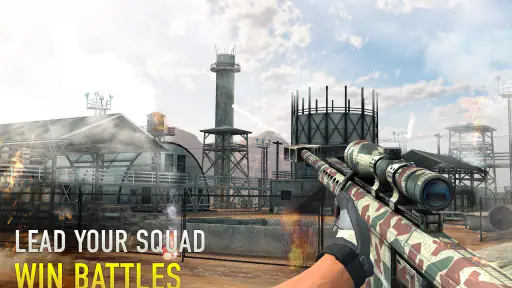
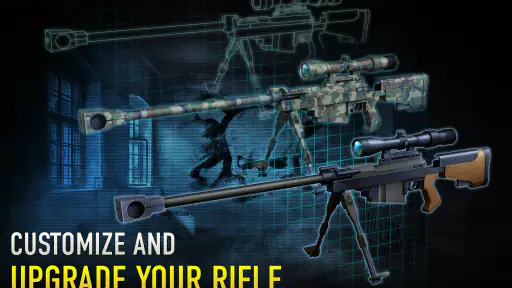
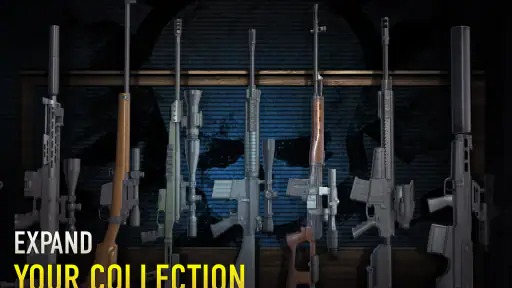
Analysis by Reviewed
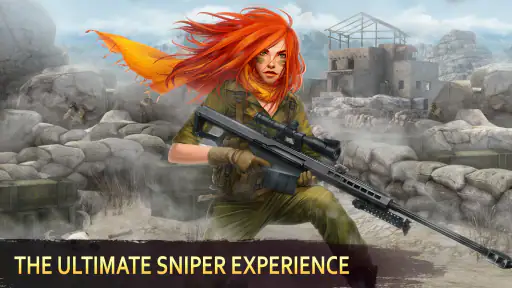
I approached Sniper Arena: Killzone Shooter expecting a quick action game built around careful aim rather than constant movement. That is exactly the kind of experience it presents: an online PvP shooter where the central challenge is finding a useful angle, reacting before another player does, and repeating good decisions under pressure. It is a free action game from Bad Santas Inc., with a Teen content rating, and it has already passed over one hundred thousand installs. My overall impression is that it works best when I treat each match as a short exercise in patience and positioning, not as a frantic run-and-gun session.
The game has a 4.0 average from around four and a half thousand ratings, which feels broadly consistent with my experience. There is a satisfying core here, especially if I enjoy sniper-focused competition, but it is not the sort of shooter I would recommend blindly to everyone. The appeal depends heavily on whether you like repeating a narrow skill loop: observe, line up a shot, take the risk, then adjust after the opponent reveals a pattern. Players looking for a large campaign, a relaxed offline pastime, or a highly varied action game may find the format restrictive.
How I Build a Reliable Match Routine
Starting with a repeatable baseline
My most useful habit is to begin every session with the same basic routine instead of changing my approach after every defeat. I first make sure I am comfortable with the controls, then I spend the opening moments watching how quickly the opposing player exposes a position. That small pause matters. In a sniper duel, firing immediately can give away information without creating a real advantage, while waiting can reveal whether the other player is impatient, predictable, or willing to hold an angle.
I also try to separate aiming mistakes from decision mistakes. If I chose a poor moment to shoot, improving finger control will not solve the problem. If I identified the right moment but dragged inaccurately, then the answer is practice rather than a completely different strategy. Keeping those two errors separate makes each round more useful, because I know what I am actually trying to correct.
For an everyday example, I can imagine playing a few matches during a short break. I would not start by chasing a long session or trying to recover a losing streak. I would play one match to settle into the controls, use the next to test whether waiting produces better opportunities, and then stop if the experience begins to feel tense rather than enjoyable. That approach suits the game better than treating it like a background activity while multitasking.
Reading the opponent before chasing speed
The fastest player is not automatically the strongest player in this format. Speed helps, but only after I know what I am reacting to. I watch for repeated exposure points, rushed shots, and moments when an opponent seems to expect me to answer immediately. If I respond to every visible movement, I become easy to manipulate. A more disciplined pattern is to let the first exchange provide information, then change my timing rather than repeating the same response.
One practical trick is to use the first shot as a test when the situation allows it. I do not mean wasting ammunition or deliberately playing badly; I mean choosing a low-commitment moment to learn whether the opponent moves, hides, or immediately returns fire. That knowledge can be more valuable than a risky attempt at an early finish. It is one of the less obvious strengths of the game: a match can reward observation even when my aim is not perfect.
Keeping the phone and hands out of the way
Because this is a precision-focused mobile shooter, the physical setup affects the experience more than it does in many casual action games. I get better results when notifications are not interrupting the screen and when my fingers are not covering the area where I need to watch for movement. I also avoid changing grip halfway through a match. A stable hold makes small corrections easier and reduces the temptation to over-drag when a target appears.
This sounds simple, but it changes how I judge the game. If I play while walking, switching between apps, or holding the phone awkwardly, I may blame the controls for mistakes caused by the situation. Sniper Arena: Killzone Shooter is much more enjoyable when I give it a few uninterrupted minutes and treat the screen as a focused play space.
Settings I would check before serious play
I would begin by checking every available control and sensitivity option rather than assuming the default arrangement is ideal. The important question is not whether a setting is objectively “best”; it is whether the reticle moves predictably when I make a small gesture. If the aim jumps past a target, the sensitivity is probably too aggressive for my grip. If tracking feels sluggish, a modest increase may help. I prefer making one adjustment at a time so I can tell what actually improved the experience.
I also pay attention to the visual balance between clarity and comfort. A sniper game depends on seeing the target quickly, but a bright or busy presentation can make long sessions tiring. If the device offers display or performance choices inside the game, I would favor a stable, readable setup over the most elaborate presentation. Consistency is more useful than visual ambition when every shot depends on a small movement.
Another worthwhile check is the audio mix. Sound can help me notice that an exchange has started or that a shot has been taken, but loud effects can become distracting if they overwhelm the rest of the match. I keep the volume at a level where I can still concentrate. I would not rely on audio alone, though. A player who builds an entire strategy around a single sound cue may struggle when the match becomes visually busy or when attention is divided.
Shortcuts are really habits here
I would not expect a large collection of keyboard-style shortcuts on a touch-screen shooter, so I interpret “shortcuts” as repeatable gestures and menu habits. I want the same finger movement for small corrections, the same pause before a shot, and the same quick check of settings when something feels wrong. That consistency reduces mental clutter. Instead of asking how to control the game every time, I can focus on the opposing player.
A useful routine is to make only one change after a poor match. If I alter aim sensitivity, grip, timing, and visual settings together, I lose the ability to identify the cause of improvement or decline. Experienced play is often less about secret tricks and more about removing unnecessary variables. The game gives me a clearer learning process when I make small, deliberate adjustments.
Faster patterns that do not sacrifice judgment
Once the basic routine feels comfortable, I can work on speed. The first improvement is usually not moving the reticle faster; it is reducing the time spent deciding whether a shot is worth taking. I scan likely areas in a consistent order, keep my attention near places where an opponent is most likely to appear, and avoid sweeping the entire screen without purpose. A predictable scan makes it easier to notice something unusual.
I also try to prepare the shot before the target is fully exposed, while stopping short of firing too early. That balance is difficult. If I wait until the opponent is completely visible, I may lose the exchange. If I commit before I have a clear target, I create pressure for myself without gaining useful information. The best rhythm is a controlled pre-aim followed by a small correction, not a frantic drag from one side of the screen to the other.
Another pattern is alternating patience and pressure. Holding the same angle for too long can make me predictable, but changing position or attention after every missed opportunity can be equally wasteful. I prefer to hold long enough to learn something, then deliberately vary my timing. This gives the opponent fewer clues about my next move while keeping my own decisions manageable.
When repetition becomes useful practice
The game’s compact focus makes repetition meaningful if I set a specific goal. One session might be about reducing unnecessary shots. Another might focus on recognizing the first movement from an opponent. A third could be about maintaining a steady grip and avoiding overcorrection. Playing with one objective turns losses into feedback rather than a vague feeling that I am simply not fast enough.
This is also where the title may appeal to competitive players who enjoy gradual refinement. It is not a broad action playground where every match teaches a completely different skill. Instead, I keep returning to the same central questions: Did I see the opportunity soon enough? Did I expose myself by rushing? Did I choose a shot because it was smart, or because I felt pressured? That narrow loop can be satisfying for the right person and repetitive for everyone else.
What I would not overestimate
I would be careful about assuming that better equipment, faster reactions, or more aggressive play will solve every problem. The game includes in-app purchases ranging from under a dollar to amounts approaching one hundred dollars per item, so the free entry point is not the whole progression conversation. I would decide early whether I am comfortable enjoying the free experience without chasing every possible upgrade. If spending begins to feel necessary for confidence rather than enjoyment, that is a good point to step back.
This is also why I would not recommend the game to someone who dislikes competitive pressure or purchase-driven progression in free games. Even when the core match is enjoyable, the surrounding sense of advancement can affect how rewarding a session feels. A player who wants a completely even, no-pressure experience may prefer a paid sniper game or a single-player action title instead.
Technical expectations and device fit
The current version is 2.2.7, and the game supports devices running Android 5.1 or later. That broad compatibility makes it approachable for people who do not use a recent phone, but compatibility alone does not guarantee that every device will feel equally comfortable for precision play. Screen size, touch response, and general stability all matter when a tiny correction decides an exchange.
I would test a few matches before committing to a long session. If the phone feels warm, the screen becomes difficult to read, or touch input feels inconsistent, the problem may be the device’s comfort rather than the game’s basic design. A larger screen can make targets easier to inspect, while a smaller phone may be more convenient to hold. Neither is automatically better; the right choice depends on whether I value visibility or compact handling more.
The Teen rating is another useful signal for choosing the audience. I would not treat this as a family-friendly game for very young children, especially because the central activity is competitive shooting. Parents deciding whether to allow it should consider both the age rating and the online PvP format, not just the fact that the game is free to download.
Where the advanced limits appear
The biggest limitation is its narrow identity. Sniper Arena: Killzone Shooter is not trying to replace a full-scale shooter with exploration, a long story, or a wide selection of play styles. Its strength is focus, but that focus can become a ceiling. After I have learned the main timing and aiming rhythm, I may want more variety than the experience is designed to provide.
Online competition also means that enjoyment depends on the quality of each encounter. A thoughtful opponent can make a match tense and rewarding, while a predictable exchange can feel routine. I cannot control that completely. My best response is to judge the game by the quality of the decisions it lets me make, not by expecting every round to become a memorable duel.
I would also avoid using the game as a substitute for an offline shooter when connectivity or privacy is a priority. Its identity is built around online PvP, so it is most suitable when I am ready to interact with a competitive match rather than play independently. Someone seeking a campaign that works at their own pace should look elsewhere.
Who should download it
I think it is a good fit for players who enjoy focused mobile action, short competitive encounters, and the satisfaction of improving a small mechanical skill. It suits someone who can accept losing while learning, who likes reading an opponent, and who prefers a deliberate sniper duel to constant movement. The free price makes it easy to try, although I would set a personal spending limit before exploring the in-app purchase side.
I would skip it if I want a rich single-player journey, broad weapon variety, casual background play, or a shooter where missing a shot has little consequence. I would also be cautious if competitive matchmaking quickly affects my mood. The game asks for attention, and its most rewarding moments come from concentration rather than passive entertainment.
My final recommendation after settling into the rhythm
After spending time with it, I see Sniper Arena: Killzone Shooter as a specialized action game rather than an all-purpose mobile shooter. Bad Santas Inc. has built its appeal around the tension of online sniper play, and that works when I approach each match with a clear routine: check the controls, watch before reacting, adjust one variable at a time, and treat every missed shot as information.
It compares favorably with faster arcade shooters when I want deliberate aim and opponent reading, but the usual alternatives are better when I want a campaign, broader movement, or more varied encounters. Its free entry is inviting, its Teen rating makes the intended audience clear, and its established player interest gives the online concept a reasonable starting point. Still, I would not call it universally essential.
My recommendation is simple: try it if the idea of a focused PvP sniper duel sounds more appealing than a sprawling shooter. Give the controls a fair adjustment period, play in short concentrated sessions, and decide whether the repetition feels like mastery or monotony. The best way to enjoy this game is to improve your decisions before chasing faster fingers. For me, that is where its real value lies, and it is also the clearest boundary of what the game can offer.
Sniper Arena: Killzone Shooter is worth a look for patient competitive players who want a free mobile action game built around precision. I would recommend it selectively, with realistic expectations about its narrow format and in-app purchases. When I want a compact test of timing, observation, and self-control, it gives me a satisfying match; when I want a larger adventure, I reach for a different kind of shooter.
Pros
- Fast-paced sniper matches with satisfying precision-based shooting.
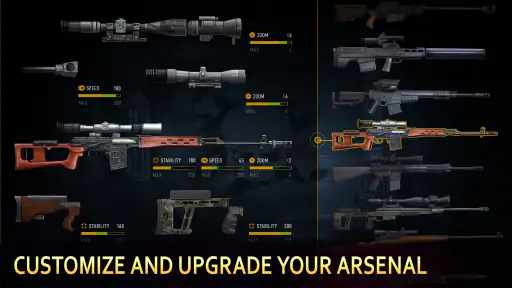
- Multiple weapons and upgrades provide useful progression over time.
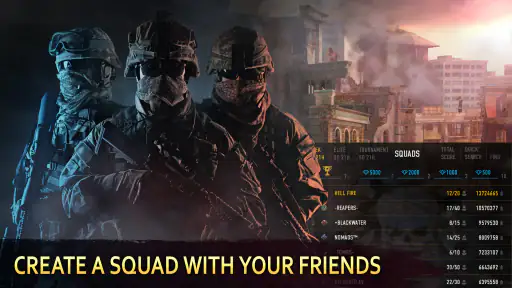
- Competitive multiplayer battles add replay value beyond solo play.
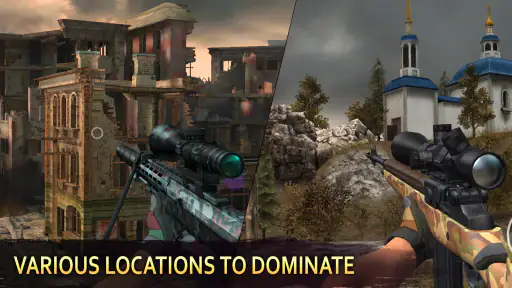
- Detailed maps offer varied sightlines and tactical positions.
- Short match sessions suit quick gaming breaks.
Cons
- Progression can feel slow without frequent play or optional purchases.
- Online matchmaking may pair players with noticeably different skill levels.
- Some maps make long-range encounters feel repetitive after extended play.
- Weapon upgrades can create an uneven experience between new and veteran players.
- The game may consume considerable battery during longer sessions.

- Category
- Action
- Version
- 2.2.7