Skullburn
- 518.00
- 4.6
- Installs
- 500.00K
- Price
- Free

Screenshots







Analysis by Reviewed
Skullburn is a free action game built around a scorched-world premise: civilization has collapsed, fire has reshaped everything, and survival takes place in a wasteland. I spent time with it looking at more than the dramatic setting. The important question is whether its free entry point gives you enough to enjoy before optional spending becomes relevant, and whether its particular mood is strong enough to make it worth keeping on your phone.
My first impression is that this is aimed at players who want a direct, intense mobile experience rather than a slow story-heavy adventure. The world immediately establishes a harsh tone, but the game’s appeal depends on how much you enjoy action built around pressure, danger, and repeated attempts. It is not the sort of title I would recommend simply because it is free. Its value comes from the combination of a focused post-apocalyptic identity and quick access to combat-oriented play.
What Skullburn offers and what the free entry really means
The game is listed as free, so you can begin without paying an upfront purchase price. That makes the initial decision easy: download it if the wasteland setting and action category appeal to you, then judge the actual experience for yourself. Optional in-app purchases range from $0.99 to $99.99 per item, which creates a very wide spending range. I would therefore treat the free version as the real test, not as a promise that every part of the long-term experience will feel equally generous.
That distinction matters. Free access is useful when you are unsure whether the atmosphere will hold your attention, but it does not automatically mean the game is inexpensive for committed players. A casual player can spend nothing and still make a sensible decision based on the opening experience. Someone who becomes deeply invested should look carefully at each purchase before treating it as good value, especially because the highest listed item price is a substantial commitment compared with the cost of trying the game itself.
I also appreciate that the game has a low barrier on older Android devices, with Android 7.0 listed as the minimum operating system. That does not guarantee identical performance across every phone, but it does make the potential audience broader than games that require a recent device. The current version is 1.0.5, so I would keep the game updated where possible and pay attention to how it behaves on your particular handset rather than assuming the same experience on every model.
The audience label is Everyone 10+, which fits a dark action setting without presenting it as an adult-only product. Parents should still judge whether a fire-ravaged wasteland and combat-focused play are suitable for a particular child. The age label is a useful starting point, but the tone is more severe than a bright, casual arcade game, so context matters if younger players share the device.
A setting that does more than decorate the action
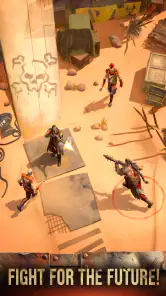
The strongest verified hook is the world itself. Fire is not just a background detail here; it defines the identity of the game. A wasteland shaped by catastrophe gives every encounter a sense of scarcity and danger, even before I consider the specific mechanics. That helps Skullburn stand apart from generic action games that place enemies in interchangeable arenas with little reason for the environment to matter.
More From Our News Desk

Clash of Clans Is Won Between the Battles

Android Auto Makes the Case for Quieter Car Software

MobiOffice: Transforming Mobile Productivity with Seamless Integration

EA SPORTS FC™ Mobile Soccer: Redefining Mobile Sports Gaming

How Microsoft OneDrive Became a Mobile Productivity Giant

How Google Translate Breaks Language Barriers Effortlessly
For me, the setting works best when I use it as a reason to stay engaged between short sessions. If I have a few minutes while waiting for an appointment, the harsh visual premise gives the game a clearer personality than a random collection of battles. I am not entering a cheerful time-killer; I am returning to a damaged world with a distinct mood. That small difference makes the game easier to remember.
At the same time, atmosphere cannot carry an action game forever. If you need a deep narrative, a large social community, or a carefully explained role-playing system, this may not be the right first choice. The store summary gives the game a strong premise, but a premise is only valuable when the moment-to-moment play supports it. I would approach Skullburn for its tone and action focus, then decide whether the actual loop earns longer sessions.
How I would use it in an ordinary day
My most realistic use case is a short evening session after finishing work. I would play with the sound at a comfortable level, try a few encounters, and stop before the game turns into a repetitive obligation. That approach suits a free mobile action title better than promising myself a long uninterrupted campaign. If I had only ten minutes, I would focus on learning how danger develops and whether my decisions feel meaningful instead of trying to force progress.
A second useful routine is to play on a stable connection before relying on it during travel. I would make sure the current version is installed, check how much battery the game uses on my phone, and avoid spending money until I know whether it remains enjoyable after the novelty of the wasteland fades. These are simple habits, but they protect the main advantage of a free game: the ability to test it without financial pressure.
For a parent, the practical scenario is different. I would first play it personally, then decide whether the bleak setting fits the child who wants to use the device. The Everyone 10+ label provides guidance, but it does not replace a quick hands-on check. For a player with an older Android phone, I would also test responsiveness early rather than assuming the minimum operating system means every action will feel equally smooth.
Three ways to get more useful information from the first session
My first tip is to judge the game by the quality of its repeat loop, not by the opening spectacle. A dramatic wasteland can make the first few minutes memorable, but the better test is whether I want to make another attempt after I already understand the basic mood. If the answer is no, additional purchases will not fix the central problem.
Second, I would separate convenience from genuine enjoyment. When a purchase appears, I would ask whether it changes how I play or merely removes a temporary irritation. That distinction is especially important here because the listed purchase range stretches from small amounts to a much larger top tier. A low-cost item may feel harmless, but several small decisions can still change the overall value of a supposedly free game.
Third, I would compare sessions on both a newer and older device if I had access to them. The minimum operating-system requirement tells me that the game is intended to support an older Android baseline, but practical comfort depends on the phone’s hardware as well. Action games are less forgiving of delayed input than turn-based alternatives, so responsiveness should be part of my decision, not an afterthought.
Value, tradeoffs, and the players I would recommend it to
Skullburn has attracted a 4.6 average from around 17 thousand ratings, along with more than 500 thousand installs. Those figures suggest that the concept has found a meaningful audience, but I would not use popularity as a substitute for personal fit. They tell me that the game is worth investigating; they do not tell me whether its pace, atmosphere, or spending structure will suit my habits.
Its clearest value is the chance to explore a distinctive action setting without an upfront fee. That is a strong proposition for curious players who like trying several mobile games rather than committing to one premium purchase. The free entry also makes it easier to recommend to a friend: I can say, “Try the opening and see whether the burned-out world grabs you,” without asking them to buy first.
The tradeoff is that free entry and long-term value are not the same thing. The broad in-app-purchase range means I would keep a firm budget if I decided to spend. I would also avoid buying simply because I had already invested time. Time spent is not a reason to continue paying; the game should still be enjoyable on its own terms. That is the most important financial discipline I would bring to this title.
Compared with a premium action game, Skullburn is easier to sample but may be less predictable as a complete value proposition because optional purchases can shape the experience. Compared with a typical free casual game, it offers a stronger identity through its fire-damaged world and survival mood, but it may ask more from players who want relaxed, low-pressure entertainment. Compared with a story-first post-apocalyptic game, it is the better choice for immediate action and the weaker choice for readers who mainly want dialogue, exploration, and narrative detail.
I would recommend it to players who enjoy bleak settings, action games that can fill short sessions, and free trials before making a commitment. It is also a reasonable pick for someone using an older Android device who still wants to see whether a modern wasteland-themed game runs comfortably on their phone. The minimum operating-system requirement makes that test possible for a wider group, although the final verdict should come from actual performance on the device.
I would be more cautious with players who dislike in-app purchases on principle. Even if the free portion is enjoyable, the presence of items priced as high as $99.99 means the game is not a good fit for anyone who wants a completely purchase-free environment. I would also point players toward a premium alternative if they prefer to pay once, avoid recurring temptation, and know the full cost before they begin.
Players looking for cooperative play, competitive ranking, or an expansive role-playing system should also pause before downloading. Those expectations are more specific than the game’s confirmed identity as an action title, and it would be unfair to assume that a strong wasteland premise automatically provides them. Skullburn makes the most sense when the desired experience is immediate, atmospheric action rather than a particular social or narrative format.
What makes the developer and current release relevant
Skullburn comes from 24 HIT Riga SIA, and the current release is version 1.0.5. I see that version detail as a practical reminder to evaluate the game as a living mobile release rather than as a finished product from memory. Keeping the installed version current is sensible, especially when playing an action game where stability and responsiveness influence enjoyment.
The release date is March 19, 2026, which also places the game early in its public life. I would not judge it solely by the size of its current audience or assume that its long-term direction is already settled. For a new player, that can be appealing: there may be room to discover the game while it is still establishing its identity. The other side is that anyone seeking a mature, extensively proven experience may prefer to wait and see how the release develops.
That early-stage context changes how I interpret the rating. A 4.6 average is encouraging, but I would still read recent user feedback before spending money. I would look for comments about device performance, purchase value, and whether the action remains satisfying beyond the first sessions. That is more useful than relying on a single overall score, particularly for a game whose appeal depends heavily on personal tolerance for repetition and monetization.
My buy-or-skip verdict
I would start Skullburn as a free trial, not as a purchase commitment. The setting is specific enough to attract me, the action focus is clear, and the low entry cost makes experimentation sensible. I would play several short sessions, test it on my usual device, and decide whether I am returning because I enjoy the wasteland action or merely because I have already started.
I would spend only after identifying a purchase that has clear personal value. The small end of the listed range may be manageable for some players, while the highest tier deserves the same caution I would apply to any major entertainment expense. I would never treat an optional item as necessary simply because the game presents it during a difficult moment. If the free experience does not feel satisfying, paying more is a reason to stop, not a reason to continue.
My recommendation is to try it if the scorched-world atmosphere genuinely appeals to you, but keep your wallet separate from your first impression. Skullburn is most convincing as a free action game with a memorable identity and a clear audience: players who want harsh wasteland energy in a mobile format. I would skip it if I want a one-time purchase, a calm casual game, or a guaranteed story-rich adventure. For everyone else, the sensible path is simple: install it, test the repeat loop, check performance on your phone, and only then decide whether its optional spending deserves any place in your budget.
Skullburn Frequently Asked Questions
How much storage space should I have available before downloading Skullburn?
It is sensible to check your device’s available storage before installing Skullburn, as with any mobile game. Having room for the initial download and future updates can help avoid installation interruptions. You can check the app’s size on its official store page before proceeding, then remove files or apps you no longer need if space is limited.
Can I play Skullburn with a controller, or is it designed for touchscreen controls?
Skullburn is an action game, so controls and responsiveness can shape how enjoyable it feels. Before downloading, check the official store page and your device’s settings for any controller compatibility information. If you plan to play on a touchscreen, consider whether you are comfortable with action games controlled that way; the best fit depends on your preferences and device.
Does Skullburn have a single-player campaign or multiplayer modes?
Whether you prefer playing alone or with others can make a big difference when choosing an action game. Skullburn’s store description sets a post-apocalyptic mood, with the world reduced to a fire-scarred wasteland. Before downloading for a particular play style, check the game’s official store page for details about its available modes and any features that suit your interests.
Who developed Skullburn, and how popular is it?
Skullburn is an action game from 24 HIT Riga SIA, set against a bleak, fire-scarred wasteland. It has an average rating of 4.6 from around 17,000 ratings, with over 500,000 installs. Those figures suggest it has attracted a sizable player community, though individual experiences can still differ depending on what someone wants from an action game.
What does Skullburn’s post-apocalyptic setting involve?
The game’s premise is summed up by its stark image: the world ended in fire, and only the wasteland remains. That gives Skullburn a dark, survival-oriented backdrop for its action gameplay. If you enjoy games with ruined-world themes and a grim tone, this setting may appeal to you; players looking for a lighter or more relaxed atmosphere may prefer something different.
Pros
- Fast-paced combat keeps short play sessions exciting.
- Distinctive skull-themed art gives the game a memorable identity.
- Simple controls make it easy to start playing immediately.
- Enemy encounters become more challenging as you progress.
- Runs well on many modern mobile devices.
Cons
- Repeated battles may feel monotonous after extended play.
- Progress can slow noticeably without frequent upgrades.
- Small on-screen controls may cause occasional input mistakes.
- The dark visual style can make some details hard to see.
- Limited content may reduce long-term replay value.

- Category
- Action
- Version
- 1.0.5