Shut The Box
- 194.00
- 4.7
- Installs
- 100.00K
- Version
- 1.2.25982

Screenshots





Analysis by Reviewed
I found Shut The Box to be a pleasantly focused board game: simple to understand, quick to start, and more thoughtful than its short store summary suggests. FunCraft Games presents it as a classic dice strategy game, but the appeal is not only in rolling dice. The interesting part is deciding how to use each roll, when to take a safe option, and when to accept a risk for a better finish.
The game is free to download, which makes trying it an easy decision for anyone who enjoys compact tabletop-style games. It is rated for Everyone, runs on Android devices using version 7.0 or later, and the current version is 1.2.25982. I also noticed that its audience is already fairly substantial, with more than one hundred thousand installs and a 4.7 average from roughly two thousand ratings. Those figures suggest that the straightforward format is connecting with players, although they do not change the fact that this is a deliberately narrow game rather than a large collection of board activities.
How the dice decisions create value
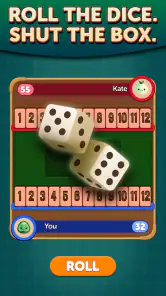
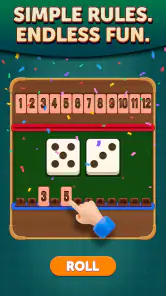
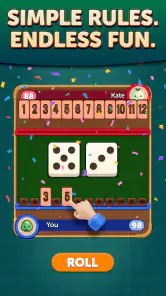
The central idea is easy to grasp. Dice determine the total available to you, and you choose how to use that result among the options on the board. That sounds basic, yet the decision is rarely completely automatic. A move that looks efficient now can leave awkward values for later, while a less obvious combination may keep more useful possibilities alive.
That tension is where the game earns its place on my phone. I can play it in a short break without learning a long rule set, but I still have something to think about after the first few rounds. The best turns are not necessarily the ones that remove the most pieces. They are the turns that leave a manageable board for the next roll.
I especially like that the game rewards restraint. New players often chase immediate progress, while experienced players begin to consider the shape of the remaining board. If a roll can be used in several ways, I recommend looking one step ahead before committing. Ask which choice leaves the greatest number of useful follow-up combinations, rather than simply choosing the most visually satisfying removal.
That small habit makes the experience feel more strategic without making it feel complicated. It also gives the game a natural learning curve. At first, I played reactively. After a few sessions, I started treating each turn as a problem of preserving options. That is a meaningful layer for a game that can be explained in a sentence.
A good fit for short, interrupted sessions
The strongest everyday use case is a spare moment when I want interaction but not a demanding commitment. It works well while waiting for an appointment, taking a short break, or sitting with family members who want to play something that does not require a long setup. Because the rules are familiar in spirit, I would also feel comfortable handing the phone to someone who does not usually play mobile games.
It is useful as a light introduction to probability and decision-making too. A younger player can understand the immediate goal, while an older player can discuss why preserving certain combinations matters. The Everyone rating supports that broad accessibility, and the lack of a complicated rules explanation keeps the first session approachable.
Still, I would not describe it as a substitute for a full board-game evening. Its charm comes from concentration and repetition, not from a large world, story, campaign, or constantly changing set of activities. If I want social negotiation, character development, or a long strategic arc, I would choose a different kind of game.
What the free version means for value
The important cost detail is clear: the game itself is free. That gives it strong trial value because I can install it and decide whether the dice-and-combination loop suits me without paying an entry fee. In-app purchases are listed from $0.49 to $49.99 per item, so the purchase range is broad even though access begins at no cost.
I would separate those two ideas when judging value. Free access makes the game easy to sample, but it does not automatically make every optional purchase worthwhile. The listed purchase range tells me that spending can vary considerably; it does not, by itself, establish what each item contains or whether any purchase is necessary for the core experience. My practical advice is to play enough free sessions to decide whether the basic loop has lasting appeal before considering any optional spending.
For me, the free starting point is the main reason to recommend a trial. This is not a game I would suggest buying sight unseen, because its appeal depends heavily on whether repeated dice decisions stay enjoyable for you. Someone who loves compact probability puzzles may get plenty of value without spending anything. Someone who needs frequent new content may reach the limits of the format quickly.
The developer, FunCraft Games, has chosen a familiar concept rather than hiding the game behind a complicated presentation. That is a sensible value decision: the player can judge the core idea almost immediately. I appreciate that clarity because it prevents the usual problem of spending time learning layers that do not improve the actual game.
Small decisions that improve your play
My first practical tip is to avoid treating every roll as an instruction to make the largest possible move. A large immediate reduction can be tempting, but it may also leave a collection of difficult values. When two choices appear similar, I usually favor the one that keeps the remaining board flexible.
My second tip is to slow down on rolls that offer several combinations. Those are the turns where a few extra seconds can matter most. The obvious pairing is not always the best pairing, particularly if another choice preserves a more useful number for a later turn. This is where the game moves beyond pure luck: the dice provide the situation, but the player decides how much future flexibility to sacrifice.
My third tip is to use early sessions as practice in recognizing patterns rather than chasing a perfect result. I found it more helpful to notice which leftovers repeatedly caused trouble than to become frustrated by one unlucky sequence. Once those patterns become familiar, I make decisions faster and with more confidence.
A fourth useful approach is to keep the game in its proper role. I would use it as a short mental reset, not as a game that demands a long uninterrupted block of attention. If I begin a session expecting a deep campaign, it will feel limited. If I begin expecting a compact board puzzle with repeatable decisions, the design makes much more sense.
Where it stands beside familiar alternatives
Compared with a physical dice game, the mobile version is more convenient. There is no need to find dice, prepare a table, or remember where the pieces belong. That makes it better for solo play and spontaneous moments. The trade-off is that a phone cannot reproduce the same tactile feeling as moving physical pieces with other people around a table.
Compared with larger digital board games, this one is easier to enter and less demanding. There are fewer rules to remember and less time between meaningful decisions. That is a strength when I want something immediate. It is a weakness if I expect multiple systems, a campaign, varied boards, or a strong narrative reason to return.
It also differs from purely luck-driven dice apps because the result is not determined by rolling alone. The choice after the roll gives the player room to influence the outcome. However, it remains unsuitable for anyone who dislikes repeated chance-based situations altogether. Good decisions can improve a position, but they cannot remove the uncertainty that defines the format.
For a group looking for conversation and shared physical interaction, a real tabletop set may be the better choice. For an individual who wants the same broad style without carrying anything, this mobile version is more practical. The right choice depends less on graphics or scale and more on whether convenience matters more to you than tactile social play.
Limitations worth considering before installing
The biggest limitation is repetition. The rules are approachable because the game stays focused, but that same focus can make sessions feel familiar after the novelty fades. I would not recommend it to someone who needs a constant stream of new mechanics. Its replay value comes from trying to make better decisions within the same framework, not from discovering a succession of different game modes.
Another limitation is that the game may feel too light for players who want a strong sense of progression. A compact board puzzle can be satisfying, but it does not automatically provide the emotional investment of a strategy campaign or the variety of a broad board-game collection. If your ideal mobile game includes a story, customization, or a large map, this is probably the wrong direction.
The in-app purchase range is also worth keeping in mind. The game is free to access, but optional purchases can reach $49.99 per item. I would therefore approach spending carefully and judge the free experience first. For a casual player, paying may never be necessary. For a committed player, the value of any purchase should be considered separately from the fact that the base game costs nothing to try.
Device compatibility is fairly welcoming because Android support begins with version 7.0. That is helpful for people using older devices, although I would still judge the experience on the particular phone or tablet available to me. A board game with simple rules benefits from being easy to access, and broad operating-system support helps with that.
Who will get the most from it
I think the best audience is someone who enjoys classic board ideas, short sessions, and decisions shaped by probability. It is particularly suitable if you like games that are easy to explain but reward better judgment over time. Families may also appreciate the Everyone rating and the absence of a steep learning barrier.
It is a good choice for commuters, casual players, and anyone who wants a small puzzle rather than a major entertainment commitment. I can imagine keeping it available for moments when I want to focus for a few minutes, then stop without losing the entire evening. That modest use case is not a weakness; it is exactly where the design feels most comfortable.
I would tell highly competitive players to try it with realistic expectations. The strategic choices are meaningful, but the game remains compact and luck still matters. Players who want deep multiplayer rivalry, elaborate planning, or a large range of board formats may be happier with a more substantial alternative.
I would also skip it if the basic dice premise already sounds repetitive. The free price removes much of the financial risk, but it cannot change personal taste. No amount of optional content can make a focused dice puzzle feel like a story-driven adventure or a complex strategy simulation if those are the experiences you actually want.
My recommendation after playing
My verdict is positive, with a clear qualification: try it for its focused loop, not for features it was never designed to provide. Shut The Box delivers a clean mobile version of a classic dice-based board idea, and its strongest quality is the balance between immediate understanding and small but meaningful decisions.
The free entry point makes the recommendation straightforward. I would install it if I wanted a quick board game for solo moments, a family-friendly activity, or a low-pressure way to practice planning around uncertain rolls. The 4.7 average and more than one hundred thousand installs indicate that many players have responded well to this approach, while the current version shows that the app is being presented as an actively available title rather than an abandoned curiosity.
My caution is equally straightforward. Do not choose it expecting a deep collection of games, a long campaign, or endless novelty. The value comes from replaying the same essential decision loop and gradually becoming better at reading the board. If that sounds satisfying, the game offers an accessible and inexpensive way to play. If it sounds repetitive before you begin, a broader board-game app or a physical set will probably serve you better.
For my own recommendation, I would keep it in the category of free, easy-to-start board games with genuine replayable decision-making. I would play it in short sessions, avoid rushing the flexible rolls, and postpone any optional purchase until the free experience had clearly earned more of my time. That makes it a sensible download for the right player, even if its deliberately narrow design will not suit everyone.
Pros
- Simple rules make it easy for anyone to start playing quickly.
- Short rounds are ideal for casual sessions or quick breaks.
- Dice-based gameplay offers a satisfying mix of luck and decision-making.
- Works well for solo play without requiring an internet connection.
- Clean presentation keeps the focus on the traditional tabletop experience.
Cons
- Luck can have a major impact
- limiting the feeling of strategic control.
- Replay value may feel limited once the basic mechanics become familiar.
- Some players may find the gameplay too slow or repetitive over time.
- The traditional design may not appeal to users seeking modern game features.
- Progression and long-term goals may be limited compared with larger games.