Shoot Die Repeat
- 61.00
- 2.0
- Installs
- 50.00K
- Price
- Free
Screenshots
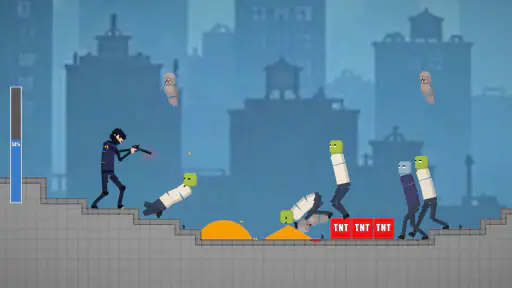
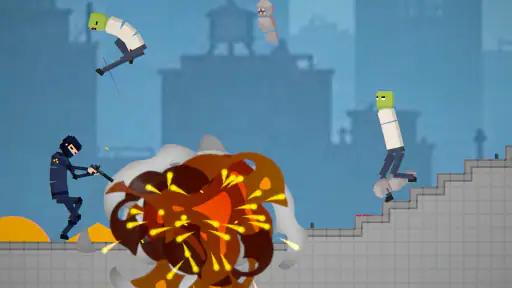
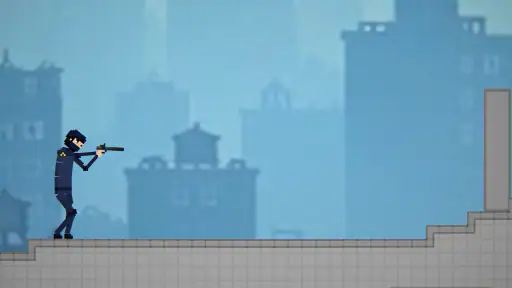
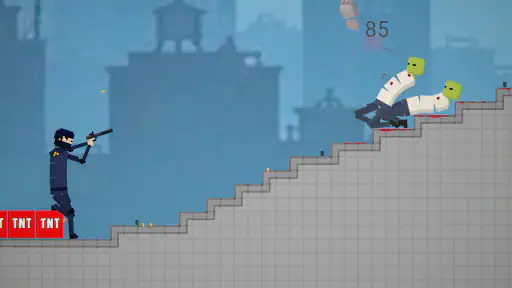
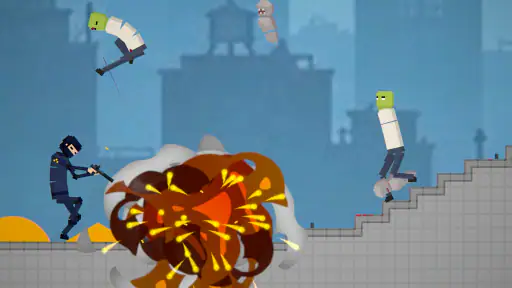
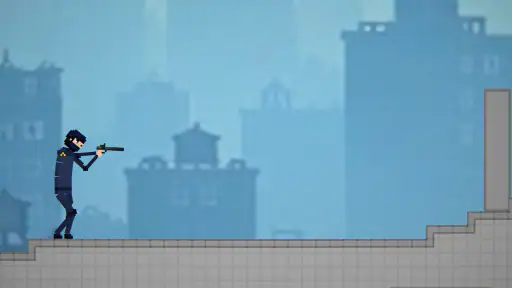
Analysis by Reviewed
I spent time with Shoot Die Repeat, an action game from Heseri Games built around a simple promise: each defeat should help you become stronger. That idea immediately makes the game sound like a quick, aggressive shooter, but the real appeal is the loop between taking risks, failing, learning, and trying again. It is free to download, aimed at players aged 10 and over, and currently sits at version 1.4.8.
My first impression was mixed. The central concept is easy to understand, and it gives every attempt a purpose, but the low average rating of 2.0 from roughly 243 ratings is important context for anyone deciding whether to install it. I did not find it difficult to start playing, yet the experience can feel demanding in ways that will not suit everybody. This is not the kind of action game I would recommend automatically to someone looking for a polished, relaxed session.
How the death-and-upgrade loop feels in practice
The main rhythm is straightforward: enter a run, shoot, survive as long as possible, die, and use what the attempt taught you to make the next one more effective. That structure works best when I treat failure as information rather than as wasted time. A poor run can reveal that I was moving too aggressively, choosing the wrong moment to attack, or paying too little attention to the space around me.
That makes the game more interesting than a basic shooter where every defeat simply sends me back to the beginning. Here, the restart has a reason. I can adjust my approach instead of repeating the same actions mechanically. The store summary, “Get stronger every time you die,” captures the broad idea, but the useful part is how that idea changes my attitude during play: I start watching patterns, testing decisions, and accepting short attempts as part of progress.
The short description, “Shoot Die Repeat,” also points to the game’s intended pace. It is designed around repetition rather than one long uninterrupted adventure. I found that helpful when I only had a few minutes available. A quick session can still feel meaningful if I focus on improving one decision, such as when to push forward or when to hold back.
Who will enjoy the format
This is a good fit for players who like action games with a retry-based structure. If you enjoy learning through failure, experimenting with different approaches, and seeing a later attempt go better because of something you noticed earlier, the design has a clear attraction. It also suits people who prefer games that can be played in short bursts instead of requiring a large block of free time.
I would be more cautious if you want a story-heavy campaign, a slow tactical experience, or a shooter that feels generous from the first minute. The repeated deaths are not an occasional inconvenience; they are central to the way the game is meant to work. Someone who dislikes restarting will probably see the same design as frustrating rather than motivating.
You May Like

Clash of Clans Is Won Between the Battles

Android Auto Makes the Case for Quieter Car Software

MobiOffice: Transforming Mobile Productivity with Seamless Integration

EA SPORTS FC™ Mobile Soccer: Redefining Mobile Sports Gaming

How Microsoft OneDrive Became a Mobile Productivity Giant

How Google Translate Breaks Language Barriers Effortlessly
A realistic everyday use case is a commute or a short break between tasks. I can begin an attempt, concentrate on one improvement, and stop without feeling that I abandoned a complicated narrative or lost track of a large world. On the other hand, if I am tired and only want something calming, the pressure to repeat a difficult sequence can make the game feel like work.
What I learned from playing more carefully
The first non-obvious lesson is that the strongest response to a death is not always to attack faster. Because the game is built around becoming stronger after failure, it encourages a habit of reviewing the cause of the defeat. I get more value from asking what decision created the problem than from immediately rushing into another attempt. That small change makes the loop feel more deliberate.
The second lesson is to separate mechanical improvement from progression. Becoming better at aiming, movement, and timing is something I can control directly, while the game’s longer-term strengthening gives the run another layer of progress. If I rely only on upgrades, difficult sections may still expose poor habits. If I rely only on personal skill, the progression system loses part of its purpose. The best results come from using both.
The third trade-off is between speed and information. A fast attempt may feel exciting, but a slower approach can teach me more about danger, spacing, and the consequences of a risky move. I would not play every run cautiously, because that would remove some of the action, but deliberate testing is useful when I am stuck. In this game, a failed experiment can be more valuable than a reckless attempt that ends for reasons I never understood.
What version 1.4.8 means for current players
The current version is 1.4.8, so this is not an untouched first release. That matters because a player installing it today is experiencing a later state of the product rather than its earliest form. I see that as a reason to judge the present build on how it feels now, while avoiding assumptions about changes that are not clearly documented in the game itself.
For existing users, the practical question is whether the current build preserves the basic appeal of the loop. In my experience, the answer depends less on a single dramatic feature and more on whether the repeated cycle still feels fair. When a death teaches me something and the next attempt gives me a believable chance to improve, the game holds my attention. When a defeat feels disconnected from my choices, the same cycle becomes tiring.
The version number also gives the game a sense of ongoing development, but I would not treat that alone as proof that every rough edge has been solved. A later version can still have design friction, uneven pacing, or moments where progression does not feel as satisfying as it should. My advice is to think of 1.4.8 as the current point in the game’s evolution, not as a guarantee that it will match the standards of a much larger action title.
That distinction is especially relevant because the game has passed roughly 50 thousand installs but still carries a 2.0 average. The audience is large enough to show that the concept attracts attention, yet the rating suggests that interest and satisfaction are not the same thing. I would use the rating as a warning to keep expectations realistic, not as a complete verdict. A player who likes retry-focused action may respond differently from someone who expects a smooth, broadly accessible shooter.
Free entry, paid friction
The game is free, which makes trying the core experience relatively easy. That is a genuine advantage for a player who is curious about the death-to-strength concept but does not want to pay before understanding the gameplay. I appreciate being able to decide based on actual handling and repetition rather than on screenshots or a description alone.
There are in-app purchases ranging from $2.99 to $14.99 per item. That changes the decision for players who want a completely uninterrupted free experience. I would avoid buying anything immediately. First, I would play enough to decide whether the basic loop is enjoyable without assistance, then consider whether a purchase adds value rather than simply reducing the challenge that makes the game distinctive.
This is also where the game differs from a traditional premium action title. A paid game usually asks for money at the beginning and then presents a more predictable package. Here, the free entry lowers the initial risk, but optional spending can become part of the longer-term experience. For me, that means the right comparison is not only “Is this shooter fun?” but also “Am I comfortable with the way progression and purchases fit together?”
How it compares with familiar action alternatives
Compared with a conventional shooter, this game places more weight on the restart. In a standard action title, I may expect checkpoints, a steady campaign, or a clear path through a level. Shoot Die Repeat instead makes repetition part of the identity. That can feel more focused, but it can also feel narrower if I want variety, narrative context, or a sense of continuous forward movement.
Compared with a slower roguelike-style experience, the action emphasis is more immediate. I am not approaching it primarily as a long planning exercise; I am reacting, shooting, and learning from the result. The advantage is a more direct session. The disadvantage is that players who enjoy deep build planning or extensive exploration may find the experience less satisfying than a larger, more systems-heavy alternative.
It also differs from casual arcade games that are built around instant, low-consequence fun. The controls and action may invite quick play, but the repeated defeat loop asks for patience. If I want to switch off my brain completely, a simpler arcade game is probably the better choice. If I want a compact challenge where every attempt can reveal a mistake, this title has a stronger reason to keep trying.
Where the experience still falls short
The biggest limitation is the possibility of repetition without enough emotional payoff. The concept promises that each death makes the next attempt stronger, but that only feels rewarding when the improvement is noticeable. If progress seems too slow or a run ends before I understand why, the slogan becomes less convincing. The game needs the player to believe that effort is producing a real change.
I also found that the design asks for a particular mindset. It does not make much sense to play while resisting the idea of failure. A player who becomes annoyed after every death may never reach the point where the loop becomes satisfying. That is not necessarily a flaw in the concept, but it narrows the audience. The game is better for people who can treat setbacks as part of the challenge.
The low rating reinforces that caution. I would not ignore it, especially if I were recommending the game to someone who values polish and consistency above experimentation. At the same time, ratings can flatten different complaints into one number. My own judgment is more specific: the game has a clear hook, but its success depends heavily on whether its moment-to-moment action makes repeated attempts feel deserved rather than obligatory.
Another weakness is that the game may not be the best choice for long sessions. The retry loop is effective in short bursts, yet its intensity can become tiring when stretched too far. I prefer stopping after a meaningful improvement instead of continuing until frustration replaces curiosity. That is a useful boundary for anyone who tends to keep playing after a difficult loss.
Practical advice before committing
When starting, I would set a small goal for each attempt. Instead of demanding a complete breakthrough, I might focus on surviving a little longer, making fewer careless attacks, or understanding one dangerous situation. This keeps the free version from feeling like an endless test and makes the progression easier to evaluate.
I would also resist spending money during the first session. The price range for individual purchases makes it sensible to learn how the game feels naturally before deciding whether paid items improve the experience. If the basic loop does not hold my attention, a purchase is unlikely to fix the underlying issue. If the loop does work for me, I can make a calmer decision later.
For younger players, the Everyone 10+ rating is a useful guide. I would still consider the child’s tolerance for repeated failure and action-focused play rather than relying on the age label alone. A game can be suitable by rating and still be a poor personal match for someone who dislikes pressure or quick restarts.
Device compatibility is also worth checking before installation. The game supports a minimum operating system of Android 7.1, so it is accessible to a broad range of Android devices that meet that requirement. I would still judge the actual experience on the phone or tablet being used, particularly if the player expects fast action to feel consistently responsive.
Who should install it now
I would recommend giving it a try if you like action games where failure is part of the progression rather than a simple penalty. It is particularly appealing for players who enjoy short sessions, repeated experiments, and the satisfaction of turning a bad attempt into a better one. The free price makes that trial easier, provided you are comfortable with the presence of optional purchases.
I would skip it if I want a complete, story-led adventure, a relaxing casual game, or a shooter that rewards me with constant forward momentum. I would also be careful if I am easily frustrated by repetition. The game does not seem designed to hide its central cycle, and that cycle will either be the reason to return or the reason to uninstall.
For existing players, version 1.4.8 is worth approaching with measured expectations. The game has clearly moved beyond its earliest release state, but the current experience should still be judged by its actual balance of action, learning, and repetition. I would continue playing when a defeat gives me a clear idea for the next run; I would take a break when I am repeating mistakes without gaining useful information.
What I would watch going forward is whether future development makes the retry loop feel more consistently rewarding without removing its challenge. The important question is not simply whether the game adds more content, but whether each attempt communicates why I failed and gives me a satisfying reason to try again. That is the point where the experience either grows into its concept or remains an appealing idea with uneven execution.
My final view is cautiously positive for the right audience. Shoot Die Repeat has a focused identity, a free starting point, and a progression idea that can turn defeat into motivation. It is not a universal recommendation, and the 2.0 average rating deserves attention before installing. Still, if you enjoy action games that ask you to learn through repetition, I think it is worth testing without spending money first. Give it a few honest attempts, judge how clearly each death teaches you something, and keep playing only if the next run feels genuinely more informed than the last.
Shoot Die Repeat Frequently Asked Questions
Who developed Shoot Die Repeat, and what is its age rating?
Shoot Die Repeat is an action game from Heseri Games, with an Everyone 10+ content rating. That rating is useful for parents and players choosing a game for a younger audience, but it does not replace checking whether the game’s repeated combat and failure-based gameplay suit the person playing. The game is free to download, with optional in-app purchases available.
What does the “get stronger every time you die” idea mean for gameplay?
The game’s central premise is captured by its tagline: “Get stronger every time you die.” Rather than treating every failed attempt as a complete setback, the loop is framed around becoming stronger and trying again. That makes it a fit for players who enjoy learning through repeated runs, though anyone who dislikes restarting after defeat may find the structure less appealing.
What is Shoot Die Repeat, and how does the game work?
Shoot Die Repeat is an action-focused game built around fast combat, repeated attempts, and learning from failure. You control a character through dangerous encounters, defeat enemies, avoid hazards, and try to progress farther each time you play. The title suggests a restart-based gameplay loop, so expect short, intense runs where timing, movement, and weapon use are more important than simply rushing forward.
Is Shoot Die Repeat suitable for beginners?
The game can be approachable for beginners, but it may still require patience because mistakes are part of the experience. Early attempts help you understand enemy behavior, level layouts, attack patterns, and the best moments to move or shoot. Players who enjoy action games with a trial-and-error structure should adapt quickly, while anyone looking for a relaxed, low-pressure experience may find the repeated deaths challenging.
Does Shoot Die Repeat require an internet connection?
Whether an internet connection is needed can depend on the version and the specific features available on your device. Core gameplay may be designed for offline play, but advertisements, updates, cloud features, leaderboards, or other online services can require access to the internet. It is best to check the store listing and test the game in airplane mode before relying on it during travel.
Pros
- Fast
- satisfying shooting keeps short sessions engaging.
- Repeat attempts make learning enemy patterns rewarding.
- Simple controls are easy to understand from the start.
- Compact levels suit quick mobile gaming sessions.
- Stylized visuals give the game a distinctive arcade feel.
Cons
- Repeated runs can feel repetitive after extended play.
- Difficulty may become frustrating for players expecting a casual game.
- Limited variety can reduce long-term replay appeal.
- Progress may feel slow when retries do not lead to success.
- Requires focus and quick reactions
- which may not suit everyone.
- Category
- Action
- Version
- 1.4.8