Rusty Lake Paradise
- 517.00
- 4.8
- Installs
- 100.00K
- Price
- $2.99

Screenshots
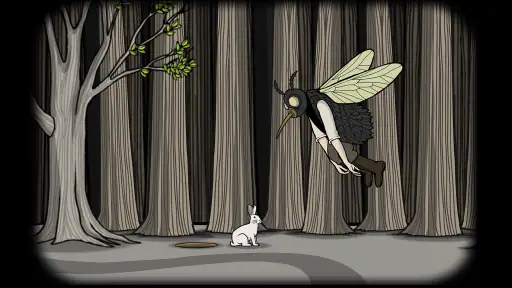
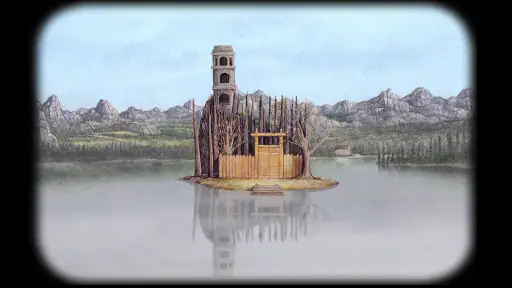
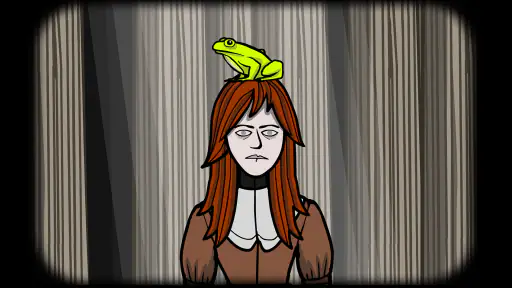
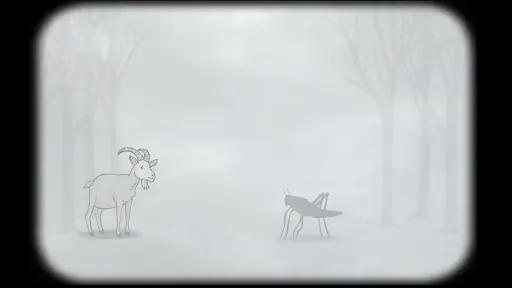
Analysis by Reviewed
Rusty Lake Paradise is the kind of adventure game I open when I want something stranger than a conventional puzzle and more focused than a large role-playing game. It is a point-and-click experience from Rusty Lake, built around observation, unsettling imagery, and a chain of problems that gradually makes its isolated setting feel more disturbing. My first impression was not that it wanted to overwhelm me with action. Instead, it asked me to look carefully, remember small details, and accept that almost every ordinary object might have an unpleasant purpose.
That focused design is a major reason I enjoyed it. The game belongs to the adventure category, but it does not behave like a broad exploration game with a huge map and dozens of unrelated tasks. Its world is compact, its interactions are deliberate, and its mood does much of the storytelling. The store summary describes a mission involving plagues, but the real appeal is how those events are turned into visual puzzles. I was not simply moving from one challenge to the next; I was learning the strange rules of a place where family history, ritual, and decay seem to overlap.
My short recommendation is simple: choose it if you like atmospheric point-and-click puzzles, unusual art, and stories that leave room for interpretation. Skip it if you need fast movement, clear explanations, or a forgiving hint system that constantly tells you what to do next. This is a game that expects patience, and its most memorable moments come from sitting with an odd scene until its logic begins to emerge.
A first impression built from unease rather than spectacle
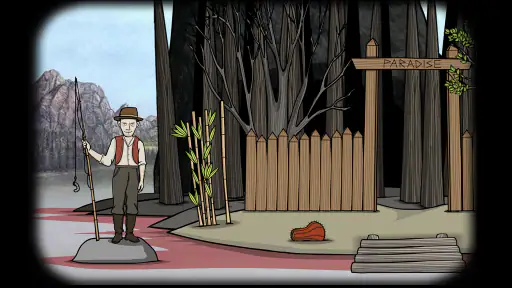
The opening feel is immediately distinctive. Rusty Lake Paradise does not rely on realistic scenery to create tension. Its characters and locations have a stylized, almost storybook appearance, but the simplicity makes the disturbing details stand out more sharply. Faces, gestures, rooms, and objects are arranged with a deliberate stiffness. I often found myself staring at something that looked harmless at first, only to notice that its placement or expression made the whole scene uncomfortable.
The setting gives the game a strong sense of confinement. Rather than presenting a sprawling adventure landscape, it keeps attention on a limited group of locations and the relationships between them. That limitation works well for a mobile game because I could understand the visual layout without needing a long session to rediscover where everything was. At the same time, the compact environment does not feel empty. Each screen carries clues, and returning to a familiar place can change its meaning after a new event occurs.
My first practical lesson was to avoid tapping randomly. The game rewards looking before acting. I began each scene by checking corners, unusual shapes, containers, characters, and anything that seemed visually emphasized. This sounds basic, but it matters here because the artwork often hides useful information in plain sight. A quick tap-through can produce a pile of disconnected items; a slower inspection gives those items context.
The game is available for $2.99, which places it in the paid mobile adventure space rather than the free-to-start puzzle category. I prefer that arrangement for this kind of experience because the design feels less distracted by interruptions. I could concentrate on the atmosphere and the sequence of discoveries instead of managing a separate economy. The trade-off is that someone looking for a casual free download may hesitate before committing, especially if they are unsure whether abstract horror and puzzle solving suit them.
Its age rating is Teen, and that feels appropriate to the tone. The unease comes from themes, imagery, and implication more than from constant action. I would not recommend it as a cheerful family puzzle, even though the controls are simple. The visual style may look playful in a screenshot, but the subject matter becomes increasingly uncomfortable, and younger players may not respond to that contrast in the same way.
The island works as a visual language
What makes the setting effective is the consistency of its visual vocabulary. Rusty Lake Paradise uses repeated shapes, colors, faces, and objects to make the world feel connected even when the immediate puzzle changes. I started to recognize that a detail was important not only because it was clickable, but because it belonged to a larger pattern. The game rarely needs a long explanation when a symbol, gesture, or arrangement has already established the right association.
The art direction also controls how I interpret space. A room may be small, but the framing can make it feel ceremonial, watched, or strangely exposed. Characters are not presented with the natural movement I would expect from a realistic adventure. Their stillness becomes part of the tension. When a figure looks toward an object or repeats a peculiar action, that behavior feels like a clue even before I understand its practical use.
This is one of the game’s less obvious strengths: the scenery is not merely decoration; it teaches the rules of attention. I learned to compare objects across screens, notice changes after completing an interaction, and treat repeated visual motifs as possible instructions. That approach is more useful than memorizing every item individually. It turns the artwork into a kind of silent tutorial.
The trade-off is that the same visual ambiguity can make certain moments feel obscure. The game does not always separate “important clue” from “interesting weirdness” as clearly as a more conventional adventure would. I sometimes spent time examining an image because it looked significant, only to discover that its role was mainly atmospheric. That uncertainty is part of the intended mood, but it can also create friction when I am already stuck.
I found the best way to manage that friction was to keep a small note of relationships rather than a complete inventory. I wrote down combinations, recurring symbols, and actions that seemed to affect the environment. A list of every object quickly became noise. A short record of what changed after each major discovery was much more helpful. This is a practical habit I would recommend to anyone playing on a phone, where switching between a game and a separate notebook is easy enough.
Sound gives the strange world its pulse
The audio design does not try to dominate the screen. Instead, it supports the feeling that the island is quiet in the wrong way. Sparse sounds, uncomfortable pauses, and small environmental cues make ordinary interactions feel consequential. When the visual style presents something as both simple and disturbing, the sound helps preserve that contradiction. I never felt that the music was trying to tell me exactly what emotion to have; it left enough space for the images to remain ambiguous.
That restraint is important for the pacing. A louder, more dramatic soundtrack could have turned the game into conventional horror, but the quieter approach makes the oddness linger. I became more aware of taps, transitions, and changes in the scene because the game was not filling every moment with noise. Playing with sound on helped me stay inside the atmosphere, although I would choose headphones only when I wanted to focus rather than when I was looking for a relaxed background game.
The rhythm comes from discovery instead of action. I might spend several minutes inspecting a room, find a connection, and then move quickly through a short sequence of interactions. After that, the game often gives me a new visual situation to absorb. This alternation keeps the experience from becoming a flat checklist, but it also means the pace depends heavily on my ability to notice patterns. If I miss one small clue, the rhythm can collapse into aimless tapping.
For an everyday scenario, I think it works best during a quiet break rather than during a commute full of interruptions. I could play a short section while waiting for an appointment, but I would not expect to enjoy the most complex puzzles with constant notifications or people asking questions. The game’s sound and visual details reward concentration. A ten-minute session can be satisfying if I solve a meaningful step, but a distracted session may end with me collecting unrelated objects and remembering none of their connections.
Why the mechanics fit the mood
The point-and-click structure is a natural match for this world. Tapping an object, examining a character, and combining observations feels like participating in an investigation rather than controlling an action hero. The limited interaction vocabulary keeps my attention on the logic of each scene. I am not learning complicated controls; I am learning how this particular world thinks.
That simplicity also makes the game approachable for players who do not usually play adventure titles. You can concentrate on visual information instead of mastering timing, combat, or a large control scheme. I would especially recommend it to someone who enjoys escape-room puzzles but wants a stronger narrative mood. The game carries some of that satisfaction: identify a relationship, test an idea, and watch the environment respond.
However, it is not the best choice for someone who wants every solution to follow familiar real-world logic. Rusty Lake Paradise often uses dreamlike associations and unusual cause-and-effect. When I was stuck, the problem was not always that I lacked intelligence; sometimes I was applying a sensible assumption to a world that operates by symbolic rules. The solution was to ask what the scene was suggesting emotionally or visually, not only what would be practical in reality.
One useful workflow is to divide puzzles into three passes. First, inspect every available screen without trying to solve anything. Second, group items by visual or thematic connection rather than by location. Third, test one relationship at a time and observe exactly what changes. This prevents the common mistake of combining objects just because they are available. It also makes backtracking less frustrating because I can identify which assumption failed.
Another trade-off is the balance between discovery and guidance. The game’s atmosphere benefits from not explaining everything, but players who prefer explicit objectives may find the lack of direction tiring. I enjoyed the uncertainty when I had enough clues to form a theory. I enjoyed it much less when I was searching for a tiny interaction that did not seem connected to the current problem. If you usually rely on generous hints, this may be better as a shared game, where another person can notice a visual detail that you overlooked.
That shared approach can work surprisingly well without turning the experience into a competitive puzzle race. One person can handle the phone while the other keeps track of symbols and sequences. Because the game’s world is so visually specific, talking through what looks unusual often reveals more than silently tapping. I would not call it a conventional multiplayer experience, but it can make a thoughtful two-person mystery session.
How it compares with ordinary mobile adventures
Compared with large adventure games, this one is much less concerned with travel, character statistics, or open-ended exploration. There is no need to manage a broad map or spend time improving a character before attempting a challenge. That focus is a benefit if I want a self-contained puzzle atmosphere. It is a limitation if I expect a long journey with many different systems and a wide range of locations.
Compared with free puzzle apps, the paid structure feels calmer. I am not pulled toward optional purchases or a repeating level loop. The experience is built around a particular mood and sequence, so it feels closer to an interactive mystery than to a disposable brain teaser. The downside is that there is less reason to return once I have fully understood the puzzles, while a daily puzzle app may offer a more regular habit.
It also differs from realistic detective adventures. Those games often present evidence through dialogue, documents, and recognizable procedures. Here, the evidence is visual, symbolic, and sometimes grotesque. I would choose Rusty Lake Paradise when I want interpretation and atmosphere; I would choose a more conventional mystery when I want a clear case, logical testimony, and a solution that can be explained in ordinary terms.
The game has an average rating of 4.8 from around 10K ratings, with over 500K installs. Those figures suggest that its unusual approach has found a substantial audience, but they should not be read as a promise that every adventure fan will enjoy it. A high rating cannot remove the central preference involved here: some players love being unsettled and uncertain, while others experience those same qualities as poor guidance.
Practical fit, device support, and who should play
The current version is 3.1.6, and the listed minimum operating system is Android 6.0. That makes it accessible to many older Android devices, at least from a stated compatibility perspective. I would still play with enough free attention and a comfortable screen because examining small visual details is more important here than raw performance. A larger display can make inspection easier, particularly when several objects share similar colors or shapes.
Rusty Lake Paradise is a strong fit for players who enjoy eerie stories, stylized art, quiet puzzle solving, and games that trust them to notice patterns. It is also a good recommendation for someone who has already tried other Rusty Lake adventures and wants another entry built around the same recognizable sense of mystery. The developer’s visual identity is clear enough that fans will know what kind of strangeness to expect, even though the specific situations remain their own experience.
I would be cautious about recommending it to players who dislike horror themes, symbolic storytelling, or backtracking. It is also a poor match for someone seeking a relaxing game with bright, reassuring feedback. The controls may be simple, but the emotional tone is not light. Likewise, players who need a constant stream of action should look elsewhere; the most important events happen while examining, waiting, comparing, and thinking.
There is also a difference between being stuck in a satisfying way and being stuck because the interface has not communicated enough. This game occasionally approaches the second kind. My advice is to pause before searching for an external solution. Revisit the scene, check whether an earlier action changed anything, and look for a relationship between images rather than a single hidden button. If that still fails, a spoiler-light hint is preferable to reading a complete walkthrough, because the pleasure comes from preserving the next discovery.
The atmosphere earns its place in the design
What stays with me is the way the artwork, sound, setting, and pacing reinforce one another. None of those elements has to carry the whole experience alone. The art makes the island recognizable, the sound gives its stillness weight, the setting narrows my attention, and the puzzle rhythm turns observation into progress. When these parts align, even a small interaction can feel like a meaningful disturbance in the world.
The game is not flawless. Its ambiguity can become irritation, its pacing can slow sharply when I miss a clue, and its disturbing tone will exclude players who want a more comfortable adventure. The paid price also asks me to know my taste before buying, since the experience is specialized rather than broadly accessible. Still, those limitations are connected to the same artistic choices that make it memorable. Removing all uncertainty would also remove much of its identity.
After playing it, I would recommend Rusty Lake Paradise to a friend who wants a compact, unsettling puzzle adventure and is willing to meet it halfway. I would tell that friend to use headphones when possible, keep brief notes about symbols and changes, and resist random tapping. Most importantly, I would explain that the game is less about finding a key than understanding what the scene is trying to make me notice.
As a mobile adventure from Rusty Lake, Rusty Lake Paradise succeeds because its mechanics serve its mood instead of competing with it. It is a focused, strange, sometimes frustrating experience, but its visual language and careful rhythm give the puzzles a personality that ordinary alternatives rarely match. For me, that makes it worth the $2.99 asking price when I am in the mood for an eerie mystery that rewards attention rather than speed.
My final verdict is favorable, with one clear condition: play it for atmosphere and interpretation, not for constant guidance or action. If that sounds appealing, Rusty Lake Paradise offers a memorable way to spend a quiet evening, one unsettling observation at a time.
Pros
- Surreal puzzles reward careful observation and creative thinking.
- Distinctive hand-drawn art creates a memorable
- unsettling atmosphere.
- Short chapters make it easy to play in focused sessions.
- The story connects naturally with Rusty Lake’s wider universe.
- Offline play is convenient for travel or areas with limited internet.
Cons
- Some puzzles offer little guidance and can feel frustratingly obscure.
- The dark themes and disturbing imagery may not suit younger players.
- Progress can depend on remembering details from earlier scenes.
- The interface may feel cramped on smaller phone screens.
- Its relatively short length may feel limited for the asking price.

- Category
- Adventure
- Version
- 3.1.6