Cube Escape: Paradox
- 5.06K
- 4.8
- Installs
- 5.00M
- Price
- Free

Screenshots

Analysis by Reviewed
Cube Escape: Paradox is the kind of adventure game I recommend when someone wants a mystery that feels more like handling evidence than following a traditional action plot. I played it as a compact point-and-click investigation, moving through a strange room, examining objects, combining clues, and trying to understand why detective Dale Vandermeer is trapped there. Its appeal is not speed or combat. The pleasure comes from noticing a small visual detail, remembering an earlier clue, and finally seeing how two apparently unrelated pieces fit together.
That focus makes it unusually easy to pick up in short sessions. I can play for a few minutes while waiting somewhere, stop after solving a small step, and return later without needing to relearn a complicated control system. At the same time, the puzzles are deliberate enough that it rewards a quiet evening with a notebook nearby. My overall view is clear: this is a strong choice for players who enjoy eerie atmosphere, compact investigations, and puzzles that expect careful observation, but it is a poor match for anyone looking for an open world, constant action, or generous hints.
A tightly designed mystery built around observation
The room is the main character
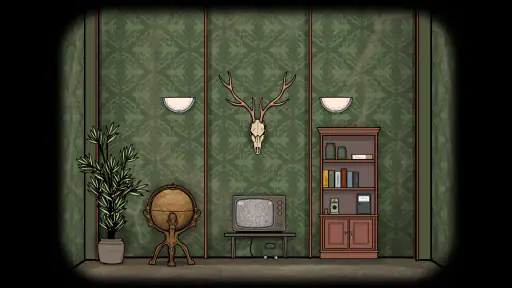
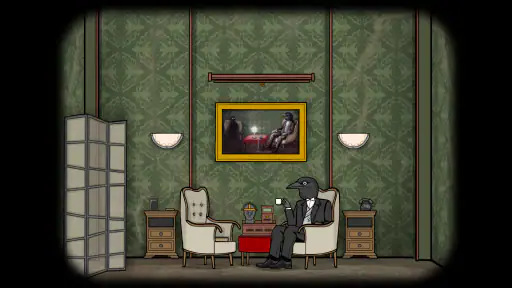
The first thing that works for me is the way the game turns a confined setting into a dense puzzle board. Rather than sending Dale across a large map, it asks me to study the room in front of me. A cabinet, a picture, a device, or an apparently decorative object can become important later. That design gives every click a purpose, even when I do not yet understand what I am looking at.
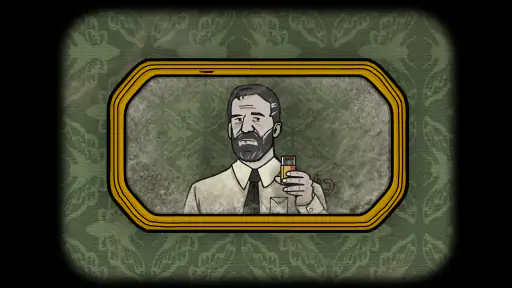
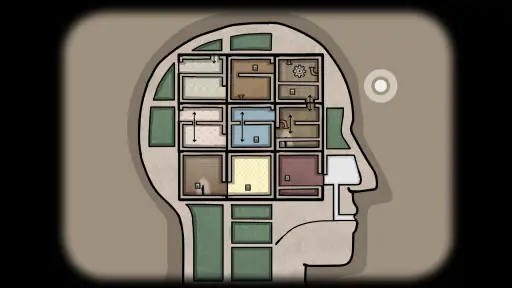
The visual style supports this approach beautifully. Rusty Lake uses unsettling images, muted colors, and strange details to make ordinary objects feel suspicious. The result is not horror built around sudden shocks; it is a persistent feeling that the room has a hidden logic. I often found myself revisiting an area because something looked slightly too deliberate to be decoration. That instinct is central to progressing.
The game is made by Rusty Lake, a developer with a recognizable preference for surreal mysteries and symbolic storytelling. That identity is visible here without making the experience feel like a generic detective game. Dale is not simply searching for a key and leaving. His situation is tied to the broader, unsettling world around Rusty Lake, so the investigation carries a dreamlike quality that keeps the puzzles from feeling purely mechanical.
Why the puzzle design feels satisfying
The best puzzles ask me to connect information rather than repeatedly tap every object until something happens. I might find a pattern in one part of the room, notice a related arrangement somewhere else, and then use that relationship to unlock the next step. The satisfaction comes from recognizing the intended connection, not from performing a difficult action.
One useful habit is to treat every unusual image as a possible instruction. If a symbol appears more than once, if an object has a suspicious number of parts, or if a scene seems to emphasize a particular direction, I stop and record it mentally before moving on. This is more effective than randomly testing combinations. The game rewards players who build a small internal map of clues.
I also recommend checking an object from every available angle before assuming it is finished. In this style of adventure, a detail that seems irrelevant can become meaningful after another discovery changes its context. That is one of the less obvious strengths of the design: progress often comes from reinterpretation. The game does not merely hide answers; it changes what earlier details mean.
A story that trusts the player
The narrative does not explain itself in a conventional, comfortable way. Instead, it uses images, fragments, objects, and the character’s circumstances to create questions. I enjoyed that restraint because it made the investigation feel personal. I was not just waiting for a cutscene to tell me what happened; I was assembling an impression from the evidence in front of me.
That approach also creates the game’s biggest storytelling barrier. Players who want a direct plot with clearly stated motives may find the symbolism vague. I sometimes understood the emotional tone before I understood the literal event. The atmosphere is strong, but the story expects patience and a willingness to accept ambiguity. If you dislike interpreting strange scenes or connecting a game to a larger fictional universe, the mystery may feel less rewarding.
The store summary presents the central situation simply: detective Dale Vandermeer needs to escape the Cube Escape room. In practice, the experience is more interesting than that sentence suggests because escaping is only the immediate objective. The room gives the player a physical problem to solve, while the surrounding clues create a deeper question about what is happening to Dale and how the pieces relate.
Controls, pacing, and the value of short sessions
The touch controls are straightforward, which is important for a game based on close inspection. I tap objects, examine details, collect useful items, and interact with mechanisms. There is no complicated virtual movement system competing with the puzzles. That simplicity lets the visual composition do the work.
The pacing is similarly restrained. There is no pressure to react quickly, and the game does not depend on reflexes. I can pause to think through a clue without worrying that an enemy will interrupt the process. For a player who enjoys solving problems during a commute or before bed, that makes the format comfortable. The darker mood may not suit every public setting, but the session structure itself is convenient.
One practical tip is to avoid playing while distracted. The game is playable in small portions, but its clues are easy to overlook if I am switching between conversations or notifications. When I give it focused attention, I notice the visual relationships that make the puzzles fair. When I rush, it can appear arbitrary. The difference is not the controls; it is the level of attention the design expects.
What the ratings and audience size suggest
On the store, the game holds a 4.8 average from around 191 thousand ratings, with more than 5 million installs. Those figures fit my experience: it is a polished, distinctive puzzle adventure rather than an obscure experiment that only works for a tiny group. The strong response is understandable because the game delivers a complete-feeling atmosphere and a clear central challenge without asking players to learn a complex system.
It is also free to start, with optional in-app purchases priced at $1.99 per item. That makes it easy to try before deciding whether the style suits you. I appreciate that arrangement for this particular game because the main question is personal taste. Some players will immediately enjoy the strange imagery and indirect storytelling; others will know within one session that they prefer a more explicit mystery.
The meaningful friction: clues can become opaque
My main criticism is that the boundary between challenging and obscure is not always comfortable. Most of the time, the puzzles encourage observation. Occasionally, I reached a point where I had inspected the room carefully but still did not know which clue the game expected me to prioritize. The problem was not that the answer was intellectually difficult; it was that several details seemed equally important.
This is where the experience differs from a more conventional adventure game. A mainstream mobile mystery often highlights interactive objects, adds a generous hint system, or gives a clear objective marker. Cube Escape: Paradox is more willing to leave me alone with the scene. That preserves the satisfaction of discovery, but it also means a single missed interaction can stall progress.
When I got stuck, the best method was not random tapping. I reviewed the items I had collected, returned to locations that contained repeated symbols, and asked what information I had seen but not yet used. I also tried to distinguish between a clue that explains the story and a clue that directly opens the next mechanism. That separation helped because the game sometimes presents narrative information before it becomes mechanically useful.
There is a trade-off here that potential players should understand. Looking up a solution can get me moving again, but it can also remove the most satisfying part of the game: the moment when a pattern becomes clear. I would keep a hint or walkthrough available only as a last resort and use it for one specific step rather than reading an entire solution. That preserves more of the investigation.
How it compares with familiar alternatives
Compared with hidden-object games, this is less about rapidly locating everything on a crowded screen and more about understanding relationships. A hidden-object title may give me a list of items and let me clear a scene. Here, an object matters because of what it connects to, how it is arranged, or what it implies. Players who enjoy visual searching but want more interpretation will probably find this more engaging.
Compared with escape-room games, it has a stronger narrative identity and a more unsettling tone. Physical escape-room apps often organize themselves around locks, codes, and rooms that follow a clear sequence. This game uses those familiar pleasures but places them inside a stranger world, where the meaning of a clue can matter as much as its function. The trade-off is that it may feel less cleanly explained than a puzzle box built only around mechanisms.
Compared with story-heavy adventure games, it gives me far less direct conversation and exposition. The reward is a more active role in understanding the mystery. If I want character relationships explained through long dialogue scenes, another adventure game would be a better choice. If I prefer to infer personality and history from setting, imagery, and unusual events, this approach is much more compelling.
Who will get the most from it
I think the best audience is an attentive player who enjoys eerie fiction and does not mind being uncertain for a while. The game suits someone who likes to examine a room slowly, keep track of patterns, and feel responsible for making the breakthrough. It is especially good for short, focused sessions because each solved mechanism gives a natural stopping point.
It is also a good introduction to the Rusty Lake style for players who have heard of the developer but have not explored its games. The experience communicates the studio’s unusual tone without requiring an action-game skill set. A player can approach it as a standalone puzzle adventure and still appreciate the atmosphere, while someone familiar with the wider setting may enjoy noticing connections and recurring ideas.
Families should pay attention to the Teen content rating. The game’s unsettling imagery and mature atmosphere are important parts of its identity, so I would not choose it automatically for a young child simply because it is a mobile puzzle game. For teenagers and adults who enjoy surreal mysteries, the rating feels aligned with the tone.
On the technical side, the listed minimum requirement is Android 6.0, and the current version is 1.3.3. That relatively accessible requirement makes it practical for people using older compatible Android devices. I would still prefer a screen large enough to inspect visual details comfortably, because the game’s clues are embedded in small parts of its artwork. A larger phone or tablet can make careful observation easier than a very compact display.
When I would skip it
I would not recommend it to someone seeking an endlessly replayable game. Its appeal comes from solving the mystery once, and the strongest discoveries lose some impact after the answers are known. It is also not the right pick for players who want character customization, combat, competitive play, or a large world to explore. None of those absences are flaws by themselves, but they define the experience clearly.
I would also suggest skipping it if frustration with indirect clues quickly outweighs curiosity. The game expects me to tolerate a little confusion and to revisit evidence without immediate reassurance. Someone who prefers a constant stream of explicit objectives may spend more time fighting the design than enjoying it. In that case, a more guided escape-room title or a dialogue-led detective game would be a better fit.
My final verdict
Cube Escape: Paradox succeeds because it makes a small space feel loaded with meaning. Its puzzles are strongest when they ask me to observe, compare, and reinterpret rather than simply hunt for highlighted objects. The atmosphere gives every discovery a slightly uneasy edge, while the compact structure makes it easy to fit into everyday play.
The cost of that ambition is occasional opacity. I had to accept that not every clue would announce its purpose, and I needed patience when progress stopped. For me, that friction was worthwhile because the eventual solutions felt earned. For players who prefer transparent instructions, it may be the reason to choose something else.
As a free adventure game from Rusty Lake, it offers a particularly easy recommendation to curious puzzle fans: try it when you can give the room your full attention, keep track of repeated details, and resist searching for answers too quickly. My verdict is positive, with one important condition: choose this for the pleasure of figuring out a strange mystery, not for a guided tour through one. If that sounds appealing, Dale’s confinement becomes an absorbing investigation rather than a simple escape challenge.
Pros
- Clever puzzles that reward observation and logical thinking.
- Distinctive surreal atmosphere with memorable visual details.
- Short chapters make it easy to play in focused sessions.
- Hints are available when a puzzle becomes especially difficult.
- Strong connection to the wider Rusty Lake story and universe.
Cons
- Some puzzles feel obscure without experimenting or using hints.
- The unsettling themes may not suit players seeking a light adventure.
- The free content is limited compared with the complete experience.
- Pixel-art visuals can make small interactive details easy to miss.
- Story references may be confusing if you have not played other Rusty Lake games.

- Category
- Adventure
- Version
- 1.3.3