Rogue Legend - Roguelike RPG
- 2.06K
- 4.7
- Installs
- 1.00M
- Price
- Free
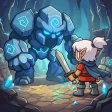
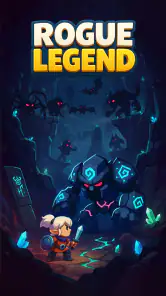
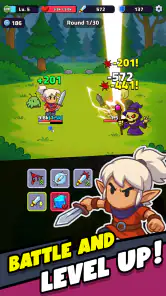
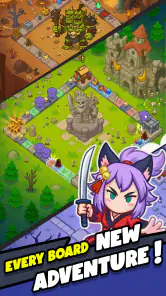
Screenshots


Analysis by Reviewed
Rogue Legend is a role-playing game I’d consider when I want action in short bursts but still enjoy the longer arc of building up a character. Its roguelike structure puts repeated runs at the center, while boss fights and idle progression give those runs a broader sense of purpose. That mix can suit a busy routine: I can play actively when I have time, then return later to continue making progress. It is less appealing if I want a tightly scripted story or a purely hands-off idle game.
How the run-based rhythm feels
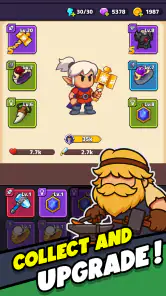
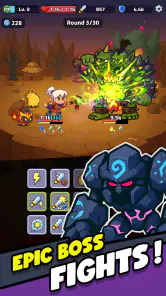
The appeal of an action roguelike is that each attempt can feel like a fresh problem to solve, rather than simply another stretch of a fixed campaign. In Rogue Legend, upgrades and boss encounters are the main reasons to keep pushing through that loop. I like this combination in principle: upgrades give a run a sense of direction, while a boss gives progress a clear test instead of letting advancement feel entirely automatic.
That structure also brings familiar pressure. A run asks you to make the most of the opportunity in front of you, and a difficult encounter can make earlier choices feel important. If you enjoy learning through retries, that pressure is part of the fun. If a failed attempt tends to feel like wasted time to you, roguelike progression may be a poor fit, even with idle elements in the mix.
The idle side changes the expected pace, but it does not make this a conventional idle game. The game is still described as an action RPG, so I would approach it expecting active play to matter, rather than assuming that leaving it alone will replace combat. A useful way to judge the balance is to try a short session first: see whether the action itself holds your attention, then treat idle progress as a convenience rather than the main attraction.
Upgrades are most useful when they answer a problem
My practical advice for a game built around runs and upgrades is to avoid choosing improvements just because they sound broadly powerful. Notice what is actually slowing you down: surviving a boss, keeping a run moving, or reaching the next meaningful milestone. Then pick upgrades with that specific obstacle in mind. This makes each attempt feel more deliberate and helps prevent the upgrade layer from becoming a string of choices made without a plan.
Boss fights are especially valuable as a checkpoint in that process. If you repeatedly reach one and struggle, that is a useful signal to reconsider how you are approaching upgrades rather than simply repeating the same run unchanged. I cannot assume that every boss works the same way, but the general lesson is sound for this kind of game: treat a tough fight as feedback. A little attention to what happened can make the next attempt more satisfying than grinding on autopilot.
For everyday play, I’d use it in two different modes. In a spare few minutes, I’d focus on an active run and stop when I reach a natural pause. On a day when I have more time, I’d pay closer attention to how upgrades affect the next boss challenge. That split gives the game room to fit around a schedule without requiring every session to become a long commitment.
Who will enjoy the pressure, and who may not
This is a natural match for players who like action RPGs but want the repeated-run structure of roguelikes. It may also work for someone who enjoys checking back on gradual progression, provided they still want to engage with the action. The combination is more flexible than a game built entirely around long, uninterrupted sessions, at least in concept, because active play and idle progression serve different moods.
I would steer away if you mainly want a story-led role-playing game, a relaxed experience with no challenging encounters, or an idle title that asks for very little direct input. I’d also be cautious if retries frustrate you. The roguelike format makes repetition part of the premise, and boss fights suggest that progress includes moments of resistance rather than an effortless climb.
Compared with a traditional action RPG, the run-based approach puts more emphasis on adapting and trying again than on steadily following one uninterrupted adventure. Compared with a standard idle RPG, the action and boss encounters make it sound more hands-on. That middle ground is its clearest identity, but it is also a trade-off: players who strongly prefer either extreme may find a more focused alternative suits them better.
Cost, fairness, and what to expect
The game is free to download, and in-app purchases range from $0.99 to $109.99 per item. That wide spread is worth knowing before you start, especially if you prefer games where spending stays out of the way. I would set a personal budget before browsing optional purchases and avoid treating a purchase as a shortcut to solving a difficult encounter. The presence of paid items alone does not tell me how necessary they are, so I would decide based on how the game feels in ordinary play rather than on the size of the listed range.
On fairness, I can make only a limited judgement from those purchase facts. They establish that optional purchases exist and that item prices vary considerably; they do not establish how purchases affect combat, progression, or competition. I therefore would not call the game pay-to-win, nor promise that spending is irrelevant. If fair progression is your priority, pay attention to whether you can enjoy repeated runs and reach bosses at a pace that feels reasonable without buying anything.
That is also a sensible way to approach competitive fairness. The available description emphasizes action, upgrades, bosses, and idle progress, but it does not establish whether there are leaderboards, player-versus-player modes, or rankings affected by purchases. So I would judge fairness through the experience you can observe directly: whether an ordinary run gives you meaningful choices and whether setbacks feel like gameplay challenges rather than pressure to spend. I would not make a stronger claim without those details.
Questions worth settling in your first sessions
If you are wondering whether you can play casually, try a brief session and see whether you can make a satisfying amount of progress without blocking out a long stretch of time. The idle element suggests there is some room for a less continuous routine, but it is not a guarantee that every part of progression works well in short visits. The best test is whether the active loop remains enjoyable when you only have a few minutes.
If you are wondering whether it is suitable for younger players, its content rating is Everyone 10+. That gives families a useful starting point, though I would still check the game together if a child is sensitive to action or challenging boss encounters. A rating is helpful context, not a substitute for knowing the individual player.
If you are asking whether you need to spend, the honest answer is that the game is free to begin, while optional purchases are available. Their existence does not prove that spending is required, and it does not prove the opposite either. I would start without paying, learn how the run and upgrade loop feels, and only consider a purchase if it adds something you actually want rather than responding to frustration.
Another reasonable question is whether a newer installation should expect the same experience as an older one. The current version is 0.600, so the version number is useful context when comparing your experience with comments from other players. I would focus on current impressions and make sure the game runs comfortably on your device before investing much time in its progression.
A quick fit check before committing
Rogue Legend is rated 4.7 on average from around 55,000 ratings, with about 2,100 written reviews, and it has passed one million installs. Those figures indicate that many players have tried it, but they do not tell me whether its particular blend of action and idle progress will suit you. I’d use them as background, then make the decision based on whether repeated runs and boss challenges sound appealing.
PocketHaven is the developer, and the game was released on January 19, 2026. It is listed for devices running Android 10 or later. The age rating is Everyone 10+, and the free entry point makes it possible to try the basic experience before deciding whether it deserves a place in your regular rotation.
One useful trade-off to keep in mind is that idle progression can make a game easier to fit around daily life, but it may also make the pacing feel less direct than a fully active RPG. If you want every improvement to come from focused play, that blend may not be satisfying. If you like alternating between active attempts and gradual advancement, it could be a welcome middle ground.
My verdict on trust and fit
I’d recommend giving Rogue Legend a try if the idea of short action sessions, repeated attempts, upgrades, and boss fights sounds more appealing than a long, linear campaign. Its free download lowers the commitment to start, while the broad purchase range is a reason to keep a clear spending boundary. I would not treat the rating or install count as proof of fairness; I’d use a no-purchase first session to see whether the game feels rewarding on its own terms.
The main uncertainty for a cautious player is how much optional spending changes the pace or strength of progression. Since the purchase range does not answer that, my trust verdict has to stay measured: there is enough here to judge the genre and entry cost, but not enough to make claims about purchase impact. Start free, notice whether you are enjoying the action rather than merely waiting for progress, and stop if the run loop feels repetitive instead of motivating.
For me, the strongest reason to try it is that it aims for a specific balance: active roguelike play with a more flexible progression rhythm. The strongest reason to skip it is equally clear: if you dislike retries, boss pressure, or uncertainty around optional purchases, a simpler RPG may be a better match. If you enjoy learning from each attempt and can keep spending in perspective, Rogue Legend looks like a reasonable game to test in small sessions before deciding how much time it deserves.
Rogue Legend - Roguelike RPG Frequently Asked Questions
What kind of game is Rogue Legend - Roguelike RPG?
Rogue Legend - Roguelike RPG is a role-playing game built around roguelike-style exploration and combat. You guide a character through dangerous encounters, defeat enemies, and look for ways to improve your chances of surviving each run. As with many games in this genre, repeated attempts are part of the experience: learning enemy patterns and choosing suitable upgrades can matter as much as simply making progress.
Is Rogue Legend - Roguelike RPG suitable for casual players?
The game may suit casual players who enjoy short sessions, action-oriented encounters, and gradually learning how its systems work. However, roguelike progression can involve setbacks, and a run may end before you reach your goal. Players who prefer a forgiving story adventure with uninterrupted progress should check the current store description and screenshots first to make sure the challenge and play style are a good fit.
Does Rogue Legend - Roguelike RPG require an internet connection?
Whether the game can be played offline may depend on its current version, platform, and any online features it offers. Store listings do not always explain every connection requirement, so check the app’s description and recent user reviews before downloading if offline play is important to you. Also consider that initial installation, updates, advertisements, or optional services may require an internet connection even when core gameplay does not.
Is Rogue Legend - Roguelike RPG free, and does it include in-app purchases or ads?
The price and monetization options can vary by platform, region, and version. Before installing, review the Google Play or App Store listing for the latest information about the download price, advertisements, and in-app purchases. If purchases are available, check what they provide and whether they are optional. Parents should also review the store’s age guidance and configure purchase controls when children use the device.
Will Rogue Legend - Roguelike RPG work on my Android or iPhone?
Compatibility depends on your device’s operating-system version, hardware, and the game’s latest requirements. Check the official store page for the minimum supported Android or iOS version and available storage before downloading. Requirements can change with updates, and a device that installs the game may not deliver the smoothest performance. If you are unsure, consult recent reviews from players using a similar model.
Pros
- Procedurally generated runs make each dungeon crawl feel different.
- Short runs suit quick play sessions on mobile.
- Character upgrades add a satisfying sense of progression.
- Roguelike combat rewards timing and careful positioning.
- Fantasy visuals give the adventure a distinctive style.
Cons
- Randomized loot can make progress feel inconsistent.
- Runs may become repetitive after many attempts.
- Difficulty spikes can punish inexperienced players.
- Frequent combat may leave little room for exploration.
- Some upgrades may take time to unlock.
- Category
- Role Playing
- Version
- 0.600