Robot Era Evolution
- 13.00
- 3.2
- Installs
- 50.00K
- Price
- Free

Screenshots
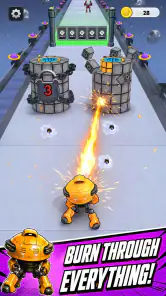
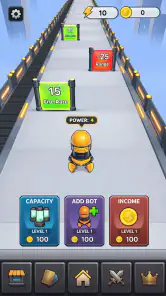
Analysis by Reviewed
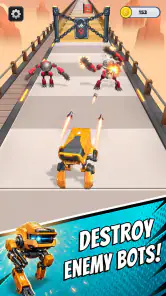
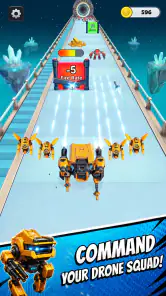
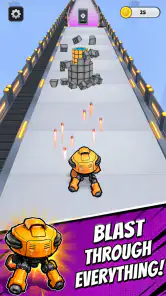
I went into Robot Era Evolution expecting a quick action game built around movement, upgrades, and a growing group of machines. That is exactly the basic appeal: you guide a robot army through obstacle-filled runs, collect progress along the way, and work toward a stronger setup. It is easy to understand in a few seconds, but getting satisfying results depends on how carefully you approach each run.
Developed by Bolt Bridge Games, this free Android action game is aimed at players who enjoy short sessions with a visible sense of improvement. It has a Teen content rating, supports devices running Android 8.0 or later, and is currently at version 0.005. The early version number matters because the experience feels like something still being shaped rather than a huge, finished action package with endless layers.
The game has reached over 50 thousand installs, while its average rating sits at 3.2 from just over 100 ratings and 13 written reviews. I would treat that score as a reason to approach it with realistic expectations, not as a final verdict. The core loop is understandable and potentially enjoyable, but players who need a very polished or content-heavy experience may notice its rougher edges quickly.
Starting with the right expectations
The first thing to understand is that this is not trying to be a deep tactical robot simulator. The pleasure comes from making progress during runs and seeing your robotic force become more capable. The obstacle sections provide the immediate action, while the army-building idea gives the session a longer-term reason to continue.
That combination works best when I want something more involved than a completely passive time-killer, but less demanding than a strategy game that requires constant planning. I can begin a run without studying a complicated rulebook, then pay attention to how movement, obstacles, and growth interact. The attraction is in making a few better decisions each time instead of mastering a large control system.
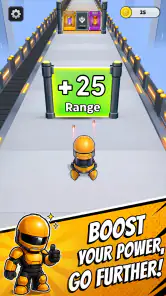
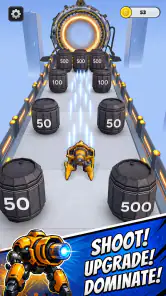
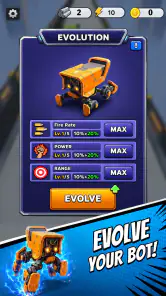
The store summary describes a path from building a robot army to running through obstacles and evolving toward greater power. In practice, I read that as a progression-focused action loop: the run itself is the immediate challenge, and the improvements afterward are what encourage another attempt. That structure suits short breaks, although it may feel repetitive if you expect every stage to introduce a completely different style of play.
For a first-time player, my advice is to judge the opening session by whether the movement and upgrade rhythm feel comfortable, not by how powerful the robots become immediately. Early progress in games like this is usually about learning what deserves attention. Rushing forward without noticing how the game presents growth can make the action seem flatter than it really is.
More From Our News Desk

Weather by Xiaomi Review: Clear at a Glance, Less Clear Up Close

X Under Pressure: Can It Recover When Posting Goes Wrong?

Clash of Clans Is Won Between the Battles

Android Auto Makes the Case for Quieter Car Software

MobiOffice: Transforming Mobile Productivity with Seamless Integration

EA SPORTS FC™ Mobile Soccer: Redefining Mobile Sports Gaming
What the first few minutes are really for
I would use the initial minutes as a learning run rather than trying to achieve a perfect result. Pay attention to the relationship between the path ahead and the strength of your group. If an obstacle causes trouble, the useful question is not simply “how do I go faster?” but “what did I fail to prepare for before reaching it?” That small change in mindset makes the progression easier to understand.
The robot army concept also changes how I look at mistakes. A run is not only about the character or unit immediately on screen; it is about building a stronger overall position for later attempts. That makes a failed section less frustrating when it teaches me which choices are risky. Players who enjoy gradual improvement will probably get more from this than players who only want instant action.
Because the game is free to download, it is easy to test without committing money first. There are in-app purchases ranging from $0.29 to $9.99 per item, so I would avoid spending during the opening session. First learn what normal progress feels like, then decide whether any optional purchase would genuinely improve your enjoyment rather than paying simply because a run went badly.
From installation to the first meaningful success
Once installed, I would begin by keeping the first run deliberately simple. Do not try to optimize every possible decision before you understand the basic rhythm. Let the game show you how it expects the robot group to move through obstacles, then focus on finishing a section cleanly. A completed run or a clear improvement over the previous attempt is a better first milestone than chasing maximum power immediately.
The most reassuring part of this approach is that it gives you a concrete target. Instead of asking whether you understand the entire game, ask whether you can get a little farther, preserve more of your group, or make a more useful improvement than before. That is the kind of feedback I want from a compact action game: a result I can recognize without needing a spreadsheet.
How I approached the opening run
I treated movement as the first skill to learn and progression as the second. Obstacles are where the game asks for attention, so I would avoid looking only at the robots or the reward at the end. Watch the route itself. If the screen becomes busy, make the next safe decision rather than trying to plan the entire sequence at once.
A practical habit is to pause mentally after every difficult section and remember what caused the problem. Was the group too weak, was the route approached too aggressively, or did you simply react too late? Even without a complex strategy layer, this kind of review turns repeated attempts into practice instead of random retries.
My first meaningful success would be reaching a point that previously stopped me while making a different choice beforehand. That distinction matters. Simply replaying the same run can feel like grinding, but changing the way you prepare the robot army gives each attempt a purpose. It is also the best way to decide whether the game’s progression has enough depth for you.
Why small improvements matter here
The game’s appeal depends on visible evolution, so I recommend resisting the urge to measure success only by the largest possible upgrade. A smaller improvement that helps you handle the next obstacle can be more valuable than a stronger-looking option that does not solve your immediate problem. This is one of the less obvious trade-offs in the design: power is useful, but timing and preparation determine whether that power matters.
For an everyday example, I can imagine playing during a short commute or while waiting for an appointment. I would start one run, notice where the obstacle sequence caused trouble, and use the next attempt to correct that one issue. If the session ends there, it still feels productive. That makes the game more suitable for interrupted play than a title that punishes you for leaving before a long mission is complete.
Common points of confusion during play
The phrase “robot army” may lead some players to expect a large management system with detailed unit roles, formation controls, or extensive base planning. I would not begin with that assumption. The central experience is action during obstacle runs and progression toward a more powerful group. If you are looking for a full-scale strategy command game, this may feel lighter than expected.
Another possible misunderstanding is believing that faster movement always means better play. Speed can help, but pushing forward without considering the condition of your group or the upcoming route can turn progress into a quick setback. I found it more useful to think in terms of controlled momentum: move decisively when the path is favorable, but use caution when the next obstacle is likely to test your current strength.
Players may also wonder whether the free entry point means they should immediately use purchases to keep up. I would not. The available purchase range is broad enough that spending can become a personal choice rather than a requirement, and the sensible approach is to understand the normal loop first. If the basic runs do not feel enjoyable without extra spending, a purchase is unlikely to fix the underlying problem.
The Teen rating is another reason to consider the audience before installing. Families should use their own judgment about whether this style of robot-focused action is appropriate for a younger player. For teenagers and adults who enjoy light combat-themed progression, the rating should not be surprising, but it still helps set expectations about the game’s tone.
What can make the game feel less satisfying
The current version, 0.005, suggests an early-stage product, and that is the main limitation I would keep in mind. A small version number does not automatically make a game bad, but it does make me more cautious about expecting a highly refined experience. If you are sensitive to rough presentation, limited variety, or a progression loop that has not yet reached its full potential, you may prefer to wait or choose a more established action title.
The rating of 3.2 also supports a measured recommendation. I see enough in the robot-building and obstacle-running concept to justify trying it, but not enough evidence to call it an automatic choice for everyone. The game is better suited to players who enjoy experimenting with a developing experience than to players who want a finished, content-rich package from the first launch.
There is also a personal trade-off between simplicity and depth. The straightforward structure makes the first session approachable, but the same simplicity can become a weakness if you need many different systems to stay interested. I would choose this over a more complicated alternative when I want immediate action; I would choose a deeper strategy or action game when I want long-term planning, richer variety, or a more demanding skill ceiling.
Building a better routine after the first success
After completing a few useful runs, I would stop treating every attempt as a test of raw strength. Instead, give each session a purpose. One run can focus on learning the obstacle pattern, another on improving the robot group, and another on seeing whether a more aggressive approach pays off. This keeps the game from becoming a blur of identical attempts.
A particularly useful routine is to make only one major change between attempts. If you change everything at once, you will not know what actually helped. Adjust the way you approach the route, then observe the result. If that improves the run, keep the lesson. If it does not, return to the previous approach rather than spending resources blindly.
I would also avoid judging an upgrade by appearance alone. The meaningful question is whether it helps with the obstacle that is currently blocking progress. This is a simple but important efficiency tip: solve the present problem before preparing for an imagined later one. It reduces wasted effort and makes the evolution system feel more connected to the action.
For players who enjoy collecting progress but dislike long sessions, the game can work well as a repeatable five- or ten-minute habit, provided the current run structure fits their device and attention span. For players who want a large campaign, extensive story, or highly varied missions, I would look toward a more mature alternative in the action category instead.
Who should give it a chance
I would recommend trying it if you like robot themes, obstacle-based action, and gradual improvement without needing to learn a complicated control scheme. It is also a reasonable pick for someone who wants a free game to sample casually before deciding whether to invest more time. The combination of immediate movement and longer-term army growth gives the short sessions a clear direction.
I would be more cautious if your priority is polish, deep tactical control, or a large amount of content. The early version and modest average rating make it better viewed as an accessible work in progress than as a definitive action game. Players who are comfortable with that may enjoy discovering what works; players who want everything fully developed may become impatient.
My own recommendation is to install it, complete the opening learning cycle, and decide based on one specific question: did your second meaningful attempt feel smarter than your first? If yes, the progression loop is doing its job for you. If the runs feel interchangeable even after you understand the basics, there is no strong reason to force yourself to continue.
Overall, Robot Era Evolution has a clear and appealing foundation. Bolt Bridge Games combines robot growth with obstacle-running action in a way that is easy to approach and potentially satisfying in short bursts. I like that the game gives a failed attempt a useful purpose when I pay attention to preparation, route choice, and the needs of the robot group.
At the same time, I would not present it as a flawless or fully mature release. The current build, the average rating, and the possibility of limited variety all point toward a game that needs the right audience. Its best quality is the simple connection between each run and the next improvement; its biggest weakness is that players seeking greater depth may outgrow that loop.
For me, it is worth a cautious try rather than an unconditional recommendation. Start free, learn the obstacle rhythm, postpone purchases until you know what you enjoy, and use each attempt to test one clear idea. If that process feels rewarding, this small robot action game can become a pleasant repeat-play option. If you want a broader and more polished experience immediately, a more established alternative will probably suit you better.
Robot Era Evolution Frequently Asked Questions
Who developed Robot Era Evolution, and what kind of game is it?
Robot Era Evolution is an action game developed by Bolt Bridge Games. Its central idea is to build a robot army, guide it through obstacles, and evolve it toward greater power. If you enjoy action games with a robot theme and a focus on progression, that premise gives you a clear sense of what to expect before downloading.
What is Robot Era Evolution about?
Robot Era Evolution is a robot-focused action and strategy game in which you build, upgrade, and command mechanical units in futuristic battles. The game combines progression, combat, and collection elements, allowing you to improve your robots, experiment with different abilities, and take on increasingly challenging opponents. Its appeal mainly comes from developing a stronger team and finding an effective battle strategy.
Is Robot Era Evolution free to download and play?
Robot Era Evolution can generally be downloaded and played without an upfront purchase, making it accessible to users who want to try the game before spending money. However, free-to-play games commonly include optional in-app purchases for resources, upgrades, characters, or other advantages. Players should review the store listing and purchase settings, especially if children use the device. In-app purchases range from $0.29 to $9.99 per item, so it is sensible to check spending controls before playing.
Does Robot Era Evolution require an internet connection?
An internet connection may be needed for important features such as account synchronization, online events, advertisements, updates, rewards, and server-based gameplay. Some parts of the experience may work temporarily offline, but you should not assume that the entire game is available without connectivity. A stable connection is recommended to avoid failed progress saves or interrupted battles.
Is Robot Era Evolution suitable for children?
The game may be suitable for older children and teenagers who enjoy robots, action, and strategic progression, and its content rating is Teen. Battles, competitive mechanics, advertisements, chat functions, or in-app purchases may affect suitability. It is also wise to enable parental controls and restrict purchases if younger players will be using the application.
Pros
- Fast-paced battles are easy to learn
- even for newcomers.
- Robot upgrades give players clear goals and a sense of progression.
- Different robot designs make team-building more engaging.
- Matches are well suited to short mobile gaming sessions.
- The futuristic setting adds personality to the overall experience.
Cons
- Progress can feel slower without frequent play or resource spending.
- Some battles may become repetitive after extended sessions.
- A busy interface can take time to understand at first.
- Device performance may affect visual smoothness on older phones.
- Online-focused features may be less appealing without a stable connection.
- Category
- Action
- Version
- 0.005