ReBet: Social Sports & Casino
- 1.39K
- 4.6
- Installs
- 100.00K
- Price
- Free

Screenshots




Analysis by Reviewed
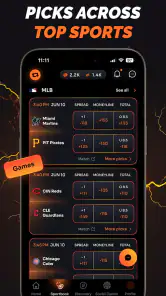
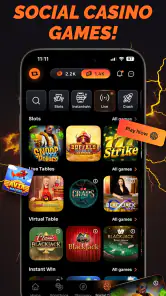
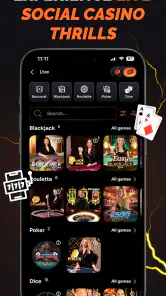
I approached ReBet: Social Sports & Casino as a sports game first, but its appeal is slightly different from a conventional score-chasing title. It combines sports picks with a social-casino style of presentation, so the experience is built around making selections, following outcomes, and sharing the mood of the activity with other people. That makes it more suitable for casual sessions and friendly competition than for someone looking for a deep simulation of a sport.
My first impression was that the game is easiest to understand when I treat it as a quick decision-making experience rather than a full sports-management product. The pitch is simple: choose sports-related picks, see how they develop, and enjoy the social side around them. The free entry point helps, especially for people who want to try the format without committing money up front. Still, the casino-inspired framing deserves attention, because it can make the experience feel more like chance-based entertainment than traditional sports gaming.
How ReBet feels to use in different situations
Readability and navigation during a normal session
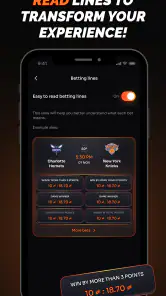
Navigation matters more here than it might in a standard arcade sports game. A player needs to understand what is being selected, what stage a pick is in, and where the social or casino-style elements fit into the session. In my experience, this type of game works best when I slow down for the first few minutes and learn the meaning of each screen instead of tapping through quickly. Once the basic flow makes sense, short visits feel more natural.
The strongest audience is someone comfortable with compact mobile interfaces and quick choices. If you already use sports-score apps, prediction communities, or casual casino games, the overall idea should feel approachable. Someone who expects a large, visual sports simulation may find the experience less immediately obvious, because the focus is on picks and interaction rather than controlling players on a field.
I also found that readability is not only about text size. It is about whether the important distinction between an active choice, a completed result, and a social interaction is clear at a glance. That distinction becomes especially important when checking the game briefly during a break. A useful habit is to review the selection before confirming anything, rather than relying on color or position alone. This reduces mistakes for players who do not process visual changes quickly.
The game’s audience appears broad enough to include casual players, and its Everyone 10+ rating reflects that it is aimed at a general audience with some maturity expected. I would still introduce it carefully to younger players, explaining that the casino-like presentation is part of the entertainment style and should not be confused with a reliable way to make money. That conversation is more useful than simply handing over the phone and assuming the format is self-explanatory.
Motor comfort and sensory demands
ReBet is a better fit for people who prefer tapping and reading over rapid physical control. The central activity does not require the kind of continuous swipes, precise timing, or virtual-stick movement found in many sports games. That can make it easier for players with limited dexterity, hand fatigue, or difficulty with fast repeated gestures. I could imagine using it one-handed during a relaxed session, provided the screen layout remains comfortable on the device being used.
There is an important trade-off, though. A pick-based game can still demand repeated small taps, visual checking, and attention to changing information. Those demands may be manageable for one player and tiring for another. Someone with tremors or reduced touch accuracy may want to use slower deliberate movements and avoid playing while walking or multitasking. The game is not a good match for anyone who needs every action to be completed through large, forgiving controls unless the device’s own accessibility tools make that easier.
Sensory comfort also depends on how a player reacts to casino-style excitement. Bright visual emphasis, changing states, or celebratory feedback can be engaging, but they may feel distracting to people who are sensitive to visual motion or attention-grabbing presentation. I would recommend playing with the phone at a comfortable brightness and taking short breaks rather than staying in a long session. That is particularly sensible when the goal is casual entertainment rather than competition.
For players who rely on audio cues, I would not make sound the only way to understand what is happening. A sports pick should be checked through its visible status and surrounding text, not inferred from a tone or animation. Likewise, players who do not use audio should approach the game by confirming the written or visual information before moving on. This kind of redundancy is valuable in any app where a mistaken tap can change the direction of a session.
Using it at home, outside, or in a shared space
The most realistic use case for me is a short evening session after checking sports news, or a quick visit while friends are discussing a match. The social angle makes more sense in that setting than playing entirely alone with no interest in sports conversation. I can see the game acting as a shared talking point: one person makes a pick, another reacts, and the result gives the group something to follow.
It is also suited to fragmented time. A player can approach it in small visits rather than reserving an entire evening for a campaign. That helps people with busy schedules, commuters waiting in a safe place, or friends passing a phone around at home. However, I would avoid using it while driving, crossing streets, or handling work that needs full concentration. The quick-session design can create the temptation to check “just one more thing,” and that is precisely when situational awareness can suffer.
Shared spaces introduce another consideration: privacy and social comfort. A person may be happy to discuss sports picks with friends but not want nearby people to see every choice on the screen. I would use headphones only if audio is genuinely helpful, keep the display angled privately when needed, and avoid making decisions under pressure from a group. The social element should add conversation, not remove personal control.
People with inconsistent internet access may also need to plan around their connection. A pick-based experience depends on timely information and a stable session more than an offline puzzle does. I would not begin an important session in a place where the connection is likely to drop, and I would double-check the final state after returning from a weak-signal area. This is a practical habit, not a criticism of the concept: real-world mobile use is often less reliable than playing at home.
Where the inclusive experience still has limits
The largest barrier is conceptual. The combination of sports picks and casino-style entertainment is not ideal for people who want a clearly skill-based sports game. If you prefer controlling athletes, building a team, or learning a detailed tactical system, a conventional sports title will probably serve you better. ReBet’s appeal comes from anticipation and social interaction, not from mastering a complex control scheme.
It may also be a poor choice for players who are uncomfortable with chance-oriented mechanics or who find them difficult to regulate. The free price makes trying the game easier, but free access does not automatically remove the need for personal limits. I would decide in advance how long to play and what kind of participation feels comfortable. If the casino presentation makes the session feel stressful rather than fun, stopping is the right response.
Another limitation is the potential gap between visual simplicity and actual understanding. A screen can look clean while still asking the player to interpret several states, labels, and outcomes. New users should not feel embarrassed about taking time to read everything. For players with cognitive disabilities, attention difficulties, or language-processing challenges, a slower routine is useful: read the pick, identify the outcome condition, confirm the selection, and only then continue.
Motor accessibility is similarly dependent on the individual device and operating system. The game supports devices running Android 7.1 or later, which gives it a wide technical reach, but compatibility does not guarantee a comfortable experience for every person. A smaller phone, a cracked screen, or a device with an unresponsive touch area can make precise selection harder. I would test the basic flow before becoming invested, especially if touch accuracy is already an issue.
Players who need highly customizable text, contrast, motion, or input settings should approach it with realistic expectations. I would rely on the phone’s built-in accessibility options where they help, but I would not assume that every adjustment will translate perfectly into the game. The safest approach is to test the screens that matter most: choosing a pick, reviewing its status, and checking the result. If any of those steps remain difficult, another sports app with a simpler information layout may be more suitable.
What makes it different from ordinary sports alternatives
Compared with a sports simulation, ReBet asks less from the player’s reflexes and more from attention, judgment, and willingness to follow an outcome. Compared with a standard sports-score app, it adds a game-like layer and a social mood. Compared with a traditional casino game, its identity is tied to sports picks rather than abstract spinning or card mechanics. That middle position is its clearest point of difference.
The trade-off is depth. A simulation can reward long-term practice, while a score app can be the fastest way to check facts. This game sits between those purposes. I would choose it when I want a more playful way to engage with sports and possibly share the experience with friends. I would choose a dedicated score service when I only need accurate information quickly, and a sports simulator when I want direct control and progression.
One useful workflow is to separate information gathering from the game itself. I would first decide which sport or event genuinely interests me, then open the game and make a considered choice rather than tapping through every available option. This keeps the session focused and reduces the chance that the interface, social energy, or casino styling will make the decision for me. It also makes the experience more accessible for people who become overwhelmed by too many simultaneous choices.
Another practical tip is to treat social interaction as optional support, not as proof that a pick is good. Friends can make the game more enjoyable, but group confidence can also push someone into a choice they would not make alone. Players who need extra time, prefer quieter environments, or process information differently should feel free to participate at their own pace. The best social experience is one where disagreement is harmless and nobody is pressured to keep playing.
Who should try it and who should skip it
I would recommend it to sports fans who enjoy making casual picks, following results, and talking about outcomes with friends. It is also worth trying for mobile players who find traditional sports controls tiring or inaccessible and would rather interact through selection and observation. The free model lowers the barrier to testing the format, and the game’s broad reach is reflected in its community: it has passed one hundred thousand installs, with an average rating of 4.6 from around 4.1 thousand ratings.
The developer, Trivelta LLC, has positioned the product in a space that is more social and conversational than a solitary sports game. That matters for people who enjoy comparing opinions, but it may not help players who want a quiet, predictable experience. I would skip it if you dislike casino-inspired presentation, avoid sports predictions entirely, or need a fully offline game that never depends on current events or changing results.
I would also be cautious if you are looking for a game that teaches sports strategy in a detailed way. Making picks can encourage thinking about form, context, and risk, but it is not the same as learning tactics through direct play. The game can complement sports interest; it should not be mistaken for a coaching tool or a replacement for a live score service.
My inclusive verdict after spending time with it
ReBet is an interesting option for players who want sports engagement without the physical demands of a conventional sports game. Its pick-centered format can be easier for people who prefer tapping and reading, and its social framing gives casual groups a reason to return. The experience is most comfortable when I approach it deliberately, check each choice, and keep the casino-like excitement in perspective.
Its accessibility is therefore practical but not universal. It can fit different abilities and situations when the player has enough time to read, the touch controls feel manageable, and the surrounding presentation is comfortable. It is less suitable for people who need extensive in-game customization, dislike chance-oriented entertainment, or want complete control over the sporting action.
The current version is 17.98, and the game has been available since October 31, 2024. Those details matter less than the central question: do you want a social sports-picks game, or are you really searching for scores, simulation, or a traditional casino title? If the first answer is yes, I think it is worth trying because the free entry lets you judge the format personally. My advice is to start with a short session, read every selection carefully, and decide whether the social energy feels enjoyable rather than pressuring.
Overall, I see it as a niche but approachable sports game for casual players. The best reason to use it is the combination of sports conversation and lightweight interaction, not the promise of deep simulation. With sensible limits and attention to one’s own sensory, motor, and cognitive needs, it can be a fun addition to a mobile sports routine. For everyone else, especially players seeking precision, realism, or a completely calm interface, a more traditional alternative will likely be the better fit.
Pros
- Social features make it easy to follow friends and compare betting activity.
- Supports both sports betting and casino-style entertainment in one app.
- Betting markets and odds are presented in a clear
- accessible layout.
- Promotional offers may provide extra value for eligible new and existing users.
- Useful for casual users who prefer a mobile-first betting experience.
Cons
- Availability of markets and casino games can vary by location.
- Wagering requirements may limit the value of promotional bonuses.
- Live betting can encourage fast decisions and higher spending.
- Some features may require account verification before they become available.
- Responsible gambling tools may not meet every user's personal needs.

- Category
- Sports
- Version
- 17.98