Raft War Survival
- 1.34K
- 4.5
- Installs
- 1.00M
- Price
- Free

Screenshots
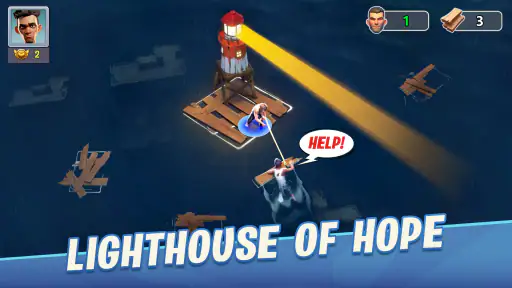
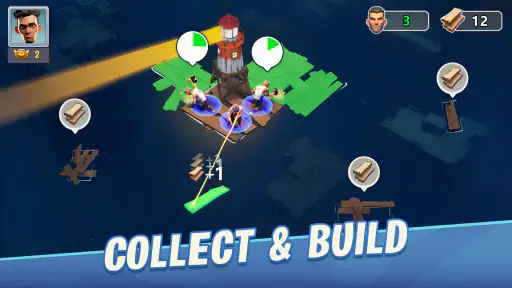
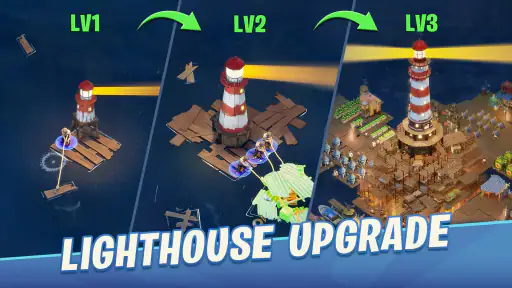
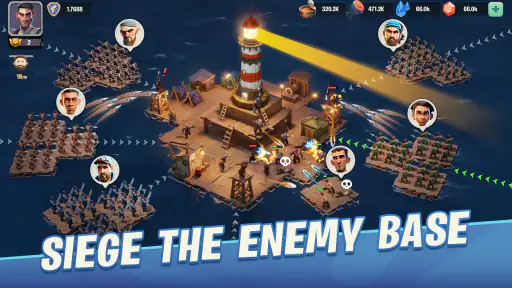
Analysis by Reviewed
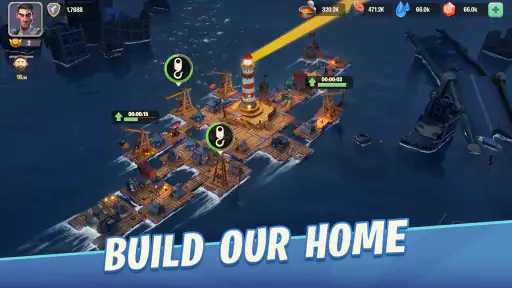
I spent my first sessions with Raft War Survival expecting a quick simulation game built around a simple idea, and that is exactly where its appeal starts. You build up an army, make decisions around a raft, and try to turn a vulnerable position at sea into a stronger one. The concept is easy to understand almost immediately, but the small choices made during play give it more texture than the short store summary suggests.
This is a free simulation game from Larks Holding Limited, rated Teen, and it has already attracted over a million installs. Its average rating sits at 4.5 from around eleven thousand ratings, with roughly one thousand three hundred written reviews. Those figures suggest that the basic loop connects with a lot of players, although popularity alone does not answer the more important question: will it still deserve a place on your phone after the first burst of curiosity disappears?
My answer is cautiously positive. The opening is inviting, the controls are approachable, and the sea-survival setting gives the usual army-building format a recognizable identity. However, the long-term value depends heavily on whether you enjoy repeating short strategic decisions and whether you can tolerate the pressure to consider optional purchases. I would recommend trying it, but I would not call it an automatic permanent installation for everyone.
Why the first week feels so inviting
The strongest part of the early experience is how quickly the game communicates its purpose. You are not asked to study a complicated rulebook before making progress. The central fantasy is clear: gather strength, multiply your force, and survive long enough to dominate the surrounding waters. That clarity matters on a phone, where I often want a game I can understand during a spare moment rather than one that demands a dedicated evening.
In the first week, the raft setting also does useful work. It makes the action feel different from a standard land-based army simulator. The limited space creates a sense of vulnerability, while the open water gives each encounter a light adventure flavor. Even when the underlying decisions are straightforward, the setting helps them feel connected: every improvement seems related to staying alive, expanding your group, or gaining an advantage before the next threat.
I found the game most comfortable in short sessions. It suits the moment when I am waiting for an appointment, taking a break from work, or sitting on a train without wanting to commit to a long campaign. The progress is easy to revisit, and the basic objective does not get buried under excessive explanation. That makes the opening week feel productive without becoming mentally tiring.
The useful decisions hidden beneath the simple premise
One of the less obvious strengths is that army growth is not only about making the biggest number possible. Timing matters. If I rushed to expand without considering the next danger, the larger force did not automatically make the situation comfortable. A more patient approach often felt better: strengthen the group, watch how the encounter develops, and avoid treating every available improvement as equally urgent.
That is a helpful habit for new players. Rather than spending every resource as soon as it appears, I would pause and ask what problem the next upgrade actually solves. Does it help me survive an immediate obstacle, increase my ability to grow, or simply make the current screen look more impressive? This distinction is easy to miss during the first few sessions, but it can reduce waste and make progression feel more deliberate.
The game also works well for players who like visible momentum. Watching a small group become a more capable army gives each session a clear sense of movement. It is not the same satisfaction as mastering a deep strategy title, but it is more engaging than a completely passive idle experience because I still feel involved in the timing and direction of progress.
Who will enjoy the opening most
I would point this toward casual players who enjoy simulation themes, light survival pressure, and simple army progression. It is especially suitable for someone who wants a game that can be learned without a long tutorial and returned to without remembering a complicated control scheme. The Teen rating also makes it more appropriate for older players than a purely child-focused management game, though parents should still consider the presence of in-app purchases.
It is less suitable for someone looking for a detailed naval simulator, a highly realistic survival game, or a competitive strategy title where every decision has a large and permanent consequence. The raft theme may attract those expectations, but the experience is better understood as accessible mobile simulation with survival styling rather than a serious maritime management system.
What remains valuable after the novelty fades
The real test arrives after the first week, when the setting is familiar and the basic army-growth loop no longer feels new. Here, the game’s recurring value comes from convenience and repetition rather than from a dramatic change in genre. I could return for a few minutes, make progress, and leave without feeling that I had abandoned a complicated plan. That low commitment is a genuine strength for a mobile game.
At the same time, convenience can become a weakness. If you need constant discovery, a large variety of systems, or a story that keeps unfolding, the routine may begin to feel narrow. The same qualities that make the game easy to pick up also limit how much it can surprise you later. I enjoyed the familiar rhythm in moderation, but I would not rely on it as my only game.
The current version is 0.18.0, and that detail is worth keeping in mind when judging its long-term position. The experience feels like something that can continue to be refined, but I would approach it as an evolving mobile game rather than a finished substitute for a large strategy production. Players who enjoy watching a compact game improve over time may be comfortable with that. Players who expect a fully mature and expansive system immediately may be more demanding.
A practical routine for keeping it enjoyable
My preferred way to use it is to set a small goal before opening the game. I might focus on strengthening the army, reaching the next meaningful stage, or testing whether a different order of decisions works better. This prevents the session from becoming an unfocused cycle of tapping through familiar actions. It also gives the game a clearer purpose when I only have a few minutes available.
Another useful approach is to separate progress from impulse. When an attractive improvement appears, I would first consider whether it changes my next encounter or merely accelerates a process I was already going to complete. That pause is particularly important in a free game with purchases ranging from $0.99 to $99.99 per item. The game can be enjoyed without treating every convenience as necessary, but players who dislike purchase prompts or progression shortcuts should enter with firm boundaries.
I also think it works better as part of a rotating game collection. Play it when you want a light simulation session, then switch to something more demanding when you want deeper planning. That pattern protects the game from becoming repetitive while preserving its best quality: it is ready when I want a quick, understandable challenge.
How it compares with familiar alternatives
Compared with a traditional city-building simulation, this game is more immediate and less concerned with long-term urban planning. You are not spending the same amount of time arranging a complex settlement or balancing many separate civic systems. The raft and army focus make the experience more direct, but they also mean there is less room for players who enjoy detailed construction and optimization.
Compared with a conventional idle game, it feels more active because the survival framing gives the growth a reason. The army is not simply a number rising in the background; it is tied to the idea of facing danger at sea. Still, players who want deep manual control may find it too streamlined, while idle fans who prefer almost no interaction may find the decisions more involved than expected.
Against a full survival game, the trade-off is accessibility. You avoid the friction of managing a broad inventory, learning complicated crafting chains, or maintaining a large base. That makes it much easier to play casually, but it also removes some of the tension that comes from being responsible for every small detail. I would choose this title for quick survival-flavored progression, not for a demanding wilderness simulation.
Maintenance, fatigue, and the cost of keeping it installed
The maintenance burden is fairly low in terms of attention. I did not need to reserve long uninterrupted sessions, and the basic objective remains understandable after a break. That makes it a good companion game for people whose schedules change from day to day. If I only had time for a brief visit, I could still feel that the session had a purpose.
The financial maintenance burden is a separate issue. Because the game is free to download but includes optional purchases, the main discipline is deciding what kind of player I want to be. If I treat purchases as optional conveniences rather than requirements, the cost can remain under my control. If I am impatient with waiting or strongly motivated to accelerate progress, the available items can make the game more expensive than its initial price suggests.
This is where the Teen rating matters in practical terms. The rating does not tell me how much a particular player will spend, so I would recommend that younger users play with clear purchase limits established in advance. Adults who are sensitive to monetization should also pay attention to their own habits. A free entry point is appealing, but the real value depends on whether the normal pace feels satisfying without repeatedly reaching for paid acceleration.
Where fatigue begins
The first source of fatigue is repetition. Once the main pattern becomes familiar, the game has to rely on the satisfaction of gradual improvement. That can be enough for a player who likes steady progress, but it may not satisfy someone looking for frequent new mechanics or major changes in how the raft operates.
The second is the gap between a simple presentation and the expectations created by the survival theme. The idea of conquering the sea sounds broad, yet the best experience comes from treating it as a focused mobile loop. If I expected a large ocean world, extensive exploration, or a highly detailed command system, I would probably feel that the concept promises more than the moment-to-moment play delivers.
A third source of fatigue is decision compression. The game makes choices easy to understand, which is excellent at first, but it also means that experienced players may eventually feel they have seen the important possibilities. That is not a flaw for a short-session title, but it limits its ability to become a single forever game. I would rather play it in measured bursts than force myself through long sessions after the decisions stop feeling fresh.
Questions I would answer before recommending it
If you are wondering whether it is genuinely free to start, yes, the listed price is free. The more useful question is whether you need to spend money to enjoy it. I would begin without buying anything, learn the normal rhythm, and only consider a purchase if it solves a specific frustration rather than an impulse. The broad purchase range means self-control matters more than the download price.
If you are asking whether it is suitable for short daily play, that is one of its better use cases. I found the compact format easier to fit around ordinary routines than a long-form strategy game. A realistic example would be playing during a lunch break: set one target, make a few careful decisions, stop before the loop becomes tiring, and return later with a clear idea of what to do next.
If you want to know whether it replaces a deeper simulation game, I would say no. Its advantage is approachability, not breadth. Choose it when you want army growth and survival atmosphere without a heavy learning curve. Choose a more complex alternative when you want detailed economies, extensive construction, or consequences that unfold across a much larger system.
If you are concerned about whether it will remain interesting for months, I would keep expectations realistic. It can earn recurring space if you enjoy repetition, gradual improvement, and short sessions. It is less convincing as a permanent main game for players who need constant novelty. The best long-term arrangement is probably to keep it available as a lightweight option rather than demand that it provide every kind of gaming experience.
My long-term verdict
After the initial novelty fades, Raft War Survival still has a clear reason to exist. Its raft setting gives a familiar army-growth format a distinct surface, and its accessible structure makes it easy to revisit. I like that it does not require me to become a specialist before I can make sensible decisions. For casual simulation fans, that balance is meaningful.
Its limitations are just as clear. The loop can become repetitive, the survival theme should not be mistaken for a fully detailed survival simulation, and the optional purchases require a deliberate approach. The game’s strongest audience is not the player searching for endless depth; it is the player who wants a compact, readable challenge that can be enjoyed in controlled bursts.
For me, the lasting value comes from using it with a routine rather than playing it without limits. I would keep it installed if I wanted a relaxing army-building game for spare moments, especially when I preferred something more active than an idle title but less demanding than a full strategy game. I would remove it if every return began to feel like the same sequence or if the purchase system became more noticeable than the gameplay.
My recommendation is to try it as a low-commitment simulation game, then judge it by the quality of your second week rather than the excitement of your first session. If the small decisions around growth, survival, and timing continue to feel satisfying, it can become a dependable part of your mobile rotation. If they do not, the game has still made its case quickly and politely, without asking you to invest a large amount of time before discovering what it is.
Pros
- Simple controls make the game easy to pick up on mobile.
- Survival gameplay creates tension as resources become limited.
- Crafting and building provide useful goals beyond basic exploration.
- Short play sessions suit casual players and quick breaks.
- Discovering new areas adds variety to the survival experience.
Cons
- Progress can feel repetitive after gathering the same resources repeatedly.
- Limited inventory space makes item management frustrating at times.
- Some features may require patience or repeated grinding to unlock.
- Mobile controls can feel awkward during fast combat situations.
- Performance may vary on older phones
- especially in busy areas.

- Category
- Simulation
- Version
- 0.18.0