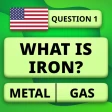
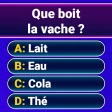
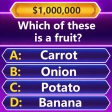
Quizzy Journey - Quiz&Earn
- 96.00
- 4.5
- Installs
- 10.00K
- Price
- Free

Screenshots








Analysis by Reviewed
I spent time with Quizzy Journey - Quiz&Earn as a casual trivia game, and my first impression was straightforward: it is built for people who want quick questions, light entertainment, and the possibility of rewards without treating every session like a serious study routine. That focus makes it approachable, but it also means the experience is better judged as an easygoing quiz companion than as a deep knowledge platform.
InventBros presents the game under the trivia category, with a clear emphasis on simple participation. The store summary describes it as fun, easy trivia with effortless rewards, while the shorter store description calls it Quizzy Journey. In practice, that positioning matters. I would open it when I had a few spare minutes, not when I wanted a carefully structured course, a competitive tournament system, or a complete reference library.
The game is free to download, which gives curious players a low-risk way to try it. That is the most important cost fact here: you can begin without paying an entry price. I would still separate free access from guaranteed financial value. A free trivia game can be enjoyable on its own, while the word “rewards” should not be treated as a promise of dependable earnings or as a substitute for paid work.
How the trivia experience feels in everyday use
The strongest part of the concept is its low commitment. A question-based game does not require the same preparation as a long-form strategy title, and Quizzy Journey is aimed at that quick decision-making rhythm. I found the idea particularly suitable for small gaps in the day: waiting for an appointment, taking a break from housework, or relaxing before bed when I wanted something more active than scrolling but less demanding than a full game.
A realistic use case would be a short evening session with a friend. One person can answer first, explain why an option seems right, and turn a few questions into a casual conversation. Even when nobody is keeping score seriously, trivia creates natural prompts: a surprising answer can lead to a discussion, a correction, or a quick search elsewhere. That social usefulness is easy to overlook because the core activity is so simple.
I also see value for players who enjoy testing broad general knowledge without committing to a specialist subject. Someone preparing for a pub quiz may use it as a warm-up, while a family might use it as a light activity during a break. The game’s appeal is less about mastering one complicated system and more about making short bursts of curiosity easy to start.
That simplicity has a practical advantage: there is little mental overhead before answering. I do not need to learn a large rulebook or understand a complex progression structure before the basic activity makes sense. For a casual player, that is a genuine strength. The trade-off is that people who need detailed explanations, lessons, or carefully organized revision material may find the experience too light.
What the reward angle really means for value
The reward-focused presentation gives the game an extra reason to keep playing, but I would approach that promise carefully. The confirmed description supports the idea that rewards are part of the appeal; it does not establish a particular payout, earning rate, redemption method, or guaranteed return. That distinction is important because the value of a free game can be entertainment value, not necessarily money.
My advice is to decide whether you would still enjoy answering questions if the rewards were only a secondary motivation. If the answer is yes, the game has a sensible value proposition: free access, quick play, and a trivia format that can fill spare time. If the only reason you are interested is the possibility of earning something, I would be much more cautious. A player should never spend money, disclose sensitive information, or change daily habits based solely on a broad rewards message.
This also affects how I would compare it with ordinary trivia alternatives. A traditional quiz app may focus entirely on scores, streaks, categories, or learning. Quizzy Journey adds a reward-oriented hook, which may make repeated sessions feel more purposeful for some players. However, a conventional trivia app can be the better choice when you want transparent educational progress or a more clearly defined competitive structure.
Because the game is free, the sensible first step is simply to try it without treating installation as an investment. Play enough to decide whether the questions, pace, and reward framing suit you. The absence of an upfront price removes one barrier, but it does not remove the need to judge whether your time is being used well.
Small habits that make short sessions better
I would use a simple personal rule: start a session with a time limit in mind. Trivia games can be easy to open repeatedly, especially when each round feels short. Setting aside a brief break helps preserve the casual nature of the experience and prevents the reward idea from turning into an obligation. This is more useful than chasing every possible session, because the game’s main strength is convenience.
A second useful habit is to treat uncertain answers as learning moments rather than failures. When I am unsure, I try to identify what makes each option plausible before choosing. That turns a fast question into a small reasoning exercise and gives the game more value than blind guessing. It is especially helpful when playing with another person, since explaining an answer can be more enjoyable than simply seeing whether it was correct.
I would also avoid using it as the only preparation tool for a serious exam or formal knowledge test. A casual trivia game can broaden recall and keep the mind active, but it is not a replacement for a syllabus, reliable reference material, or structured practice. That is one of the clearest boundaries between entertainment value and educational value.
Where the game may feel limited
The same accessibility that makes Quizzy Journey easy to approach may frustrate experienced quiz fans. Players who want deep category control, detailed answer explanations, advanced difficulty settings, or a strong head-to-head environment should check whether the game’s lighter design matches their expectations before making it a regular habit. Its public positioning is about easy trivia, not about being a comprehensive quiz-training suite.
The reward language can create another source of friction. Some users may expect a clear, measurable return simply because rewards are mentioned. I would not make that assumption. The responsible way to evaluate the game is to separate three questions: Is it enjoyable? Is the trivia quality good enough for repeated play? And does the reward system, as experienced in the app, feel clear and worthwhile to you? Those answers may differ from player to player.
Age guidance is also relevant. The game carries a Mature 17+ content rating, so I would not recommend handing it to younger children simply because trivia sounds harmless. Parents should follow the platform’s age guidance, and adults considering it for family play should keep that rating in mind. For an adult audience, the rating is a practical part of deciding where and with whom to use it.
Another consideration is longevity. Casual quiz games depend heavily on question variety and the player’s tolerance for repetition. If you enjoy short bursts and do not need a large progression system, that may not matter. If you expect a constantly expanding challenge or a highly personalized learning path, the experience may feel less satisfying than a dedicated quiz platform.
Who is likely to get the most from it?
I think the best fit is an adult who wants a free, uncomplicated trivia game and likes the idea of rewards as an extra incentive. It suits someone who can enjoy a few questions without demanding that every session produce a measurable achievement. The game is also a reasonable option for players who prefer trying something at no upfront cost before deciding whether it deserves a place in their routine.
It may appeal to people who enjoy general-knowledge prompts but are not interested in elaborate controls. The low-commitment format works well for commuters, break-time players, and anyone who wants a mental change of pace. A person who likes discussing answers with friends may find more enjoyment than someone who always plays alone and expects a deep competitive ladder.
On the other hand, I would suggest skipping it if your main goal is dependable income. Free entry is not the same as financial value, and a rewards theme should not be confused with a guaranteed payout. I would also look elsewhere if you need a serious study tool, a specialist question bank, or a clearly documented competitive format.
Players under the Mature 17+ rating should skip it as well. That is not a comment on the difficulty of the questions; it is simply the appropriate response to the stated age guidance. Adults choosing an app for children should consider that rating before installation rather than relying on the friendly-sounding trivia premise.
How it compares with familiar trivia choices
Compared with a standard trivia app built around scores and knowledge practice, Quizzy Journey’s distinguishing angle is the reward-oriented framing. That can make ordinary question answering feel more motivating for a player who likes an additional reason to return. Yet the usual alternative may be better for someone who values transparent educational structure, category selection, or progress that is easy to interpret.
Compared with a full game that has story, strategy, or long sessions, this title is easier to fit into a busy day. You can approach it as a small activity instead of reserving a large block of time. The downside is that it is unlikely to satisfy a player looking for rich world-building or complex decisions. The comparison is not really about which type is superior; it is about whether you want quick trivia or a more involved game loop.
Its current version is 1.0.4, and the game supports devices running Android 7.0 or later. Those details make it easier to judge basic compatibility before trying it. The developer is InventBros, and the game has reached over ten thousand installs with an average rating of 4.5 from around four hundred ratings. I read that as encouraging early interest, while remembering that a rating cannot tell me whether the reward model or question style will suit my particular habits.
My verdict on trying it for free
The best reason to install Quizzy Journey is that the entry cost is free, while the core activity is easy to understand. That makes it worth a trial for adults who enjoy general trivia and want a casual way to fill short breaks. I would approach the reward element as a possible bonus rather than the foundation of the decision, because enjoyment should remain worthwhile even without assuming a particular return.
After trying it, I would keep it if the questions stay engaging, the pace feels comfortable, and the reward presentation is clear enough for my expectations. I would remove it if sessions begin to feel repetitive, if the reward angle creates pressure, or if I realize I really wanted structured learning instead. Free access makes that decision easier: there is no purchase to justify, so the real cost is the time and attention I choose to give it.
My final recommendation is therefore selective rather than universal. Adults looking for a lightweight trivia game should give it a fair test, especially if they like the idea of rewards attached to casual play. Serious quiz competitors, students needing dependable revision, younger users, and anyone seeking reliable earnings should choose a more suitable alternative. For the right player, Quizzy Journey - Quiz&Earn is a pleasant low-commitment diversion; for everyone else, its simple design and uncertain reward value are good reasons to keep expectations modest.
Pros
- Wide range of quiz topics keeps sessions varied.
- Short rounds make it easy to play during spare moments.
- Simple interface is approachable for first-time quiz players.
- Progress tracking can encourage regular participation.
- Reward system adds extra motivation beyond answering questions.
Cons
- Reward availability may vary by region or account.
- Some questions may feel repetitive after extended play.
- Earning rewards can require considerable time and activity.
- An internet connection may be needed for quizzes and updates.
- Ads or promotional prompts may interrupt the playing experience.

- Category
- Trivia
- Version
- 1.0.4