Quiz for Rick and Morty
- 25.00
- 4.6
- Installs
- 10.00K
- Price
- Free

Screenshots
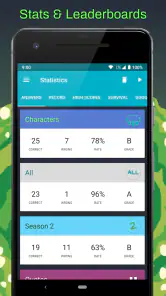
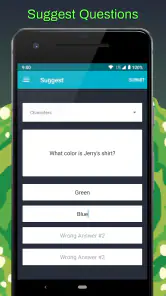
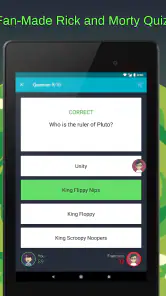
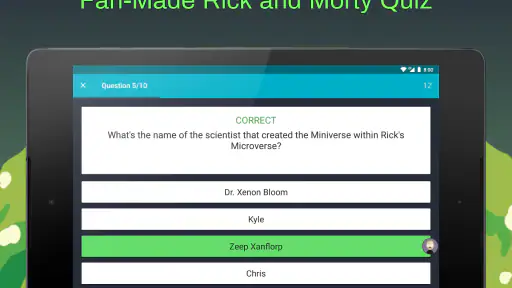
Analysis by Reviewed
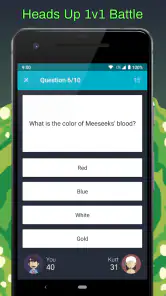
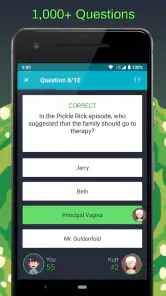
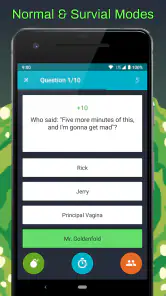
I enjoy trivia games most when they give me a reason to remember the source material, not just tap through random questions. Quiz for Rick and Morty takes that approach with a focused fan-made challenge built around the animated series. I found it easy to pick up for a short session, but it also has enough room for fans to test whether they remember small details rather than only the most famous characters and jokes.
This is a free Rick and Morty trivia game from developer Robbie Elias, aimed at Teen players. Its average rating is 4.6 from around 188 ratings, and it has passed 10K installs. Those figures suggest a modest but genuinely interested audience rather than a huge mainstream game, which fits the experience: it feels like a compact fan project made for people who already know the show.
How the current version feels to play
The current version is 1.3.1, and the game’s identity is refreshingly clear. It is not trying to become a general entertainment app, a social platform, or a large collection of unrelated mini-games. You open it because you want a quiz about Rick and Morty, and the application stays close to that purpose.
That narrow focus is its biggest strength. I do not have to sort through broad trivia categories before reaching the subject I care about. The best use is a quick break after watching an episode, a casual challenge with another fan, or a way to check how much of the series has actually stayed in my memory.
The game works particularly well for fans who enjoy details. A casual viewer may recognize the central names and broad plot points, while a more committed viewer will get more satisfaction from questions that depend on remembering scenes, relationships, and recurring parts of the show’s universe. That difference matters because the experience becomes more rewarding as your familiarity with the source grows.
I would not treat it as a replacement for watching the series. It is a companion activity, not a story-driven game or an interactive episode guide. The entertainment comes from recognition and recall, so its value depends heavily on whether Rick and Morty is already part of your interests.
A practical way to use it after watching an episode
One useful routine is to play immediately after finishing an episode, while the details are still fresh. I can use the quiz as a memory check, then return to it later when the answers are less obvious. This creates two different experiences: an immediate test of attention and a later test of long-term recall.
It also works well in a small group. Instead of handing the phone around for a long multiplayer session, one person can read a question aloud and everyone can answer before checking the screen. That makes the game a simple conversation starter, especially when the group disagrees about what happened in a particular episode.
Another practical approach is to use mistakes as a watchlist. When I miss a question because I cannot remember the scene, I can note the episode or character involved and revisit that part later. The quiz does not need to provide a complete study system to be useful; it can point out which corners of the show I have forgotten.
What the release history tells me
The game was released on March 27, 2019, and the current 1.3.1 version shows that it has moved beyond its earliest release. I see that as a sign of continued maintenance rather than proof of a large redesign. The important distinction is that a version number can indicate refinement, but it does not automatically mean the game has become a completely different product.
For someone who installed an earlier edition, the likely benefit of using the current build is a more settled experience than the first release. I would still approach it as a focused quiz rather than expecting a major expansion into new game types. Its core appeal remains the same: testing Rick and Morty knowledge in a lightweight format.
That continuity is positive for returning players. A fan who liked the basic idea does not need to relearn an elaborate system every time the app changes. On the other hand, players hoping for a dramatic evolution may find the progression conservative. The version history supports the idea of an improved quiz experience, not an entirely new form of gameplay.
The free entry point also makes trying the current version straightforward. There are in-app purchases priced at $1.99 per item, so I would check the purchase prompts carefully before confirming anything. The free availability lowers the risk of testing the game, while the optional paid items mean the full experience may involve a choice about whether additional content or convenience is worth paying for.
Where it is strongest for existing fans
Existing fans benefit because the game does not need to spend time explaining the premise of the show. I can begin with the assumption that I know the main cast and the general tone, then focus on recall. That makes each question feel more personal than a standard trivia prompt about a subject I barely understand.
The game is also a good fit for uneven knowledge. I may remember a character perfectly but forget the context of an appearance, or recall a memorable line without remembering which episode it came from. A quiz exposes those gaps quickly. That is more useful than simply replaying familiar highlights, because it encourages attention to the less obvious details.
There is a nice trade-off between speed and concentration. A short session does not require a large time commitment, but answering well still asks me to slow down and think. I would use it when I want something more active than scrolling but less demanding than a full console or mobile game.
It is also suitable for fans who prefer a single-subject quiz over broad trivia apps. General alternatives often jump from history to sport to science, which can be fun but makes it harder to measure knowledge of one fictional universe. Here, the subject remains consistent, so improvement feels easier to notice.
Where general trivia apps may be better
The same specialization that makes this game appealing can make it limiting. If I want variety, daily challenges across many subjects, competitive leaderboards, or a large educational range, a broader trivia app is probably a better choice. Quiz for Rick and Morty is not designed to satisfy every kind of quiz player.
It is also a weak fit for someone who has never watched the show. Without familiarity, many questions may feel like guesses rather than fair tests of knowledge. A generic trivia game can welcome a wider audience because its subjects change; this one assumes a particular fan relationship from the start.
Another trade-off is replay value. A focused quiz can remain enjoyable when I want to improve my memory, but repeated questions eventually become easier through recognition alone. That is different from genuinely remembering the episode. I would avoid treating a high score as proof that I understand every detail, especially after several repeated sessions.
Players looking for a narrative experience should also look elsewhere. The application uses the show as its subject, but it does not replace an episode, offer an original adventure, or let me control Rick or Morty. Its job is recall, and it does that best when I accept the simple format instead of expecting a larger game.
Small strategies that improve the experience
My first tip is to avoid rushing through every question just to finish. When I pause briefly before choosing, I can separate genuine memory from an answer that merely sounds familiar. That makes the result more meaningful and turns the session into a real test rather than a speed exercise.
My second tip is to play in stages. A first attempt immediately after watching an episode measures attention, while a second attempt several days later measures retention. Keeping those purposes separate helps me understand whether I remembered the content or simply recognized it from a recent viewing.
A third useful strategy is to use the game socially without making it a formal competition. Friends can explain why they chose an answer, compare memories, and talk about the scene behind the question. That conversation is often more enjoyable than the score, particularly when the question touches a strange or easily forgotten moment from the show.
I would also be cautious about spending money too early. Since the game is free to try and individual in-app purchases cost $1.99, I would first decide whether the basic quiz fits my habits. If I only play once every few months, paying for extras may not add much. If I return regularly and want to support the project, the purchase decision becomes easier to judge after real use.
Device fit and audience expectations
The game requires Android 6.0 or later, which makes it accessible to many older Android devices that are still in everyday use. That is helpful for a lightweight trivia title because I do not expect it to demand the newest hardware. Still, I would install it on the device I actually plan to use rather than assuming every older phone will feel equally comfortable.
The Teen content rating is worth taking seriously for younger players and families. The subject comes from an animated series with mature humor and themes, so this is not the kind of quiz I would automatically hand to a child simply because it is presented as trivia. Parents should consider whether the show itself is appropriate before treating the game as a harmless general-knowledge activity.
The audience is therefore quite specific: fans old enough for the source material, Android users on a compatible system, and players who enjoy testing memory more than collecting elaborate rewards. That specificity is not a flaw, but it does mean the game should be judged against its intended use rather than against large, feature-heavy quiz platforms.
What I would like to see next
The most valuable future direction would be deeper ways to keep knowledge fresh without losing the game’s simplicity. More variety in how questions are presented could help experienced players distinguish real recall from memorized answer positions. Any such change would need to preserve the quick-session format that makes the game convenient.
I would also watch how the paid items affect the balance between the free experience and returning play. Optional purchases can work well when the free version remains satisfying and the paid additions feel clearly worthwhile. They become frustrating when a player cannot understand what is included until after reaching a purchase prompt, so clarity will matter more than the price alone.
For existing users, the key question is whether future updates continue improving the quiz without drifting away from the fan-focused purpose. A large collection of unrelated features would not automatically make this better. In my view, careful question quality, sensible organization, and a smooth return experience would matter more than adding complexity.
My recommendation for different kinds of players
I recommend giving it a try if you already enjoy Rick and Morty and want a quick way to challenge your memory. It is especially suitable for episode-to-episode testing, relaxed sessions with friends, and fans who like noticing details that disappear during a first watch.
I would skip it if you want a broad trivia library, a competitive online structure, or a game with exploration and story. I would also skip it if you have little interest in the series, because the narrow subject leaves very little reason to return once the novelty wears off.
For me, the strongest part is the honest simplicity. This is a fan-made trivia game by Robbie Elias, not a sprawling production trying to imitate every popular mobile format. The free starting point, Teen rating, Android 6.0 requirement, and optional $1.99 purchases give players a clear idea of the commitment involved, while the 4.6 average from roughly 188 ratings indicates that many users have found the focused concept enjoyable.
My final view is that Quiz for Rick and Morty is best treated as a companion quiz for committed fans, not as a complete alternative to mainstream trivia games. Used after an episode or shared with friends, it can turn forgotten details into a fun memory challenge. Its limits are real, but they come mostly from its narrow purpose. If that purpose matches what you want, the current version is an easy, low-risk addition to a fan’s Android game collection.
Pros
- Covers characters
- episodes
- and references from across the series.
- Quick questions make it easy to play during short breaks.
- Useful for testing memory of minor details and recurring jokes.
- Simple interface keeps the focus on answering questions.
- Appeals to fans who enjoy comparing their knowledge with friends.
Cons
- Some questions may feel too easy for dedicated fans.
- Content can become repetitive after several play sessions.
- Unofficial apps may not reflect every recent episode or character.
- Ads may interrupt gameplay or reduce the overall enjoyment.
- Requires familiarity with the show to make meaningful progress.

- Category
- Trivia
- Version
- 1.3.1