Punko.io: Tower Defense
- 57.00
- 4.7
- Installs
- 100.00K
- Price
- Free

Screenshots
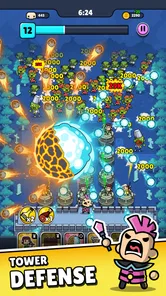
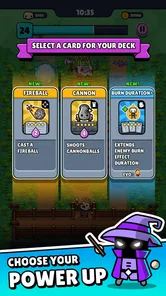



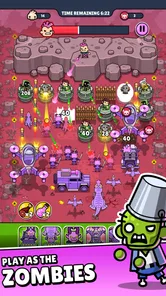
Analysis by Reviewed
I usually judge a tower defense game by whether its central decision stays interesting after the first few rounds. In Punko.io: Tower Defense, that decision is how to respond to enemy waves while protecting your base. It gives each attempt a clear purpose, and I like that the appeal comes from making choices rather than simply watching a fight unfold. The game is free to start, though optional in-app purchases range from $0.99 to $99.99 per item, so I’d treat spending as a personal choice rather than a requirement for trying it.
Why the wave-by-wave decision matters
For me, the useful thing about a defense built around incoming waves is that it gives each moment a practical question: what needs attention now? That is different from simply choosing a build once and waiting to see the result. I get more out of a run when I observe the pressure on my base, make a considered adjustment, then check whether that response is working. The satisfaction comes from connecting a decision with its consequence, not from assuming that one fixed tactic will solve every situation.
This approach also makes the game easier to sample than a sprawling role-playing campaign. I can focus on the immediate objective instead of keeping track of a long plot or a large cast. At the same time, the pressure means it is not quite a background activity. If I want to get better, I need to pay attention to the encounter rather than tap through it while doing something else.
Making each defense count
That focus on defending against waves is what makes the game easy to understand but leaves room to think. A tower defense session is most satisfying when I have to notice what is going wrong, decide which weakness to address, and see whether the adjustment holds. Instead of treating every level as a routine to repeat, I pay attention to how my choices affect the next stretch of the fight. That makes the core loop a better fit for players who enjoy adapting under pressure than for anyone looking for a story-led role-playing adventure.
There is a useful distinction between a failed attempt that teaches me something and one that only feels frustrating. I try to make the next run more informative by changing one part of my approach at a time. If I alter everything together, I cannot tell which change helped; if I keep everything identical, I may simply repeat the same problem. This is a small habit, but it gives trial and error a purpose and helps me judge whether I am learning the game or just hoping for a better result.
How I approach a run
I find it useful to treat a difficult attempt as a small experiment. When a defense falters, I try to identify the point where control started slipping before changing everything at once. Adjusting one decision at a time makes it easier to learn what helped, and it keeps a loss from feeling like a completely wasted run. This is a practical habit for a wave-based game: the goal is not only to survive, but to understand which response was worth repeating.
I’d also avoid treating a strong early stretch as proof that a strategy is settled. A defense that looks comfortable at first may still need attention as the pressure changes. Instead of spending the whole attempt admiring a good start, I keep checking whether the same response remains useful. That ongoing reassessment is the part likely to appeal to players who like tactical play; anyone who mainly wants to switch off may find that same attentiveness tiring.
More From Our News Desk

 Instagram
’s Power Comes From Its Place in Your Phone
A close look at how Instagram turns Meta’s reach, recommendation systems and everyday camera habits into durable platform power—and what that costs users.

 Gmail
Gmail in a Busy Inbox: Who Benefits Most?
From first account to crowded workday, Gmail earns its place through dependable search and flexible sorting—but its best fit depends on how much inbox maintenance you can tolerate.

 Prime Video
Switching to Prime Video: What Changes in Your Viewing Routine
Prime Video can make a compelling second home for streaming, but switching means learning a different catalog, rental layer, and route from browsing to playback.

 Universal TV Remote Control
 Works Best as a Reliable Backup
A phone remote earns its place through quick setup and reliable habits. Here is how to get more from Universal TV Remote Control—and where its limits show.

 Weather - By Xiaomi
Weather by Xiaomi Review: Clear at a Glance, Less Clear Up Close
Xiaomi’s weather app makes everyday forecasts quick to scan, but its calm surface can leave useful details and recovery paths harder to find than they should be.

 X
X Under Pressure: Can It Recover When Posting Goes Wrong?
A resilience-focused review of X, examining setup, mistaken posts, interruptions, weak connections, and the gaps that matter when recovery needs to be dependable.
Latest News



A good fit for a focused break
For a realistic everyday session, I’d open it when I have a little time to concentrate, perhaps during a quiet break at home. I would focus on one attempt rather than assume I can pause my attention every few seconds to answer messages. Tower defense can look casual, but keeping track of a changing defense is more enjoyable when I’m not constantly distracted. If I only have a moment and need to stop instantly, a simple puzzle or an idle game would be a safer pick.
A practical way to make that break work is to decide before starting whether I have enough attention for an active attempt. If I’m already splitting my focus between errands, messages, and the game, it is easy to miss the point where a defense begins to struggle. I would rather save it for a calm window than turn a potentially thoughtful session into a series of half-watched moments. That makes it a better fit for a short stretch of deliberate play than for every spare second of the day.
It can also work as a small shared challenge: after playing, I can compare notes with a friend about what seemed to go wrong and what each of us would try next. That does not require treating every run as a contest. The useful conversation is about choices and lessons, rather than simply who lasted longer. If I want a game that provides an instant social activity with little explanation, a party game would be more suitable; this one rewards taking the time to understand the defense.
Choosing the right kind of tower defense
I look at tower defense games through a simple question: do I enjoy deciding how to respond when a defense starts to feel strained? This section weighs that active, wave-focused style against the slower or more story-led options I might choose instead, so you can tell whether the game’s central challenge suits your mood.
Where it sits among mobile games
Compared with a conventional role-playing game, this is a more direct choice for someone who wants tactical decisions without making character progression or a long narrative the main attraction. Compared with very passive tower defense games, the pleasure here is in staying attentive to the waves and making considered adjustments. That also means it is not automatically the best option for every mood: I would choose a slower, more forgiving alternative when I want something to leave running in the background, or a deeper RPG when I want to spend a session following characters and exploring a story.
That distinction is especially helpful if you are choosing from a store category rather than from a detailed description of the play style. The role-playing label may lead some people to expect a campaign-first experience, while the central appeal here is defending against waves. I would think of it as a tactical choice for someone who enjoys reacting to pressure, not as a substitute for a character-focused adventure. If story, exploration, and a sense of progression through a large world are what you want most, another RPG is likely to be a better match.
Against the broader tower defense field, I’d put it closer to the active end of the spectrum than to games designed to run with minimal attention. The trade-off is straightforward: a more involved session can make each decision feel meaningful, but it also asks more of the player. Someone who likes planning and correcting a defense may welcome that demand; someone who wants a low-effort time-killer may prefer a more passive alternative. That is a difference in mood and pace, not a reason to treat one style as universally better.
Small habits that make attempts more useful
A useful way to keep the experience fresh is to resist copying the same response on every attempt. If a familiar approach stops working, I’d take that as a cue to reconsider the problem rather than assume that more of the same will fix it. That small change in mindset helps make trial and error feel purposeful. It also gives newer players a manageable way to build confidence without needing to master everything at once.
One non-obvious tip is to give a run a single learning goal. I might focus on noticing when the defense first becomes unstable, rather than trying to judge every choice at once. Another time, I might pay attention to whether an adjustment actually changes what happens next. These simple self-imposed questions make it easier to get something useful from an attempt, even when it does not go as planned. They also prevent me from turning every loss into a vague verdict that the game is unfair or that I am simply bad at it.
I would keep spending decisions separate from tactical decisions, too. Since the game is free to start and offers optional purchases, I’d first work out whether the core wave-defense loop is enjoyable for me. A purchase only makes sense if it addresses something I genuinely want from my own play; spending because I am frustrated with a difficult attempt would be a poor way to decide. The range of item prices is wide, so I’d check the specific purchase carefully rather than assume every option has the same value or purpose.
Good fit, with sensible expectations
I’d recommend it most to players who enjoy short tactical challenges, like spotting why a defense is under strain, and are happy to learn through repeated attempts. It may be less satisfying if you dislike wave-based pressure, prefer a hands-off game, or expect a sprawling role-playing campaign just because the store category is role-playing. The developer is AgonaleaGames, and the game is free, with optional purchases; I’d start without spending and decide later whether anything on offer genuinely adds value to my own play.
It is also a reasonable choice for someone who wants a game that gives a clear problem to work on without demanding that every session revolve around a long narrative. I would be more cautious about recommending it to a player who needs frequent interruptions to be painless, or who gets little enjoyment from repeating an attempt to test a different response. The deciding question is not whether tower defense is generally fun, but whether you like watching pressure build and making choices in response.
If you are wondering whether it is suitable for a broad range of players, its Everyone content rating makes it accessible in that respect. That does not mean every player will enjoy its pace: age suitability and play style are different questions. I would still consider whether the person playing likes tactical challenges and can give the game their attention. For younger or inexperienced players, the clearest way in is to focus on the immediate goal of protecting the base and learn gradually, rather than expecting to understand every decision at once.
What to expect before installing
The game is rated for Everyone, has a 4.7 average from around 1.8 thousand ratings, and has passed 100 thousand installs. It was released on March 11, 2024, and version 1.0.3 supports Android 7.0 and later. Those details make it approachable for a broad audience, but the more important question is whether you enjoy the moment-to-moment demand of holding a line against successive threats. I’d give it a try if that kind of focused decision-making sounds fun, and move on if I’m in the mood for a quieter game.
For a reader deciding whether to install, I would start with two practical questions: do you enjoy active defense, and do you have a few uninterrupted minutes when you want to play? If both answers are yes, the free entry point makes it easy to see whether the central loop suits you before considering optional purchases. If the answer to the first is no, a story-led RPG or a calmer idle game is a more sensible use of your time, regardless of the popularity of this one.
First Impressions
From the moment I launched the app, I was greeted with vibrant graphics and a user-friendly interface. The developers clearly put a lot of thought into the design, ensuring that both seasoned players and newcomers can navigate with ease. The tutorial is concise but informative, getting you into the action without unnecessary delays. For those unfamiliar with tower defense games, the premise is simple: protect your base by strategically placing towers to fend off waves of enemies.
The Gameplay
Here's where Punko.io truly shines. The game offers a variety of towers and upgrades, each with unique abilities and strengths. As you progress, you unlock more complex and challenging levels that require a keen eye and quick thinking. The balance between difficulty and enjoyment is spot on, keeping you engaged without feeling overwhelmed. I found myself experimenting with different tower combinations, trying to find the perfect strategy to conquer each level.
One feature that stands out is the multiplayer mode. Compete against friends or players worldwide to see who can last the longest or score the highest. It adds a competitive edge to the game, making victory all the sweeter. Plus, the community is active and friendly, always ready to share tips or strategies.
Visuals and Soundtrack
The visuals in Punko.io: Tower Defense are nothing short of stunning. Each level is meticulously designed, with intricate details that bring the game to life. The vibrant colors and smooth animations make for an immersive experience that’s hard to step away from. Combined with a catchy soundtrack and sound effects that add to the excitement, it’s a feast for the senses.
Final Thoughts
After spending hours defending my base and battling it out in multiplayer mode, I can confidently say that Punko.io: Tower Defense is a must-try for fans of the genre. Its engaging gameplay, stunning graphics, and community-driven features make it a standout in the world of mobile gaming. Whether you're a tower defense veteran or a curious newbie, this game has something to offer. So, go ahead, give it a download, and get ready to strategize your way to victory!
Punko.io: Tower Defense Frequently Asked Questions
Is Punko.io: Tower Defense free to download, and what should I know about optional purchases?
Punko.io: Tower Defense is free to download, so you can try its role-playing and tower-defense gameplay without paying upfront. It also offers optional in-app purchases, with prices ranging from $0.99 to $99.99 per item. Consider your spending preferences before playing, particularly if you share your device with children or want to avoid accidental purchases.
Is Punko.io: Tower Defense suitable for children?
Punko.io: Tower Defense has an Everyone content rating, making it suitable for a broad audience. Its premise involves surviving zombie wars, so parents may still want to consider whether that theme fits their child. The game also includes optional in-app purchases, so checking purchase settings on a shared device can help families manage spending.
What is the main objective of Punko.io: Tower Defense?
Punko.io: Tower Defense is a strategy game where players must protect their base from waves of enemies by strategically placing various defensive towers. The primary goal is to prevent the enemies from breaching your defenses and reaching your base. Players can upgrade towers and use different strategies to handle increasingly challenging waves.
Is Punko.io: Tower Defense available for both Android and iOS devices?
Yes, Punko.io: Tower Defense is available for download on both Android and iOS platforms. Players can find the app on the Google Play Store for Android devices and the Apple App Store for iOS devices, ensuring a wide accessibility for users regardless of their preferred mobile platform.
Are there in-app purchases in Punko.io: Tower Defense?
Punko.io: Tower Defense offers in-app purchases, allowing players to enhance their gameplay experience. These purchases can include tower upgrades, special abilities, or cosmetic items. While the game is free to download and play, the in-app purchases provide optional enhancements that can help players progress faster or customize their gaming experience.
Pros
- Engaging gameplay with strategic depth
- Visually appealing graphics and effects
- Regular updates with new content
- User-friendly interface and controls
- Offers challenging levels for all players
Cons
- Can be demanding on device battery
- In-app purchases can be expensive
- Requires stable internet connection
- Limited offline play options
- Occasional glitches in gameplay