Prison Breakout!
- 340.00
- 4.4
- Installs
- 1.00M
- Price
- Free

Screenshots







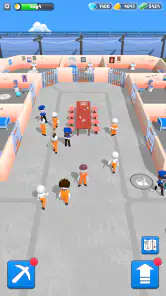
Analysis by Reviewed
I like prison escape games most when progress comes from thinking ahead rather than simply tapping faster. Prison Breakout! sets up that kind of promise: you dig, make plans and try to get out. In practice, its appeal rests on a compact role-playing loop built around the pressure of turning a risky idea into a workable escape. It is easy to understand why that setup attracts players, though the simple premise also means the experience is best approached with realistic expectations.
What makes this kind of game work for me is the small decision between sessions: do I want a quick, focused objective, or a larger world to explore? Prison Breakout! is clearly aimed at the first mood. It can suit a short pause when I want to feel that I am working toward something, but it is not the choice I would make when I want a long story to carry me through an evening.
Small goals give the escape its momentum
The first useful question is not whether you can escape immediately, but what you need to do next. That shift makes the game easier to settle into: instead of treating freedom as one enormous objective, I found it more natural to focus on the next manageable step. Digging gives the central plan a physical, hands-on quality, while the need to think about escape keeps that action connected to a larger aim.
That structure suits short sessions. If I have a few minutes between other tasks, a clear immediate objective is more inviting than a sprawling role-playing adventure that expects me to remember a long quest chain. The strongest reason to try it is the combination of a straightforward action and a goal that gives that action purpose. The prison setting also makes every bit of progress feel tied to the same central problem, rather than to an unrelated collection of activities.
Still, a premise is not the same as deep strategic choice. The game’s short description points to digging, planning and escape, but that alone does not tell a player how much variety each stage offers. I would go in expecting an accessible breakout game, not a detailed prison simulation or a sprawling role-playing campaign. That distinction matters if what you want is complex character building, a large world, or many different story paths.
Look for progress in the plan, not just the destination
One of the more useful ways to judge a game built around escape is to notice whether each action helps clarify the route ahead. A good session should leave you with a stronger sense of what the next move is, even if it does not end with freedom. I recommend resisting the urge to rush through the central action without considering its purpose; a game about planning is more satisfying when you treat each small step as part of a larger attempt.
This is also a practical way to decide whether the pacing works for you. If you enjoy setting a modest target and returning later to continue, the premise has a natural fit. If you prefer uninterrupted narrative scenes or a constant stream of new places and characters, the loop may feel narrow. The pleasure here is supposed to come from working toward an escape, not from discovering a broad role-playing world.
You May Like

Clash of Clans Is Won Between the Battles

Android Auto Makes the Case for Quieter Car Software

MobiOffice: Transforming Mobile Productivity with Seamless Integration

EA SPORTS FC™ Mobile Soccer: Redefining Mobile Sports Gaming

How Microsoft OneDrive Became a Mobile Productivity Giant

How Google Translate Breaks Language Barriers Effortlessly
What progress feels like over time
For me, the most important progress signal in a breakout game is whether the plan feels less distant after a session. Even without a complicated checklist, a clear sense of movement can make small actions rewarding. Prison Breakout! has a focused premise that gives those actions a reason to matter: you are not digging for its own sake, but trying to turn a confined situation into an opportunity.
That focus can be a strength for players who lose interest when a game scatters attention across too many systems. It can also become a limitation if you want every session to introduce a radically new activity. A focused objective is motivating when each step changes your position or understanding; it is less compelling when you are hoping for the breadth of a conventional role-playing game. I would pay attention to whether the next goal feels meaningfully different from the last, rather than judging the experience only by how quickly the escape arrives.
A helpful habit is to play with a specific stopping point in mind. Decide to make progress on one part of the escape, then take a break once that effort feels complete. That keeps the game from becoming a vague time-filler and makes it easier to tell whether you are enjoying the planning itself. It is a small approach, but it suits a game whose central appeal depends on steady forward motion.
That stopping point is useful when playing in interrupted moments, too. If I open the game while waiting for an appointment, I would choose one immediate aim rather than expect to finish a whole escape attempt in that window. It makes a brief session feel intentional and gives me a simple way to judge whether I want to return: did I leave with a clearer next step, or did the activity feel like repetition without direction?
Challenge is most satisfying when it stays readable
Escape games need some friction: if every move succeeds without thought, the prison setting loses its tension. At the same time, difficulty can become frustrating if a player cannot tell what a setback teaches them. The balance I would look for here is whether the challenge encourages a better plan rather than simply asking for repeated effort. That is a useful standard for deciding whether the game’s pressure feels fair to you.
Because the premise is simple, expectations matter. Players who enjoy experimentation may be comfortable testing an approach and adjusting when it does not work. Players who want a gentle game with no setbacks may find the escape theme itself less relaxing. Conversely, if you want demanding tactical combat or a highly intricate strategy layer, do not assume that digging and planning automatically mean that kind of depth. The game’s core idea is narrower and more approachable than those genres.
I would also avoid measuring the experience only by how quickly a goal is reached. A short route to success can be satisfying when the choices along the way feel deliberate; a longer route can feel tedious if it does not offer useful feedback. The question is whether you can understand why you are doing the next thing. That readability is especially important for casual sessions, when you may return after a day away and want to pick up the thread without reconstructing a complicated plan.
Where the pacing fits—and where it may not
The game is a better fit for someone who likes a single, easy-to-grasp objective than for someone looking for a content-heavy role-playing title. Its prison-break premise provides a natural reason to keep moving, but it also narrows the kind of variety you should expect. I would recommend it to a player who enjoys compact challenges and wants a clear purpose for each session. I would steer a friend toward a broader RPG if they mainly want an expansive story, extensive character progression, or a changing cast of activities.
It is also worth thinking about how you usually play on a phone. If you tend to open a game briefly and appreciate being able to focus on one immediate aim, a straightforward escape loop is appealing. If you need a game that can occupy a long evening through lots of distinct modes, this may not be the best match. The premise makes it easy to understand what you are working toward, but a clear goal does not automatically mean endless variety.
That trade-off is more useful than a blanket claim that the game is either simple or deep. Simplicity can make it welcoming, especially when you do not want to learn a stack of mechanics before beginning. The same simplicity can leave experienced role-playing fans wanting more layers. I would judge it as a focused mobile game first and a role-playing experience second, which is a more reliable way to set expectations.
Compared with the usual alternatives, the distinction is one of focus. A story-led RPG is usually a better pick when I want a continuing narrative and a sense of a world opening up; a dedicated puzzle game is better when I want each challenge to be a self-contained logic problem. This title sits between those habits, asking me to keep an escape objective in mind while engaging with a simple, hands-on premise. That in-between position is appealing if neither a sprawling adventure nor a pure puzzle is quite what I want, but it also means it may not fully satisfy fans of either extreme.
Free to start, with a sensible spending boundary
Prison Breakout! is free to play, so it is straightforward to try before deciding whether its particular rhythm suits you. It includes in-app purchases ranging from $0.99 to $39.99 per item. I suggest treating optional spending as a separate decision from whether the basic escape idea is enjoyable: first see if the core loop holds your attention, then decide whether anything else is worth paying for. You do not need to spend simply because a purchase is available.
That advice is especially useful for younger players and families. The game has a Teen content rating, and purchases are something to discuss before handing a device over to a child. I would also avoid assuming that spending will solve a pacing issue. If the central planning-and-digging premise is not enjoyable on its own, an optional purchase is unlikely to make it the right game for you.
The rating and player figures offer a little context without replacing personal taste. It has a 4.4 average from around 20,000 ratings, and more than 1 million installs. Those figures suggest that it has found an audience, but they cannot tell you whether you will prefer its focused escape loop to a story-led RPG or a puzzle game. I would use them as a reason to consider trying it, not as a guarantee that every part of the pacing will work for you.
Who should make room for this breakout?
Yamy Studio’s game is a good candidate if you want a mobile role-playing game with a clear central objective and a prison-escape theme. It is particularly suited to players who like seeing a plan develop through small actions, and who do not need a huge world to feel engaged. Someone who enjoys puzzle-like thinking may appreciate approaching each session as a chance to make the escape more attainable.
It is less suited to players who want rich narrative choices, a large catalogue of activities, or a consistently relaxing experience. If you prefer a conventional RPG, you may be happier with one that puts its focus on exploration and character growth. If you want a pure puzzle game, a title built entirely around discrete logic challenges may provide more of that than a role-playing game centered on a breakout. Prison Breakout! sits between those expectations, with its appeal tied to the escape goal rather than to broad genre coverage.
For an everyday example, I can see it working well during a commute or a quiet break: open the game, decide which part of the escape to work on, make a little progress, and stop without needing to commit the whole evening. If I were settling in for a long session, I would first ask whether I wanted a focused objective or a changing series of quests. That simple check helps prevent the common mismatch of expecting a compact escape game to behave like a large-scale RPG.
One practical question is whether it works for a player who does not want to spend. Since the game is free to start, I would first try the core loop and treat purchases as optional rather than necessary. Another is whether it suits a younger family member: the Teen rating makes it important to check that the content fits, and the available purchase range is a reason to set expectations about spending before play begins.
A focused progression loop, with clear limits
The current version is 2.11.2 and supports Android 8.0 or later, details worth checking before installing on an older device. Released on October 4, 2024, the game has developed an audience while keeping its central idea easy to explain. I would not choose it for technical novelty or for the promise of an enormous campaign; I would choose it because the goal of finding a way out gives a simple action a reason to continue.
My overall recommendation is measured but positive. Prison Breakout! makes the most sense when you enjoy focused progress, modest planning and a clear finish line. Its strength is that the escape objective gives each session direction; its limitation is that this narrow focus may not satisfy players seeking the breadth of a full-scale role-playing adventure. Try it if that focused loop sounds appealing, keep spending optional, and move on to a more expansive RPG if you want more story and variety than a breakout premise can provide.
Prison Breakout! Frequently Asked Questions
What is Prison Breakout! about?
Prison Breakout! is a prison-themed escape game built around finding a way out while avoiding obstacles and security. Depending on the level, you may need to plan a route, interact with objects, or make quick decisions to progress. Its central appeal is the challenge of escaping rather than managing a real prison, so expect a casual game experience focused on short puzzles and action.
Is Prison Breakout! free to download and play?
The game may be available to download for free, but that does not necessarily mean every feature or play session is free of interruptions. Some versions of mobile games include advertisements, optional in-app purchases, or both. Check the listing for your device before installing, and review the displayed purchase details if you plan to spend money. Availability and pricing can also differ by country or platform.
Does Prison Breakout! work offline?
Whether you can play Prison Breakout! without an internet connection may depend on the version and the feature you are using. Basic levels in some casual games can work offline after installation, while ads, updates, rewards, or online features may require a connection. If offline play matters to you, check the current store description and test the game in airplane mode before relying on it during travel.
Is Prison Breakout! suitable for children?
Prison Breakout! uses a prison-escape setting, but the suitability for a child depends on the game’s actual visuals, language, and store-assigned age rating. Review the rating and screenshots on Google Play or the App Store, and consider trying the game yourself before recommending it to younger players. Also check whether it contains ads or in-app purchases, since those can affect a child’s experience.
Which devices support Prison Breakout!, and how can I download it safely?
Prison Breakout! may have separate listings or availability for Android and iOS, and supported devices can vary with the developer’s requirements and operating-system updates. Before downloading, confirm that the app name and publisher match the official store listing, check the compatibility information, and read recent reviews. Use Google Play or Apple’s App Store rather than an unfamiliar download site to reduce the risk of installing an unofficial or altered copy.
Pros
- Quick
- pick-up-and-play sessions suit short breaks.
- Escape puzzles offer a satisfying sense of progress.
- The prison setting gives the game a clear
- focused theme.
- Simple controls make it easy to learn.
- Challenges can encourage creative problem-solving.
Cons
- Some puzzles may feel repetitive after extended play.
- Hints or retries may be limited
- depending on the level.
- Later stages can be difficult without much guidance.
- Ads may interrupt the flow of play.
- The game may offer limited variety beyond escaping.

- Category
- Role Playing
- Version
- 2.11.2