PPPoker - USA - Holdem, Omaha
- 71.00
- 4.2
- Installs
- 10.00K
- Version
- 4.2.140

Screenshots





Analysis by Reviewed
I approached PPPoker - USA - Holdem, Omaha as a social poker game rather than as a general-purpose card-game collection. Its focus is clear: playing poker with other people, joining global competition, and creating or taking part in home games. That makes it more interesting for a group of friends who already know Texas Hold’em or Omaha than for someone looking for a quiet, offline board game.
The game is published by Green Shield Digital Limited and sits in the board-game category on Android. It is free to install, carries a Teen content rating, and supports devices running Android 6.0 or later. I also found that optional in-app purchases are priced from $4.49 to $4.99 per item. That combination matters: you can try the core experience without paying upfront, but the free entry point should not be confused with an entirely purchase-free experience.
At the time of writing, the app shows a 4.2 average from around two hundred ratings, with more than ten thousand installs. Those figures suggest a modest but established audience rather than the scale of a mainstream poker platform. The current version is 4.2.140, and the game was released on June 24, 2021. I would treat those details as useful context when deciding whether its community size and Android compatibility suit you.
How the poker experience is shaped around social play
The main appeal is the way the game frames poker as a shared activity. The store summary points toward global battles, home games, and playing with friends, so the experience is not simply about practicing against computer-controlled opponents. The natural use case is a group that wants a digital table without arranging physical cards, chips, and a place for everyone to sit.
That focus changes how I judge it. A poker app can be technically polished and still feel empty if there is nobody you want to play with. Here, the value depends heavily on whether you arrive with friends, discover a table that suits you, or enjoy competing against people from a broader community. If you prefer solo puzzles, campaign progression, or a traditional board-game atmosphere, this is probably not the right direction.
The inclusion of both Hold’em and Omaha is useful for players who have moved beyond one familiar format. Hold’em is generally the easier starting point because its basic structure is widely recognized. Omaha asks for more careful hand reading and a better understanding of how the available cards interact. Having both styles in one poker-focused app gives an experienced group more flexibility than a title built around only one variant.
I would still recommend agreeing on the format before inviting less experienced friends. Omaha can be confusing when players are used to Hold’em rules, and a digital interface may make actions feel automatic without teaching why a hand wins or loses. For a casual group, a short explanation outside the app can prevent the first session from becoming a rules lesson interrupted by play.
What free access means in practical terms
The free download lowers the barrier to trying the game. You do not have to commit money before finding out whether the table style, player community, and available poker formats fit your group. That is the strongest value point for cautious users: install it, explore the experience, and decide whether it deserves a regular place on your phone.
The important distinction is that free access is not the same as unlimited paid value or a guarantee that every part of the experience will feel equally useful without spending. The app includes optional purchases in the $4.49-to-$4.99 range per item. I would therefore approach those purchases as convenience or participation decisions, not as a reason to install the game in the first place.
Because poker sessions can become competitive, I would set a personal spending limit before buying anything. A free-to-start game is easiest to enjoy when you decide in advance what you are comfortable paying, rather than allowing the excitement of a close table to make that decision for you. This is especially sensible when you are introducing the game to friends and do not yet know how often the group will return.
For someone who only wants occasional home games, the free starting point may be enough to justify a trial. For a player expecting a complete premium poker simulator with clearly defined paid upgrades, the purchase model deserves closer attention inside the app before committing. The verified price information tells me the items are optional and relatively easy to identify financially, but it does not turn them into automatic value for every type of player.
Where the app delivers genuine value
The clearest benefit is convenience. A physical poker night requires matching schedules, finding a suitable surface, preparing cards and chips, and remembering the rules. A mobile game removes much of that preparation. If four friends are already chatting and want to play, a digital table can be a faster way to begin than organizing a real one.
The home-game angle is particularly relevant for existing groups. Rather than treating poker as a solitary pastime, the app gives the group a shared destination. That can make it more appealing than a conventional poker trainer, which may be useful for learning hand strength but does not necessarily create the same social reason to return.
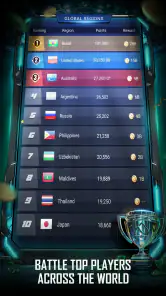
The global-battle positioning adds another layer for users who want opponents outside their usual circle. Playing with friends is comfortable, but it can also expose predictable habits: the same players know who bluffs often, who folds too quickly, and who becomes aggressive after a strong opening. A wider pool can make sessions feel less repetitive, although it may also produce more variation in experience and skill.
Another practical strength is the choice between Hold’em and Omaha. I would use Hold’em for a mixed group and Omaha for a more experienced table. That simple division gives the app a useful role across different evenings instead of limiting it to one fixed ruleset. It also lets a group gradually expand its poker interests without installing a separate game for every variation.
There is value in the app’s portability too, but I would describe it carefully. A phone is convenient for joining a session away from a physical table, yet a small screen can make a busy poker interface less comfortable than a larger device. I would prefer a stable connection, a charged phone, and a quiet place before joining a serious session. Those are not glamorous requirements, but they make a noticeable difference when decisions need attention.
Small habits that make sessions work better
My first practical tip is to use the home-game option as a scheduled activity rather than expecting a random session to become memorable. Pick the format before everyone arrives, decide how long the evening should last, and make sure new players know whether the group is playing Hold’em or Omaha. This avoids the common problem of spending the opening minutes explaining rules while more experienced players are already impatient to begin.
My second tip is to treat the two poker formats as separate learning tracks. Do not switch from Hold’em to Omaha halfway through a competitive session simply because someone is bored. The change affects how players evaluate starting hands and possible combinations. A better workflow is to hold a relaxed Hold’em session first, then reserve Omaha for a later evening when everyone has time to adjust.
Third, keep purchases separate from table decisions. If you are playing with friends, agree that nobody needs to buy anything to remain part of the group. This protects the social side of the game and makes the free entry point meaningful. It also gives you a clearer way to evaluate the app: first decide whether the play itself is enjoyable, then decide whether an optional item improves your personal experience enough to justify its listed price.
For global play, I would also avoid judging the entire app from one difficult table. A single session can be shaped by the opponents available at that moment, your familiarity with the format, and the pace of the game. Try more than one type of session before deciding whether online competition suits you. That is especially important for players who normally play only against friends.
The tradeoffs compared with usual poker alternatives
Compared with a physical poker night, the app wins on setup and accessibility. Nobody has to carry cards or chips, and people can meet digitally. The tradeoff is that the game cannot reproduce every part of sitting around one table: body language, spontaneous conversation, and the atmosphere created by handling physical cards are all different.
Compared with a dedicated poker-learning app, this title appears more socially oriented. A trainer is usually the better choice if your main goal is studying probabilities, reviewing decisions, or practicing alone at your own pace. PPPoker is more appealing when the goal is to sit down with other players and make the session itself the entertainment.
Compared with a large, widely known online poker service, the audience here is smaller based on its install and rating footprint. That does not automatically make it worse, but it does affect expectations. A smaller community may be ideal for a group that wants a familiar home-game feel, while a player who wants a dense, constantly changing competitive environment may prefer a more established alternative.
The two-format approach is also a tradeoff. Hold’em and Omaha provide variety, but they require different habits and levels of understanding. Someone who wants a simple, instantly readable card game might find Omaha too demanding. Conversely, a serious Omaha player may want more specialized tools and deeper analysis than a general social poker app is designed to provide.
The Teen rating is another point parents and younger players should consider. It signals that this is not presented as a children’s board game. I would not install it for a young child simply because the graphics or basic card rules seem familiar. The social and competitive setting deserves the same thoughtful supervision as other online multiplayer games.
Who is most likely to get their money’s worth
I think the best audience is an adult or older teen who already enjoys poker and wants a convenient way to play with friends. The free installation makes experimentation easy, while the combination of Hold’em and Omaha gives an established group room to vary its sessions. If your friends are willing to coordinate and you like the idea of a digital home game, this is where the app makes the strongest case for itself.
It can also suit a player who enjoys meeting opponents beyond a private circle. The global-battle concept gives the game a competitive direction, so it may be worthwhile for someone who finds repeated games against the same friends too predictable. I would recommend starting casually, learning the interface, and only then deciding whether the broader competition is enjoyable enough to become a regular habit.
I would be more cautious about recommending it to someone who has never played poker. The app may let you enter a game quickly, but quick access is not the same as clear instruction. A beginner could easily confuse the differences between Hold’em and Omaha, make decisions without understanding the hand structure, or feel lost when playing against experienced opponents.
I would also suggest skipping it if you want an offline board game, a story-driven card adventure, or a game with a strong solo progression system. Its identity is tied to poker tables and other players. Installing it in search of a broad collection of unrelated board games would likely lead to disappointment.
Players who are uncomfortable with optional purchases should not assume that the free label settles the question. You can begin without an upfront charge, but the presence of items priced around five dollars means you should review the purchase prompts carefully and decide on boundaries. If your ideal app is a one-time paid product with no purchase decisions afterward, this model may feel less satisfying even if you never spend anything.
My final recommendation before you install
I see PPPoker as a focused social poker option with a sensible free entry point, not as a replacement for every kind of card-game experience. Its strongest qualities are the home-game emphasis, the ability to play Hold’em or Omaha, and the possibility of competing beyond a private friend group. Those features give it a clear purpose and make it easy to recommend for an organized poker circle.
Its limitations are just as important. The experience depends on finding the right players, Omaha can raise the learning curve, and optional purchases mean that free access should be evaluated separately from paid value. The smaller install footprint also suggests that I would not choose it solely for the promise of the largest possible online community.
My buy-or-skip verdict is straightforward: try it free if you already have people to play with, and judge the app after several sessions rather than after one table. Keep purchases optional, agree on the poker format in advance, and use Hold’em as the smoother starting point for mixed-skill groups. If what you really want is solo training, deep poker analysis, or a children’s board game, choose a more specialized alternative instead.
For the right audience, the free download offers a practical way to turn a chat group into a poker night without much preparation. I would recommend it to friends who understand that its value comes from the table they create, not simply from installing the app. That distinction is the key to deciding whether this particular game belongs on your Android device.
Pros
- Supports both Texas Hold’em and Omaha poker formats.
- Private clubs make it easy to play with selected friends or groups.
- Cross-platform tables support games with players worldwide.
- Club management tools are useful for organizers and hosts.
- Regular tournaments add variety beyond standard cash games.
Cons
- Real-money features may vary depending on your location and local laws.
- The app can feel confusing for new players unfamiliar with private clubs.
- Game quality depends heavily on the activity and fairness of each club.
- Some tables may have limited player availability during off-peak hours.
- In-app purchases or club-related fees may affect the overall cost of play.