Portal Survivor
- 30.00
- 4.7
- Installs
- 50.00K
- Price
- Free

Screenshots
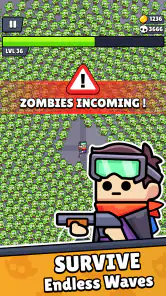
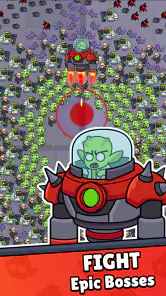
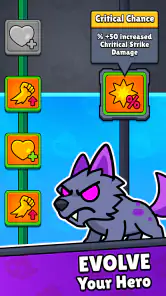
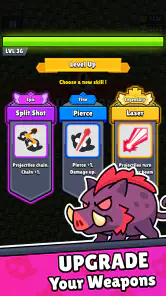
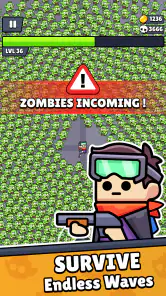
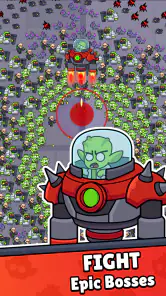
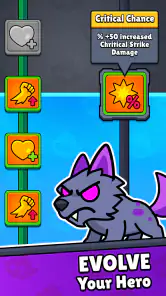
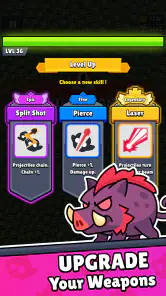
Analysis by Reviewed
Portal Survivor is the kind of action game I reach for when I want a quick session that becomes unexpectedly intense. Its central appeal is simple to understand: I enter a fight, deal with continuous enemy pressure, and try to stay alive while the action keeps moving. That focus gives the game a clear identity, but it also means the experience depends heavily on whether you enjoy repeated combat, quick decisions, and runs that ask you to improve through practice.
Developed by ESC Games Yazılım A.Ş., this free game sits in the roguelite action shooter space. It is available for players rated Everyone, requires Android 6.0 or later, and currently appears in version 3.7.0. The store page shows a 4.7 average from around 500 ratings, with more than 50 thousand installs, so it has already attracted a modest but noticeable audience. I would not treat those figures as a substitute for personal taste, though. The important question is whether its endless-combat structure fits the way you like to play.
Why the portal-focused survival loop matters
The most important capability here is the way the game turns survival into the whole objective rather than making each encounter feel like a separate, carefully staged level. The portal theme gives that pressure a useful frame: instead of simply clearing a room and waiting for the next task, I feel as if the threat is continuously arriving and I have to manage the space around me before it becomes impossible to control.
That changes how I think about movement. In a conventional action game, I may move toward an objective, search for cover, or follow a route. In Portal Survivor, my attention is more often divided between where I am standing, where danger is gathering, and which opening I need to preserve for the next few seconds. The real strength is not just the number of enemies on screen; it is the pressure created by having fewer safe choices as the run continues.
This makes the game approachable at first. I do not need to learn a large story or understand a complicated world before enjoying the basic action. I can start playing and immediately understand the central problem: survive the incoming threat. At the same time, the simplicity leaves less room for players who want a deep narrative campaign, elaborate exploration, or a large collection of non-combat activities.
I also like that the roguelite structure naturally gives short attempts a purpose. A failed run does not have to feel completely wasted, because it teaches me something about positioning, timing, or the way I react when the screen becomes crowded. That is a better fit for mobile play than a long mission that demands an uninterrupted block of time. I can play during a break, stop after a run, and return later without needing to remember a complicated plot.
What the capability feels like during a run
In practice, the portal idea works best when I stop treating the game as a race to destroy everything immediately. My first instinct in an action shooter is often to attack the nearest enemy and keep pushing forward. Here, that can be a mistake. I get more value from watching the shape of the battlefield and avoiding a position that leaves me surrounded from several directions.
That is one of the less obvious lessons I took from playing: survival often depends more on protecting future movement than on winning the current exchange quickly. If I move too close to one threat while ignoring another approach, I may create a problem that cannot be solved by fast reactions alone. Keeping a route open gives me time to respond when the pressure changes.
The same principle makes the game more interesting than its short description suggests. A player can understand the controls quickly, but good results require restraint. I have to decide when to commit to an attack, when to circle away, and when to accept a less convenient position because it is safer than the obvious one. Those choices are small, yet they accumulate during a run.
The endless format also affects the emotional rhythm. Early moments can feel manageable, which encourages me to settle into a pattern. Later, that confidence becomes dangerous if I stop paying attention. The game is at its most effective when it makes me feel that I have just enough control to continue, but not enough to relax completely.
How I would use it in everyday play
My favorite use case is a short evening session when I want action without committing to a full campaign. I can start a run while waiting for dinner, play through a focused stretch, and put the phone down when the run ends. That works better for me than opening a story-heavy game when I know I only have a few minutes, because Portal Survivor does not depend on remembering dialogue or reaching a carefully placed checkpoint to feel worthwhile.
It is also a good choice for players who enjoy repeating a familiar format while trying to make better decisions. The appeal is not that every attempt feels completely different in a dramatic way. Instead, the satisfaction comes from recognizing a mistake, adjusting the next time, and lasting longer or handling pressure more calmly. If you like the feeling of gradually becoming more capable, this loop has a clear advantage.
One practical tip is to avoid judging a run too early. A rough opening does not always mean the attempt is lost, and a comfortable beginning does not guarantee a strong finish. I found it more useful to treat the opening as preparation: learn how the space feels, keep my movement flexible, and avoid spending all my attention on a single target. This approach is especially helpful on a phone, where a small lapse in focus can quickly turn a manageable screen into a crowded one.
Another useful habit is to play with a specific question in mind. Instead of merely trying to survive, I might focus on whether I am moving too aggressively, whether I am allowing enemies to close from multiple sides, or whether I am reacting late because I am watching attacks instead of escape routes. This turns each attempt into a small experiment and reduces the frustration that can come from repeating the same failure without understanding it.
Who should skip it
I would skip this game if my main reason for playing is exploration. The portal setting may sound like an invitation to discover a larger world, but the central experience is combat survival, not wandering through a richly detailed adventure. Players looking for puzzles, character-driven storytelling, or a long sequence of handcrafted objectives will probably find the loop too narrow.
I would also be cautious if I dislike repetition. Roguelite action depends on returning to the same basic challenge and improving through another attempt. That can be satisfying when I am in the right mood, but it can feel circular when I want constant novelty. A more traditional action game may be a better choice if I prefer clear level progression and a definite ending to each stage.
The free entry point is helpful, but in-app purchases range from $0.99 to $99.99 per item. That does not automatically make the game unsuitable, yet it is worth keeping in mind before spending. I would recommend starting with the free experience, deciding whether the core survival loop genuinely holds my attention, and only then considering an optional purchase. For a game whose main value comes from repeated play, spending early would not fix a loop that does not suit me.
The Everyone rating also makes it easier to recommend in a general household context, but an age label does not tell me whether every player will enjoy the intensity. Younger or more casual players may understand the objective quickly while still finding the later pressure demanding. I would introduce it as a straightforward action game rather than promising a relaxed experience.
Tradeoffs that become clearer after playing
The biggest tradeoff is accessibility versus depth. The basic premise is immediately readable, which is excellent for mobile gaming. I do not need a long tutorial explanation to understand what I should be doing. However, that directness means the game must earn long-term interest through the quality of its combat decisions and the satisfaction of repeated runs rather than through a broad collection of systems.
That makes personal pacing important. If I rush every decision, the game can feel like frantic tapping. If I slow down enough to read the space, it becomes more tactical without losing its action focus. The best experience sits between those extremes. I am still reacting quickly, but I am not allowing the speed of the screen to decide everything for me.
There is also a tradeoff between convenience and concentration. A run is easy to start, but the game rewards attention once enemy pressure builds. It is not the ideal background activity for me when I am watching a show or answering messages. I can use it in a short break, but I need to be willing to focus during the run itself. That distinction matters because many mobile games are designed to tolerate interruptions more comfortably.
Compared with a conventional level-based action shooter, Portal Survivor offers a more compact loop and a stronger emphasis on endurance. Compared with a slower strategy game, it asks for faster movement and more immediate reactions. Compared with a story-led adventure, it gives up narrative momentum in exchange for replayable combat. I would choose it when I want the mechanical challenge to be the reason I return, not when I need a strong story to pull me forward.
My most useful adjustment was to stop measuring success only by how long I lasted. A run can be valuable if it reveals a repeatable error. For example, if I repeatedly become trapped after moving toward the center of the action, I can change my route in the next attempt and see whether preserving an outer escape path helps. This kind of self-review is more rewarding than blindly restarting, and it is where the roguelite format shows its best side.
Questions I would ask before installing
Will it run on an older Android phone? The stated minimum is Android 6.0, which makes it accessible to a broad range of devices. Actual comfort can still depend on the phone and the intensity of the action, so I would keep other apps closed if I notice interruptions or reduced responsiveness. The game is free to start, making that test relatively easy.
Does it require a large time commitment? Not in the way a campaign game does. Its run-based design suits short sessions, although the pressure during a run means I may not want to leave halfway through. I would think of it as a quick but focused activity rather than something to play absent-mindedly for a few seconds.
Is it suitable for someone new to roguelites? Yes, if that person enjoys action and is comfortable learning through repetition. The central goal is easy to grasp, but improvement still requires noticing patterns and changing habits. A player expecting to master everything immediately may become frustrated, while someone who enjoys gradual progress will probably settle in more comfortably.
Should I spend money inside the game? I would wait. Since the game is free and the purchases can reach a substantial amount per item, I would first decide whether I enjoy the basic survival cycle across several sessions. The right purchase, if any, should support an experience I already like rather than serve as a way to make the game interesting.
Who gets the most from Portal Survivor
The best audience is someone who enjoys fast mobile action but wants a clear reason to replay. This is particularly true for players who like studying their own mistakes. The game rewards the person who asks, “Why did I get trapped there?” and then changes one decision in the next run. It is less rewarding for someone who wants every session to deliver a new setting, a new story beat, or a completely different type of activity.
I also think it suits players who prefer self-contained entertainment. I can pick it up without preparing for a long narrative session, and the premise remains understandable even if I have not played for several days. That makes it a practical companion for commutes, waiting rooms, and short evening breaks, provided I have enough uninterrupted attention to enjoy the combat.
My final recommendation is positive but specific. Portal Survivor is worth trying for its focused survival pressure, not because it promises to be every kind of action game at once. The free download lowers the risk, the Everyone rating broadens its audience, and the current version is 3.7.0. I would recommend it to a friend who likes roguelite repetition, quick decisions, and the satisfaction of turning a failed run into a better one.
I would point that friend elsewhere if they wanted exploration, a substantial story, or a relaxed game that can run in the background. For everyone else, this is a compact action experience with a clear central idea: keep control of your movement while the battlefield steadily becomes harder to manage. When I play it with that expectation, its simplicity becomes a strength rather than a limitation.
Pros
- Simple controls make the game easy to pick up on mobile.
- Short runs fit well into quick gaming sessions.
- Randomized upgrades add variety to each attempt.
- Offline play is convenient when you have no connection.
- Survivor-style combat provides satisfying enemy-clearing moments.
Cons
- Difficulty can rise sharply after the early stages.
- Repeated runs may feel similar once upgrades are familiar.
- Limited strategic depth may disappoint experienced players.
- On-screen action can become visually crowded during large waves.
- Progress may feel slow without investing significant playtime.

- Category
- Action
- Version
- 3.7.0