Pool Blitz
- 2.40K
- 4.6
- Installs
- 1.00M
- Price
- Free

Screenshots





Analysis by Reviewed
I approached Pool Blitz expecting a quick mobile pool game and found something more focused on the feeling of a live match than on turning pool into a complicated simulation. Its central idea is easy to understand: line up a shot, control the cue, clear the table, and try to outplay another person online. That simplicity is a strength, but it also means the game has to make every shot feel readable and satisfying. In my experience, the best parts come from that small moment of concentration before the cue moves.
Cherry Pop Games keeps the presentation aimed at immediate play rather than a long tutorial or a heavy story. This is a sports game in the most direct sense, built around online multiplayer 8-ball pool. It is free to start, rated Everyone 10+, and has already passed one million installs, so it clearly appeals to players who want a familiar table-game format without committing to a large console-style package.
The first impression is friendly and accessible. I can understand what I am supposed to do almost immediately, which matters on a phone where I may only have a few minutes. At the same time, the game is not completely mindless. A careless shot can leave the table in a poor position, and a confident opponent can make a short match feel surprisingly tense. The real hook is the contrast between simple controls and unforgiving decisions.
How the table creates its own visual language
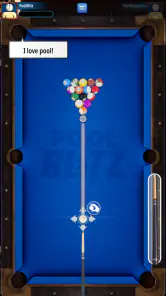
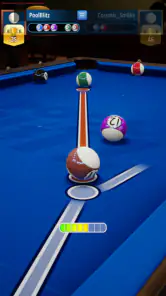
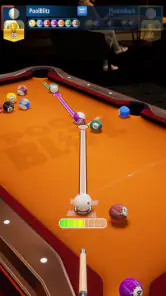
The setting is deliberately contained: the table, the balls, the cue, and the opponent are the important elements. That narrow focus works well because pool does not need a sprawling world to establish a mood. The green playing surface gives the action a clear center, while the bright balls provide immediate visual targets. I never feel lost about where the important information is, which is exactly what a competitive mobile game needs.
There is also a useful visual rhythm in the way a turn unfolds. Before the shot, the table becomes a problem to solve. During the shot, the movement of the cue and balls takes over. Afterward, the new positions tell me whether the decision worked. This gives the game a compact form of storytelling without dialogue or elaborate scenes. Every turn changes the situation, and the table itself becomes the setting, scoreboard, and tactical map.
That visual clarity is especially valuable on a smaller phone screen. Pool games can become frustrating when aiming lines, buttons, and decorative elements compete for attention. Here, the core image remains understandable enough for quick sessions. I can focus on angles and ball placement instead of searching for the next control. The presentation does not try to overwhelm me with a fictional world; it builds a clean competitive space and lets the match provide the drama.
The trade-off is that players looking for a strong narrative setting, character progression, or a richly themed sports environment may find the atmosphere restrained. This is not a game I open to explore a fictional club or follow a season-long story. Its visual identity is functional and table-centered. That is appropriate for the rules, but it also limits the emotional range compared with sports games that use stadiums, teams, or career presentation to create a larger sense of occasion.
Reading the table instead of chasing the highlight shot
One of the more useful habits I developed was to stop treating every turn as a chance to attempt the most spectacular shot. The visual layout encourages me to read the table as a sequence. I look for a reliable opening, consider where the cue ball may finish, and only then think about clearing the next target. That approach makes the art direction serve the mechanics: because the table is so visually prominent, good play depends on observing it carefully rather than rushing through the interface.
This is also where the game separates itself from very casual alternatives. A purely casual pool app may be satisfying when I want to flick balls around without much consequence. Pool Blitz feels better suited to someone who enjoys the small tactical puzzle inside each turn. It remains approachable, but the clean presentation leaves room for mistakes to be my responsibility. When I lose because I chose a difficult angle too early, the result feels understandable rather than random.
For new players, I recommend using the first matches to learn positioning rather than chasing immediate wins. The most important improvement is not simply hitting a ball accurately. It is learning to leave the cue ball somewhere useful for the next shot. That advice sounds basic, but it changes the pace of play. Instead of seeing one isolated target, I begin to see a route through the table, and the game becomes more thoughtful without becoming complicated.
Sound, pacing, and the mood of a live match
The atmosphere depends heavily on the timing of action. Pool is naturally a slow-fast sport: a player studies the table, makes a controlled movement, and then watches the result happen quickly. Pool Blitz benefits from that structure because it gives each turn a small buildup. The pause before a shot creates room for decision-making, while the collision of balls supplies the release.
I like that the game does not need constant visual spectacle to maintain interest. The sound and movement of a successful contact can make a basic shot feel complete. A miss, by contrast, has its own quiet disappointment because the table remains as evidence of the decision. That relationship between sound, motion, and consequence gives the matches a compact kind of drama. The mood is competitive but not theatrical.
The pacing also makes the game suitable for everyday situations. I can imagine playing a match while waiting for an appointment, taking a short break, or relaxing at the end of the day. It is easy to understand the appeal of a session that does not require a long setup. However, online competition can make a “quick” session less predictable than a solo puzzle. If I become invested in winning, one match can naturally lead into another, especially after a close loss.
That is the main pacing tension for me. The individual actions are short and digestible, but the competitive loop can encourage repeated play. This is not necessarily a flaw; it is part of why the format works. Still, players who want a completely relaxed experience should be aware that online matches bring pressure even when the controls are simple. I find it calming when I treat each game as practice, and more frustrating when I treat every turn as a test of skill.
Sound also helps the game avoid feeling like a static board. Without the physical feedback of a real cue and table, a mobile pool game needs contact and movement to communicate weight. The audiovisual response gives the balls a sense of consequence, helping me judge whether a shot felt deliberate or careless. It does not replace the atmosphere of a real pool hall, but it creates a compact digital version of that focus: quiet observation followed by a sharp, final result.
Where the mechanics fit the presentation
The controls are built around the essential actions of pool: aiming, choosing force, and committing to the shot. That is the right level of complexity for touch screens. I do not want to manage a large collection of technical settings before every turn, but I do want enough control to feel that the outcome reflects my decision. The game works best when I slow down and make small adjustments instead of dragging quickly and hoping for the best.
There is a useful distinction between learning the controls and mastering them. Learning is fast because the objective is familiar. Mastery takes longer because accuracy alone is not enough. I have to consider the angle of the target ball, the path of the cue ball, the order in which I want to approach the remaining balls, and the danger of leaving an easy opportunity for the opponent. This layered decision-making gives the simple interface more depth than its first impression suggests.
A practical tip is to plan the end of the shot before taking it. If I only think about sinking the current ball, I may place the cue ball behind another target or near a difficult cushion. If I think one shot ahead, I can choose a less dramatic angle that keeps the next turn manageable. This is one of the game’s strongest hidden lessons: good positioning often matters more than a flashy finish.
Another useful approach is to treat force as a tactical choice rather than a way to make shots feel powerful. Stronger contact can be tempting, particularly when I want to move the cue ball across the table, but it can also make the final position harder to predict. Softer shots may look less impressive, yet they often preserve control. The game rewards patience in a way that fits its restrained visual style.
Online play changes the meaning of mistakes. Against a casual computer opponent, I might experiment without much concern. Against another person, an error can immediately become a turning point. A poor opening may give the other player a clear route through the table, while a cautious safety-minded decision can force them to solve a harder position. That makes the game more engaging for competitive players, but it may be intimidating for someone who only wants a no-pressure pastime.
This is where the title compares favorably with ordinary offline pool alternatives. A basic solo pool game can be better for learning at my own pace, testing angles, or playing when connectivity is not part of the plan. Pool Blitz is more compelling when I want the uncertainty of a human opponent and the satisfaction of adapting to someone else’s choices. Neither format is universally better. The right choice depends on whether I value practice and calm experimentation or live competition and unpredictable momentum.
Free entry, optional spending, and the practical choice
The game is free to download, which makes trying it straightforward. There are in-app purchases ranging from $0.99 to $134.99 per item, so I would advise setting a personal spending limit before getting deeply involved. The presence of optional purchases does not automatically decide whether the game is enjoyable, but it does affect how I approach progression and competition. I prefer to judge the core matches first rather than assuming that spending will solve every difficulty.
For a parent considering the game, the Everyone 10+ rating is useful context. I would still look at how a particular child handles online competition and optional purchases, because the age label does not replace household rules. For adults, the rating signals that this is a broadly accessible sports game rather than a mature or story-heavy experience. The main concern is less about the pool theme and more about managing competitive habits and spending boundaries.
The large range between the smallest and largest purchase is worth taking seriously even if I never buy anything. Players who dislike any form of optional spending may feel more comfortable with a paid offline pool game or a simpler title with fewer competitive pressures. On the other hand, someone who wants to sample online matches without paying at the start may appreciate the low barrier to entry. I see the free model as convenient, but I would not call it irrelevant to the overall experience.
Performance and comfort also matter in a touch-controlled pool game. A larger screen can make aiming and reading the table easier, while a small phone keeps the game more portable. I prefer playing when I can give the match my full attention, because interruptions are especially costly during the aiming phase. This is not a title I would choose while multitasking heavily; the controls are simple, but the decisions still deserve a clear view and a steady hand.
Who will enjoy the atmosphere, and who should pass
I recommend Pool Blitz to players who like sports games that turn familiar rules into short competitive encounters. It is a good fit if you enjoy analyzing angles, improving through repetition, and feeling the pressure of another person’s turn. The visual design supports that audience by keeping the table central, and the pacing gives each shot enough weight to feel meaningful without requiring a long match presentation.
It is also a sensible choice for someone moving from casual pool games toward more deliberate play. The rules are recognizable, the interface does not bury the main action, and the online format adds a reason to keep learning. A realistic everyday use case would be a player who has ten minutes during a break, plays one match, and uses the result to identify one habit to improve—perhaps leaving the cue ball too far from the next target or selecting force too aggressively.
I would skip it if I want a quiet solo game with no opponent pressure, a substantial career mode, or a richly developed sports world. I would also look elsewhere if optional purchases are a firm deal-breaker or if I prefer games where every session is completely predictable. A traditional offline pool simulator may be better for methodical practice, while a more arcade-focused alternative may be better for players who want exaggerated effects and instant action rather than careful positioning.
My final impression is that the game’s art direction, audio feedback, and pacing are most successful when they stay close to the mechanics. The table is not just decoration; it is the entire stage on which the mood is created. The quiet setup, the focused aim, the sudden movement, and the changed layout after contact form a coherent loop. When that loop works, even a routine shot can feel like a small event.
Cherry Pop Games has made a sports game that understands the appeal of pool’s pauses as much as its collisions. Its average rating of 4.6 from around 38 thousand ratings matches my sense that the accessible format has broad appeal, while the online focus gives experienced players room to care about precision. I would not present it as the ideal pool game for everyone, but I would recommend giving it a fair trial if you want competitive table play in a compact mobile format.
After spending time with it, I came away valuing restraint more than spectacle. The best matches are not necessarily the ones with the boldest shots; they are the ones where the visual clarity, sound, and pacing help me make one sensible decision after another. That is the atmosphere Pool Blitz creates at its strongest: focused, lightly tense, and rewarding when patience turns a simple table into a problem I can actually solve.
Pros
- Fast-paced matches are ideal for short gaming sessions.
- Simple controls make aiming and shooting easy to learn.
- Online competition keeps the gameplay challenging and engaging.
- Smooth animations make shots and table interactions feel polished.
- Unlockable cues and rewards add progression beyond individual matches.
Cons
- Internet access is required for most competitive features.
- Matchmaking can feel uneven when facing more experienced players.
- Energy or limited-play systems may interrupt longer sessions.
- In-app purchases can influence progression and cosmetic customization.
- Ads or promotional prompts may occasionally disrupt the experience.
- Category
- Sports
- Version
- Varies with device