Player One Golf Nine Hole Golf
- 578.00
- 3.9
- Installs
- 100.00K
- Price
- Free

Screenshots
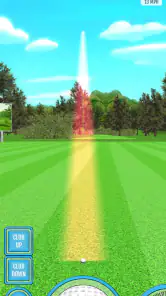
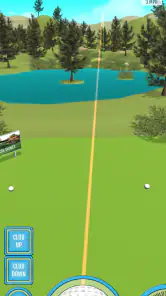
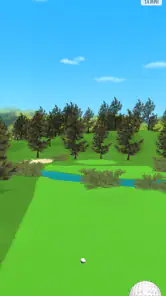
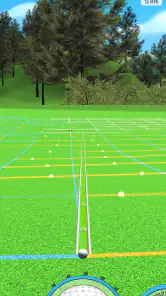
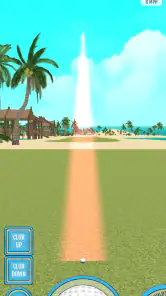

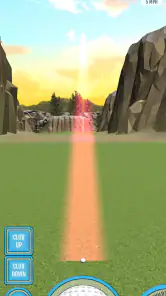
Analysis by Reviewed
I approached Player One Golf Nine Hole Golf as a small, focused sports game rather than a full golf simulation. It is a single-player Android title from Jay2Tech, built around playing against computer-controlled competition on the same device. That simple setup is important: there is no need to arrange a match with friends, learn a complicated online system, or commit to a long session before seeing whether the game suits you.
My first impression was that its appeal depends less on presentation and more on how comfortable you are with a compact golf experience. It is free to download, rated for Everyone, and has reached over one hundred thousand installs. The current version is 2.4.0.5, and it runs on Android 7.1 or later, so the compatibility range is fairly approachable for people using older phones as well as newer devices.
How the game feels to read and navigate
The most important accessibility question here is whether the screen gives you enough information to make a shot without feeling overwhelmed. A nine-hole format naturally helps with that. Compared with a large golf game filled with tours, player upgrades, social menus, and several event types, this title has a narrower purpose. I found that useful when I wanted to start a quick round without first sorting through a large amount of interface content.
The compact design also makes the game easier to understand for someone who does not regularly play mobile golf games. You can approach it as a straightforward contest against AI opponents instead of learning a broad career system. That makes it a reasonable choice for a casual player, a younger user, or anyone who prefers a game with a clear sporting theme and a limited scope.
Still, a simple game is not automatically easy for every reader. Golf depends on noticing small visual details, judging direction, and understanding what the game is showing before committing to a shot. If text, icons, or course elements appear too small on your phone, the experience can become tiring even when the rules themselves are easy to follow. I would test it briefly on the actual device you plan to use rather than assuming that a larger tablet and a compact phone will feel identical.
One practical habit helped me: I treated the opening moments of each hole as an observation phase instead of rushing immediately into the first shot. Looking at the layout, checking the intended direction, and deciding whether I was comfortable with the available view made the round feel less stressful. This is a useful approach for players who process visual information more slowly, because it turns each shot into a deliberate step rather than a reaction test.
Why the nine-hole structure matters
A nine-hole round is a good fit for everyday interruptions. I could imagine playing during a short break, while waiting for an appointment, or at home when I had enough time for a game but not enough attention for a lengthy simulation. The format also creates a natural stopping point. If you are sharing a device with someone else or need to put the phone down frequently, finishing a smaller round is less demanding than starting a full-length golf session.
That structure is not only convenient; it changes how accessible the game feels. A player with limited stamina or concentration can approach a round in smaller commitments. Someone who becomes uncomfortable with extended screen use may find nine holes more manageable than a game designed around long tournaments. The trade-off is that players looking for a deep, extended golfing journey may find the format too restrained.
Motor demands and control comfort
Golf games usually ask for some combination of tapping, dragging, timing, or directional adjustment. In my experience, the main motor challenge is not rapid action but controlled input. A player who has difficulty with precise finger movement may need more time to line up a shot or confirm a choice. That makes the game potentially calmer than an action sports title, but it does not make it completely low-demand.
This distinction matters for different abilities. Someone who struggles with fast reactions may appreciate that the game is based on planning rather than constant movement. On the other hand, a player with reduced fine-motor control may find repeated aiming or shot preparation uncomfortable. I would use the phone in a stable position and avoid playing while walking or holding it one-handed. Supporting the device can reduce accidental movement and leave the playing hand more relaxed.
Another useful adjustment is to play with a consistent grip and a predictable posture. I found that changing position between holes made it harder to judge touch and direction. Keeping the device still, using the same finger, and pausing before each input can make the control process more repeatable. These are small changes, but they matter more in a golf game than in a title where imprecise taps are quickly corrected by fast action.
Players who need external controllers, switch access, voice control, or highly customizable input should be cautious. I would not choose this game on the assumption that it offers those options. Its basic appeal is direct play on the device, and that may be enough for many people, but users with specific motor-access requirements should consider whether the standard touch interaction is workable before investing time or money in optional purchases.
Visual clarity, sound, and sensory load
The game’s sports setting can be easier on the senses than a crowded arcade game. Golf generally offers pauses between decisions, and that gives the player room to inspect the scene rather than respond to constant visual changes. For me, the slower rhythm made it easier to play in a quiet environment or while taking a short mental break.
However, visual calm is not the same as universal readability. Course boundaries, direction indicators, and shot information need to be distinguishable for the player to feel in control. If you have low vision, color-vision differences, or sensitivity to small moving elements, a quick test is worthwhile. Try a complete hole and see whether you can identify the important information without leaning close to the screen or repeatedly guessing.
Players who are sensitive to sound may prefer to adjust their device volume or play in a quieter audio setting. Those who are deaf or hard of hearing can still approach the game through its visual play structure, but any player should make sure that important feedback is not being missed. I would not treat sound as the sole way to understand a shot. Watching the visual result and learning the game’s feedback pattern is a more dependable routine.
For children and families, the Everyone content rating is reassuring in a basic sense, and the sports theme is easy to understand. Even so, supervision may be useful when purchases are involved. The game is free, but it includes in-app items priced from ninety-nine cents to three dollars and ninety-nine cents each. That does not make the game unsuitable for children, but it does mean that device purchase settings deserve attention before handing over the phone.
Playing in different situations
The single-player design is one of the clearest strengths for situational access. You do not need another person available at the same time, and the AI competition gives the game a defined opponent whenever you want to play. That suits someone who prefers private practice, has an unpredictable schedule, or simply does not enjoy online competition.
It also works well for a shared household device. A person can pick up the phone, play a round, and stop without coordinating with a group. I can see it fitting a routine where one family member plays after dinner and another uses the device later. The nine-hole scope makes turn-taking easier than a game that expects a long uninterrupted campaign.
There are limits to that convenience. A single-player game cannot replace the social energy of playing with friends in the same room or competing against real people online. If your main reason for choosing a golf game is conversation, teamwork, or a lively multiplayer community, this is probably the wrong direction. The AI format is better for independence and predictability than for shared social play.
It is also worth thinking about attention and environment. On public transport, in a waiting room, or in a busy home, I would play cautiously and avoid rushing shots just because the surroundings are distracting. The game may be suitable for short breaks, but a missed input can still be frustrating when your attention is divided. A quiet, stable surface is a better setting for players who need more control over their surroundings.
What the free model means in practice
The free entry point makes it easy to try the basic experience without making a financial commitment. That is especially helpful for users who need to evaluate text size, touch comfort, pacing, and visual clarity on their own device. Accessibility is personal, so a short hands-on test is often more informative than a feature list.
The in-app purchase range does introduce a decision point. I would not buy anything immediately. First, I would play enough to decide whether the core nine-hole format is enjoyable and whether the AI competition keeps the round interesting. Optional spending makes more sense only if it addresses something you genuinely want from the game, rather than because the store page presents it as a necessary step.
The average rating is 3.9 from around one thousand three hundred ratings, with roughly five hundred eighty written reviews. I read that as a sign of a game with a real audience but not one that will satisfy everyone. The rating fits my impression of a focused title: it can be pleasant when its limited format matches your expectations, while players seeking richer simulation or broader content may judge it more harshly.
Barriers that still deserve attention
The biggest barrier is expectation. Someone arriving from a major golf simulation may want detailed career progression, extensive customization, realistic tournament structures, or a large collection of modes. I would not select this game for that purpose. Its strength is the direct round against AI competition, not the promise of a complete golfing ecosystem.
A second barrier is the lack of a clearly social focus. Players who depend on friends, online opponents, or cooperative play for motivation may lose interest quickly. The AI format is convenient, but computer competition can feel less personal and less surprising than a human match. This is a meaningful trade-off, not a minor omission, because it affects the reason you might return to the game.
There is also a potential barrier for users who need extensive accessibility controls. I would approach the game as a standard touch-based mobile title and test it personally if you rely on large text, strong contrast, alternative input methods, or audio-independent feedback. The game’s straightforward concept may help, but simplicity should not be mistaken for comprehensive support for every access need.
Older phones are not automatically excluded because the minimum operating-system requirement is Android 7.1, but device age can still affect comfort. Screen size, touch responsiveness, battery condition, and general performance all influence how easy it is to play. I would give the game a short trial on an older device before deciding whether it is a good fit for regular use.
Who should try it, and who should look elsewhere
I would recommend it to someone who wants a free, self-contained golf game for short solo sessions. It is particularly suitable for players who like taking time over decisions, prefer AI opponents, and do not need a large progression system to keep playing. It can also work for a family member who wants a recognizable sports game without the social pressure of online competition.
I would be more hesitant to recommend it to a player who wants realistic depth, multiplayer interaction, or a highly configurable accessibility setup. In those cases, a larger golf game may be a better alternative, provided its additional menus and systems do not create their own barriers. A simple game is not always the most accessible game; sometimes the right choice is the one that gives you better control over text, input, and presentation.
My most useful advice is to judge it in three stages. First, check whether you can read the course and shot information comfortably. Next, play several holes while keeping the phone supported and noting whether the touch actions cause strain. Finally, decide whether the AI contest remains interesting when the novelty fades. That process answers the practical questions that a rating alone cannot answer.
My inclusive verdict
Player One Golf Nine Hole Golf is at its best when accessibility means a manageable pace, a clear sporting idea, and freedom to play alone. I like that the nine-hole structure can fit around real life, and the AI opponent removes the need to schedule a match. The Everyone rating, free starting point, and broad Android compatibility also make it easy for many casual players to give it a fair test.
At the same time, I would not describe it as a universal solution for every player. Touch precision, visual interpretation, and the lack of a social focus may matter a great deal depending on your needs. The in-app purchases are another reason to establish household limits before a child or another shared-device user starts playing regularly.
Overall, I see this as a modest but approachable sports game rather than a replacement for a full golf simulator. If you want a private round, a predictable opponent, and a format that can fit into a short break, I think it is worth trying. If you need deep customization, multiplayer excitement, or stronger control over how the game presents information, I would keep looking. Its inclusive value comes from being focused and easy to sample, not from offering every possible option.
Pros
- Simple controls make it easy for beginners to start playing.
- Quick nine-hole rounds fit well into short gaming sessions.
- Relaxed pace makes it suitable for casual
- stress-free play.
- Golf-focused gameplay offers a clear alternative to action-heavy games.
- Lightweight design should run comfortably on many mobile devices.
Cons
- Limited hole variety may make repeated rounds feel predictable.
- Progress can become less rewarding for experienced golf gamers.
- The game may lack the depth of a full golf simulation.
- Offline features and requirements may vary by device or version.
- Players seeking multiplayer competition may find the options limited.

- Category
- Sports
- Version
- 2.4.0.5