PGA TOUR Golf Shootout
- 8.88K
- 4.4
- Installs
- 1.00M
- Price
- Free

Screenshots







Analysis by Reviewed
I like a golf game that works for a short break but still gives me something to improve over time. PGA TOUR Golf Shootout fits that role: it is a free sports game from Concrete Software, Inc., with a quick route into play and competitive options when I have longer to spend. Its 4.4 average from around 35,000 ratings and more than a million installs suggest it has found a sizeable audience, though broad appeal does not mean it will suit every household or every kind of golf fan.
Decide how a shared device will be used
Picture a family sharing a tablet after dinner: one person wants a quick match, another would rather work through a challenge, and someone else is curious about the club collection. The game can suit that casual hand-off because its interface is easy to approach. I would still avoid treating a shared device as a shared game identity. Before passing it around, agree who is playing and whether purchases are allowed; in-app items range from $0.99 to $99.99 each, so a free download does not mean every optional purchase is free.
For a smoother turn-taking routine, I’d keep sessions distinct rather than having several people make progress under one player’s name. That makes results and collected equipment easier to understand, and it avoids confusion about who spent time or resources on an upgrade. I would also check the device’s purchase settings with the people who manage it, rather than relying on the game to provide household spending controls.
A useful everyday rhythm is to decide on the activity before handing over the device. A short challenge can make sense when someone has only a few minutes; a competitive match is a better choice when nobody is waiting impatiently for the screen. That small distinction can prevent the common shared-tablet problem of one person starting something that takes longer than expected. I would also agree on whether the next player can change equipment or use any earned items, because those choices can affect how the game feels for the person who returns later.
Separate turns, expectations, and spending
There is a difference between letting someone try a round and letting them make lasting decisions in a game. If children or guests are borrowing a device, I’d show them the basic controls first and explain that purchases need permission. The optional items have a wide price range, so I would not assume that a small-looking in-game prompt represents a trivial amount. A household rule set through the device is more dependable than relying on everyone to remember a verbal agreement.
Shared play also works best when each person knows what counts as a finished turn. One round, one challenge, or a set amount of time are all clearer than “play for a bit,” especially if several people are waiting. This is not a feature of the game; it is just a practical way to keep its quick-match appeal from turning into an argument over who has had enough time. If a family wants separate histories or individual progress, I would not assume a single installation automatically gives each player a separate identity.
Feel the Thrill of the Game
Now, I’m not a pro golfer by any means, but the game makes me feel like I’m right there on the green. The graphics are incredibly realistic, capturing every detail of the course and your golfer’s swing. You’ll find yourself immersed in the lush landscapes and the satisfying sound of your club hitting the ball. It’s almost like smelling the fresh cut grass.
More From Our News Desk

Weather by Xiaomi Review: Clear at a Glance, Less Clear Up Close

X Under Pressure: Can It Recover When Posting Goes Wrong?

Clash of Clans Is Won Between the Battles

Android Auto Makes the Case for Quieter Car Software

MobiOffice: Transforming Mobile Productivity with Seamless Integration

EA SPORTS FC™ Mobile Soccer: Redefining Mobile Sports Gaming
Gameplay and Features
One of the first things you’ll notice is the user-friendly interface. The app is designed to get you playing quickly without a steep learning curve. You can play solo matches or compete against other players in real-time, which adds an exciting competitive edge. Trust me, there’s nothing like the adrenaline rush you get when you sink a long putt to win a match.
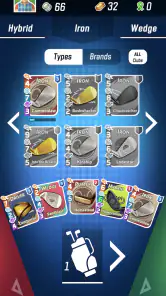
Another cool feature is the ability to collect and upgrade clubs. As you play, you earn packs that contain new clubs and gear, which can significantly improve your game. It’s like finding a hidden treasure that boosts your confidence and performance on the course. Plus, the daily challenges and tournaments keep the game fresh and engaging, ensuring you’ll never get bored.
Learn the shot before chasing better equipment
The club-collection loop gives each session a small longer-term purpose, but it also changes how I judge a match: a result can reflect equipment as well as shot choices. If you’re new, I’d focus on learning the feel of the swing and putting before chasing upgrades. That way, you can tell whether a missed shot came from timing or simply from using a club that does not suit the situation. It is a more useful habit than treating every pack as an automatic improvement.
Daily challenges are a natural fit for spare moments, while tournaments and real-time matches make more sense when you can give the game your attention. A practical routine is to use a challenge to practise, then take that feel into a competitive round. If you only want a pure, quiet solo golf simulation, the multiplayer emphasis and progression may feel like distractions; a less competitive golf game would be a better match.
One small but useful way to approach the progression is to pay attention to what a club change actually does for your decisions, rather than treating a higher-level item as a universal answer. Golf shots depend on the situation, and a club that helps in one moment may not make every other shot easier. When I’m trying to improve, I prefer to change one thing at a time: practise a familiar shot, then compare how a different club feels. It keeps the cause of a better or worse result easier to understand.
The collection element can be satisfying for players who enjoy a gradual sense of development, but it is also the main trade-off for anyone seeking a straightforward round. If you would rather select a fixed set of equipment and focus only on course decisions, the reward loop may feel like extra management. I would treat packs as a reason to keep playing, not as a promise that the next one will solve every weakness. Patient practice is still part of the appeal.
When competition helps—and when it gets in the way
If you’re a fan of golf or just enjoy a well-made sports game, this app is a must-try. The social aspect is another huge draw; you can join a club and chat with other players, sharing tips and celebrating victories together. It creates a community feel that’s both welcoming and motivating.
That social layer can be enjoyable, but it is worth setting expectations on a shared device: club chat and competitive play are tied to the experience of playing, not a substitute for agreeing who gets a turn. For a household, a simple schedule or a clear “one round each” rule is more reliable than assuming the game will coordinate everyone. If you are choosing mainly for young children, remember that the age rating is Everyone, while online interaction and optional purchases still deserve an adult’s attention.
In comparison with the usual alternatives in mobile golf, this leans more toward competition and ongoing collection than a quiet, self-contained course outing. That distinction matters if you are choosing a game for a commute, a waiting room, or a shared evening. When I have a little time and want a defined target, a challenge or match gives the session shape. When I want to relax without tracking results, gear, or other players, a simpler solo golf game is likely to feel calmer.
The real-time element also changes how I would plan a session. A solo challenge is easier to pause mentally and return to later, while a match against someone else deserves a stretch of attention so the competitive part feels fair. I would not start a match when I know I may need to put the device down at any moment. For a brief, interruption-prone break, the challenge format is the more sensible first choice; save head-to-head play for a time when you can finish without rushing.
For households, that distinction is especially helpful. A parent can suggest a solo activity for a short turn and keep live competition for a time when the player can focus. It does not require a complicated schedule, but it does make the experience easier to share fairly. The game offers several kinds of play, so the best option depends less on who has the device and more on how much time and attention that person can give it.
Who is likely to enjoy the format?
I’d recommend it first to someone who likes golf but wants more than a static putting toy: there is equipment to collect, recurring challenges, tournaments, and the option to test yourself against other players. It also suits a player who enjoys seeing a small improvement carry into the next session. You do not need to be an expert to begin, but you should be comfortable with a game that rewards learning its rhythm rather than delivering a full simulation of every aspect of the sport.
It is less compelling for someone who wants a strictly offline-feeling solo experience, a realistic practice tool for actual golf, or a game with no optional spending prompts. It also may not be ideal for a shared device when nobody wants to agree on turns or purchases. Those are not reasons to call the game poor; they are mismatches between its competitive, collectible structure and a player’s preferred kind of downtime.
If you are wondering whether a beginner can get started, I think the approachable interface helps. The more important question is whether the player enjoys learning through repeated rounds. Someone who expects every early result to feel polished may get frustrated, while a player who likes noticing small changes in shot choices has more reason to stick with it. I would give it a few focused sessions before deciding whether its pace and progression are satisfying.
Choosing it for your household
The game is free to start, rated Everyone, and runs on Android 7.0 or later. It was released on April 16, 2019, and its current version is 4.23.0. Those details make it straightforward to consider for a compatible Android device, but they do not remove the everyday questions of who plays, how long a turn lasts, and whether optional spending is acceptable. I’d settle those boundaries before handing over a shared phone or tablet.
On top of that, the app runs smoothly with minimal lag, which is crucial for maintaining the flow of the game. Whether you’re playing on a quick break or diving into a longer session, the experience is seamless and rewarding.
There is one practical limitation worth keeping in mind when choosing it for a household: the age label does not settle every question about suitability. Everyone is the stated content rating, but adults may still want to supervise online interaction and purchases, particularly when younger players are using a device that belongs to the family. I would look at the actual way the child uses the game—whether they are focused on solo play, interested in chat, or tempted by optional items—rather than treating a rating as a complete household policy.
The game is made by Concrete Software, Inc., and its long-running presence is reflected in a current version numbered 4.23.0. For me, that makes it feel like an established mobile game rather than a one-off novelty, but I would still judge it by the fit with your routine. If you need a calm activity with no social element, there are better choices. If you want an approachable golf game that can fill both a short pause and a longer competitive session, it has a clearer case.
A household verdict that depends on boundaries
My recommendation is strongest for a household where people can share a device without assuming they share one player’s progress or spending choices. Agree on turns, decide who can approve purchases, and choose challenges for quick sessions or competitive play when there is time to focus. Those simple habits suit the game’s mix of short activities and longer-term collection without pretending it includes family-management tools.
For one person, the decision is simpler: choose it if you like quick golf matches, gradual equipment goals, and a social edge. Skip it if you want a quiet simulation or dislike progression tied to collecting gear. A household that enjoys friendly competition can make good use of it, but the experience works best when the people sharing the device know where each person’s turn ends.
Final Thoughts
In a nutshell, PGA TOUR Golf Shootout is not just a game; it’s a full-fledged golf experience that fits right in your pocket. With strong visuals, engaging gameplay, and a lively community, it’s easy to see why many golf fans have taken to it. I’d recommend it to players who enjoy short competitive rounds and gradual equipment progress, especially when they can keep purchases and turns clear on a shared device. If your ideal golf game is purely solo or you want a no-purchase, no-social setup, I’d look elsewhere. For a household that likes friendly competition and can agree on simple boundaries, it is an entertaining way to fit a round into an ordinary day.
PGA TOUR Golf Shootout Frequently Asked Questions
Does PGA TOUR Golf Shootout have a clear learning curve for new players?
New players can start by getting familiar with the controls and practicing on the game’s courses before focusing on competitive rounds. Challenges provide clear goals, while equipment progression gives you something to work toward as you improve. If you are new to golf games, taking time to learn how your clubs and shots perform can make the experience more approachable.
Can I enjoy PGA TOUR Golf Shootout if I only have short gaming sessions?
The game is organized around golf rounds, challenges, and competitions, making it a reasonable choice if you want a sports game to pick up between other activities. Daily challenges offer specific goals, while tournaments and matches provide more competitive options when you have time. Your experience will depend on how long a round takes and whether you choose online play.
Is PGA TOUR Golf Shootout suitable for casual players as well as golf fans?
PGA TOUR Golf Shootout is a sports game built around golf, so it can appeal to both dedicated golf fans and players looking for a quick competitive game. Its course-based challenges give you a clear goal in each round, while practice and equipment progression offer ways to develop over time. The game is rated Everyone, making it suitable for a broad audience.
What is PGA TOUR Golf Shootout about?
PGA TOUR Golf Shootout is a mobile golf simulation game where players can experience the thrill of the PGA TOUR. The game offers realistic graphics, challenging courses, and a variety of clubs and equipment to enhance gameplay. Users can compete in daily challenges, tournaments, and even play against friends or other players online.
Is PGA TOUR Golf Shootout free to play?
Yes, PGA TOUR Golf Shootout is free to download and play. However, it includes in-app purchases that allow players to buy premium items, such as special clubs and exclusive gear, which can enhance the gaming experience. These purchases are optional, and the game can be enjoyed without spending money. In-app purchases range from $0.99 to $99.99 per item, so it is worth keeping that spending range in mind.
Pros
- Realistic golf simulation experience.
- Wide variety of courses and challenges.
- User-friendly interface and controls.
- Regular updates with new features.
- Multiplayer mode enhances competition.
Cons
- In-app purchases can be costly.
- Requires stable internet connection.
- Occasional app crashes reported.
- Limited customization options.
- Some ads can be intrusive.
- Category
- Sports
- Version
- 4.23.0