Path to Nowhere
- 1.73K
- 4.5
- Installs
- 1.00M
- Price
- Free

Screenshots

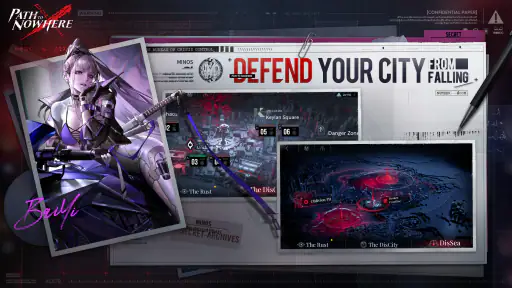


Analysis by Reviewed
Path to Nowhere is the kind of role-playing game I recommend when you want more than tapping through battles and watching a team win on its own. I spent time with it as a real-time strategy RPG, and what stood out first was the need to make decisions while a fight is still unfolding. Units have to be placed thoughtfully, special abilities need timing, and a comfortable opening plan can fall apart when an enemy changes the shape of the encounter.
That mix gives the game a sharper identity than a typical mobile RPG. It still has the familiar loop of building a roster, improving characters, and moving through story content, but the battles ask me to pay attention instead of simply repeating the same command. The result is a dark, demanding experience from AISNO Games that feels best suited to players who enjoy planning under pressure.
How the everyday play loop feels
My usual session starts by checking the next stage, looking at the enemy types, and deciding whether my current squad is actually suited to the problem. That small pause matters. Jumping into a mission with a favorite lineup can work for easy content, but tougher encounters punish a team assembled only by general strength. A character who is excellent at holding a lane may not solve a stage that requires quick damage, while a powerful attacker can become a liability if nobody protects the space around them.
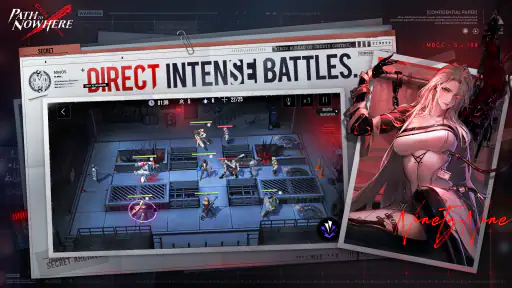
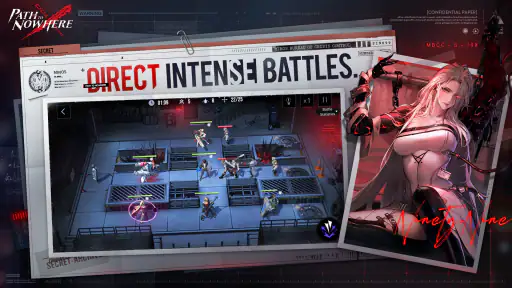
Once the battle begins, I treat the field as a changing puzzle rather than a fixed board. Positioning is not something I do once and forget. Enemies approach from different directions, targets become urgent at different moments, and the best use of an ultimate or other active skill depends on what is happening right now. I often get better results by saving an ability for a dangerous wave than by spending it immediately just because it is available.
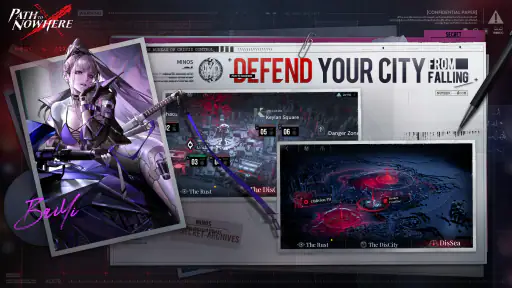
This is where the game earns its strategy label. The action is real-time, but it does not feel like a reflex test in the same way as an arcade game. The important skill is reading the situation quickly. I watch which enemy is about to break through, which ally is under pressure, and whether moving one unit creates a better angle for the next few seconds. That makes even a short stage feel involving.
The story gives the battles a strong atmosphere. The age rating is Teen, and the presentation leans into a serious, unsettling tone rather than a cheerful fantasy adventure. I would not choose it for a light, relaxing mood. Its appeal comes from tension, character drama, and a world that expects me to take its conflicts seriously.
The game is free to start, which makes trying the opening experience easy. In-app purchases range from forty-nine cents to eighty-nine dollars and ninety-nine cents per item, so I would approach spending carefully. The important question is not whether purchases exist, but whether I can enjoy the strategic loop without turning every difficult stage into a reason to buy something. For me, the answer is yes, provided I accept that progression may ask for patience and planning.
A realistic everyday session might look like this: I have ten minutes before leaving home, so I use that time to clear a familiar stage, collect rewards, and improve one character. Later, when I have more attention available, I attempt a harder mission and study why my first formation failed. That split works well because the game supports both quick maintenance and deeper problem-solving, although the latter is where its strongest qualities appear.
The first habits that make a difference
My most useful early habit was to stop treating every defeat as a demand for more upgrades. Sometimes the issue is a weak character, but just as often the problem is timing. I may have placed a defender too far forward, used a major skill before the real threat appeared, or allowed a fast enemy to reach the wrong target. Before spending resources, I replay the stage with one deliberate change. That tells me whether I need power or simply a better plan.
I also recommend learning what each member of the squad is meant to do before trying to make everyone perform the same job. A balanced team is not automatically a good team if its members compete for the same role. I get more value from assigning clear responsibilities: someone controls pressure, someone handles damage, someone protects vulnerable positions, and someone is kept available for a sudden problem. This approach makes the battlefield easier to read.
Another practical routine is to build a small group of dependable characters before spreading resources across the entire roster. Mobile RPGs often tempt me to upgrade whoever I have just obtained, but that can leave several half-developed units and no reliable core. In Path to Nowhere, a focused investment gives me a better foundation for learning stages. Once that foundation is stable, I can experiment without weakening the team I use for ordinary progress.
There is also a useful distinction between a stage that is difficult because of its opening and one that is difficult because of its final wave. If I lose immediately, I adjust the first placements and early skill timing. If I reach the end but collapse there, I preserve more resources for the closing sequence. This sounds simple, yet it prevents the common mistake of changing the entire squad when only one part of the plan is failing.
Settings and controls worth checking before serious play
I would spend a few minutes reviewing the available settings before settling into longer sessions. On a phone, the difference between comfortable and tiring can come from basic presentation choices, sound levels, and how much visual information is competing for attention. I prefer a setup that lets me see enemy movement and ability feedback clearly without making the screen feel noisy.
Sound deserves more attention than it usually gets. I often lower effects slightly when I am playing in public, but I keep enough audio feedback to notice that an important action has triggered. If I mute everything, I rely entirely on visual cues, which is workable but less comfortable during busy encounters. At home, the atmosphere benefits from leaving the audio on because the game’s tone is part of its identity.
I also check whether the game is behaving comfortably on the device before committing to a long session. The minimum operating system is Android 8.0, but compatibility on paper does not tell me how pleasant a particular phone will feel during extended play. Heat, battery drain, and touch accuracy matter more when battles demand repeated repositioning. I would rather reduce presentation quality, when the game allows it, than play with a device that becomes uncomfortable or starts missing inputs.
Connection and download planning are practical concerns too. I prefer opening the game on a stable connection before an important session, especially when I expect to move through story content or claim several rewards. A failed loading moment at the wrong time can turn a short break into a frustrating one. This is not a reason to avoid the game, but it is a reason to avoid treating it like an entirely offline pastime.
For players who share a room or commute, the Teen rating and dark presentation are worth considering together. The game is not something I would casually hand to a young child, and some people may simply prefer a brighter, less intense role-playing style. The atmosphere is a strength when I am in the mood for it, but it is also one of the clearest reasons this will not suit everyone.
Faster patterns for repeatable progress
Once I understood the basic controls, I started organizing my sessions around repeatable decisions rather than playing every mission from scratch. First I identify the stage’s main pressure point. Then I choose the smallest change that addresses it. If the issue is an enemy slipping through, I adjust control or placement. If the issue is a fragile damage dealer being overwhelmed, I change protection or timing. This keeps experimentation focused and saves upgrade materials.
I find it helpful to keep a mental record of successful openings. I do not need a detailed spreadsheet for every stage. Remembering the first few placements, the moment I used a key ability, and the enemy that caused trouble is usually enough. On a later attempt, I can reproduce the opening and spend my attention on the part that previously failed. That habit turns repeated losses into useful practice rather than random retries.
Another efficient pattern is to separate farming or routine clearing from learning attempts. When I am collecting resources, I use the most dependable formation and avoid unnecessary experimentation. When I am tackling a new challenge, I accept that the first attempt may be diagnostic. Mixing those two goals makes progress feel slower because I am never fully focused on either efficiency or discovery.
I also avoid upgrading in response to every single wall. A small improvement can help, but I first ask whether the stage is testing a missing function. If the enemies are too spread out, raw damage may not solve the issue. If one target is extremely dangerous, broad attacks may be less useful than focused timing. This is one of the game’s better lessons: strength is valuable, but the correct kind of strength is usually more valuable.
For short sessions, I prioritize tasks that have a clear endpoint. I can finish a known stage, review a character, or prepare a squad for later. For longer sessions, I reserve time for story progress and difficult battles, where interruptions are more costly. This simple division helps the game fit around real life instead of encouraging me to treat every login as an open-ended commitment.
Where the strategy becomes demanding
The game’s real-time structure creates pressure that traditional turn-based role-playing games do not. In a turn-based alternative, I can often stop and calculate every action. Here, hesitation has a cost because enemies continue moving. That makes Path to Nowhere more exciting, but it also makes it less suitable for players who want a completely relaxed pace. I enjoy the tension, though I sometimes wish a complicated encounter gave me more breathing room.
There is a learning curve in recognizing why a formation failed. The game does not become difficult only because numbers rise. A stage can expose a weakness in how I use space, how I prioritize targets, or how I manage limited abilities. Players who expect automatic progression may find this irritating. Players who like testing a theory and seeing it work will probably find the same friction rewarding.
Roster development can also create a trade-off between curiosity and efficiency. I want to try new characters because their roles and personalities are part of the attraction, but resources are more comfortable to manage when I maintain a dependable core. That means I sometimes postpone an interesting experiment until my main team is ready. The game gives me room to explore, but not always without a cost in time or materials.
The purchase range is another point where self-control matters. Free access is useful, yet optional spending can become tempting when progress slows or when a new character catches my attention. I would set a personal limit before buying anything and judge an offer by whether it improves my enjoyment, not whether it promises to remove every obstacle. If I dislike games that connect progression pressure with a shop, I would be more comfortable with a premium role-playing game that has a simpler payment model.
Compared with an auto-battle-focused mobile RPG, this game asks more from me during the fight. Compared with a conventional strategy title, it is more character-driven and easier to play in short bursts. Compared with a fully turn-based game, it gives up some of the calm precision of taking unlimited time. Those comparisons explain its audience well: it sits between accessible mobile progression and active tactical decision-making.
Who should play it, and who should skip it
I think Path to Nowhere is a strong choice for someone who enjoys dark storytelling, roster building, and battles where positioning matters. It is especially appealing if you like improving through observation rather than simply waiting for a stronger team. The game rewards players who are willing to replay a stage, identify one mistake, and try a controlled adjustment.
I would be more cautious recommending it to someone who wants a purely casual idle experience. Although a short session can be productive, the most interesting content asks for attention. It is also not my first suggestion for anyone who dislikes managing several characters or making decisions while enemies are still advancing. A slower turn-based game may be a better fit if you prefer to plan without a clock-like sense of pressure.
It has passed a meaningful popularity threshold, with over a million installs and an average rating of four point five from around one hundred sixteen thousand ratings. Those figures do not replace personal taste, but they do match my impression that the game has found an audience beyond a tiny niche. The store also shows roughly one thousand seven hundred reviews, which suggests plenty of player discussion around an experience that invites strong opinions.
The release date was October 21, 2022, and the current version is 1.9.2.0. I mention the version because players comparing older impressions with the present experience should make sure they are judging the current build. On supported devices, Android 8.0 or later is required. The game is free, so trying the opening loop is the sensible way to decide whether its tone and battle rhythm suit you.
My verdict after building a reliable routine
After settling into a repeatable workflow, I found Path to Nowhere more satisfying than its simple “strategy RPG” label suggests. Its best moments come from small decisions: moving a unit just before an enemy reaches a vulnerable target, saving an ability for a wave that has not arrived yet, or discovering that a modest formation change solves what looked like an upgrade problem.
It is not frictionless. The darker tone can be heavy, real-time battles can be demanding, and free-to-play spending requires awareness. Progress may feel less comfortable if I insist on developing every character at once or expect automatic solutions to difficult stages. Those limits are genuine, not minor details to ignore.
Still, I would recommend it to a friend who wants a mobile role-playing game with a reason to stay engaged. I would begin without spending, adjust the settings for a comfortable device experience, build a focused core squad, and treat early defeats as information. The most rewarding way to play is to improve the plan before assuming the team needs more power.
In the end, Path to Nowhere works because its progression and battles support the same idea: understanding the situation matters. AISNO Games has made a game that can fill a short break, but its strongest value appears when I give it enough attention to learn its patterns. If you want a moody, character-focused RPG with active tactical choices, it is worth trying. If you want effortless automation or completely calm turn-by-turn planning, I would choose a different kind of mobile game.
Pros
- Excellent voice acting and a dark
- atmospheric presentation.
- Strategic combat rewards careful positioning and timing.
- Distinct Sinners offer varied roles
- skills
- and team combinations.
- Regular events provide new stories
- challenges
- and limited rewards.
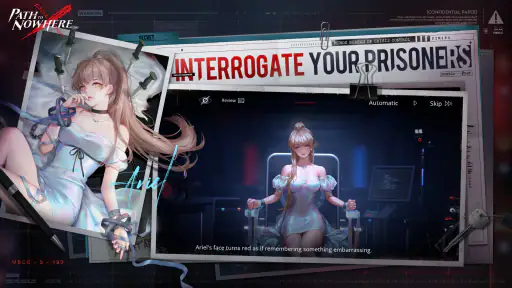
- Interrogation and character stories add meaningful narrative depth.
Cons
- High-rarity Sinners can be difficult to obtain without saving resources.
- Progression uses several currencies that may feel confusing at first.
- Some stages require specific team compositions to clear efficiently.
- Later content can become demanding without upgraded characters.
- The grim themes and mature content may not suit every player.

- Category
- Role Playing
- Version
- 1.9.2.0