P Up: Fashion Trivia & Games
- 0.00
- 0.0
- Installs
- 10.00K
- Price
- Free

Screenshots
Analysis by Reviewed
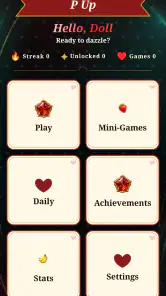
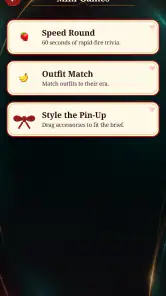
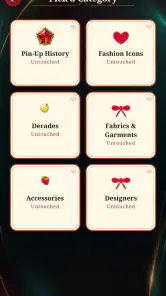
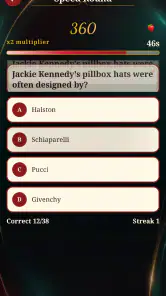
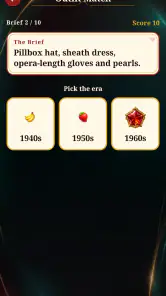
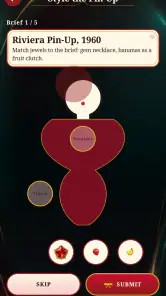
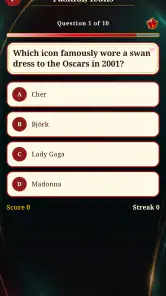
I approached P Up: Fashion Trivia & Games as a compact trivia title with a very specific personality: it turns vintage fashion into the subject of a quiz rather than treating clothing history as background decoration. The focus reaches across pin-ups, famous style icons, different decades, and designers, so the appeal depends less on fast reflexes and more on recognition, memory, and curiosity.
That narrow theme is its biggest advantage. Many trivia games jump from geography to sport to entertainment, which can make every round feel disconnected. Here, the subject gives the experience a clearer identity. If you enjoy old-school glamour, costume history, celebrity style, or the visual language of past eras, the questions have a better chance of feeling like a conversation about something you already care about.
It is a free game from Granicafe, listed in the Trivia category, and it is aimed at mature players aged 17 and over. The game is currently at version 1.0 and requires Android 8.0 or later. With more than ten thousand installs, it has a modest footprint rather than the visibility of a major mainstream quiz franchise. That makes it worth approaching as a focused specialist game, not as a fully featured replacement for every trivia app on your phone.
How the game feels in ordinary use
Speed expectations before a long session
The first thing I would expect from a fashion trivia game built around short questions is a quick path from opening it to answering. This is not the kind of title I would choose when I want a large world to load, a complicated profile to configure, or a long tutorial to complete. Its subject naturally suits brief bursts: a few questions while taking a break, a casual challenge with a friend, or a small test of memory before moving on with the day.
That lightweight role is important because trivia games are often judged by how little friction they create. A question should arrive quickly enough that the player stays focused on the clue instead of thinking about the interface. P Up has a clear reason to exist when it keeps the attention on fashion knowledge, especially for someone who does not want the constant category switching found in general-purpose quiz apps.
At the same time, I would not confuse a focused concept with a guarantee of instant performance on every phone. The available details identify the supported operating-system baseline, but they do not establish measured loading times or resource consumption. My practical advice is to treat it as a small, casual game and judge the opening response on your own device, particularly if your phone is older or already crowded with demanding apps.
The mature age classification also changes the expectation around who should casually pick it up. It is not a title I would hand to a child simply because it looks like a quiz. Adults should make the decision based on the complete in-game tone and subject matter, while parents should use the age label as a reason to supervise access rather than assuming that fashion trivia is automatically family-oriented.
What happens when curiosity turns into heavy use
The most natural heavy-use scenario is a player who already knows a lot about vintage fashion and wants to keep testing that knowledge. That person may move quickly through familiar material, then slow down when the game shifts from recognizable icons to designers, periods, or details that are harder to place. The experience can work well as a personal challenge because it encourages the player to notice where their knowledge is broad and where it is only based on famous images.
A second realistic use case is social. Two people interested in clothing history can take turns answering and discuss why a particular name, look, or decade matters. Even without turning the game into a formal competition, the questions can act as prompts for a wider conversation. One person might remember a pin-up image while another recognizes a designer, making the quiz more interesting than a simple score comparison.
The trade-off is that a narrow theme can also limit long sessions. If you are looking for endless variety across science, music, sports, films, and current events, this is not the right substitute for a broad trivia platform. After the novelty of the subject has settled, your enjoyment will depend on how much you genuinely like revisiting vintage fashion knowledge. The game’s specialization is a strength for the right audience and a ceiling for everyone else.
I would use it differently from a general quiz app. Instead of opening it with the expectation of a full evening of varied challenges, I would keep it available for short themed sessions. That approach reduces the risk of the subject feeling repetitive and makes each visit feel more intentional. It is particularly suitable for a fashion fan who wants an easy mental break without abandoning a favorite topic.
Stability and the practical meaning of version 1.0
The current release is version 1.0, which is useful context when deciding how much polish and long-term refinement to expect. A first version can already provide a satisfying core loop, but it may also feel more limited than an established trivia service with years of updates behind it. I would approach this game with interest in its central idea rather than assuming it has the breadth, customization, or mature content library of a long-running competitor.
For reliability, the most important question is whether the game lets you return to a session without unnecessary resistance. Trivia is especially sensitive to interruptions: a phone call, a notification, or a brief switch to another app can break concentration. Since there are no confirmed details here about saving behavior, offline access, recovery after interruption, or account systems, I would avoid beginning an important head-to-head session until I had personally tested how it behaves when sent to the background.
That is not a criticism of the theme; it is simply good practice with any newly released game. Try opening it, answer a few questions, leave it briefly, and return. If you are playing on a device with limited free space or aggressive background management, this small test tells you more about day-to-day reliability than a store summary can. It also helps you decide whether the title belongs in a quick-play folder or deserves a more permanent place on your home screen.
Recovery matters in another way: a trivia game should not make a wrong answer feel like a technical failure. If you miss a question because you misunderstood a decade or confused a designer with an icon, that is part of the challenge. If progress disappears after an interruption, the frustration is entirely different. I would pay attention to that distinction during the first few sessions, especially before recommending it for a group activity.
Device constraints and sensible expectations
The Android requirement begins at version 8.0, so the game is not restricted to only the newest phones. That broad compatibility is helpful for players who keep an older handset as a spare or who do not upgrade frequently. Still, operating-system support alone does not tell me how smoothly every device will handle the title. A phone can meet the software requirement and still have limited memory, an aging battery, or a crowded storage system.
For that reason, I would install it with a little practical discipline. Close unusually demanding apps before a long session, keep the system reasonably updated, and avoid judging the game based on one moment when the phone is already struggling. If the device becomes warm or the battery drops noticeably during other games, use P Up in shorter bursts and compare its behavior with your normal everyday apps rather than expecting a formal performance profile.
The game’s subject may also influence how you choose to play. Fashion trivia is often more enjoyable when you can pause to think about an image, name, or era instead of racing through every answer. On a smaller screen, visual clues may be less comfortable to inspect than on a larger phone. If the presentation relies on recognizing details in fashion imagery, a larger display could make the experience more pleasant, even though the minimum operating-system requirement does not say anything about screen size.
Storage and data use are also worth considering in a general sense, but I would not make assumptions about the installation size, downloadable content, advertising behavior, or network requirements. Those details can affect whether a game feels light in practice, and they should be checked on the device before committing to regular use. The sensible conclusion is that the title looks appropriate for casual play, while the exact burden on a particular phone should be verified through actual use.
Where it beats the usual trivia alternatives
Compared with a broad quiz app, this game offers a stronger sense of place. A general competitor may give you more categories and a larger pool of unrelated subjects, but it can also make the experience feel like a sequence of disconnected facts. P Up has a more coherent lane: vintage fashion is not merely one option among dozens, but the reason to open the game in the first place.
That makes it a better choice for targeted learning and themed social play. Someone preparing for a fashion-history discussion, building a personal interest in designers, or simply collecting knowledge about past style movements may get more satisfaction here than from a random quiz. The questions can become a way to organize what you know around recognizable cultural references rather than memorizing isolated facts.
The usual alternative is better when variety is the priority. If you want competitive rankings across many subjects, frequent changes of topic, or a game that can entertain a mixed group with very different interests, a general trivia platform will probably have the advantage. P Up asks you to accept a narrower range in exchange for a more distinctive identity. That is a fair trade, but only if vintage fashion is genuinely part of your interests.
There is also a difference between this kind of quiz and a reference app. A reference source is better when your goal is to verify a designer, study a timeline, or learn a subject systematically. A game is better when you want recall practice and a little pressure. I would use P Up to discover gaps in my memory, then turn to a reliable fashion-history source if I wanted to investigate an answer in depth. Treating it as a quiz rather than a complete educational course gives it a more realistic role.
Useful ways to get more from the theme
My first tip is to separate recognition from understanding. When a question feels familiar, ask yourself whether you know the answer or merely recognize the image associated with it. That small distinction makes the game more valuable: a correct guess based on a visual impression is satisfying, but a missed designer or decade shows you exactly where further reading could improve your knowledge.
My second tip is to keep a short personal note after a session. Write down the names or periods that caused hesitation, then revisit them later outside the game. This turns a casual quiz into a lightweight learning loop without pretending that the app itself replaces a structured course. It is especially useful for players who know iconic pin-up imagery but are less comfortable connecting those images to designers or broader fashion history.
A third useful approach is to play with different expectations depending on the group. With a fashion enthusiast, focus on accuracy and discussion. With a casual friend, allow more time for reasoning and explain why an answer seems plausible. The game’s focused subject can make conversation more important than speed, so a relaxed format may produce a better experience than treating every round like an esports match.
I would also avoid using a single session as a final judgment. Version 1.0 gives the game a starting point, but your opinion will depend on how well the available questions match your interests and how comfortably the title behaves on your phone. Give it enough time to move beyond the most obvious references, while remaining honest if the subject does not hold your attention after several short visits.
Who should install it, and who should skip it
I would recommend giving it a try if you enjoy vintage clothing, famous fashion personalities, pin-up culture, or the history of style across different decades. It is also a sensible pick for adults who prefer a themed quiz to a noisy, all-purpose trivia game. The free price makes that experiment easy, and the modest install count suggests a smaller niche experience rather than a title designed around mass-market familiarity.
It is less suitable for anyone seeking a family game without checking the mature 17+ classification first. It is also a weak match for players who want action, elaborate progression, or a constant stream of unrelated categories. If your interest in fashion stops at modern shopping advice, the vintage focus may feel too specialized. In that situation, a general trivia game or a fashion reference tool would likely serve you better.
I would be cautious about recommending it as the only game for a long trip or a group with mixed tastes. Its theme can create excellent conversations among the right people, but it cannot guarantee that everyone will care about the same decades, icons, or designers. For a varied group, keep a broader quiz alternative available. For a focused audience, the specialization becomes exactly what makes the game worthwhile.
My performance verdict
My overall view is that P Up: Fashion Trivia & Games is best understood as a focused, free fashion quiz for adults, not as a universal trivia replacement. Its strongest quality is the clear connection between its questions and its vintage subject. That identity gives it more character than a random collection of categories and creates useful opportunities for memory practice, discussion, and follow-up learning.
On performance, I would keep expectations measured. The Android 8.0 minimum makes it accessible to a range of devices, but there are no published measurements here that justify promising a particular loading speed, battery impact, or memory footprint. Test it on your own phone, especially if you use an older device, and pay attention to how it behaves when you switch away and return. That simple check covers the practical issues that matter most in everyday use.
The game is worth trying when the theme itself is enough to motivate you. I would install it for short sessions, use missed answers as prompts for deeper research, and play it socially when everyone is comfortable with the subject. I would skip it if I wanted broad category variety, child-friendly access, or a heavily developed competitive ecosystem. For the right adult player, however, this specialized approach is more appealing than another generic quiz with no clear personality.
In the end, Granicafe has chosen a focused idea rather than an all-purpose formula. That choice brings limits, but it also gives the game a reason to stand apart. If vintage fashion is already a subject you enjoy, the title can turn that interest into an approachable test of recall while remaining easy to fit into an ordinary day. Its real value is the combination of a distinctive theme and low-commitment play, provided your expectations match what a version 1.0 niche trivia game can realistically offer.
Pros
- Quick fashion quizzes are easy to play during short breaks.
- Covers recognizable fashion brands
- trends
- and style-related topics.
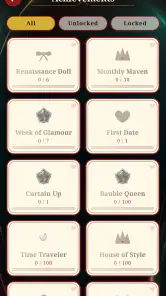
- Bright visuals and collectible elements make sessions feel rewarding.
- Simple controls make it accessible for casual players of any age.
- Regular challenges can encourage repeat visits and daily play.
Cons
- Some questions may depend on subjective opinions about fashion.
- Advanced content or rewards may require considerable time to unlock.
- Ads can interrupt gameplay
- especially between quiz rounds.
- The app may feel repetitive once familiar categories are completed.
- An internet connection may be needed for certain features or updates.

- Category
- Trivia
- Version
- 1.0