One Shot Soccer: Swipe & Score
- 0.00
- 0.0
- Installs
- 500.00K
- Price
- Free

Screenshots
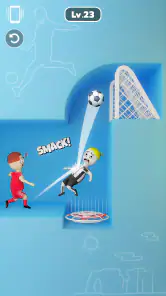
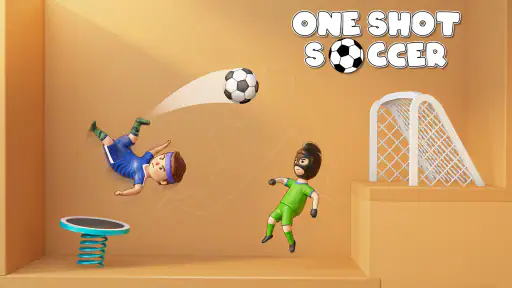

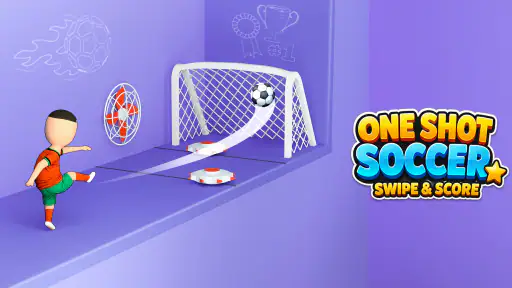
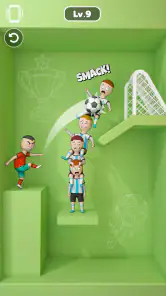
Analysis by Reviewed
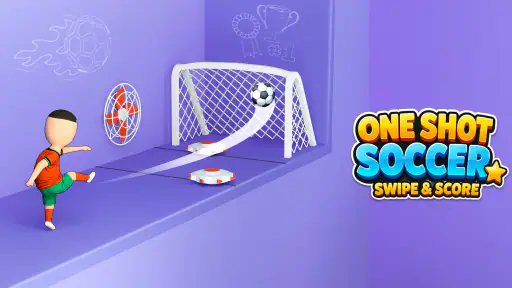
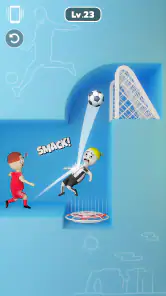
One Shot Soccer: Swipe & Score takes a very narrow idea and builds the whole experience around it: you get one attempt, read the situation, and try to place the ball well enough to score. I found that focus more interesting than a large football game with menus, squads, leagues, and long matches. Here, the appeal is the decision inside a single shot. It is a sports game for the moments when I want something quick, understandable, and easy to pick up without committing to a full match.
That simplicity is also the reason I would not recommend it to everyone. Players looking for team management, realistic match control, or a deep career mode should look elsewhere. This is best understood as a compact shooting challenge rather than a complete football simulation. Developed by World Sports Arena, it is free to play, carries an Everyone age rating, and has already reached over 500 thousand installs. The current version is 1.5, and it runs on Android 7.1 or later.
One decision is the whole game
Why the single-shot idea matters
The central capability is not simply kicking a ball. It is making a fast choice with limited room for correction. A normal football game gives me time to recover from a poor pass, reposition a defender, or build another attack. One Shot Soccer removes that safety net. The shot becomes the event, not the final touch after several minutes of play.
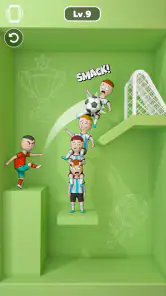
That changes how I pay attention. Instead of watching a whole team, I concentrate on the target, the angle, and the timing of my swipe. The short format makes each attempt feel self-contained. When a shot works, I can identify the decision that helped. When it fails, the result is immediate enough that I am willing to try again rather than feeling that I have wasted a long match.
The store summary asks whether I can score every shot, and that question captures the pressure of the design without explaining away the experience. The game is not asking me to master every part of football. It is asking me to become more consistent at one repeatable action. The real strength is its tight focus: one shot is enough to create a small but clear test of control.
What the format feels like on a phone
On a phone, a single-shot game fits naturally into spare moments. I can play while waiting for an appointment, take a few attempts during a short break, or return to it when I do not want to remember a complicated control scheme. The lack of a full match structure makes it less demanding than traditional football titles, especially when I only have one hand free or a few minutes available.
That convenience does not make the game mindless. A quick attempt still benefits from slowing down for a second before swiping. I found that rushing was usually less useful than observing the situation and committing to a deliberate motion. The best habit is to treat every shot as a small routine: look first, decide where the ball should go, then make one confident input.
This is also where expectations matter. The game’s identity comes from repetition. If I enjoy refining one action and chasing a cleaner result, the narrow scope works in its favor. If I need constant variety, the same focus may start to feel restrictive. The experience depends less on the amount of content and more on whether the player enjoys improving through repeated attempts.
How I approach each attempt
I do not begin by swiping immediately. I first check the available target and think about whether accuracy or speed should guide the movement. A short, controlled gesture is easier to reproduce than an exaggerated one, so I prefer consistency over dramatic input. This makes the game feel more like practicing a technique than gambling on a random motion.
One useful approach is to separate decision-making from execution. I choose the intended destination before touching the screen, then make the swipe without changing my mind halfway through. That small separation reduces nervous movements and makes failed attempts easier to understand. If the shot misses, I can ask whether the problem was my choice of direction or the way I executed it.
Another practical tip is to play several attempts in one sitting before judging the game. A single miss can feel arbitrary when I am still learning the control response. After a short run, patterns become easier to notice. I can tell whether I am consistently aiming too far, moving too quickly, or simply making poor choices under pressure. That learning loop is the most satisfying part of the design for me.
A realistic everyday use case
Imagine having five minutes before a train arrives. A full football game would be awkward because it may require sustained attention and leave me wanting to finish a match. This title is better suited to that situation. I can make a few attempts, stop without losing the thread of a long contest, and return later with the same basic objective in mind.
It also works for a quick reset after a long task. Rather than opening a complicated game and spending time navigating menus, I can focus on the next shot. That makes the experience approachable for casual players who like sports but do not follow football simulations closely. The action is easy to explain to a friend: try to score with the swipe, then learn from the result.
For younger players, the Everyone rating makes the concept feel broadly accessible, although the simplicity of the controls should not be confused with guaranteed success. A child may understand the objective quickly but still need practice to control the shot. Adults who want a quiet, low-commitment game can appreciate the same clarity for a different reason.
Where it differs from usual football alternatives
Most football games on Android ask me to manage several layers at once. I may control movement, passing, tackling, formations, or a squad over a long session. Those games are the better choice when I want to feel involved in a complete match or build a team over time. One Shot Soccer deliberately steps away from that structure.
Compared with an arcade football game built around continuous action, this one places more weight on the pause before the input. There is less emphasis on keeping possession and more on making a single attempt count. Compared with a penalty-focused game, its appeal is not just the familiar set-piece situation; it is the repeatable challenge of judging and executing a shot without the rest of the match around it.
That comparison reveals the main trade-off. The focused design makes it faster to understand and easier to fit into a busy day, but it also gives the game fewer ways to surprise me. Players who enjoy tactical variety may quickly prefer a fuller football title. Players who find large sports games cluttered may see this restraint as exactly what they wanted.
The friction behind the clean idea
The biggest limitation is the same feature that makes the game distinctive: every session revolves around shooting. There is no broader football role for me to explore in the moment. If I am in the mood to defend, pass, create chances, or manage a team, this is not the right tool. Its free price removes the barrier to trying it, but it does not change the narrow nature of the experience.
Repetition can also expose small frustrations. When an attempt fails, I want the result to feel connected to my input. Any uncertainty in reading the target or controlling the swipe can make a miss feel less educational. My advice is to avoid treating every failure as a score problem. Use the early attempts to learn the game’s response, then decide whether the control style feels predictable enough for you.
Another trade-off is the difference between accessibility and depth. The simple premise lets a new player start quickly, but experienced sports gamers may reach the limits of the concept sooner than they would in a full simulation. This is not a flaw that can be solved by playing differently; it is a choice in the game’s identity. The right question is whether a focused shooting loop is enough to keep you interested.
Who gets the most from it
I would recommend One Shot Soccer: Swipe & Score to casual players who want a sports game with a clear objective and short attempts. It is especially suitable for someone who likes improving hand control, prefers quick challenges, or feels overwhelmed by football games full of teams and systems. The free entry point makes it easy to test without planning a purchase, and the Everyone rating broadens its audience.
It is also a sensible choice for a friend who says they like football but do not want to learn a complete control layout. The game gives them one action to understand and one result to evaluate. That makes it useful as a lightweight introduction to mobile sports gaming, even if it will not replace a full football title for a dedicated fan.
I would skip it if my priority were a realistic match, long-term squad building, or a wide range of tactical decisions. I would also be cautious if I dislike repeating a single mechanic until my execution improves. In those cases, a conventional football game will offer more variety and a stronger sense of progression through different roles and situations.
My final take on the focused challenge
World Sports Arena has chosen a clear direction rather than trying to reproduce all of football on a small screen. That makes the game easy to understand and convenient to revisit. In my experience, the best sessions come when I treat it as a precision exercise: observe the opportunity, commit to the swipe, and use the next attempt to correct one specific mistake.
It is not a substitute for a full sports simulation, and its repeated shooting format will not suit players who need constant change. But for quick breaks, casual competition with myself, and anyone who enjoys turning one simple action into a skill, it has a convincing purpose. If you want a compact football challenge instead of a complete match, this is worth trying; if you want the rest of the sport, choose a broader alternative.
Pros
- Simple swipe controls make shooting easy to learn.
- Quick matches fit well into short breaks.
- Increasing difficulty keeps later levels challenging.
- Offline play is convenient when no connection is available.
- Minimal interface makes the game easy to navigate.
Cons
- Gameplay can become repetitive after extended sessions.
- Precision may feel inconsistent on smaller screens.
- Ads may interrupt the experience between attempts.
- Limited modes reduce long-term variety for some players.
- Progression may feel slow without optional purchases.

- Category
- Sports
- Version
- 1.5