Old Greg's Tavern
- 315.00
- 4.6
- Installs
- 50.00K
- Price
- Free

Screenshots




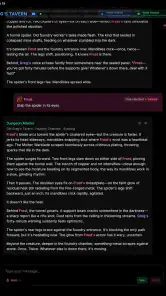


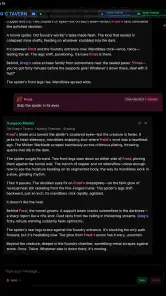
Analysis by Reviewed
Old Greg's Tavern immediately presents itself as a role-playing game built around a simple promise: a solo dungeon experience that fits into spare moments. I approached it expecting something I could open, make a few meaningful decisions, and put down without needing a long session. That expectation is important, because this is not the kind of game I would choose when I want a large cinematic adventure with a constantly expanding map. Its appeal is more focused: a compact fantasy setting, repeatable dungeon play, and a mood that works best when I let the game’s tavern identity frame each short visit.
What surprised me most was how strongly the setting influences the way I play. The title does not feel like a label placed on top of an unrelated dungeon crawler. The tavern idea gives the game a recognizable starting point and helps make the solo format feel intentional rather than lonely. I am not waiting for a party of online players, coordinating schedules, or trying to keep up with a live-service event. I can play on my own, at my own pace, and return when I have enough attention for another run.
That makes Old Greg's Tavern an interesting choice for players who enjoy role-playing games but do not always have time for a long campaign. It is free to start, carries a Mature 17+ rating, and comes from Old Greg's Tavern. The game has reached over 50 thousand installs and holds a 4.6 average from around 5.7 thousand ratings, which suggests that its focused approach has found an audience. Those figures do not replace personal experience, but they do match my impression that this is designed for a specific kind of player rather than trying to satisfy every RPG audience at once.
A tavern setting that gives the dungeon a distinct voice
The first visit feels more personal than a generic fantasy menu
The tavern setting is the most useful piece of identity here. Many mobile RPGs begin with a broad fantasy backdrop, then quickly move into menus, upgrade screens, and combat encounters. Old Greg's Tavern has a more grounded starting point. A tavern naturally suggests preparation, stories, risk, and the promise of returning after a dangerous expedition. Even when the underlying activity is dungeon-focused, that framing makes the experience feel like a series of visits rather than an endless checklist.
I also like how the setting supports solo play. A conventional party-based RPG often creates the expectation that I should be managing a full group, following a large plot, and remembering a long chain of characters. Here, the tavern gives the adventure a social flavor without requiring a multiplayer commitment. It is a small but effective distinction: I get the atmosphere of a gathering place while still playing entirely on my own.
The art direction works best when it reinforces that contrast between comfort and danger. A tavern is familiar and enclosed; a dungeon is uncertain and threatening. That opposition gives the game a visual language that is easier to remember than a collection of unrelated fantasy screens. I found myself reading the setting as part of the game’s pacing. The tavern suggests a pause, while the dungeon suggests a decision. That rhythm helps prevent the experience from feeling like one continuous block of combat.
Why the setting matters to the role-playing experience
For me, role-playing is not only about character statistics or choosing attacks. It is also about feeling that actions belong to a place. Old Greg's Tavern has an advantage because its central idea can connect the practical parts of play with the imagined world. Preparing for a run feels more natural when the game presents the adventure through a tavern-centered lens, and returning to that space gives a sense of closure even during a short session.
This is also where I noticed a trade-off. A tightly defined setting can be more memorable than a huge one, but it may not satisfy players who want a sprawling world with many regions and a constantly unfolding story. If your favorite mobile RPGs are built around extensive lore, numerous factions, elaborate cutscenes, or a large roster of heroes, this game’s narrower mood may feel restrained. I would recommend it more readily to someone who values consistency and atmosphere over sheer scale.
Art that supports play instead of competing with it
The visual presentation is most successful when it keeps attention on the next choice. In a dungeon game intended for repeated solo sessions, excessive visual noise would work against the format. The tavern and dungeon contrast gives the game a clear visual anchor, while the role-playing structure keeps the focus on what I am doing rather than on spectacle for its own sake.
That restraint is useful during ordinary mobile play. I can imagine opening the game during a break, checking the current situation, and deciding whether I have enough time for another attempt. It does not need to turn every visit into a dramatic presentation. The atmosphere comes from the relationship between the safe hub and the dangerous expedition, not from constant visual escalation.
Sound and the feeling of a short session
Sound plays an important supporting role because the game’s identity depends on mood. A tavern-centered RPG needs to feel different when I am preparing than when I am descending into danger. Even without treating the audio as a separate attraction, I found that the sound design helps divide those moments. The quieter, more settled side of the setting makes the dungeon portion feel like a deliberate departure rather than simply another screen.
This matters especially when playing with headphones. The game’s atmosphere is easier to appreciate when the surrounding noise is reduced, because small changes in tone can make a short run feel more complete. I would not describe the audio as the sole reason to play, but it contributes to the sense that the game has a coherent place and rhythm. It is doing useful work instead of merely filling silence.
The sound also affects how quickly I want to move. A loud, constantly urgent presentation would push me toward rushing. The more measured tavern-to-dungeon contrast encourages me to pause before committing to the next action. That is a subtle benefit for a role-playing game: the mood gives mechanical decisions a little more weight, even when the individual encounter is brief.
How the pacing fits everyday use
The strongest everyday use case is a short, interrupted session. I can picture playing on a commute, during a lunch break, or at home while waiting for something else. The solo structure removes the pressure to be online at a particular time, and the dungeon format makes it easier to think in individual attempts rather than in a long uninterrupted campaign.
My practical advice is to treat each visit as a small decision-making window, not as a promise to complete a huge amount of content. Start when you have enough concentration to consider your choices, then stop when the run no longer feels thoughtful. That approach suits the game’s atmosphere better than trying to rush through it while distracted. If you mainly want a game that can be played with one hand while multitasking, this may not be the ideal fit; role-playing decisions deserve more attention than a purely idle activity.
Where the mechanics meet the mood
The game’s mechanical appeal comes from the relationship between repeated dungeon play and the tavern setting. A dungeon RPG needs a reason to return, but repetition can become flat if every run feels interchangeable. The surrounding mood helps give each attempt a little context. I am not simply pressing through another sequence; I am leaving a familiar place, taking a risk, and eventually returning to that same frame of reference.
That does not remove the usual challenge of this format. Repetition is only satisfying when my decisions feel meaningful. Players who want a deep, highly reactive role-playing system may eventually find the compact structure less demanding than a traditional computer or console RPG. On the other hand, players who enjoy refining their approach over many short attempts may appreciate the ability to focus on the run in front of them without committing to a massive campaign.
One useful way to play is to separate experimentation from progress. On one visit, I would try a different approach simply to learn how the game responds. On another, I would play more conservatively and aim for a cleaner expedition. This prevents the experience from becoming a repetitive race toward the next reward. It also makes the setting feel more like an adventure routine: prepare, venture out, learn something, and return with a better idea of what to do next.
Free entry, purchases, and the real decision
The game is free, with in-app purchases ranging from $3.99 to $24.99 per item. For me, that makes the initial decision straightforward: install it if the solo dungeon premise and tavern atmosphere appeal to you, then judge the experience by how much you enjoy the basic loop before spending anything. The important question is not whether optional purchases exist, but whether the game remains enjoyable when I approach it at my own pace rather than treating every obstacle as a reason to buy something.
I would be particularly cautious about spending early. A short trial is enough to reveal whether the pacing suits you, whether the setting holds your interest, and whether repeated dungeon visits feel rewarding rather than routine. Players who dislike in-app purchase systems on principle may prefer a premium RPG with a single upfront cost. That alternative can offer a clearer sense of ownership, even if it lacks this game’s free entry and tavern-centered character.
Who should play it, and who should choose something else?
I think Old Greg's Tavern is best for someone who wants a solo role-playing game with a defined mood, a fantasy dungeon focus, and sessions that can fit around everyday life. It is also a good match for players who enjoy returning to the same setting and gradually becoming more comfortable with its rhythm. The Mature 17+ rating is worth taking seriously, so it is not a title I would recommend casually to younger players or to anyone choosing games for a family-friendly device.
I would skip it if your priority is real-time multiplayer, a huge open world, or a heavily cinematic narrative. A larger party RPG will usually be better for players who want extensive character relationships and a broad map to explore. A traditional turn-based adventure may also be preferable if you are looking for a long-form campaign with more room for elaborate tactical planning. Old Greg's Tavern is more appealing when you want a contained, repeatable experience with atmosphere doing as much work as scale.
Device compatibility is also simple to understand: the current version is 1.4.1 and it supports Android 7.0 or newer. That makes it accessible to people using older Android devices, although the actual comfort of play will still depend on the phone’s screen, performance, and how easily you can read and manage the game’s interface. I would keep the display clean and use headphones when possible, because both the visual separation and the audio mood contribute to the experience.
My final take on the atmosphere
After spending time with it, I see Old Greg's Tavern as a mood-led RPG rather than a massive content showcase. Its strongest achievement is coherence. The tavern setting, dungeon premise, sound, and measured pacing all point in the same direction. The game knows that a solo adventure can feel inviting when it gives the player a familiar place to return to, and that idea carries more weight than a generic fantasy theme would.
The limitations are connected to that same focus. Its contained identity may feel too narrow for players who need constant novelty, and the free-to-play structure means I would make spending decisions carefully. The Mature 17+ rating also limits its suitability for younger audiences. Those are meaningful considerations, not minor footnotes, but they do not undermine the game’s central strength.
My recommendation is to try it when you want a quiet, self-contained dungeon RPG with a memorable tavern mood, not when you are searching for a sprawling replacement for a console adventure. The free starting point makes that test easy, while the 4.6 average from thousands of ratings indicates that many players have connected with its approach. If you enjoy solo play, appreciate atmosphere that supports mechanics, and like the idea of turning short visits into a continuing fantasy routine, this is a worthwhile addition to your Android library. If you need multiplayer energy or a much larger world, another role-playing game will probably serve you better.
Pros
- Relaxed tavern setting with a friendly
- casual atmosphere.
- Good variety of drinks and food for different preferences.
- Easygoing gameplay suitable for short
- relaxing sessions.
- Memorable characters add personality to the tavern experience.
- Simple controls make it accessible for new players.
Cons
- Some tasks can feel repetitive after extended play.
- Progress may slow down without regular resource management.
- The humor may not appeal to every player.
- Limited customization can reduce long-term variety.
- Performance may vary on older mobile devices.

- Category
- Role Playing
- Version
- 1.4.1