Numblock Factory Block Puzzle
- 7.00
- 4.8
- Installs
- 10.00K
- Version
- 1.0.11
Screenshots
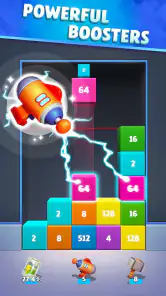
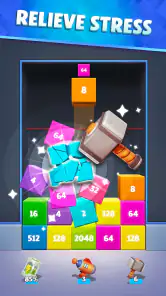
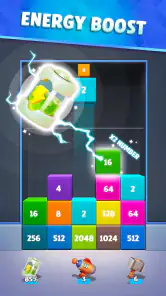
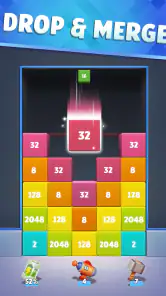
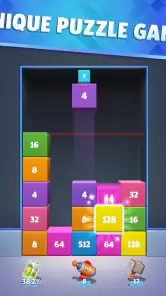
Analysis by Reviewed
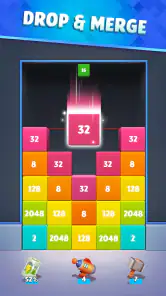
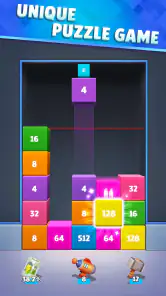
I spent time with Numblock Factory Block Puzzle as a casual 3D board game, and my first impression was easy to understand: it turns number merging into something more spatial and tactile. Instead of treating the board as a flat grid, the game asks me to think about blocks in depth, combine matching values, and make room for larger pieces. That small change gives the familiar merge-puzzle idea a different rhythm.
The game is free to start, which makes it simple to try without committing money up front. It is made by Voxel Cube Games and is suitable for Everyone, so I can see it working for short breaks, relaxed evening play, or anyone who enjoys puzzle games without a complicated story or a large set of rules. Its store rating sits at 4.8 from around 150 ratings, and the game has passed 10K installs, which suggests that its straightforward format has already found an audience.
What matters most to me is that the basic idea is immediately readable, but the three-dimensional layout gives each move more consequence than a simple number exercise. I do not need a long tutorial to understand the goal. The challenge comes from deciding where to place or combine blocks before the available space becomes awkward.
How the 3D board changes the usual merge puzzle
The central loop is built around merging number blocks to create larger ones. That sounds familiar if you have played other number-merging board games, but the 3D presentation changes how I read the board. I am not only checking which values can combine; I am also considering the physical arrangement of the blocks and how a new piece may affect future moves.
That extra dimension is the game’s clearest identity. In a flat puzzle, I can often scan rows and columns quickly. Here, I have to slow down and inspect the stack or arrangement from a more deliberate angle. This makes the game feel less like rapidly tapping through obvious matches and more like managing a compact workspace.
I found that the best approach is not to merge every possible pair immediately. A quick combination may create a larger block, but it can also occupy a useful position and reduce flexibility. I get better results when I first look at the open areas, consider where the next block is likely to fit, and only then commit to a merge. That habit is one of the more interesting lessons hidden inside the simple rules.
The real skill is space management, not merely chasing the biggest number. A large block is satisfying, but it does not automatically mean the board is healthy. If the surrounding spaces become crowded, the apparent progress can turn into a problem. I recommend treating empty positions as resources rather than unused decoration.
A practical way to play during short breaks
For an everyday example, I would use this game while waiting for an appointment or taking a short break between tasks. I can begin a session without learning a character system, remembering a storyline, or preparing a team. The number-based objective is clear enough that I can return to it after a distraction without needing to reconstruct a complicated plan.
My preferred routine is to spend the first few moves creating a stable arrangement rather than immediately pursuing a high-value block. I try to keep at least one area open for awkward pieces and avoid filling every convenient corner. When the board starts to tighten, I focus on restoring room instead of becoming attached to one promising combination.
This makes the game a better fit for people who enjoy calm concentration than for players seeking constant excitement. The pleasure comes from seeing a messy arrangement become manageable, not from dramatic action or competition. If you want a board game that rewards patience and visual planning, the format has a good chance of working for you.
What feels different from familiar alternatives
Compared with a conventional flat number-merging game, the three-dimensional board gives Numblock Factory a more physical sense of placement. A flat alternative may be easier to read at a glance and may suit players who prefer quick pattern recognition. This game asks for more spatial awareness, which can make it feel fresher but also slightly less immediate.
It also differs from classic match-three board games. Match-three titles usually emphasize color, shape, or chain reactions, while this game puts the value of each block at the center of the decision. I am not simply looking for a visual match; I am trying to build a sequence that keeps the board usable. That gives each move a more deliberate quality.
Against larger strategy board games, its advantage is accessibility. I do not have to learn a deep set of units, cards, or long-term rules before I can play. The trade-off is equally clear: anyone looking for a rich campaign, competitive matchmaking, or a board that changes dramatically from session to session may find the experience too focused.
Current version and what it means for players
The current version is 1.0.11, while the game was released on August 6, 2024. I would describe it as a young, focused puzzle product rather than a mature board-game platform with years of accumulated systems. That is not automatically negative. A compact game can be more pleasant when it avoids unnecessary menus and mechanics, but it also means expectations should remain realistic.
For someone installing it today, the important point is that the current experience centers on the core block-merging idea. I would not approach it expecting a broad collection of unrelated modes. Its appeal depends on whether the main loop itself is enough to hold your attention.
The version number shows that the game has moved beyond its first release, but I would separate that fact from assumptions about major changes. A newer version can reflect refinements without transforming the design. From my perspective, the safest way to judge the update is by whether the current build feels comfortable to play and whether the central board remains clear and responsive on the device being used.
It runs on Android 7.0 and later, which gives it a reasonably broad compatibility range for Android users with older phones or tablets. That is useful for a casual puzzle game because this type of title is often played on a secondary device, an older handset, or a tablet kept for relaxed use. I still recommend checking the available store version on your own device before settling into it, especially if you rely on older hardware.
What the release stage means for existing users
Players who started with an earlier build may appreciate the fact that the game is still being represented by a current version rather than remaining fixed at its launch release. However, I would not assume that every update changes the way the puzzle should be played. The underlying habits remain the same: protect open space, plan merges, and avoid confusing immediate progress with a healthy board.
That continuity is helpful. I can build a personal strategy without worrying that the entire game concept has been replaced every time the version advances. At the same time, a focused puzzle benefits from careful interface refinement. Small improvements to visibility, touch accuracy, or board readability can matter more here than flashy additions because nearly every session depends on understanding the arrangement correctly.
If you already enjoy it, I would judge future updates by practical effects rather than by the version label alone. Does the board remain easy to inspect? Do taps feel predictable? Is it still comfortable to resume after a short pause? Those questions are more relevant to daily play than a larger number attached to the build.
Where the current experience can create friction
The 3D design is also the main source of possible confusion. Depth can make blocks look close together even when they occupy different positions, and a crowded arrangement may take longer to interpret than a flat grid. I sometimes need to pause before making a move simply to confirm what is in front, what is behind, and which space I am actually using.
That is not a flaw for every player. Some people will enjoy the extra spatial layer, while others will see it as unnecessary visual work. If you prefer puzzles that communicate every option instantly, a traditional two-dimensional board may be a better match. Numblock Factory asks you to accept a little more inspection in exchange for a more distinctive layout.
Another limitation is the narrowness of the concept. The number-merging loop is easy to pick up, but that also means the game may not satisfy someone who needs a narrative, a collection system, or a wide selection of puzzle types. I would recommend it for focused sessions, not as a replacement for an entire board-game library.
The free entry point is convenient, although in-app purchases range from $0.99 to $94.99 per item. That is worth keeping in mind before treating the game as a completely cost-free experience. I can try the core game without paying, but anyone who chooses to buy extras should make that decision deliberately and keep the purchase range in view.
Small strategic habits that make a difference
My first useful tip is to avoid building only toward the center of the board. Central merges may look efficient, but they can make the surrounding positions difficult to use once larger blocks appear. I prefer to preserve a controlled edge or corner as a temporary parking area, provided it does not become a place where incompatible values accumulate.
My second tip is to distinguish between a safe merge and a decorative merge. A safe merge improves the board while leaving several routes open. A decorative merge creates a larger number but closes useful paths. When I am unsure, I choose the move that preserves more empty space, even if it produces a less impressive immediate result.
The third tip is to inspect before tapping when the board becomes crowded. In a flat puzzle, fast play can sometimes be an advantage. In this 3D setting, speed can cause a misread. I would rather spend a moment confirming the block position than make a move based on a visual overlap and lose the arrangement I was building.
A fourth useful habit is to treat the early portion of a session as preparation. I do not need to force the largest possible combination right away. Creating a flexible structure gives later blocks more places to go, and it makes the eventual difficult decisions easier to evaluate. This is especially helpful for players who are used to match-three games and may instinctively chase every available match.
Who should play it and who should look elsewhere
I think the game is best for casual puzzle players who like numbers, compact boards, and a little spatial planning. It suits someone who wants a self-contained activity that can be understood quickly but still rewards better decisions over time. It may also appeal to players who have grown tired of flat merge games and want the same broad idea presented with a different visual structure.
It is a reasonable choice for families as well because the content rating is Everyone and the rules are simple to explain. I would still let younger players discover the board at their own pace rather than expecting them to optimize immediately. The game’s educational value is informal: it encourages counting, comparison, and planning, but I would not mistake it for a dedicated learning tool.
I would skip it if your priority is competitive play against other people, a story-driven adventure, or a large set of board-game modes. I would also look elsewhere if you dislike games with in-app purchases or prefer puzzles where the board can be understood instantly from a single glance. The three-dimensional presentation is the feature that makes the game distinctive, but it is also the feature most likely to divide players.
For players who enjoy traditional number puzzles, the decision comes down to tolerance for visual complexity. If you want the cleanest possible route from one merge to the next, a flat alternative will probably feel more efficient. If you enjoy asking where a block belongs as much as whether it can merge, this game offers a more interesting kind of attention.
What I would watch as the game develops
Because the current build is 1.0.11, I would be interested in how Voxel Cube Games continues to support the central idea without making it unnecessarily busy. The most valuable improvements would be the ones that help players read depth, understand placement, and recover from accidental taps. In a game this focused, clarity is more important than adding systems simply to make the feature list longer.
I would also watch for how the balance between free play and purchases feels in future versions. The game is easy to try because it is free, but the presence of paid items means the long-term experience should remain comfortable for players who do not want to spend. A good balance would let the puzzle itself remain the reason to return, rather than making progress feel dependent on purchases.
Existing players should pay attention to whether updates preserve the calm, deliberate character of the board. New players should judge the game on the current experience rather than on assumptions about what future versions might add. The release history gives some reason to expect continued attention, but expectations should stay separate from confirmed features.
My recommendation after playing
I came away viewing Numblock Factory Block Puzzle as a focused and approachable 3D merge game with one clear idea: make number combinations feel like a spatial board problem. It does not try to be a story game or a full tabletop collection, and that narrow purpose is part of its charm. When I want a short session that rewards careful placement, it gives me enough to think about without burying the rules under layers of explanation.
Its strongest quality is the way it turns empty space into a strategic decision. Its main weakness is that the same depth-based layout can slow down visual reading, especially when the board becomes crowded. The free starting price lowers the barrier to trying it, while the available in-app purchases are a reason to remain mindful before buying anything.
My recommendation is simple: give it a try if you like number merging but want more spatial involvement than a standard flat puzzle provides. Start slowly, preserve open areas, and judge progress by how flexible the board remains rather than by the size of one block. If that style of planning feels satisfying, this compact board game can become a pleasant break-time habit. If you need competition, narrative, or endless variety, another puzzle category will serve you better.
Pros
- Simple block-puzzle rules make it easy to learn quickly.
- Short rounds work well for casual play and quick breaks.
- Offline play is useful when you have no internet connection.
- Gradually increasing challenges help keep the gameplay engaging.
- Bright visuals make the board easy to read on small screens.
Cons
- Gameplay may feel repetitive after extended sessions.
- Limited strategic variety can reduce long-term appeal for some players.
- Mistakes can be frustrating when the board becomes crowded.
- Progress may feel slow without frequent rewards or new modes.
- Small screens can make precise block placement slightly awkward.