Number Crush: Match Ten Puzzle
- 905.00
- 4.6
- Installs
- 500.00K
- Price
- Free
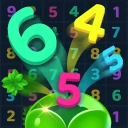
Screenshots


Analysis by Reviewed
I like Number Crush: Match Ten Puzzle best when I want a puzzle that gets me thinking without asking me to learn a complicated rulebook. The basic move is easy to grasp: find two numbers that make ten, then clear the pair. That quick decision gives each turn a satisfying little purpose, while the changing board encourages me to look beyond the next obvious match.
A small move can change the whole board
The useful habit I’ve developed is to pause before clearing a pair and scan for other matches nearby. Removing numbers changes what I can work with next, so the first pair I spot isn’t always the smartest one to take. I treat the grid like a short chain of decisions: identify a match, consider what its removal opens up, and then choose. That makes the game feel more thoughtful than simple mental arithmetic.
This is also why I wouldn’t call it a pure reflex game. Quick recognition helps, but rushing can mean missing a better sequence. If I’m tired or distracted, I play more slowly and use each turn to recheck the available numbers. For a brief phone break, that balance between simple rules and a little planning is the main appeal.
Taking the first turn thoughtfully
When I start a session, I don’t tap the first matching pair I notice. I scan from one edge of the board to the other, looking for more than the sum: I’m checking which removal leaves the clearest next choice. That small routine gives the puzzle a more deliberate feel and helps me avoid making a move simply because it is available. It is a useful approach if you’re new to number-match games, too, because it encourages you to read the board rather than react to isolated digits.
I also find it helps to separate “a valid pair” from “a helpful pair.” A combination can satisfy the rule and still leave a less convenient board afterward. Thinking one move ahead is usually enough; trying to plan a long sequence before the board changes can turn a light puzzle into unnecessary work. The sweet spot is a quick scan, one sensible choice, then another scan once the new situation is visible.
Gameplay that Hooks You In
So, what makes Number Crush: Match Ten Puzzle stand out in the sea of mobile games? It’s the simple yet compelling gameplay. You’re presented with a grid of numbers, and your mission, should you choose to accept it, is to match pairs of numbers that add up to ten. Sounds easy, right? But as the levels progress, the challenge ramps up, and that’s where the mind-bending fun begins.
Simplicity Meets Strategy
At first glance, the game seems straightforward, but don’t be fooled. As you dive deeper, you’ll realize it demands a fair bit of strategy. Planning your moves, anticipating the next numbers, and making the perfect match requires a keen eye and quick thinking. It’s like Sudoku had a makeover and decided to party with Tetris.
More From Our News Desk

Weather by Xiaomi Review: Clear at a Glance, Less Clear Up Close

X Under Pressure: Can It Recover When Posting Goes Wrong?

Clash of Clans Is Won Between the Battles

Android Auto Makes the Case for Quieter Car Software

MobiOffice: Transforming Mobile Productivity with Seamless Integration

EA SPORTS FC™ Mobile Soccer: Redefining Mobile Sports Gaming
And here’s a little secret: the more you play, the more you’ll notice your mental math skills sharpening. It's a sneaky way to get better at math without even realizing it. Who knew learning could be this much fun?
Reading the board without overthinking
One practical trade-off is that the same clear rule that makes the game approachable can also make a long run feel repetitive. I keep it fresh by changing what I pay attention to: sometimes I focus on clearing a useful area, and sometimes I challenge myself to notice a match I initially overlooked. These are personal ways of approaching the board, not extra modes or special tools, and they work precisely because the central task stays simple.
If you’re playing with a child, I’d frame it as a pattern-spotting activity rather than a lesson with a score attached. Asking “what might this pair leave behind?” keeps the emphasis on thinking ahead, while taking turns calling out possible sums can make a shared session more conversational. The Everyone age rating makes it broadly approachable, but whether it suits a particular child still depends on their interest in number puzzles and their comfort with optional purchase prompts.
From a spare minute to a proper break
I find this kind of number puzzle most useful in the gaps that don’t suit a longer game: waiting for a coffee, sitting on a train, or taking a short pause between tasks. A realistic routine is to open it for one round while something else is on hold, then stop when the interruption ends. The clear add-to-ten goal makes it easy to settle in quickly, though the urge to keep searching for one more pair can stretch that break.
For example, if I’m waiting for a delayed appointment, I can start with a quick scan, make a few considered matches, and put the phone away when my name is called without needing to remember a complicated story or plan. That makes it a particularly handy choice for brief, interrupted pockets of attention. It is less suitable when I want a game to occupy a whole evening or provide a shared activity with substantial back-and-forth.
That makes it a better fit for people who enjoy quiet, self-directed puzzling than for anyone looking for a story, a social match, or a big change of pace. If you want direct competition or a game built around elaborate levels and characters, a different board or puzzle game will probably suit you better. Here, the numbers and the choices are the point.
Visuals and Soundtrack
The visuals are crisp and colorful, making the game easy on the eyes even during extended play sessions. The interface is intuitive, so you won’t find yourself lost in a maze of confusing menus. And the soundtrack? It’s the kind of background music that’s just enough to keep you relaxed, enhancing your focus without being a distraction. It’s like the game was designed with your Zen state in mind.
What the rhythm rewards—and what it doesn’t
The reward is less about spectacle and more about the small satisfaction of spotting a useful pair and clearing space for the next choice. I enjoy that steady feedback because it makes a simple action feel purposeful. It also gives me a practical way to play: scan the full board before tapping, take the obvious match when it helps, and slow down when several options compete. That little pause is often more valuable than trying to move quickly.
Compared with a classic Sudoku app, this is more immediate and less dependent on writing down candidates or carrying a long chain of deductions in your head. Compared with a word puzzle, it asks for number recognition rather than vocabulary. Neither alternative is worse; they simply suit different moods. I reach for this one when I want a low-friction logic task, not a deep puzzle that occupies my attention for a long stretch.
There is also a useful distinction between a puzzle that rewards a single clever insight and one that rewards patient attention. This game leans toward the latter: I get more from checking the board carefully than from waiting for a dramatic breakthrough. If I’m in the mood to solve one dense problem and feel finished, a tougher logic puzzle is a better fit. If I only have a few minutes and want the pleasure of making several small decisions, the match-ten loop is easier to pick up and put down.
Why You’ll Keep Coming Back
Aside from the addictive gameplay, Number Crush: Match Ten Puzzle offers daily challenges that keep the experience fresh. It’s one of those games where you’ll find yourself saying, "Just one more level," and before you know it, an hour has flown by. The game also features leaderboards, so if you’re the competitive type, you can challenge your friends and see who reigns supreme in the number matching world.
There’s a useful distinction between enjoying the core matching and wanting every extra reason to return. If you like having a recurring goal, the daily challenges may give a session a natural starting point; if you prefer to play only when you feel like it, the basic pair-finding loop is still the part to judge it by. I would not choose it primarily for social competition, since the board puzzle itself is what makes the strongest case for opening the game.
For a player deciding whether to install it, I’d ask one simple question: do you enjoy spotting number relationships enough to repeat the process? If yes, the daily challenge can add a nudge without changing what the game is about. If no, a leaderboard is unlikely to transform the experience, and a game with varied objectives or a stronger social focus may hold your attention better. I’d treat those extras as optional reasons to check in, not as a substitute for liking the basic board.
Who should give it a try
Microjoy Games’ board game is free to download, rated for Everyone, and has a 4.6 average from around 47,000 ratings, with over 500,000 installs. It was released in September 2022, and version 2.7.6 is listed for Android 5.1 and up. I’d recommend it to casual players who like number patterns, need a compact distraction, or want a gentle way to practise spotting sums. It may be a poor match if you dislike repetitive puzzles, want a plotted adventure, or need every session to feel dramatically different.
Its appeal is strongest for people who like a quiet challenge they can approach at their own pace: commuters, casual puzzle fans, and anyone who enjoys mental sorting without a large ruleset. It can also suit someone who usually finds Sudoku too demanding for a short break but still wants more to do than simply swipe through a match-three board. The comparison is about the kind of attention each asks for: this puzzle centres on recognizing pairs that total ten and considering the consequences of clearing them.
The game includes in-app purchases, with items ranging from $0.99 to $99.99, so I’d keep that in mind if you’re downloading it for a child or simply prefer to avoid optional spending. The free entry point makes it easy to try, but the presence of purchases is a reason to be deliberate rather than tap through prompts without looking. That practical caveat matters more than any claim that the game is automatically suitable for every player.
If you’re cautious about spending, my advice is straightforward: decide before playing whether you want to make any optional purchases, and read each prompt rather than treating it as part of the puzzle. The game is free to download, but that does not mean every item is free. For a family device, it is worth setting expectations in advance; for an adult who avoids in-app spending, simply keeping that distinction in mind makes the choice clearer.
When to stop and start again
For me, the best session ends when I’ve had enough of scanning and planning, not when I’ve proved I can keep going. The game’s simple loop makes restarting tempting: there is always another board-level decision to make, and the goal is immediately understandable again. I suggest treating it as a short reset between activities if you tend to lose track of time in mobile games. If you want a puzzle that reliably tells a larger story or changes its mechanics often, this is not the one I’d pick.
That reset is part of the design’s everyday usefulness. I can leave after a small pause and return without needing to reconstruct a plot or remember a complicated strategy; the core question is familiar as soon as I look at the numbers. The flip side is that the same continuity can blur the boundary between a quick break and a longer session. A simple personal limit—one short play window, or stopping when the task I paused for is ready—helps keep the game in the role I wanted it to fill.
And for those worried about it being a battery hog – fear not! The app is surprisingly considerate of your device’s resources, meaning you can play to your heart’s content without watching your battery percentage drop like a stone.
All in all, Number Crush: Match Ten Puzzle is more than just a game; it’s a delightful escape into a world where numbers rule, and the only limit is how fast your fingers can move. Whether you’re a casual player looking for something to pass the time or a puzzle enthusiast seeking your next challenge, this app has you covered.
My verdict on the loop
The loop works because each action is easy to understand, the board gives immediate feedback, and a cleared pair invites another scan. Its reward is a modest sense of order and progress rather than a deep narrative payoff. I’d choose it for a calm, focused break and skip it when I’m craving variety or a more involved challenge. If that sounds like your kind of downtime, it’s worth trying—just set your own stopping point before “one more match” turns a quick pause into a much longer session.
Number Crush: Match Ten Puzzle Frequently Asked Questions
Does Number Crush: Match Ten Puzzle need an internet connection to start playing?
Number Crush: Match Ten Puzzle is described as playable offline, which can make it convenient for a commute, a trip, or a break when connectivity is limited. The core puzzle experience does not require a constant connection. Online access is needed for certain functions, including in-app purchases, so you may need to reconnect if you want to use those.
Is Number Crush: Match Ten Puzzle appropriate for a quick break or longer sessions?
The number-pairing format makes Number Crush: Match Ten Puzzle easy to approach when you have a little time to spare, while planning matches can also hold your attention for longer. It is a board-style logic game rather than an action title, so the pace is focused on considering your choices. Whether you prefer short or extended sessions depends on your play style.
What kind of game is Number Crush: Match Ten Puzzle?
Number Crush: Match Ten Puzzle is a board-style number puzzle built around pairing tiles to reach a target. Its simple premise makes it easy to understand before you begin, while choosing which numbers to match gives each turn a small strategic element. It may suit players looking for a calm, logic-focused game rather than a fast-paced action experience.
Is Number Crush: Match Ten Puzzle free to download, and does it include purchases?
Number Crush: Match Ten Puzzle is free to download, with optional in-app purchases available. These purchases range from $0.99 to $99.99 per item, so it is worth considering purchase controls if children use the device. Spending is not required to enjoy the basic number-matching puzzle, and players can decide for themselves whether any optional items are worthwhile.
What is the main objective of Number Crush: Match Ten Puzzle?
Number Crush: Match Ten Puzzle is a brain-teasing game where the main objective is to match and combine number tiles to reach the sum of ten. The game challenges players to strategically plan their moves to clear the board while maximizing their score. With its intuitive gameplay mechanics, it's suitable for all ages, offering both casual play and more intense strategic challenges.
Pros
- Engaging puzzle gameplay.
- Visually appealing design.
- Simple and intuitive controls.
- Challenging levels increase in difficulty.
- Regular updates with new content.
Cons
- Contains in-app purchases.
- Ads can be intrusive.
- Limited lives system.
- Requires internet connection.
- May become repetitive over time.
- Category
- Board
- Version
- 2.7.6