Noob Battle: War Sandbox
- 0.00
- 0.0
- Installs
- 50.00K
- Price
- Free
Screenshots
Analysis by Reviewed
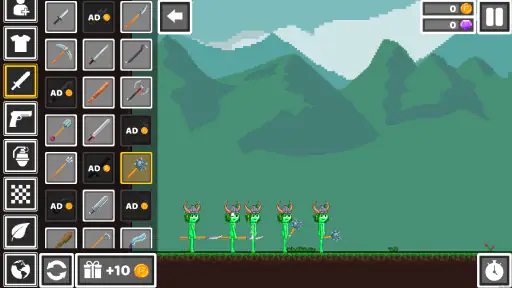
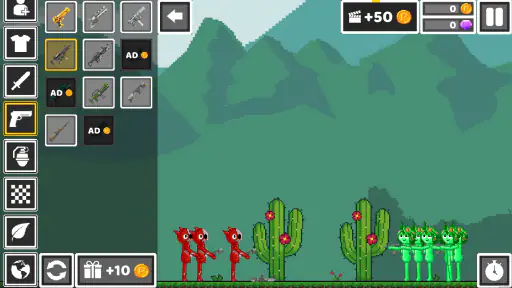
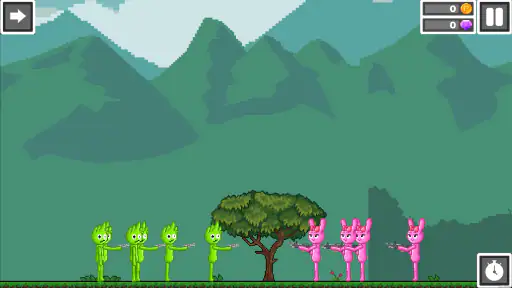
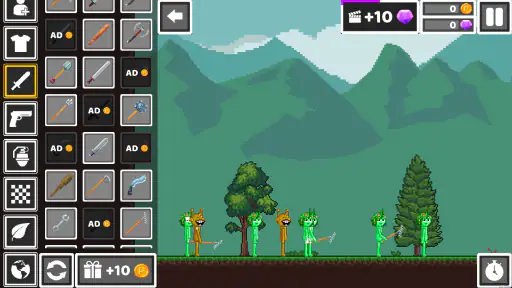
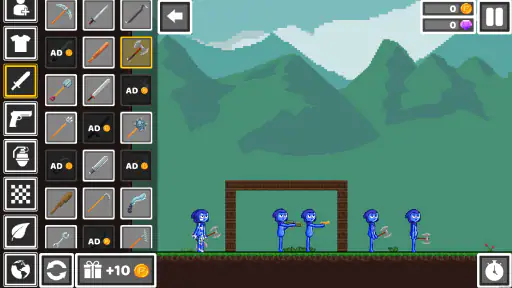
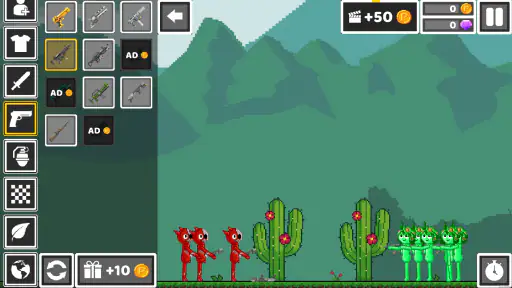
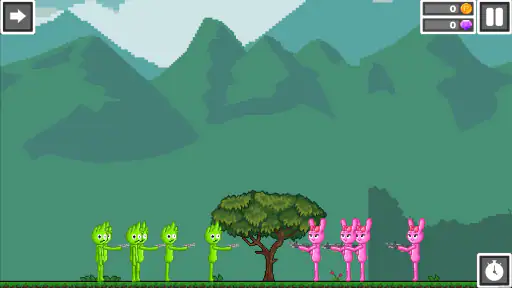
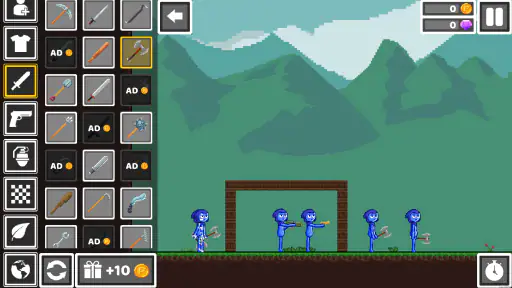
I spent time with Noob Battle: War Sandbox as a quick, playful simulation game rather than a serious strategy title. Its appeal is immediate: place noob characters into a battle setup, watch ragdoll physics turn simple clashes into unpredictable scenes, and adjust the sandbox until the result feels entertaining. I found myself enjoying it most when I stopped trying to “win” in a traditional sense and started treating each encounter as a small experiment.
That distinction matters. This is not the kind of game I would choose for a carefully balanced campaign, deep progression, or competitive ranking. It is better suited to short sessions where I want to create a funny situation, test how a group reacts, or simply watch a battle unfold. Q8Power keeps the concept focused on accessible sandbox amusement, and the Everyone age rating makes the tone approachable for a broad audience.
The game is free, which makes trying it easy, and it belongs to the simulation category even though its battles give it an action-oriented feel. It was released on August 5, 2026, and the current version is 2.1.2. Those details are useful when checking compatibility, but the more important question is whether its physics-driven format matches the way you like to play.
How the battles feel in ordinary play
The first thing I noticed was the speed of the basic loop. I can get from opening the game to experimenting with a battle idea without needing to commit to a long session. That makes it a good companion for a short break, especially when I want something more interactive than watching a video but less demanding than a full strategy game.
The perceived pace depends heavily on what I create. A small setup feels immediate and easy to follow. Once more characters and movement enter the scene, the visual action becomes busier, and the fun comes from seeing events develop rather than controlling every second. I would not describe the experience as a precision-focused test of reflexes. It is closer to arranging a playful situation and observing the consequences.
That design gives the game a different rhythm from usual battle alternatives. A conventional strategy game asks me to manage resources, plan a route, or make decisions under pressure. A standard action game puts timing and direct control first. Here, the entertainment comes from the combination of setup and physics. The result can feel spontaneous, which is exactly why a small encounter is often more satisfying than an overcomplicated one.
My most useful approach was to begin with a simple arrangement instead of filling the scene immediately. I could then see which part of the battle was producing the interesting movement and build from there. This is a practical tip for new players: change one element at a time. If everything is altered at once, it becomes harder to understand why a particular outcome happened.
Why the ragdoll style changes the experience
Ragdoll physics gives the battles their personality. Characters do not feel like identical pieces moving through a rigid board; their reactions create moments that are difficult to predict. That unpredictability is a strength when I am looking for comedy or surprise, but it can also frustrate me if I want a repeatable result.
I found this especially noticeable when trying to recreate a scenario. A setup that looked promising once might not feel equally entertaining the next time because the physical reactions changed the flow. In a traditional tactics game, repeating a plan usually teaches me something precise. In this sandbox, repeating a plan is more like rerunning an experiment: the value is in observing what happens, not necessarily in reproducing the same outcome.
That makes it suitable for players who enjoy emergent play. It is less suitable for someone who needs clear feedback after every decision. If you prefer knowing that a particular command always produces a predictable tactical advantage, the loose physical style may feel random rather than clever.
Where it fits into a normal day
A realistic use case is a ten-minute break between tasks. I might open the game, create a compact battle, watch the result, and make a few changes before putting the phone away. There is no need to prepare a long-term plan, and the sandbox structure makes it easy to stop after one amusing outcome.
It can also work as a shared activity. I can hand the device to a friend and ask them to design the next setup, then compare which arrangement creates the more entertaining scene. That kind of informal challenge is more natural here than trying to prove who has the stronger competitive skill. The game’s value comes from participation and curiosity.
Families should still remember that an Everyone rating describes broad suitability, not a guarantee that every person will enjoy the same style. Younger players may like the funny physical reactions, while older players looking for detailed planning may want something more structured. I would present it as a light sandbox game, not as a replacement for a deep war simulation.
What happens during heavier sessions
The game’s workload is tied to the amount of activity I create on screen. A simple battle is easier to read and feels more controlled. A crowded scene asks the device and the player to handle more simultaneous movement, collisions, and visual events. Even without turning the experience into a technical benchmark, that is the point at which expectations should become realistic.
I would not judge the game only by how quickly a small setup begins. Sandbox titles often feel fast at the start and become more demanding when the player keeps adding objects or participants. In Noob Battle, the sensible way to preserve a clear experience is to build gradually. If a scene becomes visually confusing, reducing the setup is not merely a performance trick; it also improves the quality of the battle because I can understand what caused the outcome.
This is one of the less obvious trade-offs of the format. More characters may suggest a bigger and more exciting war, but a larger scene does not automatically create better entertainment. Sometimes a smaller group produces clearer collisions, more readable movement, and a funnier chain of events. I got more value from designing a situation with a purpose than from making the battlefield as crowded as possible.
For extended play, I would use a simple recovery routine. I would finish a battle, return to a lighter setup, and then begin the next experiment instead of carrying every idea into one increasingly busy scene. That keeps the session easier to follow and gives the device less continuous work to handle. It is also a better way to identify whether a problem comes from the size of the scenario or from the game itself.
Managing visual overload
There is a difference between technical heaviness and creative clutter. When many ragdoll reactions happen together, the scene can become difficult to interpret even if it remains responsive. I learned to pause my own experimentation when I could no longer explain why something happened. At that point, simplifying the battle restored both clarity and enjoyment.
This matters for users who expect every sandbox to reward maximum scale. In my experience, Noob Battle works better as a sequence of focused tests than as one enormous spectacle. Try a formation, observe the result, alter the arrangement, and then compare. That workflow turns the physics from random noise into something I can explore.
Another useful habit is to keep a mental note of what changed between attempts. Because the game is built around playful outcomes, it is easy to forget whether a result came from placement, timing, or the general movement of the scene. Treating each attempt as a small test makes the experience more satisfying for players who enjoy discovering patterns inside chaotic systems.
Stability, interruptions, and getting back into play
For a sandbox game, reliability is not only about whether the application opens. It is also about whether I can recover from an unsatisfying battle without losing interest. The short-session structure helps here. If a setup does not work, I can usually treat it as a failed experiment and start again rather than feeling that I have lost a long campaign.
That recovery style is one of the game’s practical strengths. A conventional campaign game can make a restart feel expensive because progress, time, or a carefully developed plan may be involved. Noob Battle is more disposable in a good way: an uninteresting result is a reason to redesign the scene, not a major setback.
At the same time, players should not confuse easy recovery with guaranteed smoothness in every situation. The more ambitious the sandbox arrangement, the more important it becomes to give the game and the device a manageable workload. If the experience ever feels less comfortable during a busy experiment, my first response would be to simplify the scene and reopen the battle rather than immediately assuming the whole game is unsuitable.
I also appreciate that the current version, 2.1.2, gives users a clear version reference when troubleshooting or checking whether their installation is up to date. I would keep that number in mind if I were comparing behavior across devices, because performance impressions can change after an update. Still, the version label alone does not tell me how every phone will behave; the scene size and device age remain important factors.
What reliability means for this kind of game
In a story-driven game, reliability protects saved progress and long sessions. Here, it protects the willingness to experiment. I can forgive an occasional dull battle because the next setup is quick to create, but repeated interruptions would damage the game’s main appeal: instant curiosity followed by a funny or surprising result.
That is why I would recommend short test sessions when first installing it. Try a modest battle, then gradually explore busier arrangements. This gives a clearer impression of how the game feels on a particular phone than immediately attempting the most crowded scenario. It is a more useful personal check than relying on another player’s device experience.
Device limits and who should install it
The minimum operating system is Android 7.0, so the game is aimed at a wide range of Android devices rather than only recent hardware. Compatibility is encouraging, but an operating-system requirement is not the same as a promise that every supported phone will handle the busiest sandbox scene identically. Older devices may be more comfortable with restrained experiments, while newer phones are likely to give players more freedom to explore larger setups.
I would install it on a phone with enough free working space and close unnecessary demanding apps before starting a longer session. That is not a special requirement unique to this title; it is simply sensible when a game has to animate multiple physical reactions. If the phone becomes warm or the action feels less fluid during a crowded battle, reducing the number of active elements is the first adjustment I would make.
People with limited storage or older phones should approach it with modest expectations. The game may still be worth trying because its core amusement does not require a huge scenario, but the best experience may come from small, readable battles. Players using newer devices and enjoying visual experimentation are more likely to appreciate the freedom to push the sandbox further.
I would skip it if my main goal were a polished competitive ladder, a detailed military campaign, or a large collection of carefully explained strategic systems. The title’s noob characters and ragdoll behavior point toward humor and experimentation. Choosing it for serious tactical depth would create the wrong expectations from the beginning.
How it compares with familiar alternatives
Compared with a traditional war strategy game, this one asks less from my memory and more from my imagination. I do not approach it expecting a perfect build order or a long chain of upgrades. Instead, I think about how to arrange a situation that will be interesting to watch. That makes it easier to pick up, but it also means the sense of long-term mastery can be lighter.
Compared with a direct-control action game, it gives me less emphasis on individual reflexes. The fun is not primarily about aiming quickly or mastering a complicated control scheme. It is about setting up conditions and seeing how the characters respond. Players who dislike waiting for an outcome may find an action alternative more rewarding.
Compared with a physics sandbox that focuses only on open-ended construction, Noob Battle gives the experimentation a battle theme. That framing helps when I want a clear reason to arrange characters and watch the result. The trade-off is that someone seeking a broad creative toolkit beyond war scenarios may prefer a more general construction sandbox.
For me, the strongest comparison is with casual simulation games that offer small experiments. Noob Battle has a more visual and comedic payoff than a management simulator, but it does not provide the same satisfaction as building an economy, organizing a city, or improving a long-running system. It is a better choice when I want immediate physical consequences rather than gradual development.
My performance verdict after using the sandbox
My overall impression is that Noob Battle: War Sandbox performs best when I respect its intended scale. Small and medium experiments feel more readable, easier to restart, and more rewarding than blindly filling the scene. The game’s perceived speed comes from how quickly I can try an idea, while its heavier moments come from asking the physics to manage a busier battle.
The most practical performance advice is simple: begin with a compact setup, add complexity in stages, and simplify whenever the action becomes difficult to follow. That approach helps both the device and the player. It also reveals whether I enjoy the core loop before I spend time creating elaborate scenes.
Q8Power has made a free simulation game that understands the appeal of unpredictable battles. I like that a failed experiment is rarely wasted; it can become the starting point for a better arrangement. The limitation is equally clear: without a deeper campaign or competitive structure, the long-term appeal depends on how much I enjoy inventing new situations for myself.
The game has reached over 50 thousand installs, which places it among the smaller casual titles rather than an unavoidable mainstream hit. That does not determine quality, but it matches my experience of a focused game built around a specific kind of fun. It is easy to recommend to someone who enjoys ragdoll physics, short sandbox sessions, and humorous battlefield experiments.
My final recommendation is conditional but positive. Install it if you want a lightweight way to create chaotic war scenes, test arrangements, and laugh at unexpected physical reactions. Keep your battles manageable if you are using an older device or prefer clear action. Skip it if you need deep strategy, extensive progression, or precise competitive control. For the right player, the real strength is not winning a battle but discovering an entertaining way for the battle to unfold.
Pros
- Simple controls make battles easy to start for new players.
- Sandbox maps encourage experimentation with different combat setups.
- Quick matches suit short gaming sessions.
- Lighthearted visuals keep the action accessible to younger players.
- Different units and weapons add variety to each battle.
Cons
- Gameplay can become repetitive after extended play.
- Some battles may feel unbalanced between available units.
- The physics occasionally produce unpredictable results.
- Ads may interrupt the experience or require extra patience.
- Limited strategic depth may disappoint experienced strategy fans.
- Category
- Simulation
- Version
- 2.1.2