NightClub Simulator
- 225.00
- 4.6
- Installs
- 1.00M
- Price
- Free

Screenshots

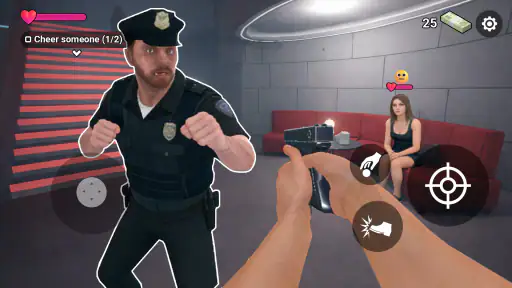
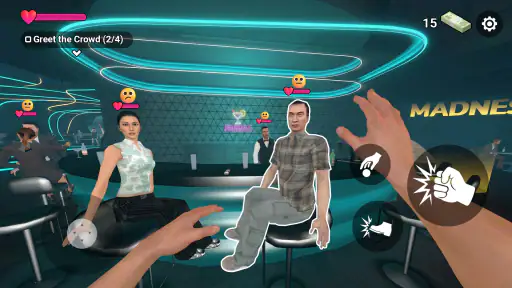
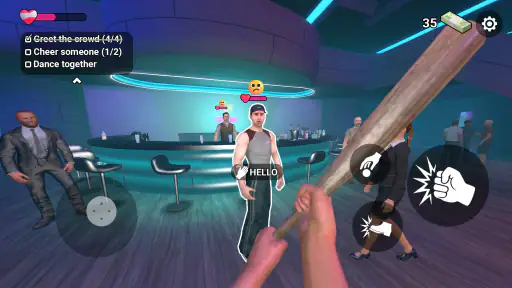
Analysis by Reviewed
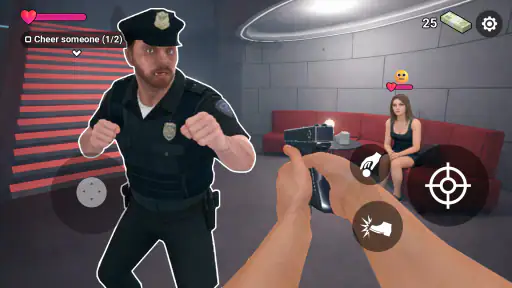
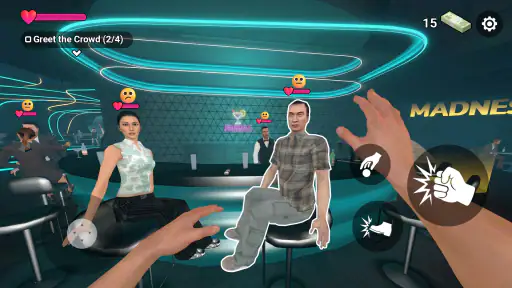
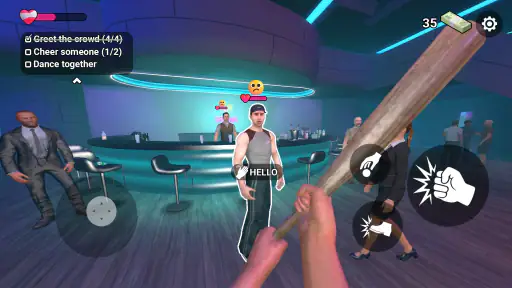
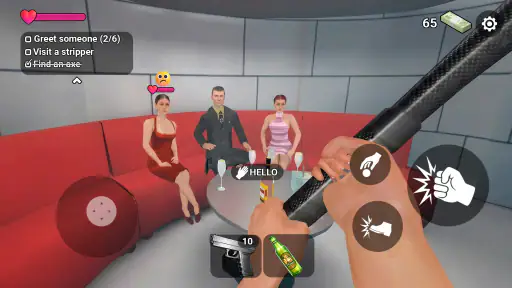
I spent time with NightClub Simulator as a compact, story-led simulation game rather than treating it like a simple dance title. Its appeal comes from the contrast between the nightclub atmosphere and the trouble that develops around it: you can move from dancing and social scenes into fights and narrative situations without leaving the same setting. That mix gives it a more unusual identity than a straightforward management game or a conventional action game.
It is the official mobile version of Nightclub Simulator, developed by Ant Hill Games, and it is available free of charge with optional in-app purchases priced at $3.49 per item. The game is rated Teen, which matters if you are considering it for a shared phone or tablet. I would not describe it as a harmless party game for young children; the fighting and mature nightclub setting make the age context part of the decision.
The mobile release has built a sizeable audience, with over a million installs and a 4.6 average from around 8.2 thousand ratings. Those numbers suggest that the unusual combination of nightlife, story, and conflict is connecting with players. My experience was more mixed in a useful way: the concept is memorable, but it works best when you want a short, atmospheric game with some unpredictability rather than a perfectly calm simulation.
How it fits into a shared household
A game that can attract more than one person
On a shared device, the game is easy to notice because its premise is immediately understandable. Someone can watch for a few minutes and see dancing, club activity, or a confrontation, then quickly understand why the player is making decisions. That makes it more approachable than a dense strategy simulation where a spectator needs a long explanation before anything makes sense.
I can imagine one person using it as a casual evening game while another family member watches and comments on what is happening. The story gives spectators something to react to, while the nightclub setting creates a clear visual mood. It is not necessary for everyone in the household to enjoy the same type of game for this one to become a shared talking point; one player may like the simulation side, while another is more interested in the dramatic encounters.
There is also a practical downside to that shared-device appeal. The game’s tone can change quickly. A relaxed dance sequence may be followed by a fight, so it is not ideal to hand the phone to a small child simply because the colorful club setting looks playful. On a family tablet, I would treat it as a Teen-rated game first and a casual party-themed game second.
A realistic evening use case
Imagine using the game after dinner on a device that several people share. One person has twenty minutes before the tablet goes to someone else, so the goal is not to build an enormous long-term session. The player can enter the nightclub world, follow the current situation, and stop when the device is needed. That kind of short, self-contained session suits the game better than expecting it to replace a deep console simulation.
In that situation, I would recommend agreeing beforehand who is using the device and whether others want to watch. The story and confrontations can invite backseat decisions, which may be entertaining if everyone is comfortable with it but irritating if the player wants to explore independently. This is one of the game’s less obvious strengths: it creates conversation without requiring formal multiplayer coordination.
At the same time, I would not mistake watching for cooperative play. The game is still something one person controls. If several household members want equal turns, a simple rotation works better than trying to make everyone participate in every decision. That keeps the experience relaxed and avoids arguments over who is actually directing the nightclub’s story.
Why the setting matters more than the label
Calling it a simulation only tells part of the story. The nightclub environment is not just decoration around menus and numbers; it shapes the way the game feels. Dancing gives the setting its social energy, while fights prevent it from becoming a purely comfortable management exercise. The story provides a reason to continue beyond repeating the same club routine.
Compared with a traditional business simulation, this is less suitable for someone who wants careful planning, predictable growth, and a quiet sense of control. Compared with an action game, it may feel less focused because the player is not simply moving from one fight to the next. Its identity sits between those categories, and that is exactly why it can be appealing or frustrating depending on your expectations.
Setting boundaries before anyone starts playing
Device access is part of the experience
Because the game is free to download, it is easy for a household to try without making a purchase decision first. That convenience is useful when several people are deciding whether the nightclub theme suits them. However, free access does not mean the game is automatically frictionless. Optional purchases cost $3.49 per item, so I would establish a simple household rule before letting a child or guest use a shared device.
I would personally keep purchase approval with the device owner and avoid treating the game as an open-ended spending activity. Even when a player only wants to explore the free experience, the presence of optional items can change how the session feels. A clear rule such as “play freely, ask before buying” is more practical than assuming everyone understands the boundary automatically.
This is especially important when a device is used by people with different ages. An adult may see the in-app purchases as a small optional extra, while a younger player may interpret them as part of normal progress. The game does not need to become a source of conflict if the household agrees on the rule before the first session.
Separate expectations from account ownership
On a shared phone or tablet, I would also decide who is responsible for the game’s progress. The most straightforward arrangement is to let one regular player treat the save as their own and ask others to watch or take turns only when that player agrees. If several people make choices in the same story, the result can stop feeling personal very quickly.
This matters more here than it would in a disposable arcade game. The story gives choices and events a sense of continuity, so changing direction because another person grabbed the device can be disappointing. A household does not need complicated coordination; a simple verbal boundary is enough. The important point is to avoid assuming that a shared device automatically means a shared save.
I would also avoid promising a child that the game is a family activity in the same way as a board game. The content rating is Teen, and the fights are part of the official premise. Adults can enjoy it together with older children if the tone is appropriate for them, but it should not be presented as a universal family title.
What to check during the first session
My practical advice is to make the first session a supervised trial when the device is shared with younger users. Pay attention to how the game’s story and fights are received, rather than relying only on the nightclub theme. Some players will be comfortable with the fictional conflict and enjoy the drama; others may find the sudden change from dancing to fighting unpleasant.
This first look is also a good time to decide whether the game belongs on a communal device at all. If people are constantly interrupting one another, arguing over story decisions, or asking for purchases, the problem is not necessarily the game’s quality. It may simply be a poor match for that household’s device habits. In that case, keeping it on one person’s phone is more sensible than forcing it into a shared routine.
Version and device considerations
The current version is 1.1.2, and the game supports Android 7.0 and later. That makes it accessible to many older Android devices, which can be useful when a family shares an older phone or tablet. Still, compatibility is only the starting point. A device that technically runs the game may not offer the most comfortable experience for everyone, especially if its screen is small or several people are trying to watch.
I would test the controls privately before inviting others to take turns. In a game that combines movement, social activity, and fights, a player needs to know how much attention the screen demands. If the controls require concentration, backseat coaching from several people may make the experience worse rather than better. A larger shared screen can improve viewing, but it can also make disagreements more visible, so the household routine still matters.
Coordinating turns, choices, and expectations
Use turns that match the game’s rhythm
The easiest way to share the experience is to divide play by natural stopping points instead of passing the device after every small action. A short turn can feel unsatisfying if the player is in the middle of a story event or confrontation. I would let one person complete a meaningful segment, then hand over the device when the situation has settled.
This approach also protects the story from becoming a committee exercise. If everyone votes on every movement, the game can lose its personal feel. A better arrangement is for one person to play while others offer suggestions only when invited. That keeps the social side enjoyable without turning every nightclub decision into a household negotiation.
For younger Teen players, an adult can watch the opening session and explain that the game’s fictional fights are part of the scenario rather than behavior to copy. That conversation does not need to be dramatic or preachy. A calm explanation is enough, especially if the player already understands the difference between a simulation and real life.
Coordinate around the story, not just the device
The story changes the way people share the game. In a basic racing title, another player can take over without worrying much about what came before. Here, someone who takes the next turn may make a decision that affects how the previous player imagined the situation developing. I recommend agreeing whether the household is following one shared storyline or simply treating each turn as an experiment.
The first option is better for people who care about continuity. The second is better for a group that enjoys seeing different reactions and does not mind an unpredictable result. Neither method is objectively correct, but choosing one in advance avoids disappointment. This is a concrete trade-off that is easy to miss when the game is described only as a nightclub simulator.
If one person prefers the dancing and social atmosphere while another mainly wants the fights, alternating by activity may sound fair but can create uneven turns. The game’s appeal comes from the combination, so splitting it too rigidly may make each player see only half of what makes the title distinctive. I would share complete story sections instead and let each player experience the full blend.
When another kind of game is better
If your household wants a game with clear competitive rules and equal participation, this is probably not the best choice. A racing game, party game, or turn-based board-style title usually makes shared play easier because everyone understands when a turn ends and how victory is measured. NightClub Simulator is more personal and narrative-driven, so it works better when the group is comfortable with one person guiding the session.
It is also not my first recommendation for someone seeking a serious club-management experience. A conventional management simulation may offer more satisfying planning and clearer systems for players who enjoy budgets, staffing, upgrades, and long-term optimization. This game’s attraction is the atmosphere and the unpredictable mixture of social scenes, story, and conflict, not a promise of a purely methodical business exercise.
On the other hand, if you find ordinary management games too dry and action games too narrow, this unusual middle ground may be exactly what you want. The game gives the nightclub a sense of drama instead of reducing it to a spreadsheet. That makes it a better fit for players who want to feel involved in a setting, not merely efficient inside it.
Age, trust, and the right player
Why the Teen rating should guide the decision
The Teen rating is not a minor footnote here. Fights are one of the game’s defining ingredients, and the nightclub setting can carry a more mature tone than a typical dance game. I would be comfortable recommending it to an adult or an appropriately mature Teen, but I would not suggest installing it for a young child just because it is free and easy to access.
Trust also matters because the game combines entertainment with optional purchases. A responsible player should understand the household’s spending rule and respect the owner’s save or account boundary. If that trust is not there, the safest choice is to keep the game on a personal device rather than a communal one.
For adults, the age rating mainly helps set expectations. This is not a gentle relaxation app disguised as a game. It has a lively social setting, but the fights mean that the tone can become tense. If you prefer peaceful simulations, the game may feel uncomfortable even if you like the idea of running or exploring a nightclub.
Who will get the most from it
I think the strongest audience is made up of players who enjoy hybrid games. You may like watching a story unfold, making choices in a distinctive environment, and handling moments of conflict without committing to a full-length action experience. The free entry point makes it easy to discover whether that mixture works for you before spending anything on optional items.
It is also a good candidate for a player who enjoys discussing games with friends or family. The nightclub setting gives people something concrete to react to, and the changing tone can produce memorable moments. I would recommend it to someone who wants a game with personality rather than another anonymous simulation built around familiar menus.
I would advise skipping it if you want a calm, realistic business simulator, a child-friendly dance game, or a tightly structured multiplayer experience. It may also disappoint players who dislike narrative interruptions in simulation games or who want every action to contribute to a clear long-term strategy. The hybrid design is the reason to play, but it is also the main source of potential friction.
Trust the player’s reaction
Household suitability cannot be decided by age alone. Two Teen players can respond very differently to the same fictional fight or nightclub scene. I would watch whether the player is engaged, uneasy, or simply bored by the combination. If the game creates more discomfort than curiosity, there is no reason to push through just because it has a strong average rating.
That rating is 4.6, supported by around 225 written reviews, but popularity does not remove the need for a personal fit. The audience response tells me that the concept has broad appeal, not that every household will enjoy it. In a shared setting, the best decision is the one that respects the least comfortable regular user without pretending the game is something gentler than it is.
My household verdict
NightClub Simulator works surprisingly well as a watchable, conversation-friendly game on a shared device, provided everyone understands that it is a Teen-rated experience with fights and optional purchases. I like that its nightclub setting is more than a visual theme. Dancing, story events, and confrontations give the game a distinct rhythm, and that makes it easier to remember than a routine simulation.
My preferred household setup would be simple: one clearly designated regular player, agreed rules for purchases, turns that end at natural story breaks, and an adult check before a younger Teen starts playing. I would not encourage several people to control the same story casually, because the decisions can lose their meaning. Watching and discussing works better than pretending the game offers equal cooperative control.
The game is free, supports Android 7.0 and later, and comes from Ant Hill Games. Its current version is 1.1.2, so it is practical to try on a range of Android devices. Those details make the first step easy, but the more important question is whether your household wants an atmospheric hybrid rather than a conventional management or party game.
My honest recommendation is to try it when you want a distinctive short-session simulation with story and conflict, not when you need a peaceful or universally family-friendly title. For the right adult or Teen player, the unusual blend is its biggest strength. For a shared household that needs strict boundaries, equal turns, and child-safe content, another category of game will be a better fit.
Pros
- Realistic nightlife setting with an entertaining club-management concept.
- Offers varied tasks that keep gameplay from feeling repetitive.
- Easy-to-understand controls make it accessible for casual players.
- Short sessions work well for playing on the go.
- Progression gives you reasons to keep improving the nightclub.
Cons
- Some activities may become repetitive after extended play.
- Progress can feel slow without spending extra time on upgrades.
- The nightlife theme may not appeal to every player.
- Performance can vary on older or less powerful devices.
- Limited depth may disappoint players seeking a complex simulator.

- Category
- Simulation
- Version
- 1.1.2