My Child Lebensborn
- 1.05K
- 4.8
- Installs
- 100.00K
- Price
- $2.99

Screenshots


Analysis by Reviewed
What stays with me about My Child Lebensborn is how it makes care feel consequential without turning parenting into a puzzle to solve. You are not asked to win a battle or build a perfect household; you are asked to look after a child facing prejudice in post-war Norway. That focus gives this simulation its emotional force, but it also makes it a slow, serious experience rather than an easy game to dip into whenever you have a spare minute.
I would treat it as an interactive drama with everyday caregiving at its centre. If you want a cheerful family game, a large sandbox, or constant mechanical challenges, this is probably not the right fit. If you are willing to sit with a difficult story and make small choices without expecting them to fix everything, its quiet approach can be unusually affecting.
The Emotional Journey Begins
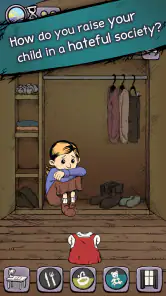
As soon as you launch My Child Lebensborn, you're greeted by a beautifully haunting art style that sets the tone for the entire experience. The game is inspired by the real-life stories of children born during the Lebensborn program, and it doesn’t shy away from presenting the harsh realities these children faced.
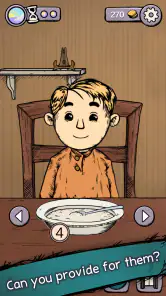
In this interactive simulation, your primary goal is to nurture and care for your adopted child, Klaus or Karin, in post-war Norway. You’ll find yourself caught in the emotional whirlwind of managing their daily needs—food, rest, and happiness—while shielding them from the prejudices of the society around them.
Caregiving Is the Main Decision, Not a Side Activity
The routine of looking after Klaus or Karin gives the story its personal scale. When you have to balance ordinary needs against the emotional damage caused by hostility, even a small parenting decision can feel loaded. I’d recommend playing in a quiet stretch of time rather than squeezing it into a distracted minute: the value is in noticing how the child’s situation shapes the choices, not in rushing through a checklist.
It also helps to approach the decisions without expecting a perfect answer every time. The pressure to choose between immediate comfort and limited resources is part of the point. I found it more useful to think about what the child needs in that moment than to treat each choice as a puzzle with one obviously correct solution. That makes the experience more involving, but it can also feel uncomfortable if you prefer games that reward clear optimization.
Gameplay Mechanics and Features
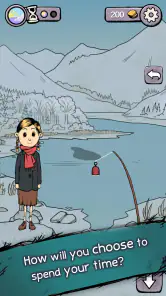
The gameplay is straightforward yet deeply engaging. As a player, you will be making decisions that affect your child’s well-being and their view of the world. Every choice matters. Do you spend your limited money on food or a comforting toy? Do you confront the bullies or teach your child resilience?
More From Our News Desk

Weather by Xiaomi Review: Clear at a Glance, Less Clear Up Close

X Under Pressure: Can It Recover When Posting Goes Wrong?

Clash of Clans Is Won Between the Battles

Android Auto Makes the Case for Quieter Car Software

MobiOffice: Transforming Mobile Productivity with Seamless Integration

EA SPORTS FC™ Mobile Soccer: Redefining Mobile Sports Gaming
The game employs a day-night cycle, where each day brings new challenges and stories. You’ll read letters, help with homework, and decide how to respond to the often heartbreaking questions your child might ask. The simplicity of the mechanics makes the emotional impact of the story even more profound.
One useful way to play is to pause after a difficult exchange and consider what the child is asking for beneath the words. A question may call for comfort more than a practical explanation, and the game’s strength is how it places those small moments alongside the routine of food, rest and schoolwork. This isn’t a deep management simulator with layers of systems to master; it is a narrative experience where simple interactions carry the weight.
That distinction matters when choosing between it and other simulation games. If you want to build, decorate, or endlessly tune a household, a broader life simulator will likely suit you better. If you want a story about care under social pressure, this is the more focused choice. I’d also avoid starting a session when you only want something cheerful or mechanically demanding: its themes are heavy, and the slow rhythm gives them room to land.
Small Choices and the Cost of Attention
The limited-resource decisions are most interesting when I resist treating them like a scorekeeping exercise. A practical purchase may answer an immediate need, while a gesture of comfort may matter in a different way; the tension comes from having to choose with imperfect knowledge. I would not replay a scene in search of a supposedly flawless parenting route. The more useful question is what kind of response feels humane in that particular moment, even when the surrounding circumstances remain unfair.
That approach also makes the game easier to discuss with someone else. Rather than comparing who made the “best” choice, you can talk about what each response communicates to the child and why a parent might hesitate. It is a good fit for a thoughtful conversation with an older teenager, provided the discussion acknowledges that the subject is distressing rather than presenting the game as a simple teaching tool.
There is a practical trade-off here: the same restraint that gives the story room to breathe can make the interactions feel repetitive if you expect a steady stream of new mechanics. I would play in short, attentive sessions and stop when the emotional weight starts to feel tiring. Continuing just to clear a task can turn a reflective experience into routine clicking.
Visuals and Soundtrack
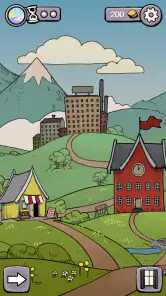
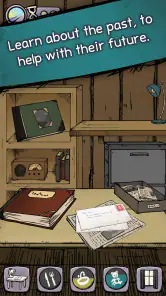
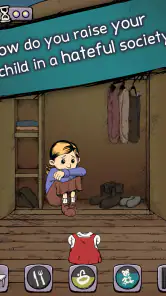
The visuals of My Child Lebensborn are crafted with a hand-drawn aesthetic that perfectly captures the somber yet hopeful atmosphere of the game. Each scene is a piece of art, resonating with the emotions of the narrative. The soundtrack complements this beautifully, with its mellow tones that echo the bittersweet nature of the story.
The restrained presentation is a good fit for the subject, but it won’t appeal to everyone. Players who prefer bright, busy interfaces or constant visual rewards may find the understated scenes and measured pacing too subdued. I see that as a deliberate trade-off: the game asks you to sit with the child’s experience instead of distracting you with spectacle.
The visual style also helps keep attention on expressions and the mood of a scene rather than on elaborate environments. That is a strength for intimate storytelling, not a substitute for variety. If you usually judge a simulation by how much you can customize or how many activities it offers, the quiet presentation may feel sparse. I would choose it for the way it frames a personal story, not for a long list of things to manage.
Who Should Make Room for This Story?
I’d recommend it to players who are open to difficult historical themes, enjoy choice-led storytelling, and want a simulation with emotional stakes rather than a broad sandbox. It may also suit someone looking for a thoughtful game to discuss with an older teenager, since the content rating is Teen; I would still expect to talk about the prejudice and distress the story explores rather than treating it as casual background entertainment.
For a realistic everyday scenario, imagine having a quiet evening after work and wanting a short, contained story rather than another competitive match. This can fit that mood if you have the attention to follow the child’s circumstances and make considered choices. It is a poor match for a noisy commute or a few distracted taps between tasks, because interruptions can flatten the emotional continuity that makes the scenes meaningful.
The game is made by Sarepta Studio and sits in the simulation category, but its appeal is closer to a compact interactive drama than to a typical life-management sim. Its 4.8 average across around 13,000 ratings, alongside over 100,000 installs, suggests that many players have connected with its approach. Those figures are context, not a promise that its sombre subject or deliberate pace will work for every player.
For a parent or educator considering it for a young person, I would focus less on whether the game is easy to operate and more on whether its themes suit that player. The Teen rating gives a useful starting point, but the story’s treatment of bullying and exclusion can still be upsetting. Playing alongside an older teenager can make room to discuss those moments; handing it over as a light, independent activity would misread its tone.
Practical Expectations Before You Play
This is a paid game, priced at $2.99, so I’d approach it as a complete, focused story purchase rather than something to sample as a free casual diversion. It was released on May 7, 2018, and version 2.0.108 requires Android 5.1 or later. The Teen rating is worth keeping in mind: the historical setting and bullying are central to the experience, so it is better suited to players ready for emotionally serious material than to younger children seeking a light nurturing game.
If you are wondering whether the story is mainly about history or parenting, I’d say the two are deliberately intertwined. The historical context gives the child’s treatment its meaning, while the everyday caregiving makes those consequences personal. If you want an expansive account of the period, a history-focused game or book may offer more breadth; if you want to encounter its human impact through intimate choices, this is a more direct route.
There is a trade-off in that intimacy. The child’s hardship can make the experience feel pressuring, and the simple interaction style may not provide enough mechanical variety for players who need frequent new systems or a strong sense of control. I wouldn’t choose it to unwind after a difficult day if emotionally heavy stories tend to stay with you. Its best use is when you have room to pay attention and are willing to accept that care cannot erase the unfairness around the child.
One question I would ask before buying is whether a focused narrative is enough to hold my attention without the usual progression of upgrades, collections, or open-ended goals. Here, the draw is the relationship and the choices, not a broad toolkit to master. If that sounds appealing, the relatively simple structure can make the story approachable. If you need a sense of constant discovery, a more systems-heavy simulation will be a better match.
I would also plan around the mood rather than the length of a session. A quiet evening is a better setting than a rushed break, because the story’s impact depends on following the child’s situation from one interaction to the next. You do not need to approach every scene as a test of strategy; reading carefully and responding thoughtfully is a more rewarding way to play than hunting for a universally optimal answer.
Why It’s Worth Your Time
This isn’t just a game; it’s an experience that educates and evokes empathy. It sheds light on a lesser-known part of history and offers a unique perspective on the human condition. Playing My Child Lebensborn will challenge your emotional resilience and leave you reflecting on its themes long after you’ve put your device down.
In conclusion, if you’re looking for a game that’s not only entertaining but also meaningful, My Child Lebensborn is a title that shouldn’t be missed. It’s a poignant reminder of how the past shapes identity and compassion in the face of adversity.
My recommendation is specific: choose it if you value a carefully framed, personal story and can make time for its difficult subject matter. Skip it if you want a cheerful parenting game, a wide-open simulation, or constant action. For me, its strongest achievement is making ordinary acts of care feel consequential without pretending they can fix everything. That modest, uncomfortable honesty is what makes the experience linger.
My Child Lebensborn Frequently Asked Questions
Can I play My Child Lebensborn offline?
My Child Lebensborn is a story-driven simulation game built around caring for a child and making choices as the narrative unfolds. If you are considering it for travel or times without a reliable connection, check the game’s availability and requirements on your device’s app store before downloading. Its central experience is focused on the story and daily decisions, rather than competitive online play.
How much does My Child Lebensborn cost, and is it free to play?
My Child Lebensborn is a paid game, listed at $2.99. That makes it different from free-to-start titles that rely on optional purchases to continue. Before confirming a download, review the purchase screen for your platform so you know the price shown there. The game’s appeal is its complete, story-led caregiving experience, so consider whether its subject matter and style are right for you as well.
What kind of game is My Child Lebensborn?
My Child Lebensborn is a simulation game centered on caring for a child through a story-driven experience. Its premise invites players to consider the emotional and practical consequences of everyday choices, rather than treating caregiving as a simple checklist. The story is based on true events, and its focus on difficult experiences gives the game a serious tone from the outset.
Who developed My Child Lebensborn, and what is its current version?
My Child Lebensborn was developed by Sarepta Studio. The current version is 2.0.108, and the game requires Android 5.1 or later. These details can help you check whether the game is a suitable option for your device before downloading. Its presentation combines simulation gameplay with a narrative about a child’s experiences and the care they need.
What is My Child Lebensborn about?
My Child Lebensborn is a narrative-driven simulation game where players adopt and care for a child in post-World War II Norway. The game focuses on the challenges faced by children born of foreign soldiers and local women, known as Lebensborn children. It explores themes of bullying, discrimination, and identity through interactive storytelling.
Pros
- Deeply emotional storyline
- Realistic depiction of post-war struggle
- Engaging child-rearing mechanics
- Unique historical perspective
- Thought-provoking moral choices
Cons
- Limited replay value
- Emotional heaviness may not suit all
- Somewhat linear gameplay
- Requires internet connection
- Lack of diverse endings
- Category
- Simulation
- Version
- 2.0.108







