Modern Gunships: AC130 WarGame
- 349.00
- 4.7
- Installs
- 500.00K
- Price
- Free
Screenshots
Analysis by Reviewed
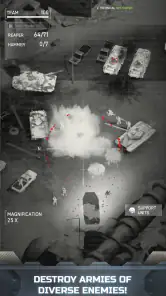
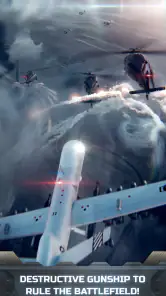
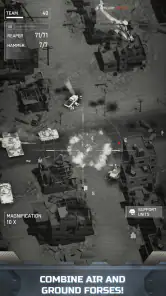
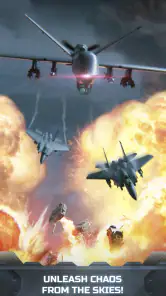
Modern Gunships: AC130 WarGame puts me in the seat of an AC130-style gunship and asks me to manage the action from above. It is an action game from ForgeGames Mobile, built around the appeal of choosing targets, timing attacks, and trying to keep control while the battlefield becomes increasingly difficult to read. That perspective gives it a different feel from the usual run-and-gun shooter: I am not sprinting through corridors, but watching the fight unfold and deciding where my fire matters most.
After spending time with it, I see the strongest appeal in short sessions where I want something direct and visually dramatic. The free entry point makes it easy to try, and the game is listed for Teen players, so it is aimed at an older audience rather than very young children. Its store presence has attracted over half a million installs and an average rating of 4.7 from around sixteen thousand ratings, which suggests that the central gunship fantasy connects with a sizeable audience.
That said, the fantasy alone is not enough to make a game a good fit for everyone. The important question is whether you enjoy tactical pressure from a fixed aerial viewpoint, and whether you are comfortable with a free game that offers optional purchases ranging from $0.99 to $199.99 per item. I found the experience most enjoyable when I treated every attack as a small decision rather than simply holding down the fire button.
How the gunship perspective changes the action
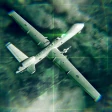
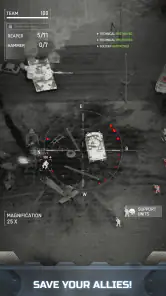
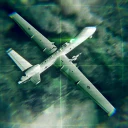
The basic viewpoint is the game’s defining feature. Instead of controlling a soldier at ground level, I look down on the battlefield and work from the gunship’s position. That changes what “action” means. The challenge is less about movement through a map and more about identifying the useful target, reacting before the situation shifts, and avoiding wasteful attacks.
This perspective can feel surprisingly focused. A conventional shooter often gives me several ways to move, hide, reload, and reposition. Here, the attention stays on the battlefield and the weapon response. When several targets compete for attention, I have to decide whether immediate damage is more valuable than waiting for a clearer opportunity. That makes the game approachable in short bursts, but it also means players who need character movement or close combat may find the format limited.
I recommend beginning with a patient rhythm. My first instinct was to fire whenever something appeared important, but that approach made the action feel messy. Watching the scene for a moment before committing helped me separate urgent threats from distractions. This is one of the more useful habits for new players: observe first, then spend your firepower with a reason.
The AC130 theme also gives the game a strong identity. It is not trying to be a general military sandbox in the way a large battlefield shooter might be. The appeal is narrower and more focused: controlling destructive power from above. If that specific fantasy is what brought you here, the game gets to the point quickly. If you are looking for vehicle driving, infantry movement, or broad exploration, the gunship setup will not provide the same variety.
What makes a session satisfying
The most satisfying moments come from turning a crowded situation into a manageable one. I like the feeling of scanning the field, selecting a priority, and seeing the result of a well-timed attack. The game works best when I give myself a small objective for each encounter, such as controlling the most dangerous area first or conserving attacks until the battlefield becomes clearer.
A realistic everyday use case is a short evening break after work or school. I can play a focused session without needing to commit to the longer structure of a large online shooter. The game’s action is easy to understand at a glance, so it suits a player who wants immediate engagement rather than a long tutorial or an elaborate story setup. It is also a reasonable choice for someone who enjoys military-themed action but prefers planning from a distance.
However, the same simplicity can become repetitive if I play for too long without changing my approach. Because the central interaction remains tied to aerial targeting, the experience does not have the physical variety of games built around running, jumping, driving, or switching between several character classes. I would rather play it in compact sessions than expect it to replace a broader action game.
Progress, pressure, and the cost of mistakes
Progress feels more meaningful when I treat each attempt as practice in prioritization. I do not recommend rushing through every encounter simply because the game presents a target. A better workflow is to identify what can cause the most trouble, act decisively, and then reassess instead of continuing with the same pattern.
This matters because aerial action can create a false sense of safety. Being above the battlefield may look powerful, but it does not remove pressure. The screen can still become difficult to interpret, and a poorly chosen attack can leave me reacting instead of controlling the pace. I found that conserving attention was almost as important as conserving ammunition or firepower: looking everywhere at once made me slower, while focusing on one priority made decisions clearer.
Players should also understand the difference between progress pressure and purchase pressure. The game is free to download, but it includes in-app purchases priced from $0.99 to $199.99 per item. That range is significant enough that I would advise setting a spending limit before playing, especially if the action encourages repeated attempts or makes upgrades feel tempting. The existence of purchases is confirmed; the exact effect of every item on progression is not something I would assume without checking the purchase screen in the current build.
My practical advice is simple: play the opening sessions without spending, learn which situations actually stop you, and only then decide whether an optional purchase solves a problem you genuinely have. Buying immediately can hide whether your difficulty comes from weak equipment or from targeting habits. In a game built around choosing the right target, better decision-making may be more valuable than a faster upgrade.
The current version is 1.0.3, and the game was released on April 7, 2025. Those details matter because an early version can change the balance of progression and purchases over time. I would not judge the entire long-term economy from a single short session, but I would pay close attention to whether advancement feels earned through play or increasingly dependent on spending.
Fairness when spending is optional
From a fairness standpoint, the clearest fact is that Modern Gunships: AC130 WarGame is free to start while offering optional items across a very wide price range. That gives players a low-risk way to try the core experience, but it also means the purchase screen deserves attention. A free download is not the same thing as a completely cost-free progression path.
I am comfortable recommending it to players who can ignore optional offers and enjoy learning the action at their own pace. I would be more cautious with anyone who dislikes purchase prompts or wants a game where every player’s progress is entirely detached from spending. The high end of the listed item range is not a minor impulse purchase, so families should discuss spending expectations before allowing a younger Teen player to use a device with payment access.
There is also an important difference between competitive fairness and personal value. A purchase can be fair in a competitive sense yet still feel poor value if it removes the need to learn the game. Conversely, a purchase may seem attractive to a busy player who wants to reduce repetition, even if a patient player would rather earn progress through play. Without assuming effects that are not established, I would judge each item by asking what it changes: does it add convenience, shorten the learning curve, or give a meaningful advantage?
For that reason, I would avoid spending during an emotional moment after a failed attempt. Wait until the next session and see whether the same obstacle remains. This small pause is especially useful in action games, where frustration can make a purchase look more necessary than it really is. The best value decision is the one made after understanding the obstacle, not while reacting to it.
How it compares with familiar alternatives
Compared with a traditional first-person shooter, this game is more concentrated and less physically demanding. I do not need to master movement routes, close-range aiming, or weapon switching in the same way. That makes it easier to pick up, but it also removes some of the variety and personal expression that make larger shooters last for months.
Compared with a flight simulator, it is more immediately aggressive and less concerned with realistic aircraft handling. The attraction is the gunship attack role, not the complete routine of piloting, navigation, and aircraft management. Players who want technical aviation systems should look elsewhere; players who want the dramatic viewpoint and direct battlefield decisions may find this more accessible.
It also differs from tower defense. Both genres can involve watching a battlefield and choosing where to apply power, but here I feel more directly responsible for each attack. I am not simply placing defenses and waiting for enemies to follow a route. The action asks me to remain alert and respond to what is happening on screen. That makes it more active than passive defense, even though the viewpoint is still removed from ground-level combat.
My recommendation depends on that distinction. Choose this game if the idea of operating a gunship from above is the main attraction and you prefer short, focused action. Skip it if you need exploration, a deep campaign structure, realistic flight controls, or a completely purchase-free environment. A broader shooter will be better for social variety, while a dedicated simulator will be better for aircraft detail.
Practical questions before installing
Device compatibility is relatively broad because the listed minimum operating system is Android 7.0. That makes it accessible to people who are not using the newest phone or tablet, although operating-system compatibility alone does not guarantee identical performance on every device. I would keep other apps closed if the battlefield feels sluggish and avoid judging the controls during the first few seconds of a session while the device is still settling.
The game is free, so trying it does not require an upfront purchase. Still, I would check the payment settings on the device before handing it to a child or another family member. The Teen content rating and the optional purchase range make that a sensible precaution, even for players who intend never to buy anything.
New players often wonder whether they need to spend money to understand the game. My answer is no for the initial evaluation: learn the targeting rhythm first. The more useful question is whether the game remains enjoyable when played without purchases. If the core loop already feels satisfying, optional spending can remain a choice rather than a requirement. If the core loop feels repetitive immediately, buying an item is unlikely to fix the underlying mismatch.
Another likely concern is whether this is a good replacement for a full action game. I would say it is better viewed as a focused companion rather than a complete substitute. It gives me a particular kind of battlefield control, and that is enough for a few engaging sessions, but it does not offer the broad range of movement and interaction I expect from a full-scale shooter.
Who should play it, and who should pass
I think it suits players who enjoy military action, target prioritization, and the feeling of controlling a powerful weapon from a distant viewpoint. It is especially appealing if you like games that can be understood quickly but still reward calmer decisions. The high public rating and install count indicate that the premise has found an audience, though they should be treated as signals of popularity rather than proof that every player will enjoy the same pace.
I would recommend it to a friend who wants a free action game for short sessions and does not mind evaluating optional purchases carefully. I would also suggest it to someone who likes the AC130 concept but does not want the complexity of a full aviation simulator. The game’s focused identity is its advantage when that is exactly what you want.
I would tell a different friend to skip it if they dislike military imagery, prefer story-heavy campaigns, or need a large range of playable roles. Players who become uncomfortable with free-to-play pressure should also approach carefully. The purchase range is broad, and even a game with an enjoyable core can become tiring if the surrounding spending decisions dominate the experience.
My trust verdict after weighing the trade-offs
Modern Gunships: AC130 WarGame earns my recommendation as a focused aerial action game, not as an all-purpose replacement for every military or flight title. ForgeGames Mobile has chosen a clear premise, and the game is strongest when I slow down, read the battlefield, and make each attack serve a purpose. That is the part I would return to: the compact loop of watching, prioritizing, and responding.
I also think the free starting price is useful because it lets players test that loop before committing money. The purchase range, however, means I would not install it without making a personal spending rule first. Since the exact impact of individual items can change the feel of progression, my trust depends on treating purchases as optional decisions to examine, not automatic solutions to difficulty.
In the end, I would keep it installed for short action sessions and recommend it to players who specifically want the gunship viewpoint. I would not promise endless variety or a deeply simulated aircraft experience. Its value is narrower and more honest than that: it delivers a direct battlefield-control fantasy, rewards attention more than frantic tapping, and gives curious players a free way to decide whether that particular style of action is enough for them.
Pros
- Intense AC-130 missions with varied objectives and enemy waves.
- Simple controls make aiming and weapon switching easy on mobile.
- Weapon upgrades provide a satisfying sense of progression.
- Short missions work well for quick gaming sessions.
- Strong sound effects make explosions and gunfire feel impactful.
Cons
- Repetitive mission structure can become predictable after extended play.
- Higher upgrades may require considerable grinding or in-app purchases.
- The fixed gunship perspective limits movement and tactical variety.
- Frequent combat effects can make smaller targets difficult to track.
- Battery usage may increase during longer sessions with detailed effects.
- Category
- Action
- Version
- 1.0.3