MiniMuse
- 867.00
- 4.5
- Installs
- 1.00M
- Price
- Free

Screenshots
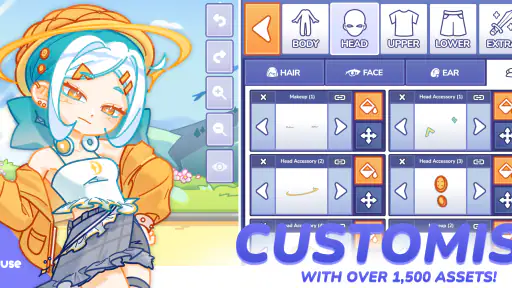

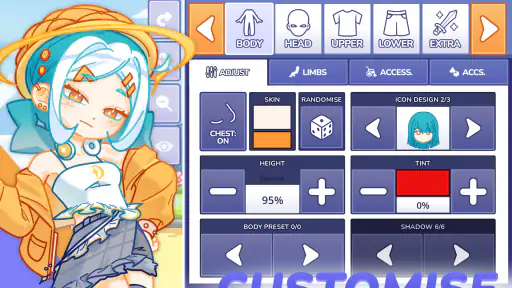


Analysis by Reviewed
MiniMuse is a role-playing game with an appealingly personal premise, but its brief description tells me more about its mood than its actual play. My overall take is that it is best approached as a small, character-led experience for players who enjoy imagining a story around a game, rather than as a conventional RPG built around a clearly defined combat loop or a long list of systems. That distinction matters: if you want to shape a tale at your own pace, the idea may draw you in; if you need detailed explanations of mechanics before committing, you may find the first step less reassuring.
Developed by Studio Sirenia, MiniMuse is free to download and is rated for Everyone. It has a 4.5 average from around 10,000 ratings, while more than a million installs suggest that its central concept has found a sizable audience. Those figures are useful context, not a promise that it will suit every RPG fan. I would judge it on whether its story-focused identity matches the kind of play you want from a game on your phone.
A personal premise, with room for the player
Why the concept is the main attraction
The strongest thing about MiniMuse is the sense that your relationship with the experience is meant to matter. Rather than pitching itself through a familiar checklist of battles, equipment, and quests, it presents a personal, creative angle. That gives the game a different first impression from a typical mobile role-playing title, where the opening often asks you to learn a set of combat rules before you have any reason to care about the characters.
I like that kind of focus when I want a game to feel more intimate than demanding. A personal story can make even a short session feel purposeful: I can return to the game because I want to see how a character or narrative develops, not simply because a timer or reward track is pulling me back. The trade-off is that the promise of a personal experience depends on how much the actual writing and interaction appeal to you. A premise can invite imagination, but it cannot guarantee that every player will connect with its tone.
That makes MiniMuse a better fit for curious readers and role-playing fans who enjoy filling in emotional or imaginative gaps than for players who want a tightly explained fantasy world from the outset. I would go in looking for an unusual story-first mood, not assume that the game will deliver the same structure as a large, mechanics-heavy RPG.
How I would fit it into an ordinary day
For a realistic use case, I can see myself opening MiniMuse during a quiet break, playing long enough to reconnect with the story, and then putting it away without needing to reserve a whole evening. That is the sort of role-playing experience that can work well on a phone: a little attention when I have it, rather than a commitment to a long session or an exacting sequence of inputs.
There is a useful practical distinction here. If I am commuting, waiting for an appointment, or winding down before bed, I want a game whose appeal survives being played in short bursts. A personal narrative can do that better than a complicated tactical encounter, because I can focus on the scene in front of me instead of keeping a large set of battle conditions in my head. Still, I would not assume that every moment is equally suited to interruption. When a story has emotional context, stopping mid-scene can weaken its effect, so I would save the more attentive moments for when I can read and respond without rushing.
You May Like

Clash of Clans Is Won Between the Battles

Android Auto Makes the Case for Quieter Car Software

MobiOffice: Transforming Mobile Productivity with Seamless Integration

EA SPORTS FC™ Mobile Soccer: Redefining Mobile Sports Gaming

How Microsoft OneDrive Became a Mobile Productivity Giant

How Google Translate Breaks Language Barriers Effortlessly
One simple way to get more from a story-led game is to pause after an important choice or character moment and ask what outcome I actually want, rather than tapping through just to advance. That habit makes the experience feel more like participating in a story and less like clearing a queue of screens. It is especially worthwhile in MiniMuse because the personal framing is central to its appeal.
Where it differs from familiar mobile RPGs
Compared with the usual mobile RPG, MiniMuse appears to prioritize a personal narrative identity over the genre’s most recognizable promises. Many alternatives make their value immediately legible through combat, collecting, character upgrades, or repeatable challenges. That approach is easier to evaluate before playing: I can quickly tell whether I enjoy the central loop. A story-centered game asks for a different kind of trust. I need to be interested in its voice and its characters, and I may need to give the experience time before I know whether its style works for me.
This is not automatically a weakness. Familiar progression systems can give a player clear goals, but they can also turn a game into a routine of checking menus and chasing incremental rewards. MiniMuse’s more personal positioning may be refreshing if those loops have started to feel interchangeable. On the other hand, someone who wants a dependable stream of battles, build choices, or measurable advancement may be happier with a traditional role-playing game that makes those systems explicit.
My advice is to compare the feeling you want, not just the label. “Role-playing game” covers a wide range, and MiniMuse should not be treated as a direct substitute for every RPG on a phone. Choose it for its individual, story-oriented appeal; choose another title when the main attraction for you is combat mastery or a deep progression puzzle.
What to consider before investing your time
The biggest point of friction is expectation. A compact description can spark interest without giving a newcomer a clear picture of how the play actually unfolds. I would not download MiniMuse expecting a conventional RPG structure simply because it sits in that category. The safer approach is to treat the premise as the invitation and use the opening portion to decide whether its particular storytelling style keeps you engaged.
It is also worth considering how you feel about uncertainty in a game’s rhythm. Some players enjoy discovering what an experience is as they go; others want to know the core loop before they spend time learning it. MiniMuse’s personal framing is likely to appeal more to the first group. If I were recommending it to a friend who is cautious about trying new games, I would say to sample it without expecting the full breadth of a large-scale RPG.
Its free price makes that initial trial easier, but free access does not mean every part of the experience must be free. MiniMuse includes optional in-app purchases priced from $6.99 to $13.99 per item. I would decide what I think of the game before spending anything, and I would avoid treating a purchase as necessary just because it is available. For a story-driven game, the more important question is whether I want to spend time with its premise; an add-on cannot make an unappealing story suddenly click.
One practical tip is to set a personal boundary before browsing any purchase options. If I am only testing whether the game suits me, I would keep the first session focused on the experience itself and postpone spending decisions until I know I want to return. That keeps the choice grounded in enjoyment rather than curiosity about what a paid item might change.
Who will get the most from it
I would recommend MiniMuse to players who like character-led experiences, enjoy bringing their own imagination to a story, and are comfortable with a game whose appeal may be more personal than systems-driven. It could also suit someone who wants a lighter alternative to an RPG that demands constant attention, provided they are interested in the tone and premise rather than expecting a large tactical sandbox.
It is less likely to satisfy players who measure an RPG primarily by the complexity of its combat, the size of its world, or the number of ways to optimize a character. Those players are not wrong to want more structure; they may simply be looking for a different kind of game. I would also hesitate to recommend it to someone who dislikes learning a game through exploration and prefers a clear explanation of its loop immediately. For that person, a more mechanically transparent alternative will be an easier choice.
MiniMuse is available as version 0.9.6 and supports Android 7.0 or later. That makes the operating-system requirement straightforward for many Android users, though anyone using an older device should check compatibility before planning to play. Its Everyone age rating makes it broadly accessible by classification, while individual players and families should still choose games according to their own preferences about story and tone.
A measured recommendation
MiniMuse has a clear reason to exist: it offers a personal, story-minded take on mobile role-playing rather than leading with the familiar machinery of an RPG. That is its strength and its main risk. If you want a game that gives you a distinct narrative mood and room to engage at your own pace, I think it is worth trying. If you want a transparent combat loop, extensive character optimization, or a large catalogue of clearly described systems, I would look elsewhere first.
My recommendation is therefore specific rather than universal. Download it for the premise, give it enough attention to see whether its voice suits you, and let your own interest—not the genre label or the popularity figures—decide whether to keep playing. MiniMuse works best when you approach it as a personal story experience, not as a promise of every feature associated with a traditional RPG. Its free entry point lowers the risk of finding out, while its optional purchases are best left for a later decision. If that balance sounds appealing, it may become a welcome change from the usual mobile routine; if not, a more mechanics-first role-playing game will probably be the better match.
A sensible way to try it
I would treat the first session as a test of fit rather than a commitment. Pay attention to whether the personal framing makes you curious about what comes next, and whether the pace feels comfortable on a small screen. If you find yourself wanting to linger over the story, that is a stronger sign of compatibility than simply enjoying the novelty of a new game.
For a busy day, I would avoid beginning when I have only a moment to spare if I am likely to be interrupted repeatedly. A short break can be a good time to return to a familiar point, but a new story moment may deserve a little more focus. This small distinction helps preserve the experience without turning a casual phone game into another obligation.
Another useful trade-off is between imagination and clarity. The personal approach can leave room for your own interpretation, which is part of its appeal; it can also feel less satisfying if you want the game to explain its world and rules in a highly direct way. I would choose based on which side of that balance you enjoy, rather than expecting one style to suit everyone.
When another RPG is the better choice
If I were choosing a game for a long session built around tactical decisions, carefully planned character growth, or repeatable challenges, I would reach for a title that puts those systems front and center. Those games make progress easier to measure and give players a concrete loop to master. MiniMuse is more compelling as a change of pace for someone who wants a more individual, story-oriented experience than as a replacement for that whole style of play.
Likewise, a player who prefers knowing exactly what a game asks of them before installing may be more comfortable with an RPG that spells out its central mechanics clearly. MiniMuse asks for some willingness to explore its identity as you play. That is a reasonable ask for a curious player, but not an advantage if uncertainty is what usually makes you abandon a new game.
Final verdict for the right kind of player
My bottom line is that MiniMuse is worth considering when the personal, character-led angle is the reason you are looking for a game, not merely because you want any RPG on your phone. Its appeal depends on whether you enjoy giving a story your attention and bringing your own response to it. Players who want a defined combat routine or extensive systems should look elsewhere; players seeking a quieter narrative alternative have a clearer reason to give it a try.
MiniMuse Frequently Asked Questions
What is MiniMuse?
MiniMuse is an app whose name alone does not establish its exact features, purpose, or intended audience. Before downloading, check its official store listing and developer description to confirm what it offers, such as creative tools, entertainment, or another kind of service. Reviewing screenshots and recent user feedback can help you decide whether the app matches your needs and expectations.
Is MiniMuse free to download, and does it include in-app purchases?
The cost of MiniMuse can depend on the platform, region, and current store listing. Check the app’s Google Play or Apple App Store page for its price, subscription details, and any in-app purchases before installing it. If the app offers paid features or recurring billing, read the terms carefully so you understand what is included for free and how to cancel a subscription.
Is MiniMuse available for Android and iOS?
Availability may vary by device, operating system version, and country. Search for MiniMuse directly in the official Google Play Store or Apple App Store, and verify that the developer and app name match the listing you intend to install. The store page should also show compatible devices and minimum software requirements, helping you avoid downloading an incompatible or unofficial version.
What permissions and personal information might MiniMuse require?
The permissions MiniMuse requests depend on the features it provides and may differ between Android and iOS. Review the permissions shown during installation and the privacy information on its store page before sharing personal details. Grant only access that makes sense for the app’s stated purpose, and check whether you can use its main features without optional permissions such as access to photos, location, or contacts.
How can I tell whether MiniMuse is safe and suitable for my device?
Download MiniMuse only from an official app store or a trusted link provided by its developer; avoid modified or unofficial installation files. Before installing, review the developer’s identity, update history, privacy disclosures, and recent user reviews. Also confirm that your device meets the listed requirements and that you have enough storage. These checks cannot guarantee an app is risk-free, but they help you make a more informed choice.
Pros
- Simple controls make it easy to start playing.
- Short sessions work well for quick breaks.
- The compact presentation keeps the focus on gameplay.
- Suitable for players looking for a casual experience.
- Easy to pick up without a lengthy learning curve.
Cons
- Gameplay may feel repetitive over time.
- Limited depth may not satisfy experienced players.
- Progress can feel slow during longer play sessions.
- The small-scale experience may offer little variety.
- May not appeal to players seeking a story or complex challenges.

- Category
- Role Playing
- Version
- 0.9.6