Mini Metro
- 2.74K
- 4.6
- Installs
- 1.00M
- Price
- $0.99

Screenshots

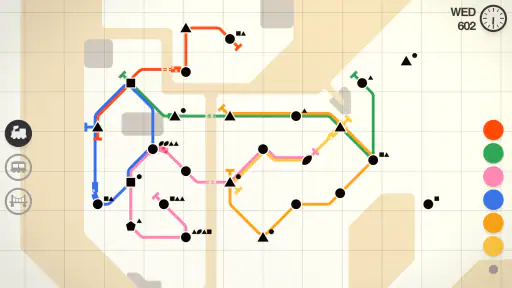
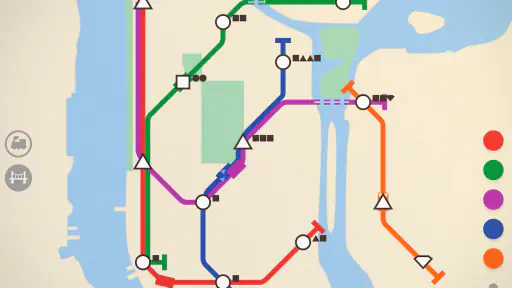
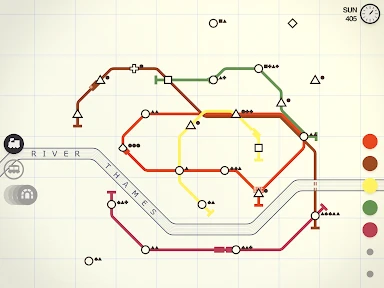
Analysis by Reviewed
I like games that let me understand the problem quickly, then make me work for a better answer. Mini Metro has that appeal: I spend my time shaping a transit network as a city grows, with each new connection bringing a fresh planning choice. It is a small-scale idea with enough pressure to make a short session feel involving, rather than a sprawling simulation that asks for an evening of attention.
Its focus also makes it easy to judge whether it suits you. The central pleasure is looking at a map, deciding what needs attention, and accepting that a neat plan may need to change. I find that satisfying when I want a thoughtful puzzle, but it is not the right fit if I want a story to follow or a large city to manage from the ground up.
Getting Started with Mini Metro
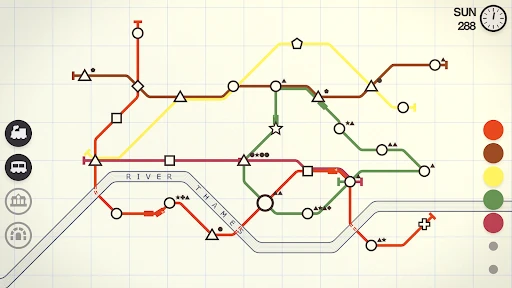
So, let's dive right in. Mini Metro is a minimalist strategy simulation game where you get to build and manage metro lines in various cities around the globe. The app is available on both Android and iOS, so no one misses out on the fun! The objective here is simple: connect stations with metro lines, ensuring smooth transit for all the cute little passengers hopping on and off.
Early Goals and the First Decisions
What works for me early on is resisting the urge to make every line reach every station. A route that looks tidy can become awkward when new stations appear, so I try to keep connections purposeful and leave room to adjust. The first goal is not to build a perfect map; it is to spot which parts of the network are starting to ask for help.
That makes a quick session surprisingly useful in an ordinary day. I can play for a short break, make a few routing decisions, and return later without needing a long story or complicated setup. It suits people who enjoy planning and small, readable puzzles. If you want direct control of individual trains, a detailed transport-management sandbox, or a story campaign, this is a much leaner kind of simulation and may not scratch that itch.
The Gameplay Experience
First things first, the game starts off easy-peasy, but don't be fooled. As time progresses, the number of passengers increases, and stations pop up all over the map, making it a real brain teaser. You have to think on your feet and redesign lines to accommodate the growing demand. It's like a puzzle that keeps evolving, and honestly, it's quite satisfying when you manage to keep the trains running without any hiccups.
One practical habit is to check where passengers are accumulating before extending a route. Adding a connection can solve one local problem while making a line longer and less flexible elsewhere. I find it helpful to treat each change as a trade-off: prioritize the busiest-looking connection, then watch whether the pressure shifts rather than assuming the fix worked everywhere.
More From Our News Desk

Weather by Xiaomi Review: Clear at a Glance, Less Clear Up Close

X Under Pressure: Can It Recover When Posting Goes Wrong?

Clash of Clans Is Won Between the Battles

Android Auto Makes the Case for Quieter Car Software

MobiOffice: Transforming Mobile Productivity with Seamless Integration

EA SPORTS FC™ Mobile Soccer: Redefining Mobile Sports Gaming
Progress Signals and Difficulty
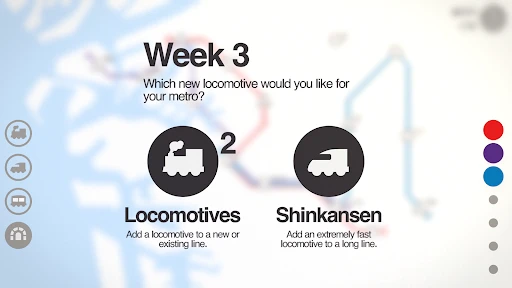
One of my favorite features is the weekly upgrades. You can choose from new trains, more carriages, or even new lines to enhance your network. The choices you make can significantly impact your metro system's efficiency, so you need to strategize wisely. It's this layer of decision-making that keeps me coming back for more.
Those choices provide a useful signal of progress: the map is not simply getting bigger, because each upgrade asks what kind of strain I expect next. Extra capacity and extra reach solve different problems, so I try to choose based on what the network is actually struggling with. It is a small decision with a visible consequence, not a reason to chase a single “best” option every time.
The rising difficulty is the main source of tension, and it can be less relaxing than the clean visuals suggest. When several parts of the map need attention at once, there may not be a satisfying way to preserve every route exactly as it is. I enjoy that pressure when I am in the mood to adapt; if I want a completely passive, no-failure experience, I would choose something gentler.
Visuals and Soundtrack
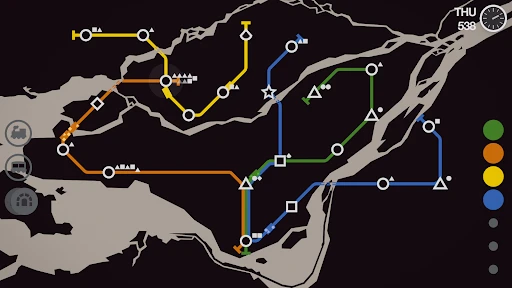
If you're a fan of clean, minimalist designs, you're going to love the look of Mini Metro. The graphics are simple yet elegant, making it easy to focus on the gameplay. The uncluttered map is more than a style choice: it helps me compare routes at a glance, especially when I need to decide whether to extend a line or leave its current shape alone. That clarity is useful, though it does not remove the need to keep track of several competing demands.
And let's not forget about the soundtrack. The ambient music and sound effects are both calming and immersive, providing the perfect backdrop for those intense metro-planning sessions. It's like meditation, but with an adrenaline rush!
Replayability, Alternatives, and Value
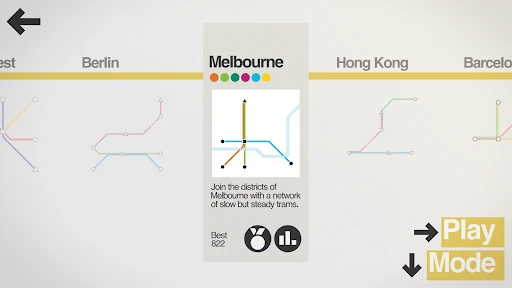
What really sets Mini Metro apart is its replayability. Each game is different, with random station placements and passenger demands, so you never get the same game twice. It keeps you on your toes, constantly adapting and refining your strategies. Plus, there's a daily challenge mode where you can compete with other players worldwide. Talk about keeping things exciting!
Compared with a typical city-building simulation, this puts the route puzzle first and leaves the wider work of running a city in the background. That focus is a strength if you like seeing a network problem and responding to it directly; it is a limitation if you want to build neighborhoods, manage budgets, or shape a sprawling city. I also like that a failed run can still teach me something: noticing which connection repeatedly became a bottleneck gives me a concrete idea to test next time.
For a new player, I would focus on observing before making a major redesign. A small route change is easier to judge than rebuilding the whole map at once, and keeping an eye on where demand gathers can prevent a quick fix from becoming a tangle. That approach makes the game approachable, though its pressure can still feel abrupt when new stations and passenger needs arrive together.
Who It Suits and My Verdict
Dinosaur Polo Club is the developer behind this paid simulation game. It costs $0.99, is rated Everyone, and has an average rating of 4.6 from around 70,000 ratings, with over one million installs. Those figures suggest it has found a large audience, but the appeal for me is more specific: I enjoy a compact planning challenge that rewards attention rather than fast reflexes.
It is an easy recommendation for someone who enjoys map puzzles, can tolerate revising a plan, and wants a game that fits into a spare moment. I would skip it if the idea of a growing network feels stressful, or if you expect a broad city simulator with lots of systems to manage. The simple presentation does not mean every run is easy, and the need to respond to changing demand is central to the fun.
In conclusion, if you're on the hunt for a game that's both relaxing and challenging, Mini Metro is definitely worth checking out. It's the perfect blend of strategy and creativity, wrapped up in a beautifully designed package. So why not give it a go? Happy commuting, and may your metro lines always run smoothly!
Small Decisions That Change a Run
When I play, I try not to treat every new station as an instruction to redraw the whole system. It is tempting to react immediately, but a little observation can reveal whether the new stop is genuinely isolated or simply part of a temporary surge. Waiting long enough to see where passengers gather helps me spend limited route changes with more purpose.
There is also a useful distinction between a line that is busy and a line that is badly designed. A crowded section may need more capacity, while a route that snakes across the map may be difficult to adjust when another area needs help. The two problems can look similar at first. I get better results when I ask whether the trouble comes from too few places to move passengers or from a route that has become too committed to one path.
That makes upgrades a planning question rather than a routine reward. If the network’s weakness is reach, adding another line can give me options; if the main issue is load along a route, extra capacity may be more useful. I do not assume the same choice will work in every run, because the map and its pressure points keep changing.
A Better Fit for Certain Breaks
For an everyday example, I can imagine opening it while waiting for a train or taking a quiet lunch break. I can focus on one run, make a few adjustments, and stop when I need to return to something else. The appeal is that the challenge is visible without a long tutorial or a narrative thread I might forget between sessions. It asks me to think, but the map gives me a clear place to begin.
That compactness has a trade-off. A run can become absorbing just when I planned to play for only a moment, because each new demand invites one more decision. If I need a game that can be ignored at any point without losing the thread, a gentler puzzle may fit better. Here, paying attention is part of the pleasure, and stepping away during a tense stretch can mean leaving an unfinished problem on the map.
I would especially recommend it to people who enjoy diagrams, route planning, and seeing a complicated situation become legible. It is also a good choice for someone who prefers strategy over quick reactions. On the other hand, players who want detailed control over vehicles, a persistent city-building project, or a progression path driven by characters and story should look toward a broader management game. This one is strongest when it stays focused on network decisions.
What Keeps the Challenge Moving
The sense of progress comes less from collecting a long list of rewards than from learning to read the map more confidently. Early on, I may connect stations simply because they appear close together. Later, I pay more attention to how a line’s shape affects its usefulness and how one fix can move congestion elsewhere. That change in how I think is satisfying, even when a run ends before I have built the network I wanted.
The pacing works because new demands gradually complicate a problem I already understand. I am not learning an entirely different activity each time the map changes; I am applying familiar principles under tighter conditions. This makes improvement feel earned, but it can also make a difficult run feel unforgiving if I have not noticed a bottleneck early enough. The clean visuals help me inspect the situation, yet they cannot make every decision reversible.
For me, the best way to approach a frustrating run is to identify one recurring weakness rather than judging the whole map as a failure. If a particular connection keeps attracting pressure, I can test a different route or choose an upgrade that addresses that kind of strain next time. That turns replay into practical experimentation instead of simply hoping for an easier arrangement.
Choosing It With Clear Expectations
The game is a paid download at $0.99, with an Everyone age rating. Its average rating is 4.6, supported by around 70,000 ratings and roughly 2,700 written reviews, while installs are above one million. I see those figures as useful context, not a promise that every player will enjoy the same pace. Its appeal depends on whether watching a network evolve and making corrective decisions sounds relaxing or stressful to you.
There is no need to approach it as a realistic transport-planning tool. I treat the map as a compact strategy puzzle, not a place to reproduce how a real metro authority operates. That distinction matters if you are choosing between this and a serious management simulator: the latter is the better fit when budgets, construction details, or broader city systems are the point. Here, the pleasure is in the immediate consequence of connecting stations and responding as demand shifts.
I also think it suits people who enjoy replaying a puzzle with different conditions more than people who need a clearly defined endpoint to feel satisfied. The changing layouts invite experimentation, while the challenge mode gives replay another reason to return. If you prefer a game that steadily unlocks a large collection of tools or tells you exactly what milestone to chase, this may feel spare. Its progression is more about adapting well than following a checklist.
Overall, I would choose it when I want a clean, thoughtful game that can turn a simple map into a demanding planning exercise. I would pass when I am looking for a relaxed building sandbox or a game where every run ends with a tidy sense of completion. For the right mood, its restrained design and shifting network problems make each session worth considering, and the strongest reason to keep playing is the chance to make a smarter decision on the next map.
Mini Metro Frequently Asked Questions
Is Mini Metro suitable for a quick play session, or is it better for longer sessions?
Mini Metro suits both quick sessions and longer stretches of play. Its central task—designing a subway map for a growing city—is easy to understand, while the need to adjust the network as stations and passenger demand increase gives each run room to develop. You can make a few planning decisions at a time or stay longer to see how your system handles expansion.
Does Mini Metro work well on a phone’s touchscreen?
Mini Metro is designed around arranging routes and managing a subway map, making its planning-focused gameplay a natural fit for a mobile screen. The core appeal is making decisions about how the network should connect as the city grows. If you enjoy games that invite careful thought and small adjustments rather than fast action, its style should feel comfortable to play on a phone.
Is Mini Metro a good choice for players who enjoy planning and strategy?
Yes. Mini Metro puts planning at the center of its simulation gameplay. You design a subway map for a growing city, then adapt the network as stations appear and passenger demand changes. It is a good match for players who like weighing trade-offs, organizing a system, and responding to new pressures. The challenge comes from keeping the layout useful as the city develops.
What is Mini Metro and how does it work?
Mini Metro is a minimalist strategy simulation game where players design and manage a subway map for a growing city. The objective is to efficiently lay out tracks, connect stations, and ensure smooth transit operations. As the city expands, players must adapt their designs to handle increasing passenger numbers while maintaining the network's efficiency and avoiding overcrowding.
Is Mini Metro available on both Android and iOS devices?
Yes, Mini Metro is available for both Android and iOS devices. You can download it from the Google Play Store for Android devices and the Apple App Store for iOS devices. The game offers a seamless experience across both platforms, allowing users to enjoy the strategic gameplay on their preferred device.
Pros
- Simple yet challenging gameplay.
- Visually appealing minimalist design.
- Smooth and intuitive controls.
- Regular updates with new cities.
- Offline mode available.
Cons
- Limited tutorial for beginners.
- Can become repetitive over time.
- No multiplayer mode.
- Limited soundtrack variety.
- In-app purchases can be pricey.
- Category
- Simulation
- Version
- Varies with device







