METAL SLUG RUSH
- 37.00
- 3.0
- Installs
- 50.00K
- Price
- Free

Screenshots
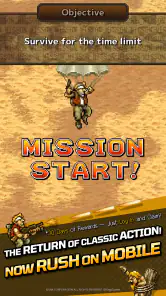
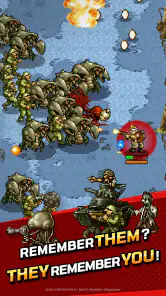

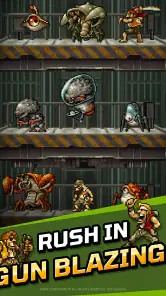
Analysis by Reviewed
METAL SLUG RUSH is an action game from revivecontents that takes the familiar run-and-gun spirit of Metal Slug and places it inside a roguelite survival format. The important idea is not simply shooting through a level; it is making a series of decisions while a run develops, then seeing whether those choices are strong enough to carry you through the next wave. I found that this changes the rhythm considerably. Instead of treating every encounter as a fixed arcade challenge, I approached each attempt as a short experiment in movement, attack timing, and build direction.
That focus makes the game easy to understand but harder to judge fairly. The store summary points toward classic Metal Slug action, yet the survival structure gives it a different purpose. Fans looking for a quick burst of familiar combat may enjoy the immediate controls and pressure, while players expecting a traditional stage-by-stage remake may find the run-based format less predictable. My overall impression is that the game works best when I accepted that a failed run is part of the process rather than proof that the game has nothing more to offer.
Why the roguelite survival idea matters here
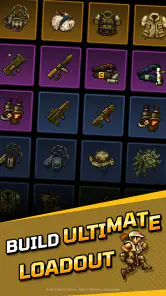
The central capability is the ability to build a run while fighting. That sounds straightforward, but it affects nearly every decision. In a conventional action game, I usually learn a stage, memorize danger points, and repeat the same route until execution improves. Here, the emphasis moves toward adapting to what happens during the current attempt. The value of a run comes from the combination I create and how well I use it under pressure.
This is where the Metal Slug influence becomes useful rather than decorative. The fast, explosive identity of the series suggests that the player should keep moving and react quickly. The roguelite layer adds a second question: should I favor an option that helps immediately, or choose something that may become more valuable as the run develops? Even without turning the game into a complicated strategy title, that tension gives ordinary encounters more weight.
The real appeal is the changing decision loop, not just the shooting. I was not only asking whether I could defeat the enemies in front of me. I was also considering whether my current setup suited the next stretch, whether I had become too dependent on one approach, and whether a risky choice was worth taking. Those small judgments are what separate this from a basic arcade shooter.
What I look for during a run
My first practical tip is to avoid choosing upgrades or run options solely because they appear powerful at that moment. A choice that supports the way I am already playing is often more useful than an impressive-looking option that forces me to change direction at the worst possible time. When the screen becomes busy, consistency matters. A build I understand is easier to control than one made from disconnected advantages.
I also found it helpful to treat movement as part of the build rather than as a separate skill. In a survival game, damage alone does not solve every problem. If I spend too much time standing still to attack, I can lose the space needed to react. If I move constantly without a plan, I may drift into another threat. The strongest runs came from matching my offensive choices with a movement habit I could repeat under stress.
This creates a useful learning pattern. Early attempts teach me which situations make me panic, while later attempts let me prepare for those moments. I could then make more deliberate choices instead of changing everything after one mistake. That is a subtle strength: the game encourages improvement through better decisions, not only through faster reflexes.
How the action feels in everyday play
The game is a natural fit for short sessions. I can start a run when I have a small break, play with a clear goal in mind, and stop after an attempt without needing to remember a long story sequence. That makes it more convenient than a traditional campaign when I am waiting for transport or taking a quick break between tasks. The run structure gives each session a beginning, a middle, and a clear result.
A realistic example is a commute where I have enough time for one focused attempt but not enough patience for a lengthy mission. I would use that session to test one build idea rather than chase a perfect result. If the run ends early, I still learn whether the approach was too fragile or whether I was making poor movement choices. That makes failure feel more useful than it would in a game where repeating the same opening section is the only way forward.
At the same time, the short-session advantage depends on how much repetition I personally tolerate. Roguelite games naturally ask me to replay a structure, and METAL SLUG RUSH is not the best choice if I want a constantly new campaign with carefully scripted progression. I enjoyed the quick reset when I was in the mood to experiment. On a day when I wanted a definite sequence of missions, the same design felt less satisfying.
Practical choices that improve a run
One useful approach is to decide on a priority before the action becomes hectic. For example, I might begin by valuing reliable survival over maximum damage, then only shift toward riskier choices once I have a comfortable rhythm. This prevents the common mistake of taking every aggressive option and discovering too late that the build has no room for errors.
Another tip is to notice which decisions solve a current problem and which ones merely look attractive. If enemies are forcing me into cramped movement, an option that improves immediate control can be more valuable than extra offensive potential. This is not a universal rule, but it helped me avoid building around an imagined future while ignoring the danger already on screen.
I would also recommend changing one major part of the plan at a time. When I altered everything after a failed attempt, I could not tell what had caused the problem. Keeping most of the approach stable made the next run a clearer test. That method is especially useful for players who are new to roguelite systems and might otherwise mistake random variation for personal inconsistency.
Where the game differs from usual action alternatives
Compared with a standard arcade shooter, this game gives more importance to run planning. A traditional alternative may reward memorizing enemy patterns and mastering a fixed route. METAL SLUG RUSH instead asks me to make choices while the attempt is unfolding. That makes it more replayable for players who like experimentation, but it also means the satisfaction is less about perfecting one known sequence.
Compared with a slower survival game, the Metal Slug-inspired identity points toward a more active experience. I am less interested in simply waiting for a defensive setup to do the work. The action encourages me to stay engaged with positioning and timing. Players who prefer calm automation may find the pace demanding, while players who want movement and pressure may appreciate the sharper involvement.
It also differs from a full premium action campaign because the free entry point lowers the barrier to trying it. The trade-off is that in-app purchases range from $0.99 to $104.99 per item. I would approach those purchases carefully and decide first whether the core run loop genuinely holds my attention. A free download is useful for testing the concept, but it should not automatically be treated as a completely cost-free long-term experience.
Limits that affect the recommendation
The average rating is 3.0 from around a thousand ratings, with 37 written reviews, so the public response is mixed rather than strongly enthusiastic. I would not use that figure as a final verdict, because run-based action games divide players sharply. Still, it is a reason to set expectations properly. This is a focused design built around repeated attempts, not a universal replacement for every Metal Slug-style game.
The biggest potential friction is repetition. If I enjoy learning through failure, repeated runs feel like practice. If I need constant story progress or a large variety of handcrafted stages, the same loop may become tiring. The game is also a poor fit for anyone who dislikes making choices under pressure, because the build element is not just a cosmetic layer; it is part of how the action stays interesting.
Another trade-off is accessibility of commitment. The age rating is Everyone 10+, and the game is free to install, which makes trying it simple. However, the presence of optional purchases means I would recommend setting a personal spending limit before playing, especially for younger users. The game is easier to evaluate when the decision to buy something is separated from the excitement of a difficult run.
Device compatibility is broad enough for many older phones and tablets, since it requires Android 6.0 or later. The current version is 1.0.5, which is useful to know when checking whether a device can run it. I would still keep expectations practical: compatibility only answers whether installation is possible, not whether every device will feel equally comfortable during busy action. Screen size, touch precision, and personal tolerance for visual pressure can affect the experience.
Who gets the most from the run-building system
The best audience is someone who likes action but also wants each attempt to present a small puzzle. You will probably get the most from it if you enjoy testing different approaches, learning from a failed run, and improving through better choices rather than relying only on reflexes. Fans of classic run-and-gun games who are open to a less scripted structure have a clear reason to try it.
It is also a good match for players who prefer games that can be played in compact sessions. I could treat one run as a complete activity instead of needing a long uninterrupted block of time. That makes it practical for casual play, provided the player is comfortable with repetition and does not expect every session to deliver a new narrative chapter.
I would steer you elsewhere if your priority is a fixed arcade campaign with carefully staged encounters, or if you dislike optional purchases strongly enough that their presence distracts from the game. I would also skip it if you want a relaxed experience with minimal decision-making. The game’s identity comes from pressure, adaptation, and the possibility that a promising run can fall apart.
My final take after weighing the strengths and friction
METAL SLUG RUSH succeeds when its two sides support each other. The recognizable action gives the run a lively foundation, while the roguelite structure gives me a reason to replay instead of simply repeating a completed stage. The most satisfying moments came from understanding why a run worked, not merely surviving it. That is a meaningful distinction for anyone deciding whether this is more than a quick novelty.
My recommendation is cautious but positive for the right player. I would try the free game if I wanted a mobile action title built around short attempts and evolving choices. I would begin without spending money, test whether the movement and run-building loop feel natural, and only then consider whether any optional purchase adds enough value for my habits. The developer, revivecontents, has positioned the game around a clear idea, and that idea is strongest when I treat every attempt as a focused experiment.
In the end, this is not the safest recommendation for every action fan, but it is a specific one for players who enjoy the meeting point between classic shooting and survival-style adaptation. If that combination sounds appealing, the game offers a straightforward way to find out quickly. If you want a predictable campaign, deeper long-form storytelling, or a completely purchase-free experience, another action game will likely suit you better.
Pros
- Fast
- responsive controls make short sessions enjoyable.
- Distinct character abilities add variety to repeated runs.
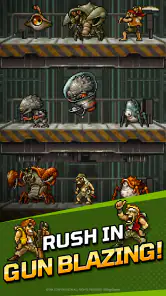
- Bright pixel-art visuals preserve the series’ classic personality.
- Frequent rewards help new players unlock useful upgrades early.
- Offline play is convenient when an internet connection is unavailable.
Cons
- Energy limits can interrupt play during longer sessions.
- Upgrade costs become increasingly demanding as progress continues.
- Some stages rely heavily on repeated enemy and obstacle patterns.
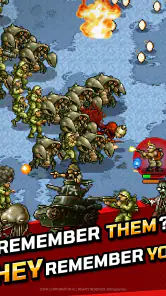
- The small screen can make crowded battles difficult to read.
- Optional purchases may appeal to players seeking faster progression.

- Category
- Action
- Version
- 1.0.5