Medieval Idle King
- 186.00
- 3.7
- Installs
- 100.00K
- Price
- Free

Screenshots
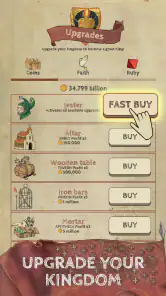
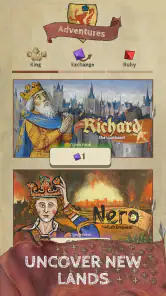

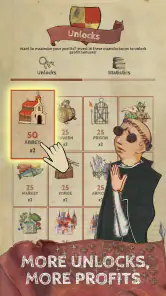
Analysis by Reviewed
I spent time with Medieval Idle King as a light medieval simulation game, and its appeal is easy to understand: it turns the fantasy of ruling a troubled kingdom into a steady cycle of building, automation, and gradual growth. You are not stepping into a demanding strategy epic with a huge map and complicated diplomacy. Instead, the game is aimed at players who enjoy making a few decisions, watching production develop, and returning later to see how far the realm has progressed.
That distinction matters. The experience is built around the satisfaction of improvement rather than constant action. I found it most enjoyable when I treated each session as a short management check-in: review the kingdom, decide where the next improvement should go, and leave the system working. If you want a game that respects brief play sessions, this approach can be appealing. If you need deep tactical battles or a detailed medieval role-playing adventure, the streamlined design may feel too limited.
MTAG PUBLISHING LTD presents the game as a free simulation for Everyone, and the current version is 0.5. It has already passed 100K installs, with a 3.7 average from around 1.1K ratings. Those figures suggest a developing game with a modest but real audience rather than an established giant in the idle genre. I would approach it as an evolving experience, not as a finished replacement for the largest kingdom-management games.
How the free model affects the experience
The most important cost detail is straightforward: Medieval Idle King can be downloaded and played for free. That makes it easy to test without committing money first, which is particularly useful for an idle game because the central question is personal. Some players enjoy watching a kingdom grow through repeated small upgrades; others quickly find the waiting and repetition dull. Free access lets you discover which group you belong to before spending anything.
The game includes in-app purchases ranging from $0.99 to $99.99 per item. I would not treat the presence of those purchases as a reason to dismiss the game automatically, but I would keep a firm boundary in mind. The free entry point is the clearest value proposition. Any optional purchase should be judged by whether it makes your own routine more enjoyable, not by pressure to keep pace with an imagined spender.
For me, the sensible way to evaluate the purchase system is to play normally first. Learn how the kingdom’s growth loop feels, identify which decisions actually matter, and only then decide whether paying would improve convenience. Buying before understanding the pacing can make the game feel less rewarding, because idle titles depend heavily on the pleasure of earning progress through planning.
Parents and younger players should also remember that a game rated Everyone can still contain optional purchases. The age rating makes the basic audience broad, but it does not turn the spending system into a non-issue. I would keep purchase controls protected on a shared device and explain clearly that free installation does not mean every item inside the game is free.
The value of returning to a growing kingdom
The strongest value here comes from the relationship between short sessions. Medieval Idle King is not asking me to sit down for a long uninterrupted campaign every time I open it. Its appeal is the feeling that a previous decision continues to matter after I leave. That makes it a natural companion for small gaps in the day, such as checking in during a break, before an appointment, or after finishing a longer game.
A realistic routine would be to open the game in the morning, inspect what the kingdom has produced, and choose one improvement that supports the next stage of development. Later, I might return during a commute or lunch break to see whether that choice changed the pace of growth. The useful habit is not tapping as quickly as possible; it is creating a repeatable check-in routine and avoiding random spending on upgrades that do not support a clear goal.
That is also where the automation theme earns its place. Automation is valuable when it reduces the need for constant attention, but it can weaken the sense of involvement if too much happens without a meaningful choice. I found the game more satisfying when I treated automated progress as a tool and kept my attention on the decisions around it. The kingdom should keep moving while I am away, but I still want each return to present a reason to think.
One non-obvious advantage of this format is that it can work as a low-pressure palate cleanser between more demanding games. I can spend a few minutes making progress without learning a new control scheme or preparing for a difficult encounter. The trade-off is that the same convenience makes it less suitable when I want a strong narrative, urgent objectives, or a sense of personal skill deciding every outcome.
Where the simulation feels useful and where it feels thin
The medieval setting gives the basic management loop a recognizable personality. Building and growing a kingdom feels more engaging than managing an abstract collection of counters because the theme gives my decisions a simple mental picture: I am trying to turn disorder into a functioning realm. Even without treating it as a historically detailed simulation, the setting helps the progression feel coherent.
Still, players should keep their expectations measured. The store positioning describes a chaotic kingdom, building, automation, and growth, so I see the game primarily as an idle management experience. I would not choose it expecting the breadth of a traditional grand-strategy title, the character depth of a role-playing game, or the competitive complexity of a large multiplayer kingdom game. Those alternatives may offer more systems, but they also demand more time and attention.
The game’s value therefore depends on what “depth” means to you. If depth means many layers of resource decisions that can be checked in small bursts, the format may work. If depth means a large number of interacting factions, detailed battles, diplomacy, and long-term political consequences, this is probably the wrong category of experience. I would rather be clear about that distinction than praise the game for features it is not trying to provide.
Another useful insight is that idle progress can hide inefficient choices. Because the game continues moving, it is tempting to upgrade whatever is immediately available. A better approach is to pause and ask what you want the next session to accomplish: faster accumulation, a stronger foundation for later growth, or simply unlocking the next visible step. That small planning habit makes the game feel more strategic without pretending it is a full strategy simulation.
The trade-offs behind the relaxed pace
The relaxed structure is both the game’s comfort and its main limitation. I like being able to step away, but the reward for returning can become less exciting if every session follows the same pattern. Idle games live or die by the quality of their progression rhythm. When the next improvement feels meaningful, waiting becomes anticipation. When it feels like a routine collection step, the game can turn into maintenance.
This is why I would avoid recommending it to someone who needs constant novelty. A player looking for quick combat, exploration, or a story with dramatic turns may find the kingdom’s gradual development too quiet. The game is better suited to someone who enjoys incremental goals and does not mind that the most important moment may be choosing what to improve rather than carrying out a spectacular action.
There is also a psychological trade-off around purchases. Free access lowers the barrier to entry, while the available purchase range means that convenience can have a very different meaning for different players. I would be especially cautious if you tend to spend impulsively when progress slows. Set a personal rule before playing: either remain entirely free-to-play, or decide in advance what level of optional spending is comfortable. That keeps the value judgment in your hands.
The early version number is another reason to keep expectations realistic. Version 0.5 suggests that the game is still at an early stage of its development. I would not interpret that as a flaw by itself, but it does make patience more important. The current experience may suit players who enjoy trying a developing title, while someone seeking a highly polished, long-established simulation may prefer a more mature alternative.
For the same reason, I would not make a purchase simply because I hope it will guarantee a particular future direction. Pay only for the value the game delivers to you now. That is the fairest way to assess a free game with optional items, especially when the experience is still being developed.
Who will get the most from it
Medieval Idle King is a good match for players who enjoy management games but do not want to monitor them constantly. It can fit into a daily routine for someone who likes checking progress, making a focused upgrade choice, and leaving the kingdom to continue its work. The Everyone rating also makes it approachable for a broad audience, although younger players still need guidance around optional spending.
I would particularly recommend it to people who enjoy the calm side of simulation games: visible growth, gradual improvement, and the satisfaction of returning to a project that has advanced while they were away. It may also suit players who are new to idle games because the medieval kingdom theme gives the progression a more understandable context than a purely abstract production simulator.
It is less appropriate for players who want a complete medieval world with complex politics or a strong story. If your favorite part of strategy games is outmaneuvering opponents in real time, this game’s slower management focus will not replace that experience. Likewise, if you dislike timers, repeated check-ins, or progress that accumulates gradually, the free price will not compensate for a structure you fundamentally do not enjoy.
Compared with a conventional city builder, this game is easier to approach in short sessions and less demanding in terms of continuous planning. Compared with a deeper strategy game, it offers a lighter commitment but also a narrower decision space. Compared with a purely passive idle title, the kingdom theme gives your choices more identity. Those comparisons explain its position well: it is a casual medieval growth game, not an all-purpose strategy package.
My practical way to play
I would begin without spending and use the first several sessions to learn the rhythm of the kingdom. Rather than upgrading every available option, I would choose a simple priority and observe whether it improves the next return. This creates a useful feedback loop: make one deliberate choice, leave the game, come back, and judge the result. It is a better test of the simulation than rapidly tapping through every prompt.
I would also avoid opening the game too frequently. Checking constantly can turn an enjoyable idle loop into a chore, especially if the available progress between visits is small. A few planned check-ins make the growth easier to notice and preserve the feeling that the kingdom is developing independently. This is one of the clearest ways to get value from the format without allowing it to take over your attention.
If progress begins to feel slow, I would first reconsider the upgrade plan rather than immediately reaching for a purchase. Ask whether the current goal is actually aligned with the way the kingdom is growing. If the answer is yes and the slower pace is simply part of the game’s design, decide whether you still enjoy the process. Paying should solve a convenience issue you knowingly accept, not hide a mismatch between the game and your preferences.
Finally, I would treat the game as a small daily hobby rather than a title that needs to be completed as quickly as possible. Its strongest moments come from accumulation. Rushing toward an endpoint can make the intervening decisions feel pointless, while a slower routine gives the building and automation themes room to work.
My verdict on the free download
My overall opinion is positive but deliberately measured. Medieval Idle King offers an approachable way to enjoy a medieval kingdom-management fantasy through gradual building, automation, and return visits. Its free access makes trying that loop risk-free in monetary terms, and the broad age rating makes it easy to recommend as a casual option for many players.
The best value is in the free experience when you enjoy steady progress without demanding constant action. I would not judge it by the standards of a full strategy epic, and I would not spend until I had established that the basic loop genuinely fits my habits. The optional purchase range can be reasonable for players who knowingly want convenience, but it should not be confused with a requirement for everyone.
My recommendation is to download it if you want a lightweight simulation that gives you a kingdom to nurture in short sessions. Start slowly, make purposeful choices, and keep spending optional. I would skip it if you need rich storytelling, intense competition, or a large tactical sandbox. For the right player, the game is a pleasant little management routine; for everyone else, a deeper city builder or strategy title will offer more lasting variety.
With MTAG PUBLISHING LTD still presenting the game in an early version, I see it as a title worth trying rather than one I would describe as definitive. Its current appeal is the simple pleasure of turning a chaotic realm into a steadily improving one. If that modest goal sounds satisfying, the free entry point gives you a fair chance to find out for yourself.
Pros
- Simple idle mechanics make progress easy to manage in short sessions.
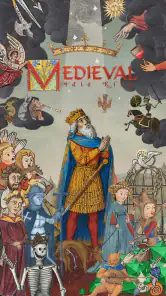
- Medieval theme gives the game a distinctive visual and atmospheric style.
- Offline earnings let your kingdom continue growing while you are away.
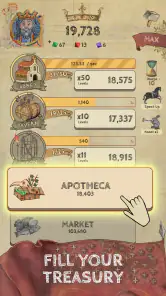
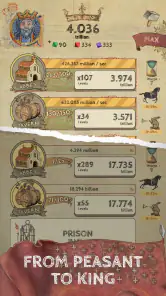
- Multiple upgrades provide clear goals and a steady sense of progression.
- Lightweight gameplay is suitable for casual players and older devices.
Cons
- Progress can become repetitive after the initial kingdom-building stages.
- Advancement may feel slow without watching ads or using premium currency.
- Limited strategic depth may disappoint players seeking complex kingdom management.
- Frequent reward prompts can interrupt the otherwise relaxed gameplay.
- Long-term replay value may be reduced once most upgrades are unlocked.

- Category
- Simulation
- Version
- 0.5