Mahjong 4 Friends: Multiplayer
- 425.00
- 4.7
- Installs
- 100.00K
- Version
- Varies with device

Screenshots
Analysis by Reviewed
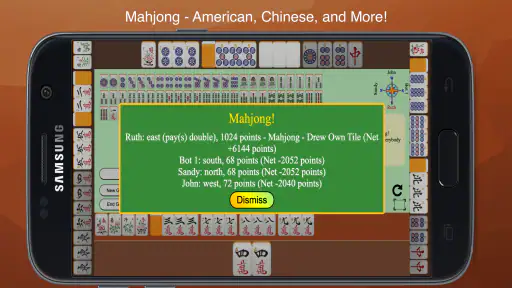
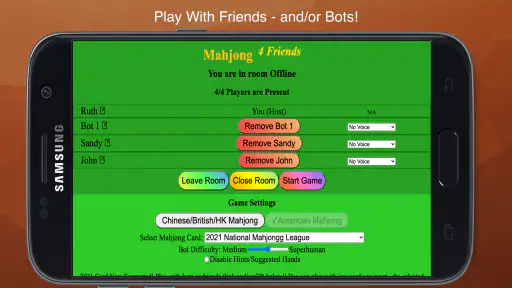
I approached Mahjong 4 Friends: Multiplayer as a board-game app first and a mobile time-killer second. That distinction matters because its appeal is not simply matching tiles alone; it is bringing American and Chinese Mahjong to a phone or tablet with friends, while also allowing play against AI. I found the idea immediately practical for people who enjoy the social rhythm of a tabletop game but do not always have a full group, a physical set, or a convenient place to play.
Developed by Unwind Media, the game sits in the board category and is free to download, with optional in-app purchases ranging from $0.99 to $19.99 per item. It is rated for Everyone, which makes it approachable for mixed-age households, although the rules themselves can still take time to learn. The app has built a 4.7 average from around 1.8 thousand ratings and has passed 100 thousand installs, so it is clearly more than an obscure experiment.
How Mahjong 4 Friends feels in real play
A quick start, with the usual Mahjong learning curve
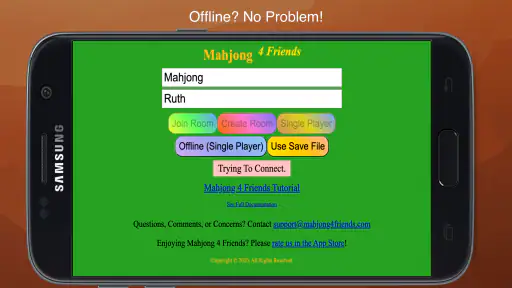
The first thing I noticed is that the app’s basic promise is easy to understand: choose a Mahjong style, decide whether to play with people or AI, and get into a board-game session. The difficulty is not finding the game mode; it is understanding the rules well enough to make sensible decisions. American and Chinese Mahjong are related, but they are not interchangeable versions of the same experience. A player familiar with one may still need to adjust to the other.
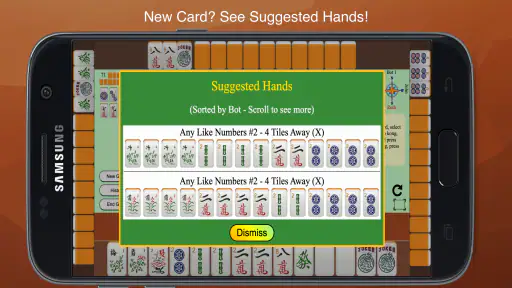
That makes this a better choice for curious beginners who are willing to learn than for someone looking for an instant, no-explanation puzzle. If you already play Mahjong in person, the app provides a convenient way to continue between gatherings. If you are new, I would begin with AI games and treat the first sessions as practice rather than expecting to play confidently against experienced friends immediately.
The AI option is particularly useful in everyday situations. I can imagine opening a short session while waiting for an appointment, using it to rehearse tile recognition and decision-making without asking three other people to join. It also removes the awkwardness of being the only beginner at the table. Once the rules feel familiar, multiplayer becomes more attractive because the app can serve as the shared table rather than merely a solo exercise.
Why the two rule traditions change the experience
One of the app’s strongest ideas is supporting both American and Chinese Mahjong. That gives the game more depth than a simple tile-matching title, but it also creates a responsibility for the player: do not assume that knowledge from one format transfers perfectly to the other. The strategic feel, expectations at the table, and reasons behind a move can differ enough to affect how you read the board.
My practical advice is to choose one style for several sessions before switching. Jumping between formats too quickly can make mistakes feel like app problems when they are really rule differences. Keeping a small note of unfamiliar terms or decisions can help, especially if you are learning with friends. The game is more enjoyable when everyone agrees on the format before starting, rather than discovering halfway through that players expected different rules.
This is also where the app compares favorably with casual tile-matching games. Those games usually reward quick visual recognition and short repeated rounds. Here, the satisfaction comes from remembering patterns, judging risk, and adapting to other players. The trade-off is that Mahjong 4 Friends asks more attention from you. It is not the best pick when you want something that can be played almost automatically.
Perceived speed during ordinary sessions
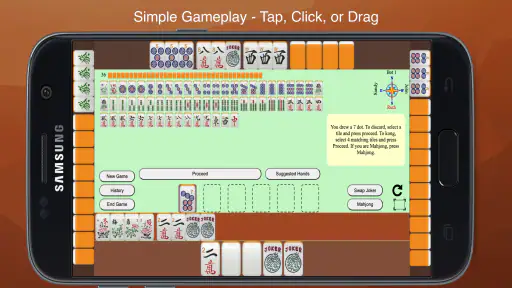
In normal use, I would expect the game to feel responsive during the parts that matter most: selecting tiles, following the table, and moving through a turn. A board game with a relatively focused interface does not need the same kind of rapid animation as an action title, and that works in its favor. The experience is built around decisions, not reflexes, so a calm pace feels appropriate rather than sluggish.
There is an important difference between technical speed and game speed. A Mahjong turn naturally includes pauses while players consider their options. Someone unfamiliar with the rules may interpret that quiet period as a delay, while an experienced player may appreciate the time to think. When playing with friends, the human pace of the table will often matter more than the phone’s raw responsiveness.
For that reason, I would not choose this app if your main test is whether every action feels instantaneous like a fast arcade game. I would choose it if you want the board to remain readable and the session to leave room for decisions. Its format is better suited to deliberate play than to rapid-fire entertainment.
What happens when several people are involved
Multiplayer is where the app’s purpose becomes clearest, but it is also where preparation matters most. Before inviting friends, I would agree on which Mahjong tradition to use, make sure everyone understands how to enter the session, and allow a little time for first-time players to get comfortable. A few minutes of setup can prevent confusion later, especially when one player knows the game well and another is still learning the meaning of the tiles.
A useful workflow is to run a short AI practice game before arranging a group session. That lets each person become familiar with the board without turning the first shared match into a tutorial. It also helps identify whether someone prefers American or Chinese Mahjong before the group commits to a longer game. This small step is more valuable than simply sending an invitation and hoping the rules explain themselves.
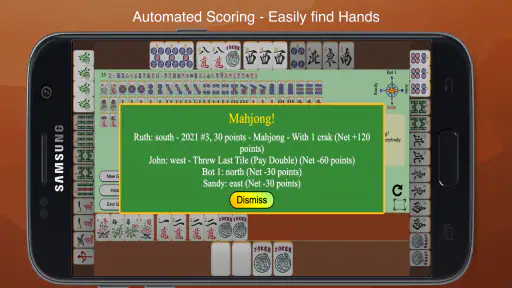
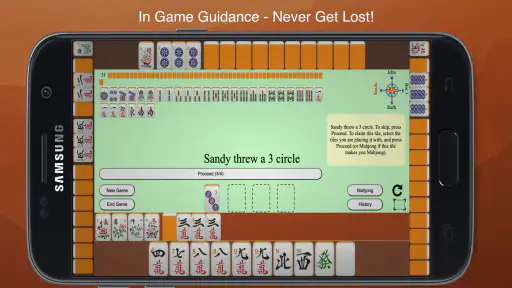
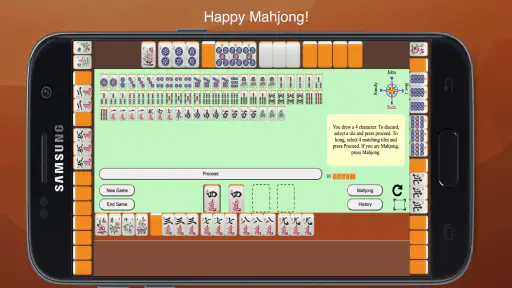
During a busy multiplayer moment, the app has to keep the current board, turn order, and available actions understandable. That is the kind of situation where any board-game interface can feel crowded, particularly on a small phone. I found the concept more comfortable on a larger screen, where the tiles and surrounding information have room to breathe. A tablet is likely the better household choice if several people are gathered around it.
Reliability and recovering from interruptions
Mobile board games are often used in imperfect conditions: someone receives a call, switches apps, locks the screen, or loses attention for a few minutes. Mahjong 4 Friends is most useful when it can fit around those interruptions rather than demanding the same uninterrupted focus as a long console session. I would still treat an active multiplayer game as something that deserves a stable moment, because other players are part of the experience and may be waiting for the next move.
My advice is to avoid starting a group game just before boarding transport, entering a meeting, or doing anything that may cut the session short. That is not a criticism unique to this title; it is a realistic limitation of multiplayer board games on a phone. For solo practice, interruptions are easier to tolerate because the AI does not create the same social pressure. This makes AI play the safer option when your available time is uncertain.
Recovery is also a matter of habits. If you are playing with friends, let the group know when you need to step away instead of silently leaving the app. If you are learning, take a screenshot or note of a confusing situation before closing the game, then use the next session to revisit the decision. I would not rely on memory alone when learning two rule traditions at once.
Resource demands and suitable devices
As a focused board game, this is not the kind of app I would install for demanding graphics or elaborate visual effects. Its main workload is presenting the Mahjong table, processing turns, and supporting the chosen play format. That makes it a sensible candidate for ordinary Android or iOS devices, particularly for people who want a game that does not compete with visually intensive titles for attention.
Still, “lightweight” should not be confused with universally comfortable. Screen size makes a real difference. On a compact phone, tile labels and table information may require more concentration, especially for a new player who is already trying to remember rules. A larger phone or tablet can reduce visual strain and make a shared session more practical. If your eyesight is not ideal or several people need to watch the same board, I would favor the largest convenient display.
Battery concerns are likely to be less about graphics and more about the length of a session and the use of multiplayer connectivity. I would not open a long group match with a nearly empty battery, particularly if the phone is also handling messages or other background tasks. The game’s board format is efficient in spirit, but the safest approach is still simple: charge first when you know a social session is planned.
Storage is another reason the app feels approachable. A concentrated Mahjong experience should be easier to accommodate than a large action game, although I would avoid making assumptions about exact installation size. What matters for a user is that the game’s value comes from its rules and player interaction, not from a large collection of visual assets. That makes it easier to justify keeping on a device used for several different purposes.
Where it beats physical sets and simpler alternatives
Compared with a physical Mahjong set, the app removes several barriers. You do not need to store tiles, prepare a table, or find a complete group before practicing. The AI option is especially important because it turns an otherwise social game into something available on demand. For a player who enjoys the strategy but rarely has four people free at the same time, that convenience may be the deciding factor.
The physical table still wins for atmosphere and conversation. Tile sounds, face-to-face reactions, and the shared ritual of setting up the game are difficult for a phone to reproduce. I would use the app as a companion to in-person play rather than a total replacement if the social setting is what I value most. It is strongest when distance, time, or missing players would otherwise stop a game from happening.
Compared with solitaire Mahjong apps, this title is better suited to people interested in the actual multiplayer board game rather than a solo matching puzzle. That distinction should guide your download decision. If you mainly want to clear identical tiles at your own speed, a traditional solitaire-style app may be simpler and more relaxing. If you want to learn formats that involve other players and strategic choices, this game offers a more relevant experience.
Who should use it, and who should skip it
I would recommend it to players who enjoy turn-based strategy, want to learn American or Chinese Mahjong, or need an AI partner while building confidence. It also fits families and friend groups looking for a shared activity that does not require everyone to be in the same physical room. The Everyone rating supports its broad accessibility, although younger or completely new players may still need an adult or experienced player to explain the rules.
I would be more cautious about recommending it to someone seeking a very short, effortless distraction. Mahjong can be mentally demanding, and the app’s appeal depends on understanding the decisions rather than merely tapping through a board. It is also not the ideal choice for a group that wants a physical, face-to-face evening above all else. In that case, a real set will provide the stronger social experience.
Players who dislike learning variations should also think carefully before installing it. Supporting both American and Chinese Mahjong is a benefit, but it means there is more to keep straight. I see that as useful breadth, not unnecessary clutter, provided you approach the game with patience and choose one format at a time.
Free access and the role of purchases
The free price makes it easy to test the central experience before deciding whether it belongs in your regular rotation. That is important for a rules-heavy board game because the right question is not simply whether you like Mahjong in theory; it is whether this particular presentation feels comfortable on your device and with your preferred group.
Optional purchases are available from $0.99 to $19.99 per item. I would treat them as a personal choice rather than part of the basic reason to try the game. Start with free play, learn how the AI and multiplayer sessions fit your routine, and only consider spending if you already know you will use the app regularly. That approach prevents a beginner from paying for extras before understanding which version of Mahjong they actually prefer.
The purchase range also reinforces a sensible boundary: this should be evaluated as a complete board-game experience, not as a collection of paid conveniences. If your main goal is occasional practice, free access may be enough. If your household intends to use it as a recurring digital Mahjong table, then the optional items can be judged according to how much additional value they provide to your particular group.
My performance verdict for everyday use
After considering speed, busy multiplayer moments, interruptions, and device comfort, I see Mahjong 4 Friends as a focused and practical game rather than a technically showy one. Its performance expectations are modest in the best sense: the important test is whether the board remains clear and the session remains playable, not whether it delivers dramatic graphics. The AI option gives it flexibility, while multiplayer gives it a reason to stay installed.
The main friction is human rather than mechanical. New players need time to understand the difference between the supported traditions, group sessions benefit from preparation, and small screens can make a detailed board less comfortable. None of those issues undermines the concept, but they do affect who will enjoy it immediately. I would introduce it gradually, beginning with solo practice and moving to friends once the basic flow feels natural.
For me, the strongest use case is a player who wants Mahjong available between real-world games: a quick practice session alone, a planned match with friends, or a way to keep playing when a physical table is not possible. The app does not replace the atmosphere of a traditional set, and it is not as instantly accessible as a simple tile-matching game. But as a free board-game option from Unwind Media, with both American and Chinese formats and support for AI and human play, it offers a convincing bridge between those two worlds.
My recommendation is to try it if you want to learn or regularly play Mahjong, but begin slowly and choose one rule tradition first. That small bit of preparation makes the experience clearer, reduces avoidable confusion, and gives the app a fair chance to show its real strength: making a traditionally social, thoughtful game available whenever your group—or your schedule—allows it.
Pros
- Supports multiplayer games with friends and family.
- Simple rules make it accessible to casual players.
- Useful for practicing Mahjong hands and strategy.
- Matches offer a social alternative to solo puzzle games.
- Runs well on most modern Android and iOS devices.
Cons
- Requires other players for the best multiplayer experience.
- Online matches may depend on a stable internet connection.
- The interface can feel dated compared with newer games.
- Limited appeal if you prefer fast-paced or action-focused games.
- Matchmaking activity may vary depending on the time of day.